
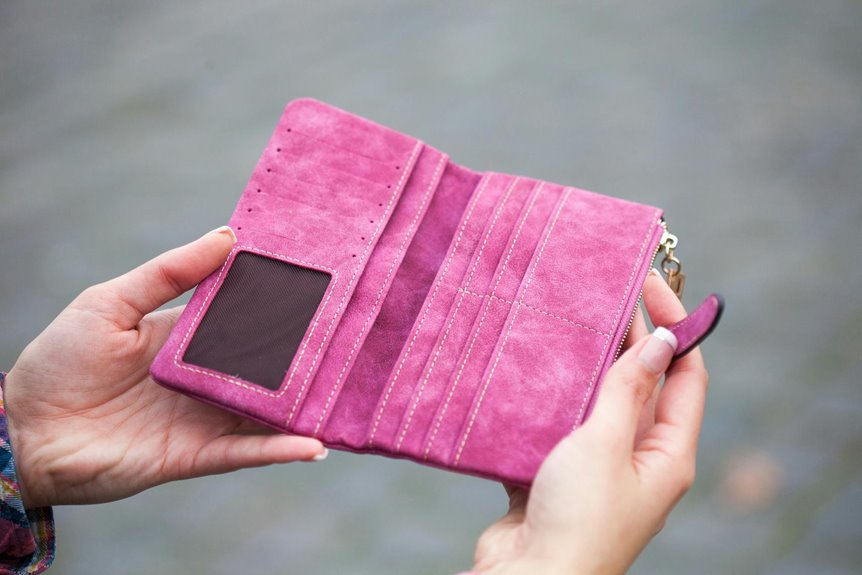
To clean a purse with fabric and suede, treat each part carefully. Gently blot fabric sections with a mild detergent diluted in water, avoiding soaking. For suede, use a soft-bristled brush to lift dirt and a suede eraser on spots—never soak it. Always test any cleaner first on a hidden area. Dry your purse away from direct heat and shape it with tissue paper. Keep it well cared for, and you’ll find more tips to keep your purse looking great ahead.
Key Takeaways
- Spot-test fabric with mild detergent and water before gentle cleaning to avoid discoloration or damage.
- Use a soft, damp cloth with mild soap for fabric sections, avoiding oversaturation.
- Clean suede areas with a soft-bristled suede brush and a suede eraser for small stains, avoiding water.
- Dry the purse naturally away from direct heat or sunlight to preserve both materials.
- Seek professional cleaning for persistent stains, extensive damage, or if unsure about cleaning methods.
Understanding the Differences Between Fabric and Suede
Although fabric and suede both appear soft to the touch, they require different cleaning methods because of their distinct textures and materials.
You’ll notice fabric is woven from threads, making it more durable and water-friendly. It can handle gentle scrubbing and mild detergents without damage.
Suede, however, is a type of leather with a napped finish, which means it’s delicate and prone to stains and water damage. When you clean suede, you have to be careful not to soak it or use harsh chemicals that can ruin its texture.
Understanding these differences helps you choose the right approach for each material, ensuring your purse stays in great shape without accidentally harming its fabric or suede sections.
Essential Cleaning Tools and Supplies
Before you start cleaning, gather the right materials like soft brushes, gentle cleaners, and microfiber cloths.
Choosing protective products designed specifically for fabric and suede will help keep your purse in great shape.
Having these essentials on hand makes the process smoother and more effective.
Cleaning Materials Needed
Gathering the right cleaning materials is key to restoring your purse without causing damage. You’ll need a soft-bristled brush, like a suede brush, to gently lift dirt from the suede sections without scratching.
A clean, white microfiber cloth helps you wipe down fabric areas without transferring colors or fibers. For deeper cleaning, prepare a mild detergent diluted in water—avoid harsh chemicals that can ruin both fabric and suede.
Keep a suede eraser handy to tackle stubborn stains on suede. Additionally, have a small bowl of lukewarm water for rinsing your cloth or sponge.
Finally, use cotton swabs for precise cleaning in tight spots. These tools will guarantee you clean effectively while preserving your purse’s delicate materials.
Protective Products Selection
Once you have your cleaning tools ready, choosing the right protective products will help maintain your purse’s appearance and durability.
Look for a fabric protector spray that’s safe for delicate textiles and a suede-specific protector for the suede sections. Make sure both are water and stain repellent but don’t alter the texture or color.
Test any product on a hidden area first to avoid damage. Avoid harsh chemicals or products with alcohol, as they can dry out suede or weaken fabric fibers.
Use a soft-bristled brush to apply protectors evenly, and follow the manufacturer’s instructions carefully. Regularly reapply these protective sprays to keep your purse looking fresh and shielded from everyday wear and spills.
This proactive step extends your purse’s life considerably.
Preparing Your Purse for Cleaning
To prepare your purse for cleaning, start by emptying all its contents to prevent damage or loss.
Next, check the purse for any detachable parts like straps or embellishments and remove them if possible.
Use a soft brush or lint roller to gently remove surface dust and dirt from both fabric and suede areas.
Place a clean towel or cloth beneath your purse to protect your workspace.
Finally, read the care label or manufacturer’s instructions to guarantee you use the right cleaning methods.
- Empty all pockets and compartments
- Detach removable straps or accessories
- Brush off loose dirt with a soft brush
- Lay down a clean towel to work on
- Review care instructions or labels
These steps set a solid foundation for effective, safe cleaning.
How to Clean the Fabric Sections of Your Purse
Start by spot-testing a small, hidden area of the fabric to guarantee your cleaning solution won’t cause discoloration or damage.
Mix a mild detergent with warm water and dip a soft cloth into the solution, wringing out excess moisture. Gently blot the fabric sections of your purse, focusing on stained or dirty areas without rubbing harshly.
Use a clean, damp cloth to wipe away any soap residue. Avoid soaking the fabric to prevent water stains or weakening the adhesive.
Let the fabric air dry completely in a well-ventilated area, away from direct sunlight or heat sources.
If stubborn stains remain, repeat the process carefully, but don’t overclean, as it can damage the fabric’s texture and color.
Techniques for Cleaning Suede Without Damage
Cleaning suede requires careful attention since its delicate texture can easily be damaged by moisture or harsh scrubbing. To keep your purse looking fresh, follow these techniques to clean suede safely:
- Use a soft-bristled suede brush to gently lift dirt and restore the nap.
- Avoid water; instead, try a suede eraser or a clean white pencil eraser for small spots.
- Work in one direction to maintain the suede’s natural texture.
- If the suede gets wet, blot with a dry cloth and let it air dry away from heat sources.
- Apply a suede protector spray after cleaning to repel future dirt and stains.
Removing Common Stains From Fabric and Suede
Although fabric and suede require different care methods, you can tackle many common stains on both materials effectively with the right approach.
Different materials need different care, but common stains on fabric and suede can be treated effectively with proper methods.
For fabric, gently blot fresh stains with a clean cloth and mild soap mixed with water. Avoid rubbing, as it can push the stain deeper. For dried stains, use a soft brush to loosen dirt before spot cleaning.
With suede, start by brushing the area with a suede brush to lift surface dirt. For liquid stains, blot immediately with a dry cloth. If the stain remains, apply a small amount of white vinegar on a cloth, gently dabbing the spot.
Always test any cleaner on a hidden area first. Prompt attention and gentle care will help preserve your purse’s fabric and suede.
Drying and Conditioning Your Purse Properly
Once you’ve treated stains and cleaned your purse, you’ll want to dry it properly to prevent damage and maintain its shape.
Avoid direct heat or sunlight, as these can cause fabric fading and suede stiffness. Instead, follow these steps:
- Pat excess moisture gently with a clean towel.
- Stuff the purse with acid-free tissue paper to retain its shape.
- Air-dry in a well-ventilated, shaded area.
- Use a suede brush once dry to restore the nap.
- Apply a leather conditioner sparingly on suede parts to keep them supple.
Tips for Protecting Your Purse After Cleaning
To keep your purse looking fresh and new, you’ll want to take some preventive measures after cleaning.
First, store your purse in a dust bag or pillowcase to protect it from dust and dirt. Avoid direct sunlight, which can fade both fabric and suede.
When not in use, stuff your purse with tissue paper to maintain its shape. Use a suede protector spray to repel water and stains, but test it on a small area first to avoid damage.
Rotate your purses regularly to prevent excessive wear on one. Finally, handle your purse with clean hands to avoid transferring oils and dirt.
These simple steps help maintain your purse’s appearance and extend its life between cleanings.
When to Seek Professional Cleaning Services
If your purse has stubborn stains or delicate fabric you’re unsure about, it’s time to call in a professional.
You’ll want to find a cleaner who specializes in fabric and suede to avoid damage. Choosing the right expert guarantees your purse gets the care it needs without risk.
Signs You Need Help
Although you might feel confident cleaning minor stains on your purse, certain issues demand professional attention to avoid damage.
If you notice any of the following signs, it’s time to seek expert help to preserve your purse’s fabric and suede:
- Stubborn stains that won’t lift with gentle cleaning
- Extensive water damage causing discoloration or warping
- Significant suede wear or deep scratches
- Mold or mildew growth inside or outside the purse
- Fading or color bleeding between fabric and suede sections
Ignoring these problems can worsen damage or ruin the purse’s appearance.
Professionals have the right tools and knowledge to safely restore delicate materials without risking further harm.
Don’t hesitate to reach out when your purse needs more than a quick touch-up.
Choosing a Cleaning Expert
How do you find the right professional to handle your purse’s delicate fabric and suede? Start by researching cleaners who specialize in both materials.
Look for reviews or ask for recommendations to guarantee they’ve experience with mixed textures. When you contact them, ask about their cleaning methods and if they use gentle, fabric- and suede-safe products.
Make certain they offer a damage guarantee, so you feel confident leaving your purse in their care. Avoid general cleaners who mightn’t understand how to treat suede without harming the fabric.
Trust experts who communicate clearly and answer your questions thoroughly. If your purse has sentimental or high monetary value, don’t hesitate to invest in professional cleaning—it can save you from irreversible damage.
Maintaining Your Purse to Prevent Future Dirt and Stains
To keep your purse looking fresh, you’ll want to adopt simple habits that minimize dirt and stains from settling in. Regular maintenance prevents buildup and extends your purse’s life.
Simple habits keep your purse fresh by minimizing dirt and stains, extending its life through regular care.
Start by storing it in a dust bag or a breathable cover when you’re not using it. Avoid placing your purse on dirty or wet surfaces, as this can transfer grime.
Use a suede protector spray to shield the delicate parts and gently brush suede areas to keep them clean. Finally, wipe fabric sections with a damp cloth regularly to remove surface dust.
- Store your purse in a dust bag
- Keep it off dirty or wet surfaces
- Apply suede protector spray regularly
- Brush suede gently with a soft brush
- Wipe fabric areas with a damp cloth often
Frequently Asked Questions
Can I Use a Washing Machine to Clean a Fabric and Suede Purse?
You might think tossing your purse into the washing machine is quick and easy, but don’t! The suede will get damaged. Instead, spot clean the fabric and gently brush the suede to keep it safe and fresh.
How Often Should I Clean My Purse to Maintain Its Appearance?
You should clean your purse every few weeks to keep it looking fresh. Spot clean stains immediately and do a thorough cleaning monthly, especially if you use it daily, to maintain its appearance and longevity.
Are There Specific Brands of Suede Cleaners Recommended for Purses?
You’ll find brands like Kiwi, Jason Markk, and Sofolk offer suede cleaners ideal for purses. They’re gentle yet effective. Always test on a small spot first to avoid damage and keep your purse looking great.
Can I Store My Purse in a Humid Environment Without Damage?
Storing your purse in humidity is like leaving bread out—it’ll mold or warp. You shouldn’t; moisture damages fabric and suede. Keep your purse in a cool, dry place to preserve its shape and prevent damage.
Is It Safe to Use Homemade Cleaning Solutions on Both Materials?
You shouldn’t use homemade cleaning solutions on both materials without caution. Fabric and suede react differently, so test on a small area first. It’s safer to use products specifically designed for each material to avoid damage.