
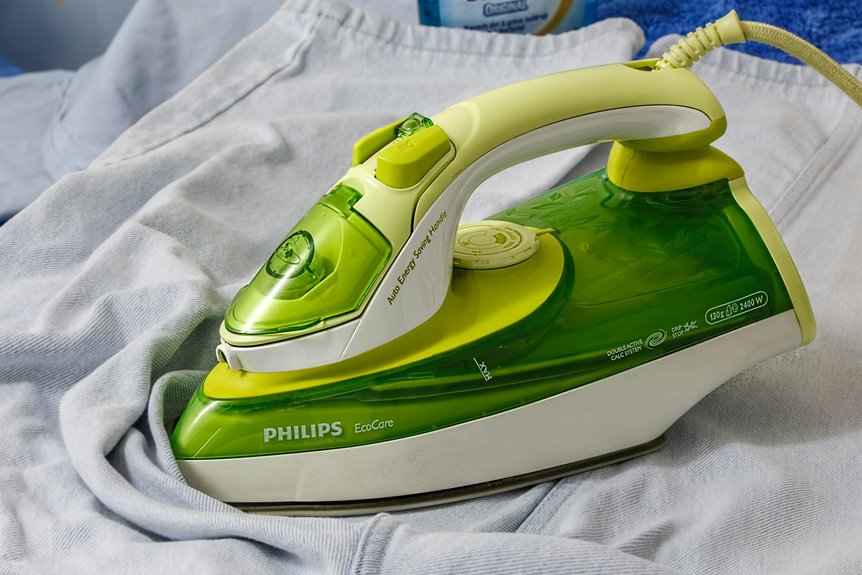
To choose the right iron for wrinkle-free results, focus on power, heat settings, and steam features. Check labels to find suitable heat levels for different fabrics, and look for powerful steam output to tackle tough wrinkles. Consider ease of use with an ergonomic design and a quality soleplate that glides smoothly. Don’t forget safety features and maintenance tips that guarantee durability. If you want to make an informed choice, there’s more to explore on various options.
Key Takeaways
- Select the right heat setting for your fabric type to achieve optimal results without damage.
- Look for irons with powerful steam output and adjustable steam settings for tackling various wrinkles effectively.
- Choose an iron with a comfortable ergonomic handle and adequate cord length for ease of use and mobility.
- Prioritize safety features like automatic shut-off and a cool-touch handle to ensure safe operation.
- Research reputable brands and customer reviews to find a reliable iron that meets your needs and budget.
Understanding Power and Heat Settings
How do you know which power and heat settings are right for your fabrics? Start by checking the care labels on your clothes. They’ll guide you on the appropriate heat levels.
For delicate fabrics like silk or polyester, use lower settings to avoid damage. Cotton and linen, on the other hand, can handle higher temperatures, helping you achieve crisp results.
It’s essential to adjust the power based on the fabric type. Higher wattage means quicker heating, which can save time, but make sure it matches your fabric’s needs.
Experiment with a small, inconspicuous area first if you’re unsure. By understanding your fabric’s requirements, you can choose the right settings for a smooth, wrinkle-free finish without any mishaps.
Evaluating Steam Features
When evaluating steam features, what should you prioritize for best results? Look for an iron with a powerful steam output, as this will help you tackle tough wrinkles quickly. A higher steam rate, typically measured in grams per minute, guarantees efficient smoothing.
Consider adjustable steam settings, too; they allow you to customize the steam output based on fabric type. Additionally, check if the iron has a vertical steam option for hanging garments, which can be incredibly useful for quick touch-ups.
A steam burst feature is also beneficial for those stubborn creases. Finally, verify the water tank is easy to fill and holds enough water for uninterrupted ironing sessions.
Prioritizing these features will enhance your ironing experience markedly.
Assessing Ease of Use
When choosing an iron, you’ll want to take into account its weight and how easy it’s to maneuver.
An ergonomic handle can make a big difference in comfort during use, while cord length and flexibility can affect your range of motion.
These factors can help guarantee you get wrinkle-free results without unnecessary strain.
Weight and Maneuverability
Choosing the right iron involves considering weight and maneuverability, which greatly impact your ironing experience. A lightweight iron can make your task feel less cumbersome, allowing you to glide effortlessly over fabrics.
If you’ve ever struggled with a heavy iron, you know how tiring it can be, especially during long ironing sessions. Look for an iron that balances weight and effectiveness; you want one that’s easy to lift but still delivers the necessary steam power.
Maneuverability is also essential. You’ll want an iron that moves smoothly across various fabric types and doesn’t snag or drag. Opt for a design that allows you to reach tricky areas effortlessly, ensuring you achieve wrinkle-free results without straining your wrist or arm.
Ergonomic Handle Design
A lightweight iron isn’t just about ease of lifting; the handle design plays a significant role in your overall ironing experience.
You want a handle that feels comfortable and secure during use. Here are three features to look for:
- Grip: A rubberized or textured grip can prevent slipping, giving you better control.
- Shape: An ergonomic shape that fits your hand naturally reduces fatigue, especially during long sessions.
- Angle: An angled handle allows you to maintain a relaxed wrist position, making it easier to maneuver the iron across fabrics.
Choosing an iron with an ergonomic handle can make a world of difference in how enjoyable and efficient your ironing tasks become.
Cord Length Flexibility
Having the right cord length can greatly enhance your ironing experience. A longer cord gives you the freedom to move around your ironing board without feeling tethered. You won’t have to constantly reposition your iron or search for an outlet.
On the other hand, a shorter cord can limit your mobility and create a frustrating experience. Look for irons with at least a 6-foot cord, as this length usually strikes a good balance between flexibility and ease of storage.
Additionally, consider models with swivel cords that prevent tangling and allow for smooth movement. Ultimately, choosing the right cord length will make your ironing sessions more efficient and enjoyable, leading to wrinkle-free results every time.
Considering Soleplate Material and Design
When picking an iron, the soleplate material and design can make a big difference in your ironing experience.
You’ll want to reflect on how well it glides over fabrics and how easy it’s to clean and maintain.
Let’s explore the different types of soleplate materials and their impact on your ironing efficiency.
Types of Soleplate Materials
Choosing the right soleplate material can considerably impact your ironing experience. Different materials offer various benefits, so it’s essential to know what suits your needs best. Here’s a quick overview:
- Stainless Steel: Durable and resistant to scratching, stainless steel provides excellent heat conductivity, ensuring even ironing.
- Ceramic: Known for its smooth surface, ceramic heats evenly and glides effortlessly over fabrics, preventing scorching.
- Non-stick: These soleplates are designed to prevent fabric from sticking, making cleanup easier and reducing the risk of burns.
Understanding these materials will help you select an iron that meets your ironing style and fabric types.
Invest time in choosing wisely, and you’ll enjoy wrinkle-free results every time!
Soleplate Glide Efficiency
How smoothly your iron glides over fabric can make all the difference in your ironing routine. A well-designed soleplate enhances maneuverability, allowing you to cover large areas quickly and reach tricky spots with ease.
When choosing an iron, consider the soleplate material. Stainless steel offers excellent glide but can be prone to sticking, while non-stick coatings reduce friction and promote effortless movement. The shape of the soleplate also matters; a pointed tip helps you navigate buttons and seams effectively.
Look for features like steam holes strategically placed to minimize drag. Ultimately, a smooth-gliding iron not only saves you time but also improves your ironing results, making your experience more enjoyable and efficient.
Cleaning and Maintenance Tips
Maintaining your iron’s performance starts with proper cleaning, especially considering the soleplate material and design.
Regular upkeep guarantees peak glide and wrinkle-free results. Here are three essential cleaning tips:
- For Stainless Steel Soleplates: Wipe with a damp cloth after every use. For stubborn stains, a mixture of baking soda and water works wonders.
- For Non-Stick Soleplates: Avoid abrasive cleaners. Instead, use a soft cloth and a mild detergent to keep it smooth and scratch-free.
- For Ceramic Soleplates: Clean with a damp cloth and avoid high heat settings. Store it upright to prevent scratches.
Evaluating Safety Features
When selecting an iron, it’s essential to take into account its safety features, especially since accidents can happen in the blink of an eye.
Look for an iron with an automatic shut-off feature that turns off the device after a certain period of inactivity. This can prevent potential fires and damage.
Additionally, consider models with a safety lock that keeps the iron upright when not in use, reducing the risk of tipping over.
A cool-touch handle is another valuable feature, ensuring you won’t burn yourself during operation.
Finally, check for a good cord length to avoid tripping hazards.
Budget and Brand Considerations
While it’s tempting to go for the cheapest option, understanding your budget and the brands available can greatly impact your ironing experience.
Investing wisely can save you time and effort in the long run. Here are three key points to evaluate:
- Set a Budget: Determine how much you’re willing to spend. Remember, a higher price often means better quality and features.
- Research Brands: Look into reputable brands known for reliability and performance. Brands like Rowenta, Philips, and Black+Decker often have great reviews.
- Read Reviews: Check customer feedback to gauge performance and durability. Real experiences can help you make an informed choice.
Maintenance and Care Tips
Choosing the right iron sets the stage for effective ironing, but keeping it in top shape is just as important.
First, always unplug your iron after use and let it cool down completely to prevent damage. Regularly clean the soleplate with a damp cloth to remove any residue; this guarantees smooth gliding.
If your iron has a steam function, empty the water reservoir after each use to prevent mineral buildup. Consider using distilled water for steaming to extend its lifespan.
Store your iron upright or in a safe place to protect the soleplate from scratches.
Finally, read your iron’s manual for specific maintenance tips, as different models may have unique care requirements.
Taking these steps will help you achieve wrinkle-free results consistently.
Frequently Asked Questions
How Do I Choose the Right Iron for Delicate Fabrics?
When choosing an iron for delicate fabrics, look for a model with adjustable temperature settings, a steam feature, and a lightweight design. These elements help you effectively smooth wrinkles without damaging those fragile materials.
Can I Use Tap Water in My Steam Iron?
You can use tap water in your steam iron, but check if your iron’s manual recommends it. If your water’s hard, consider using distilled water to prevent mineral buildup and guarantee peak performance.
What Fabric Types Require Specific Ironing Techniques?
Certain fabrics like silk and wool need low heat and specific techniques, while cotton and linen can handle higher temperatures. Always check the fabric care label, and adjust your ironing method accordingly for best results.
How Often Should I Descale My Iron?
You should descale your iron every few months, or more frequently if you notice mineral buildup. Regular maintenance keeps your iron working efficiently and helps prevent damaging your clothes with mineral stains or uneven steam.
Are Cordless Irons Effective for All Fabric Types?
Cordless irons can be like wild stallions—free and flexible—but they’re not always ideal for delicate fabrics. You’ll find they work best on sturdy materials, so consider your fabric choices before going cordless.