
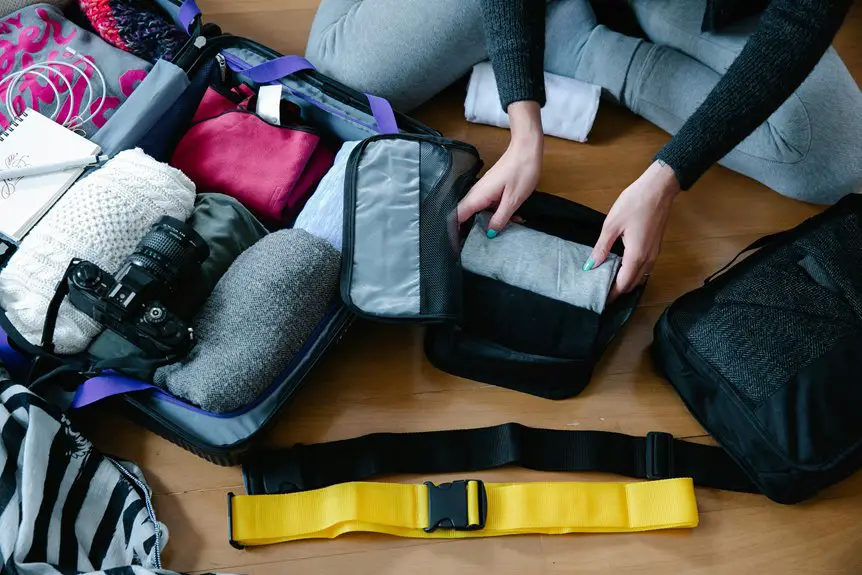
To choose luggage that won’t cause pilling on your clothes during travel, opt for materials like polyester and nylon that resist wear and snagging. Look for designs with smooth exteriors and structured compartments to minimize friction. Use packing techniques like rolling clothes and separating delicate fabrics to reduce abrasion. Brands like Away and Samsonite offer durable options, while packing cubes can help keep items organized. There’s more to take into account to protect your clothes effectively.
Key Takeaways
- Choose luggage made from durable materials like polyester or ballistic nylon to reduce fabric friction and pilling risk.
- Opt for bags with smooth, structured exteriors to minimize snagging and rubbing against your clothes.
- Use packing cubes to organize clothes, preventing movement that can lead to pilling.
- Pack delicate fabrics separately to avoid abrasion with rough materials and zippers.
- Consider brands like Away and Samsonite that prioritize fabric protection in their designs.
Understanding Pilling and Its Causes
When you choose luggage, it’s essential to understand pilling and its causes, as this can greatly affect the look and longevity of your bag.
Pilling occurs when fibers in your luggage rub together, creating small, unsightly balls of fabric. This usually happens with low-quality materials or when bags are overloaded and subjected to friction.
If your luggage has rough surfaces or zippers, it can exacerbate this issue. Additionally, frequent exposure to moisture can weaken fibers, leading to more pilling.
To avoid these problems, pay attention to the fabric quality and construction of your luggage. A well-constructed bag with smooth textures will help minimize friction, keeping your clothes looking fresh and your luggage in great shape for years to come.
Choosing the Right Materials for Luggage
While selecting luggage, it’s essential to take into account the materials used, as they play a significant role in durability and resistance to pilling.
Choosing the right materials can save you from the frustration of dealing with pilled clothing after your travels. Here are some materials to evaluate:
- Polyester: Strong and resistant to wear, it’s less likely to snag your clothes.
- Nylon: Lightweight and durable, it provides excellent resistance to abrasions.
- Ballistic nylon: Extra tough, it offers maximum protection against rough handling.
- Leather: Stylish and durable, though it can be heavier, it’s less likely to cause pilling.
Assessing Design Features That Prevent Pilling
To guarantee your luggage won’t lead to pilling on your clothes, it’s essential to evaluate its design features.
Look for bags with smooth, structured exteriors that minimize friction between surfaces. Soft, plush fabrics can snag and create pilling, so opt for materials with a tighter weave or a synthetic finish.
Choose luggage with smooth, structured exteriors and tighter-weave materials to minimize friction and prevent pilling on your clothes.
Check for well-designed compartments and dividers that keep your clothes secure and prevent them from shifting during travel. Zipper placements and closures should be thoughtfully positioned to avoid contact with delicate fabrics.
Additionally, consider luggage with padded or reinforced edges, as this can help protect your clothing from rough edges and seams.
Paying attention to these design features can greatly reduce the risk of pilling on your clothes.
Packing Techniques to Minimize Fabric Friction
Packing your luggage with care can greatly reduce fabric friction and prevent pilling. Here are some techniques you can use to guarantee your clothes stay in top condition during your travels:
- Roll your clothes: Rolling minimizes creases and reduces surface area that can rub against each other.
- Use packing cubes: These help organize your items, keeping them snug and preventing unnecessary movement.
- Separate delicate fabrics: Keep items like silk or cashmere separate from rougher materials to avoid abrasion.
- Layer strategically: Place heavier items at the bottom and lighter ones on top to minimize pressure on delicate fabrics.
Recommended Brands and Products for Pilling-Free Travel
Choosing the right luggage and products can greatly enhance your travel experience and protect your clothes from pilling.
Brands like Away and Samsonite offer durable, smooth-surfaced suitcases that minimize friction. Look for luggage made from polycarbonate or nylon, which are less likely to snag your fabrics.
Away and Samsonite provide durable suitcases with smooth surfaces that help prevent fabric snagging during travel.
For packing, consider using packing cubes from eBags or Travelpro to keep your clothes organized and reduce movement during transit. Additionally, use anti-static sheets from Bounce to help prevent static cling and pilling.
When it comes to garment bags, check out the options from Calpak, designed to keep your clothes wrinkle-free and protected.
Frequently Asked Questions
Can Pilling Occur With Specific Types of Clothing Materials?
Did you know around 30% of fabrics can pill? Natural fibers like wool and cotton are particularly prone to pilling, especially when they rub against each other or rough surfaces. Keep an eye on your materials!
How Do Climate and Humidity Impact Pilling During Travel?
Climate and humidity can greatly impact pilling. High humidity can cause fabrics to rub against each other more, leading to increased friction and pilling. You’ll want to select breathable materials to minimize this effect during travel.
Are There Luggage Options Specifically Designed for Delicate Fabrics?
Yes, you can find luggage options designed specifically for delicate fabrics. Look for soft-sided bags with padded interiors, which minimize friction. Additionally, consider using garment bags to protect your clothes during travel.
Should I Avoid Certain Colors to Prevent Pilling?
You don’t necessarily need to avoid certain colors to prevent pilling. Instead, focus on material quality and bag design. Smooth fabrics generally reduce friction, minimizing the risk of pilling on your clothing during travel.
How Often Should I Clean My Luggage to Prevent Pilling?
In this age of convenience, you should clean your luggage every few trips. Regular maintenance minimizes debris buildup, reducing the chances of pilling. A simple wipe-down with a damp cloth goes a long way.