
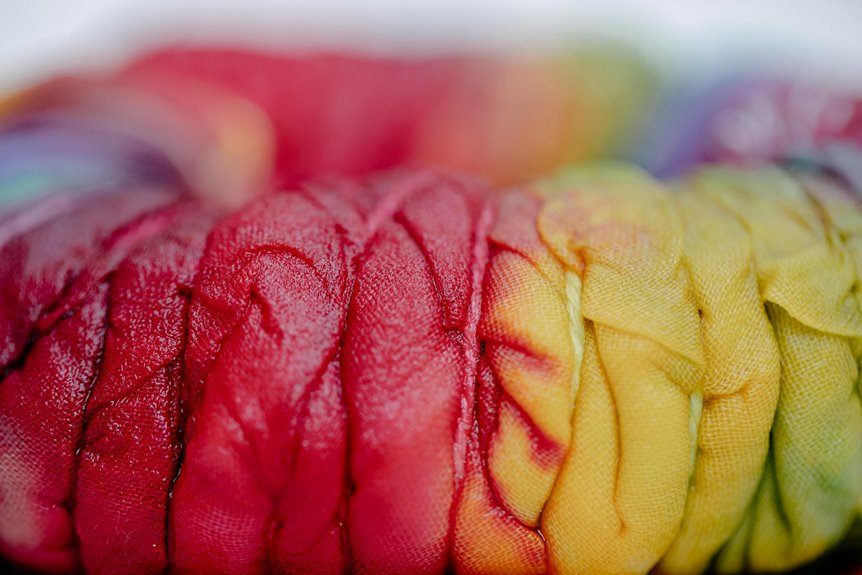
To avoid white spots in your tie-dye, start with 100% natural fabrics like cotton and wash them thoroughly to remove oils or sizing. Keep your fabric damp and loosen tight folds before applying dye evenly and fully to every area. Make sure to leave enough time for the dye to set before rinsing. If you want intentional white spots, you can control where dye doesn’t reach. For tips on perfecting your results and fixing spots, keep exploring these dye techniques.
Key Takeaways
- Pre-wash fabric without softeners to remove oils and sizing that repel dye and cause white spots.
- Use 100% natural fibers like cotton for better dye absorption and fewer missed areas.
- Apply dye evenly and thoroughly, loosening tight folds to ensure all fabric sections receive color.
- Keep fabric damp and consider soaking in soda ash solution to enhance dye bonding.
- For existing white spots, reapply dye with a brush and allow 6-8 hours for absorption before rinsing.
Understanding the Causes of White Spots in Tie-Dye
Although tie-dye is a fun and creative process, you might notice white spots appearing on your fabric if certain steps aren’t followed correctly.
These spots usually happen because the dye doesn’t reach some areas of the fabric. This can occur if you tie your fabric too tightly, preventing dye from soaking through.
Another common cause is using inadequate amounts of dye or uneven application, which leaves patches untreated.
Using too little dye or applying it unevenly can cause untreated patches on your fabric.
Also, if you don’t pre-wash your fabric, residues like starch or oils can repel the dye, creating white spots.
Finally, failing to let the dye sit long enough or rinsing too soon can stop the color from fully fixing.
Choosing the Right Fabric for Even Dye Absorption
Selecting the right fabric plays an essential role in achieving even dye absorption in your tie-dye projects. Natural fibers like cotton, rayon, and silk absorb dye more effectively than synthetic fibers.
When you choose 100% cotton, you’re less likely to get those unwanted white spots because the dye penetrates evenly. Avoid fabrics with blends containing polyester or nylon, as they resist dye and can cause patchiness.
Also, consider the fabric’s weave; tighter weaves absorb dye more uniformly, while looser weaves might lead to uneven coloration. If you want vibrant, consistent colors, stick with soft, untreated natural fabrics.
Choosing the right fabric sets a solid foundation for your tie-dye success and helps you avoid frustrating white spots in your final design.
Preparing Your Fabric Properly Before Dyeing
Proper fabric preparation is essential to prevent white spots and guarantee your dye adheres evenly.
Start by washing your fabric without fabric softener to remove any sizing, oils, or dirt that could block dye absorption. Use a mild detergent and rinse thoroughly.
Next, keep the fabric damp but not soaking wet—moist fibers absorb dye better and reduce missed spots. Avoid letting it dry before you apply the dye.
If you’re using a natural fiber like cotton, consider soaking it in a soda ash solution for 15 minutes; this raises the pH and helps the dye bond more effectively.
After soaking, wring out excess liquid gently. By taking these steps, you’ll create an ideal surface for the dye, minimizing the chance of unwanted white areas.
Techniques to Prevent Dye From Missing Areas
When you apply dye, make certain to saturate every section of your fabric thoroughly to prevent white spots. Uneven saturation often causes missed areas. Use consistent pressure when squirting or brushing dye. Rotate the fabric to reach hidden folds or creases. Avoid dye pooling by applying moderate amounts evenly. Also, loosen tight bands or folds slightly to let dye penetrate deeper.
| Technique | Benefit |
|---|---|
| Consistent pressure | Guarantees even dye distribution |
| Rotate fabric | Accesses all fabric areas |
| Moderate dye amounts | Prevents pooling and streaks |
| Loosen tight folds | Allows deeper dye penetration |
How to Apply Dye for Full Coverage
Ensuring every inch of your fabric gets covered in dye takes a careful approach. Start by saturating the fabric evenly—don’t just dab the dye on.
Use squeeze bottles for control, applying dye slowly and steadily to avoid missing spots. Work from the center outward, allowing the dye to soak through layers and reach hidden folds.
Flip the fabric occasionally to apply dye on both sides, ensuring full saturation. Avoid over-saturating to prevent color bleeding but make sure the dye penetrates deep enough.
Take your time and check for untouched areas as you go. If you notice any, add dye immediately.
Fixing White Spots After Dyeing
Although white spots can be frustrating, you can often fix them even after the dyeing process.
Start by reapplying dye directly to the spots using a small brush or squeeze bottle. Make sure to use the same dye colors you originally applied to maintain consistency.
Reapply dye to white spots with a small brush or squeeze bottle, using original colors for a seamless fix.
Let the fabric sit for at least 6-8 hours to allow the dye to fully absorb, then rinse and heat set as usual.
If the spots are stubborn, try soaking the fabric in a dye bath matching your design colors to even out the tone. Be careful not to oversaturate, or you might blur your design.
Fixing white spots takes patience, but with careful touch-ups, you can salvage your piece and achieve the vibrant look you want.
When White Spots Can Enhance Your Tie-Dye Design
You can actually use white spots to your advantage by placing them intentionally in your design.
These blank areas create striking contrast that makes your colors pop even more.
Don’t be afraid to experiment with white space to add unique flair to your tie-dye.
Intentional White Spot Placement
When you place white spots deliberately, you can create striking contrasts that make your tie-dye design pop. To do this effectively, you’ll want to control where and how those spots appear.
Here’s how to intentionally place white spots:
- Resist Application: Use rubber bands or plastic clips to tightly bind areas of fabric, preventing dye from reaching those spots.
- Selective Folding: Fold your fabric strategically so specific sections remain untouched by dye, forming planned white shapes.
- Bleach Detailing: After dyeing, carefully apply bleach with a brush to small areas to create bright white accents.
Enhancing Contrast Effects
Because white spots create sharp contrasts against vibrant colors, they can elevate your tie-dye designs by adding depth and visual interest. You can use these spots strategically to highlight shapes or create patterns that pop. When you plan your tie-dye, think about where white spaces will enhance the overall look rather than detract from it.
| Color Area | Effect of White Spots |
|---|---|
| Bright Red | Intensifies vibrancy |
| Deep Blue | Adds crisp contrast |
| Neon Green | Makes colors appear brighter |
| Warm Yellow | Creates dynamic light effects |
| Purple Shades | Highlights intricate details |
Use white spots like negative space in art—they guide the eye and strengthen your design’s impact.
Tips for Maintaining Vibrant Colors Over Time
To keep your tie-dye colors vibrant over time, it’s essential to handle your garments with care right from the start.
First, always wash your tie-dye separately in cold water to prevent colors from bleeding or fading.
Second, use a gentle detergent designed for bright colors to preserve the dye’s intensity.
Third, avoid direct sunlight when drying, as UV rays can dull the colors quickly.
Additionally, turn your garment inside out before washing to reduce friction on the dyed surface.
Avoid bleach or harsh chemicals, and skip the dryer when possible—air drying is best.
Frequently Asked Questions
Can Different Dye Brands Affect the Appearance of White Spots?
You might think different dye brands cause white spots, but it’s more about how you apply and prepare. While brands vary in quality, your technique plays a bigger role in preventing or creating those spots on your fabric.
How Does Water Temperature Influence Dye Absorption?
You’ll find that warmer water opens fabric fibers, helping dye absorb better and reducing white spots. Cold water slows absorption, causing uneven color. So, don’t skip using warm water for vibrant, consistent tie-dye results.
Is It Better to Tie or Fold Fabric for Fewer White Spots?
You’ll get fewer white spots if you fold fabric tightly instead of just tying it. Folding creates more compressed areas that resist dye evenly, while tying leaves gaps where dye can’t fully reach.
Can Pre-Washing Fabric With Vinegar Prevent White Spots?
Pre-washing your fabric with vinegar can help set the fibers and remove residues, which might reduce white spots. However, it’s not a guaranteed fix—you’ll still need proper folding and dye application techniques for best results.
Do White Spots Affect the Durability of the Tie-Dye Design?
White spots, like silent gaps in a story, don’t weaken your tie-dye’s fabric strength. Your design’s durability depends on dye absorption and fabric quality, so these spots mainly affect appearance, not how long your garment lasts.