
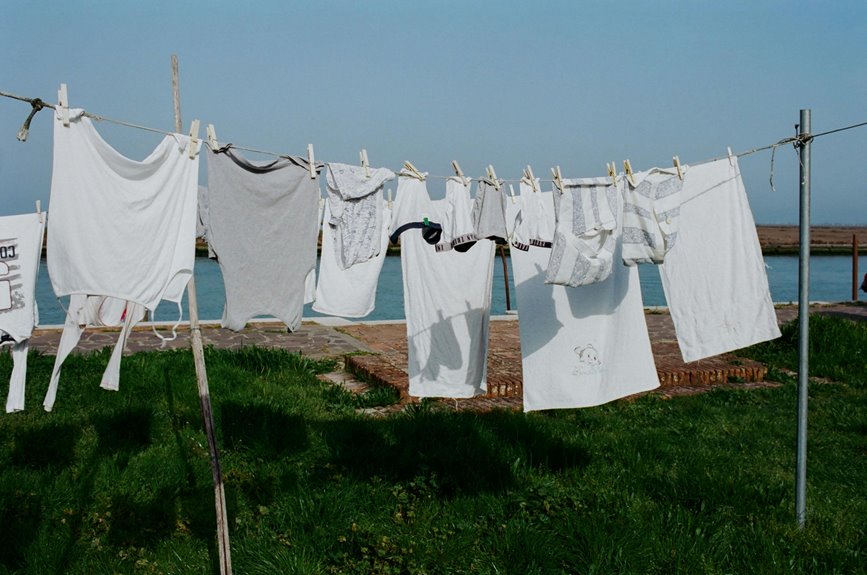
When you’re dealing with wicking clothes, how you dry them can impact their performance and lifespan. Air drying seems gentle, but machine drying offers speed and convenience. You’ll want to know which method keeps your gear at its best without sacrificing fabric quality. There’s more to contemplate than just time—temperature, airflow, and fabric care all play a role. Let’s explore what works best for your moisture-wicking wardrobe.
Key Takeaways
- Air dry wicking clothes in a shaded, well-ventilated area using hangers or drying racks to preserve fabric integrity and moisture-wicking properties.
- Avoid overlapping or folding garments when air drying to maintain fabric shape and maximize airflow for faster drying.
- Use low heat and gentle drying cycles with small to medium loads if machine drying to minimize fabric damage and shrinkage.
- Limit machine drying time to 20-30 minutes and avoid dryer sheets to protect fabric pores and reduce wear.
- Choose air drying to save energy, lower utility costs, and extend the lifespan of moisture-wicking garments.
Benefits of Air Drying Wicking Clothes
Although it might take longer, air drying wicking clothes helps preserve their moisture-wicking properties and fabric integrity.
When you air dry, you reduce the wear and tear caused by the machine’s heat and tumbling, which means your clothes maintain durability retention over time. This method keeps the fabric’s performance intact, so your gear continues to wick sweat effectively during workouts.
Plus, air drying offers significant energy savings since you’re not using electricity to dry your clothes. Not only does this benefit the environment, but it also lowers your utility bills.
Advantages and Drawbacks of Machine Drying
You’ll appreciate how machine drying speeds up the process and adds convenience to your routine.
However, you should be aware that the heat can sometimes damage the fabric’s wicking ability or cause shrinkage.
Balancing these factors helps you decide when machine drying fits best for your wicking clothes.
Speed and Convenience
When you use a machine dryer, you cut down drying time considerably, making it a go-to option when you’re in a rush.
The speed efficiency of machine drying lets you get your wicking clothes ready quickly, which is a huge convenience factor if you have a busy schedule. You won’t have to wait hours for your gear to dry, unlike air drying.
Plus, machine drying frees you from monitoring your clothes throughout the day. However, remember that this convenience comes with energy use and potential wear on fabrics.
Still, if speed and ease are your top priorities, a machine dryer offers unmatched convenience factors that air drying can’t compete with, helping you stay active and prepared without delay.
Fabric Care Risks
Machine drying speeds up the process, but it can also put your wicking clothes at risk. The high heat and tumbling action can accelerate fabric degradation, weakening the fibers and reducing the garment’s lifespan.
Over time, you might notice your wicking clothes losing their stretch and shape. Additionally, machine drying can interfere with moisture retention properties. While wicking fabrics are designed to pull sweat away from your skin, excessive heat can damage the fibers that enable this function, making your clothes less effective at keeping you dry.
If you choose machine drying, use a low-heat setting and remove your clothes promptly to minimize damage. Otherwise, air drying is gentler, preserving both the fabric’s integrity and moisture management capabilities longer.
Effective Air Drying Techniques for Moisture-Wicking Fabrics
To air dry your moisture-wicking clothes effectively, you’ll want to choose a well-ventilated, shaded area to prevent fabric damage from direct sunlight.
Hang your garments properly—using hangers or a drying rack—to maintain their shape and allow even airflow.
These simple steps help your clothes dry faster and stay in great condition.
Optimal Drying Environments
Because moisture-wicking fabrics rely on their structure to pull sweat away from your skin, drying them in the right environment is crucial to maintain their performance.
Aim for an area with ideal humidity—too much moisture in the air slows drying and can cause odors, while overly dry conditions may damage fabric fibers.
Temperature control also plays a key role; moderate warmth speeds evaporation without stressing the material.
Avoid direct heat sources like radiators or intense sunlight, which can degrade the fabric’s elasticity and breathability.
Instead, choose a well-ventilated space where air circulates freely, helping moisture escape efficiently.
Proper Hanging Methods
Choosing the right spot to dry your moisture-wicking clothes is just the start; how you hang them makes a big difference too.
Use proper hanging techniques to maintain the fabric’s shape and functionality. Avoid folding or bunching garments, which can trap moisture and slow drying. Instead, spread your clothes evenly on drying racks or hangers to maximize airflow.
If you’re using drying racks, make sure the clothes aren’t overlapping, allowing air to circulate freely. Hang shirts by the shoulders to keep their form, and lay items like leggings flat if possible.
These simple hanging methods prevent stretching and help your wicking clothes dry faster, preserving their performance and comfort. With the right approach, air drying can be just as effective as machine drying without the wear and tear.
Best Practices for Machine Drying Wicking Clothes
While machine drying wicking clothes can save time, you need to take certain precautions to preserve their moisture-wicking properties. Always choose low heat machine settings to avoid damaging the fabric. Use gentle drying cycles to reduce wear and static buildup. Avoid high temperatures, which can break down fibers and reduce effectiveness.
Here’s a quick guide to help:
| Setting Type | Recommendation | Reason |
|---|---|---|
| Heat Level | Low | Protects fabric integrity |
| Drying Cycle | Gentle or Delicate | Minimizes wear and tear |
| Load Size | Small to Medium | Guarantees even drying |
| Dryer Sheets | Avoid | Can clog fabric pores |
| Drying Time | Short (20-30 mins) | Prevents overheating |
Follow these tips to keep your wicking clothes performing at their best.
Comparing Fabric Care: Air Drying vs. Machine Drying
When you care for wicking clothes, deciding between air drying and machine drying affects their longevity and performance.
Different fabric types respond uniquely to drying methods and temperatures, so choosing wisely preserves your gear.
- Air drying gently maintains fabric integrity, especially for delicate blends.
- Machine drying offers speed but risks damage if drying temperatures are too high.
- Synthetic wicking fabrics often tolerate low heat in machines but thrive with air drying.
- High heat can degrade elastic fibers, reducing moisture-wicking ability and fit.
Environmental and Cost Impacts of Drying Methods
Drying methods don’t just affect your clothes—they also impact the environment and your wallet. When you air dry your wicking clothes, you reduce energy consumption considerably, lowering your sustainability impact. Machine drying, however, uses electricity or gas, increasing costs and carbon footprint. Here’s a quick comparison to help you decide:
| Drying Method | Energy Consumption | Cost Impact |
|---|---|---|
| Air Drying | None | Minimal |
| Machine Drying | High | Higher utility bills |
| Sustainability | Low | Higher |
| Convenience | Moderate | High |
| Fabric Longevity | Better | May degrade faster |
Choosing air drying is a smart way to save money and support sustainability while protecting your wicking fabrics.
Special Tips for Maintaining Wicking Fabric Performance
To keep your wicking clothes working at their best, you need to care for them properly. Maintaining fabric longevity and ideal moisture retention hinges on a few simple habits.
Proper care is key to keeping your wicking clothes effective and long-lasting.
Follow these tips to extend your gear’s lifespan and performance:
- Wash wicking fabrics in cold water using mild detergent to prevent damage.
- Avoid fabric softeners, as they reduce moisture-wicking ability by clogging fibers.
- Air dry whenever possible, since high heat from machine drying can break down fibers.
- Store clothes in a cool, dry place to prevent mildew and preserve fabric integrity.
Frequently Asked Questions
Can Wicking Clothes Be Dried Outdoors in Humid Climates?
You can dry wicking clothes outdoors in humid climates, but humidity challenges slow drying. To avoid odors and mildew, guarantee good airflow and sunlight. Otherwise, consider machine drying to keep your gear fresh and effective.
How Does Air Drying Affect the Odor of Wicking Fabrics?
Back in the days of the telegraph, you’d find air drying wicking fabrics reduces odor retention better than machine drying. You’ll notice natural drying techniques help freshen your clothes and prevent that stubborn, musty smell from sticking around.
Are There Specific Detergents Better Suited for Wicking Clothes Before Drying?
You should choose detergent types designed for synthetic or wicking fabrics to maintain fabric care. These detergents remove oils and odors without damaging fibers, so your wicking clothes stay fresh and perform well after drying.
Can Drying Racks Damage the Fabric if Used Improperly?
Yes, drying racks can damage fabric if you use improper drying techniques. You’ll want to guarantee good air circulation and avoid overstretching to protect fabric care. Handle wicking clothes gently for best results.
How Long Should Wicking Clothes Ideally Dry Before Storage?
You should let wicking clothes dry completely, usually 6-12 hours depending on humidity, before storage. Using ideal drying techniques guarantees no moisture remains, preventing mildew and preserving fabric performance for your next use.