
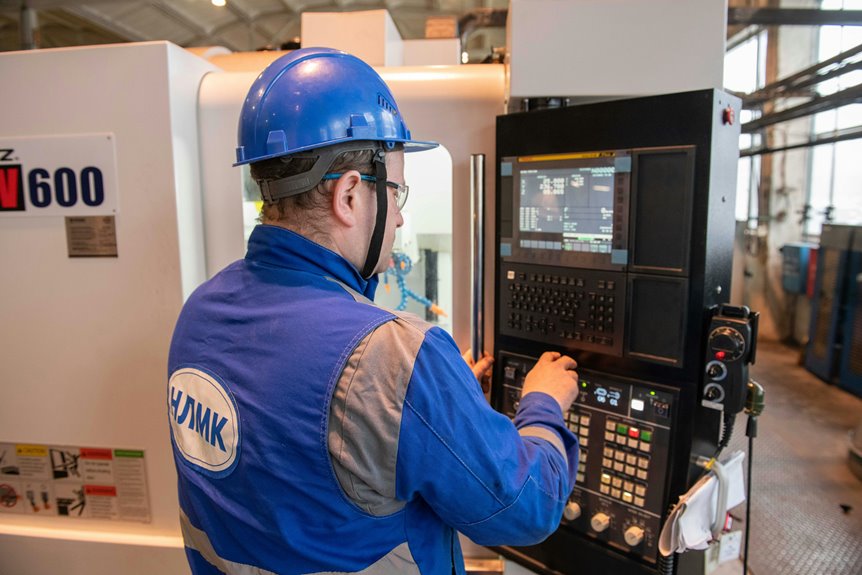
You’ll find corduroy’s manufacturing has evolved from hand-loomed weaving to advanced mechanization, using power looms and precision cutting machines for consistent quality. Automation now includes robotic sewing that improves efficiency and reduces errors. Sustainable methods like waterless dyeing and recycled fibers help lower environmental impact. Digital monitoring guarantees real-time quality control, catching defects early. If you explore further, you’ll discover how these technological strides shape the future of corduroy production.
Key Takeaways
- Corduroy manufacturing evolved from hand-loomed weaving to mechanized power looms, improving consistency and production speed.
- Industrial Revolution introduced steam-powered factories, enabling mass production and affordability of corduroy fabric.
- Modern precision looms and cutting machines enhance wale accuracy, fabric quality, and reduce material waste.
- Robotic sewing integration streamlines production, ensuring consistent stitch quality and lowering labor costs.
- Digital monitoring and sustainable technologies enable real-time defect detection, eco-friendly processes, and data-driven quality control.
Origins of Traditional Corduroy Manufacturing
Although corduroy is often seen as a modern fabric, its origins trace back centuries to traditional manufacturing methods.
When you look at early corduroy, you’ll find it was crafted using hand-loomed cotton or wool fibers. Artisans carefully wove parallel ridges, called wales, by raising extra sets of yarns, creating that distinctive ribbed texture.
Early corduroy was hand-loomed with cotton or wool, featuring carefully woven parallel ridges called wales.
You’d see craftsmen focusing on durability and comfort, making corduroy ideal for workwear. The labor-intensive process required skill to maintain consistent wale width and spacing.
You mightn’t realize how much attention went into every yard of fabric back then. These traditional methods laid a foundation for corduroy’s characteristic look and feel, setting it apart from other textiles.
This craftsmanship made corduroy both functional and stylish long before industrial advances.
Early Mechanization in Corduroy Production
As artisans honed their skills crafting corduroy by hand, inventors and manufacturers began exploring ways to speed up production. Early mechanization introduced simple machines that automated cutting and weaving, increasing efficiency without sacrificing quality. You’d notice machines like the power loom beginning to replace manual weaving, allowing more consistent rib patterns. These innovations helped meet growing demand while maintaining corduroy’s distinctive texture.
| Mechanization Stage | Key Innovation | Benefit |
|---|---|---|
| Hand weaving | Manual craftsmanship | High quality, slow process |
| Frame loom | Basic mechanization | Improved speed |
| Power loom | Automated weaving | Consistent fabric quality |
| Cutting machines | Precision cutting | Uniform rib appearance |
| Early finishing tools | Simple press systems | Faster production cycle |
You’d see how these steps laid groundwork for future advancements.
Impact of Industrial Revolution on Textile Manufacturing
When the Industrial Revolution transformed textile manufacturing, it revolutionized how corduroy and other fabrics were produced. You saw manual, labor-intensive processes give way to mechanized methods, boosting efficiency and output. This shift made corduroy more accessible and affordable.
Here are three key impacts for you to reflect on:
- Introduction of steam power accelerated spinning and weaving, reducing production time drastically.
- Standardization improved fabric consistency, ensuring uniform corduroy ridges and quality.
- Factory-based production centralized work, allowing you to benefit from economies of scale and increased availability.
These changes laid the foundation for modern corduroy manufacturing, setting the stage for innovations that would further refine the fabric’s texture and durability.
Understanding this era helps you appreciate the technological leaps that shaped textile production today.
The Role of Power Looms in Corduroy Fabric Creation
When you use power looms, weaving corduroy becomes much faster and more efficient.
These machines automate the process, boosting production speed while keeping the fabric consistent.
This mechanization transformed how corduroy is made, making it easier to meet growing demand.
Mechanization of Weaving
Though weaving corduroy once demanded painstaking manual effort, power looms have transformed the process by dramatically increasing speed and consistency.
You’ll notice that mechanization lets you produce the distinctive ribbed texture with exact precision, reducing human error.
When you work with power looms, you can:
- Control the tension and placement of yarns precisely to form uniform wales.
- Automate repetitive motions, allowing continuous fabric production without manual intervention.
- Adjust settings quickly for different corduroy patterns or widths, enhancing versatility.
This mechanized approach doesn’t just speed things up—it guarantees every yard of corduroy maintains quality and durability.
Increased Production Speed
Because power looms automate much of the weaving process, they greatly boost the speed at which corduroy fabric is produced. You’ll notice that where hand weaving took days, power looms cut this time drastically, allowing for mass production. This efficiency means you get corduroy fabric faster and in larger quantities.
| Benefit | Effect on Production |
|---|---|
| Automation | Reduces manual labor |
| Increased speed | Fabric made quicker |
| Higher output | Meets growing demand |
| Consistent rhythm | Smooth operation |
| Less downtime | Continuous weaving |
Enhanced Fabric Consistency
While manual weaving can introduce slight variations in corduroy fabric, power looms guarantee a level of consistency that’s hard to match.
When you rely on power looms, the fabric’s texture, thickness, and rib patterns remain uniform across every yard produced. This consistency improves the overall quality and appearance of the final product, making your corduroy more reliable for various uses.
Here’s why power looms enhance fabric consistency:
- Precise control over yarn tension guarantees even rib height.
- Automated weaving patterns eliminate human error in rib alignment.
- Consistent speed maintains uniform fabric density throughout production.
Computer-Aided Design (CAD) in Pattern Making
When you integrate Computer-Aided Design (CAD) into pattern making, you can create precise and detailed corduroy patterns much faster than traditional methods allow.
CAD software lets you visualize and modify patterns on-screen, reducing errors and material waste. You can easily adjust the width, depth, and spacing of the distinctive ribs in corduroy fabric, tailoring designs to specific styles or production needs.
This digital approach streamlines communication between designers and manufacturers, ensuring your patterns are accurately interpreted during production. Plus, you can store and replicate patterns effortlessly, speeding up future projects.
Modern Weaving Techniques Enhancing Fabric Quality
As you explore modern weaving techniques, you’ll find they greatly boost the quality of corduroy fabric.
Today’s advancements allow you to achieve finer control over texture and durability, making the fabric more consistent and comfortable.
Here are three key ways weaving technology enhances corduroy:
- Precision Yarn Tension Control: You can maintain even yarn tension, which prevents irregularities and strengthens the fabric’s rib structure.
- Advanced Looms with Programmable Patterns: These looms let you customize wale widths and pile density for varied textures and appearances.
- Improved Yarn Blending Techniques: By blending fibers more effectively, you get better colorfastness and enhanced softness without compromising durability.
These innovations help you produce corduroy that meets modern standards for both fashion and function.
Automation in Cutting and Sewing Processes
You’ll notice how precision cutting machines streamline the corduroy fabric’s shaping, minimizing waste and errors.
Robotic sewing integration then takes over, delivering consistent stitches with speed and accuracy.
Together, these automated processes boost efficiency and product quality in corduroy manufacturing.
Precision Cutting Machines
Although traditional cutting methods have served the industry well, precision cutting machines have revolutionized the manufacturing process of corduroy by automating accuracy and efficiency.
When you use these machines, you reduce fabric waste and speed up production without compromising quality. They allow you to:
- Achieve consistent, intricate cuts that are difficult to replicate by hand.
- Optimize fabric layout to maximize material usage, saving costs.
- Integrate digital patterns directly, ensuring each piece meets exact specifications.
Robotic Sewing Integration
Building on the efficiency gained from precision cutting machines, robotic sewing integration takes automation further by streamlining both cutting and sewing processes. You’ll notice how robotics reduce human error and speed up production, ensuring consistent stitch quality and alignment in corduroy manufacturing. When you implement robotic sewing, you cut down labor costs while boosting output and precision.
| Benefit | Impact on Production | Example Application |
|---|---|---|
| Increased Accuracy | Fewer defects | Seam alignment |
| Faster Cycle Times | Higher throughput | Continuous sewing |
| Labor Reduction | Cost savings | Automated fabric handling |
| Enhanced Consistency | Uniform product quality | Stitch tension control |
| Integration Flexibility | Adaptable workflows | Multi-pattern stitching |
With these advantages, robotic sewing truly transforms your corduroy manufacturing.
Sustainable Technologies in Corduroy Manufacturing
As the demand for eco-friendly textiles grows, manufacturers have embraced sustainable technologies in corduroy production to reduce environmental impact.
You’ll notice these innovations help conserve resources and minimize waste without sacrificing quality.
Here are three key sustainable practices transforming corduroy manufacturing:
- Organic and Recycled Fibers – Using organic cotton or recycled materials lowers water use and chemical dependency.
- Waterless Dyeing Techniques – New dyeing methods cut water consumption drastically, reducing pollution.
- Energy-Efficient Machinery – Advanced machines consume less energy, helping factories shrink their carbon footprint.
Integration of Digital Monitoring for Quality Control
You can improve corduroy quality by using digital monitoring systems that inspect fabric in real time.
These systems automatically detect defects, helping you catch issues early.
Plus, data-driven metrics give you clear insights to maintain consistent standards.
Real-Time Fabric Inspection
Though traditional visual inspections have served their purpose, integrating digital monitoring into real-time fabric inspection offers you a faster, more accurate way to catch defects in corduroy as they happen.
This approach minimizes the risk of flawed fabric advancing through production, saving time and resources. You benefit from immediate feedback that lets you adjust machinery or processes instantly, ensuring consistent quality throughout the roll.
With real-time fabric inspection, you can:
- Detect subtle imperfections like weaving errors or color inconsistencies early.
- Monitor fabric tension and alignment continuously to maintain uniformity.
- Record inspection data automatically for traceability and quality analysis.
Automated Defect Detection
One key advantage of automated defect detection is its ability to instantly identify flaws in corduroy fabric without human error.
When you use digital sensors and cameras integrated into the production line, you catch issues like broken wales, uneven pile, or color inconsistencies right away. This technology relies on machine learning algorithms that analyze fabric patterns in real time, flagging defects faster than manual inspection ever could.
By incorporating this system, you reduce waste and avoid costly recalls due to quality lapses. Plus, the consistent monitoring enhances overall product reliability, giving you confidence that every yard meets quality standards.
Automated defect detection streamlines your quality control, making your manufacturing process more efficient and ensuring customers get flawless corduroy every time.
Data-Driven Quality Metrics
Building on the advantages of automated defect detection, manufacturers can harness data-driven quality metrics to elevate control over corduroy production. By integrating digital monitoring systems, you gain real-time insights into every production stage, enabling rapid adjustments and minimizing waste.
These metrics provide objective, quantifiable data that help maintain consistent fabric texture and durability. Here’s how this benefits you:
- Predictive Analytics: Anticipate equipment failures or quality drops before they happen, avoiding costly downtime.
- Process Optimization: Identify bottlenecks and fine-tune parameters to boost efficiency without sacrificing quality.
- Traceability: Track every batch’s quality history, simplifying recalls and ensuring compliance with industry standards.
With data-driven quality control, you not only improve product consistency but also reduce costs and enhance customer satisfaction.
Future Trends in Corduroy Production Technology
As technology evolves, corduroy production is embracing innovations that enhance efficiency and sustainability. You’ll see automation playing a bigger role, with AI-powered machines optimizing fabric cutting and weaving to reduce waste.
Smart textiles are on the rise, integrating functional fibers that improve durability and comfort without sacrificing the classic corduroy feel. You can also expect advances in eco-friendly dyeing processes, using less water and fewer chemicals, aligning with growing environmental concerns.
Digital twins and IoT sensors will give you real-time insights into production, helping to spot defects early and streamline operations. As these technologies mature, you’ll benefit from faster turnaround times, improved fabric quality, and a smaller environmental footprint in corduroy manufacturing.
Staying updated will keep you ahead in this evolving industry.
Frequently Asked Questions
What Types of Dyes Are Commonly Used in Corduroy Fabric Coloring?
You’d think corduroy’s colors just magically appear, right? Actually, you use reactive, vat, and direct dyes to color it. These dyes bond well with cotton fibers, giving that vibrant, lasting hue you love on your corduroy.
How Does Corduroy Compare to Velvet in Terms of Texture and Durability?
You’ll find corduroy has a ribbed, textured feel, while velvet is smooth and plush. Corduroy’s durability outshines velvet, making it better for everyday wear, though velvet offers a luxurious softness you might prefer for special occasions.
What Are the Main Challenges in Maintaining Corduroy Garments?
Don’t think corduroy’s tough to care for—its main challenges are preventing crushing of the ribs and avoiding color fading. You’ll want to wash gently, avoid high heat, and store garments carefully to keep them looking sharp.
Can Corduroy Be Recycled or Repurposed Effectively?
You can definitely recycle or repurpose corduroy by turning old garments into new clothing, accessories, or home decor. Its durable fabric makes it great for creative upcycling projects, reducing waste and extending its life effectively.
How Does Corduroy Fabric Perform in Different Climates?
Ever wondered if corduroy can keep you comfortable everywhere? You’ll find it cozy in cold climates, but it might feel too warm in hot weather. Its breathability varies, so choose wisely based on where you’ll wear it.