
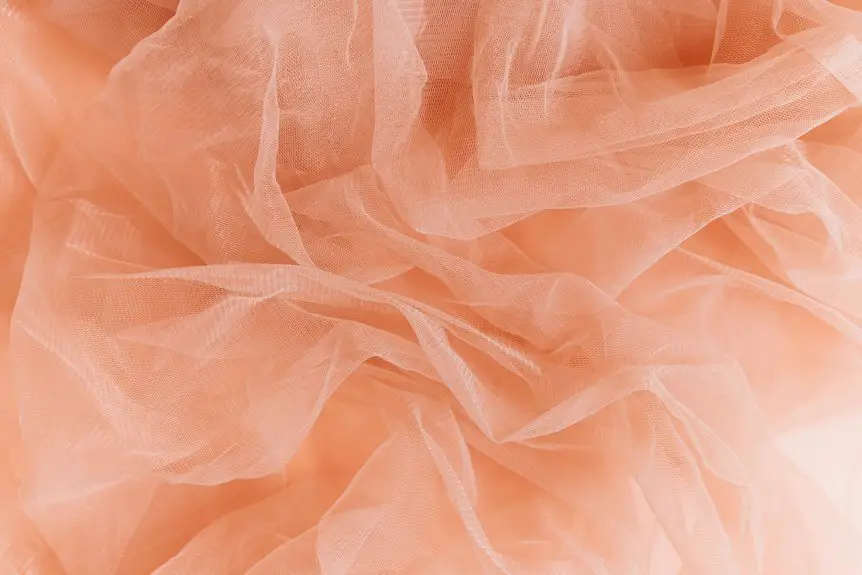
You start making Katan organza by selecting fine, strong silk fibers, usually from Bombyx mori silkworms. These fibers get carefully reeled into smooth yarns, which are then dyed evenly using natural or acid dyes. Next, the yarn is woven on handlooms or power looms to create the signature sheer, lightweight fabric with a subtle sheen. This meticulous crafting process guarantees durability and elegance. Stick around to explore how these traditional techniques shape Katan organza’s unique charm.
Key Takeaways
- Katan organza is made from fine, strong silk yarns derived from long filament Bombyx mori silkworm fibers.
- Silk fibers are carefully reeled, sorted, twisted, and combined to create smooth, lustrous yarns for weaving.
- Yarn is pre-soaked and dyed using natural or acid dyes, maintaining consistent temperature and timing for vibrant, even colors.
- Weaving is done on handlooms or power looms, aligning warp and weft yarns to achieve the fabric’s sheer texture and strength.
- Quality control checks yarn strength, thread density, and color uniformity to ensure the delicate, lightweight finish typical of Katan organza.
Origins and History of Katan Organza
Katan organza traces its roots back to the rich textile traditions of India and China, where artisans perfected the art of weaving fine silk threads into delicate, sheer fabrics.
Katan organza emerges from India and China’s legacy of weaving fine silk into delicate, translucent fabrics.
You’ll find that the fabric’s name, “katan,” refers to a specific silk yarn known for its smoothness and strength, essential for creating the crisp texture that defines organza.
As you explore its history, you’ll learn that katan organza gained prominence during the Mughal era in India, valued for its lightweight elegance and subtle sheen.
This fabric was often used for royal garments and ceremonial attire, symbolizing luxury and refinement.
Today, when you handle katan organza, you’re connecting with centuries of craftsmanship that blend tradition with artistry in every thread.
Selection of Raw Silk Fibers
Choosing the right raw silk fibers is essential to crafting high-quality organza fabric. You’ll want to select silk that’s fine, strong, and lustrous to achieve the delicate yet crisp texture characteristic of Katan organza.
Typically, long filament silk fibers from the Bombyx mori silkworm are preferred because they produce smooth, uniform threads. Avoid tangled or short fibers, as they can cause unevenness or weak spots in the fabric.
Inspect the silk for consistent thickness and minimal impurities to guarantee durability and a refined finish. By carefully choosing premium raw silk fibers, you set the foundation for organza that’s both lightweight and resilient, ready to be transformed into the sheer, elegant fabric you want.
Silk Reeling and Yarn Preparation
Begin by carefully reeling the silk fibers from the cocoons to create long, continuous threads essential for smooth organza fabric. This step guarantees the yarn’s strength and uniformity.
Next, you’ll prepare the yarn to meet the fine texture Katan organza demands. Here’s how you do it:
- Sort the silk strands to remove any weak or broken fibers.
- Twist the threads to add strength without compromising softness.
- Combine multiple filaments to achieve the desired thickness and smoothness.
- Wind the yarn onto spools, ready for weaving.
Dyeing Techniques for Katan Yarn
Once the yarn is prepared and wound, the next step involves adding color to bring the fabric to life. You’ll find that dyeing Katan yarn requires precision because the fine silk threads absorb color differently.
Typically, natural dyes or high-quality acid dyes are used to achieve vibrant, lasting hues. Before dyeing, you must carefully soak the yarn in water to guarantee even dye penetration.
Then, immerse the yarn in the dye bath, maintaining consistent temperature and timing to avoid color irregularities. After dyeing, rinse the yarn thoroughly to remove excess dye and prevent bleeding later.
Finally, you’ll dry the yarn in shade to preserve brightness and prevent damage. This careful dyeing process guarantees your Katan organza fabric boasts rich, even colors.
Weaving Process and Loom Types
Although dyeing sets the stage, the weaving process truly shapes Katan organza fabric’s delicate texture and transparency.
Dyeing prepares, but weaving crafts Katan organza’s signature delicate texture and translucent beauty.
You’ll find that weaving this fabric requires precision and the right equipment. Here’s what you need to know:
- Handlooms – Traditional handlooms give you fine control over thread tension, essential for organza’s crisp finish.
- Power looms – These speed up production but need careful settings to maintain fabric quality.
- Warping – You carefully align the silk yarns lengthwise to guarantee uniformity.
- Weft insertion – The crosswise yarns are woven tightly, balancing sheerness and strength.
Characteristics of Katan Organza Weave
The weaving techniques and loom choices directly influence the unique qualities of Katan organza.
When you look closely, you’ll notice its distinct crispness and sheer texture, thanks to the fine silk threads woven tightly yet delicately. The fabric’s lightweight nature comes from the balanced plain weave, which uses equally spaced warp and weft yarns.
This structure gives Katan organza its subtle stiffness, allowing it to hold shapes beautifully without feeling heavy. You’ll also see a slight sheen on the surface, a natural result of the silk’s smooth fibers and the weaving tension.
Plus, the weave creates a translucent effect that plays with light, making Katan organza ideal for elegant garments and decorative uses where both strength and delicacy matter.
Finishing Treatments and Enhancements
You’ll notice how finishing treatments give Katan organza its distinct feel and look.
Applying stiffening agents helps maintain its structure, while surface smoothing techniques enhance its delicate texture.
Plus, color fixation processes guarantee the fabric stays vibrant wash after wash.
Stiffening Agents Application
When you want Katan organza fabric to hold its shape and exhibit that signature crispness, applying stiffening agents becomes crucial.
These agents enhance the fabric’s structure and guarantee it maintains that delicate yet firm feel you expect.
Here’s how you can apply stiffening agents effectively:
- Select a suitable stiffener, like starch or resin, depending on the desired firmness.
- Dilute the stiffener in water to the right concentration for even coverage.
- Submerge the fabric fully, ensuring every fiber absorbs the stiffening solution.
- Remove excess liquid and let the fabric dry flat to avoid unwanted wrinkles.
Surface Smoothing Techniques
Applying stiffening agents sets the foundation for Katan organza’s structure, but achieving that flawless, smooth surface requires additional finishing treatments. You’ll need to focus on surface smoothing techniques like calendaring, heat setting, and singeing to refine the fabric’s texture and appearance. These methods help eliminate irregularities and enhance sheen without compromising the fabric’s delicate nature.
| Technique | Purpose | Result |
|---|---|---|
| Calendaring | Pressing fabric between rollers | Smooth, glossy finish |
| Heat Setting | Applying controlled heat | Stabilizes shape, reduces wrinkles |
| Singeing | Burning off surface fibers | Cleaner, polished surface |
Color Fixation Processes
Although surface treatments create a smooth base, color fixation processes guarantee Katan organza’s hues stay vibrant and long-lasting.
When you handle this delicate fabric, you’ll want its colors to resist fading and washing. Here are four key steps in the color fixation process:
- Heat Setting – You’ll apply controlled heat to lock in dyes without damaging the sheer texture.
- Chemical Fixatives – Using mild fixatives, the dye bonds more firmly with the fibers.
- Steam Treatment – Steam helps to evenly set the color and soften the fabric.
- Washing and Rinsing – Carefully washing removes excess dye, preventing bleed and dullness.
These steps guarantee your Katan organza fabric remains rich and bright, ready for elegant use.
Quality Control and Inspection Methods
Guaranteeing the highest quality of Katan organza fabric requires rigorous control and inspection methods at every stage of production. You’ll want to check yarn strength, weave consistency, and color uniformity to avoid flaws. Inspections usually include visual checks and mechanical testing to guarantee fabric durability and aesthetic appeal.
Here’s a quick overview of key quality checks:
| Inspection Stage | Focus Area | Method Used |
|---|---|---|
| Yarn Preparation | Strength & purity | Tensile testing |
| Weaving | Thread density | Visual & mechanical |
| Finished Fabric | Color consistency | Spectrophotometer |
Applications and Uses of Katan Organza Fabric
You’ll find Katan Organza fabric shines in bridal and evening wear, adding elegance and delicate texture.
It also works beautifully for home decor accents, bringing a light, airy touch to your space.
Plus, it’s perfect for crafting lightweight fashion accessories that stand out with subtle sophistication.
Bridal and Evening Wear
Many designers choose Katan organza fabric for bridal and evening wear because of its delicate sheen and lightweight structure.
When you pick this fabric, you get a luxurious look that’s perfect for special occasions without feeling heavy or stiff. You’ll find it ideal for adding volume and elegance to gowns without sacrificing comfort.
Here’s why you should consider Katan organza for your next formal outfit:
- Creates stunning, structured silhouettes that hold shape beautifully.
- Adds a subtle shimmer, enhancing the garment’s visual appeal.
- Breathable and light, keeping you comfortable throughout events.
- Easily layered for dramatic, flowing effects without bulk.
Using Katan organza lets you design outfits that look exquisite while feeling effortlessly graceful.
Home Decor Accents
While Katan organza is famed for fashion, it also brings a touch of elegance to home decor accents. You can use this sheer, smooth fabric to enhance curtains, table runners, and lampshades, adding a delicate shimmer and light-diffusing quality to your space. Its stiffness helps create structured decorative elements like bows or layered window treatments. You’ll find Katan organza perfect for seasonal decorations and wedding decor at home, offering a refined texture that elevates any setting.
| Home Decor Use | Benefit | Ideal Setting |
|---|---|---|
| Curtains | Light diffusion | Living rooms, bedrooms |
| Table Runners | Elegant shimmer | Dining areas |
| Lampshades | Softened lighting effect | Study, lounge |
| Decorative Bows | Structured accents | Events, seasonal decor |
| Wedding Decor | Luxurious texture | Home celebrations |
Lightweight Fashion Accessories
Because of its sheer texture and delicate sheen, Katan organza fabric makes an excellent choice for lightweight fashion accessories.
When you wear items made from this fabric, you get an airy, elegant look without any heaviness. You can incorporate it into your wardrobe in several creative ways:
- Scarves: Add a translucent splash of color and sophistication.
- Hair Accessories: Create delicate bows or scrunchies that feel light and stylish.
- Veils and Shawls: Perfect for formal occasions, offering subtle shimmer.
- Handbags and Clutches: Use organza as overlays to give your accessories a graceful, ethereal touch.
Frequently Asked Questions
Is Katan Organza Fabric Hypoallergenic?
You won’t believe how gentle katan organza feels—it’s like clouds hugging your skin! Since it’s made from natural silk fibers, it’s usually hypoallergenic, so you can wear it comfortably without worrying about irritation or allergies.
How Do You Care for Katan Organza Garments?
You should hand wash Katan Organza garments gently in cold water and mild detergent. Avoid wringing them out, and air dry flat. Iron on low heat with a cloth to protect the delicate fabric from damage.
Can Katan Organza Be Blended With Other Fibers?
Like mixing colors on a canvas, you can blend katan organza with other fibers to enhance durability or texture. You’ll find it adds strength without losing that sheer, elegant look you love in your garments.
What Is the Environmental Impact of Producing Katan Organza?
You’ll find producing katan organza involves significant water and energy use, plus chemical treatments that can harm ecosystems. Choosing sustainably sourced or eco-friendly alternatives helps reduce your environmental impact when picking this fabric.
Are There Synthetic Alternatives to Katan Organza?
You can find synthetic alternatives to katan organza like polyester or nylon organza. They’re more affordable, durable, and easier to care for, but might lack the natural feel and breathability of traditional katan organza.