
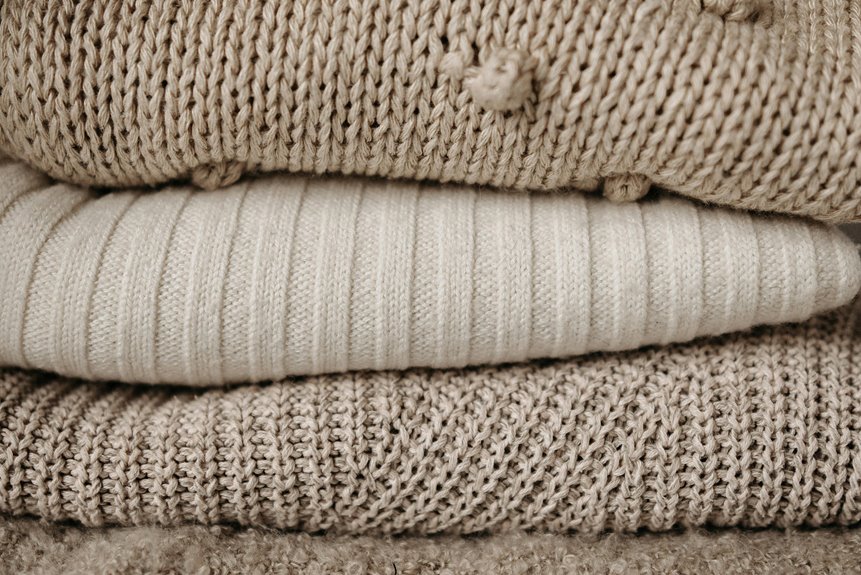
You’ll love how herringbone flannel fabric blends cozy warmth with timeless style. Its soft, brushed surface traps heat while staying breathable, making it perfect for comfort without overheating. The distinctive zigzag herringbone pattern adds subtle visual interest and a tailored touch to your wardrobe. Durable yet inviting, it’s great for layering through changing seasons. Keep exploring, and you’ll discover how to style, care for, and find the best herringbone flannel pieces for your closet.
Key Takeaways
- Herringbone flannel features a soft, brushed surface that traps heat, offering warmth and cozy comfort ideal for cooler weather.
- The distinctive V-shaped herringbone pattern adds subtle texture and timeless style to any outfit.
- Medium-weight flannel fabric balances durability with a relaxed, tailored drape for versatile styling.
- Neutral layering with leather and wool accessories enhances both the fabric’s visual appeal and cozy feel.
- Proper care maintains the fabric’s softness and pattern, ensuring long-lasting comfort and style.
The History of Herringbone Pattern
Although the herringbone pattern has ancient origins, you’ll often find it linked to Roman architecture and textiles where its distinctive V-shaped weave first gained popularity.
When you look closely, the design mimics the skeleton of a herring fish, creating a visually striking zigzag effect.
Over time, this pattern became a favorite in weaving and masonry, prized for both its strength and aesthetic appeal. You’ll notice it in classic fabrics, especially wool and twill, and even in flooring and brickwork.
As you wear herringbone flannel, you’re tapping into a tradition that blends utility with timeless style—something that’s kept the pattern relevant for centuries.
This rich history adds depth to the cozy fabric you love today.
What Makes Flannel Fabric Cozy
You’ll love how flannel fabric feels against your skin thanks to its softness and warmth.
It also lets your skin breathe, keeping you comfortable all day long.
Plus, natural fibers add extra benefits that make flannel even cozier.
Softness and Warmth
Softness and warmth define the cozy appeal of herringbone flannel fabric. When you touch it, you immediately notice the gentle, brushed surface that feels inviting against your skin.
This softness comes from the way the fibers are woven and then brushed to raise a nap, creating a plush texture. The warmth you feel isn’t just from thickness but from the fabric’s ability to trap heat close to your body.
Unlike smoother fabrics, herringbone flannel’s slightly fuzzy surface creates tiny air pockets that act as natural insulators. So, when you wrap yourself in herringbone flannel, you get a comforting blend of softness and warmth that makes chilly days feel much more bearable.
It’s this tactile experience that truly sets it apart.
Breathability and Comfort
Because herringbone flannel fabric balances breathability with warmth, it keeps you comfortable without overheating. When you wear it, air easily circulates through the fabric’s weave, preventing that trapped, stuffy feeling common with heavier materials.
This airflow allows moisture to escape, so you stay dry even during physical activity or fluctuating temperatures. The fabric’s structure also adapts to your body heat, providing insulation when it’s cool but letting excess heat dissipate.
As a result, you can enjoy cozy warmth without sacrificing comfort. Whether you’re layering up or wearing it alone, herringbone flannel offers a breathable softness that feels natural against your skin, making it an ideal choice for all-day wear in varying conditions.
Natural Fiber Benefits
While synthetic fabrics can feel cold or stiff, natural fibers in herringbone flannel provide a cozy, breathable texture that feels inviting against your skin.
When you choose herringbone flannel made from cotton or wool, you get more than just warmth; you get comfort that lasts all day. These fibers naturally regulate temperature and wick moisture away, keeping you dry and comfortable. Plus, they’re soft and gentle, so you won’t experience irritation or itchiness.
Here’s why natural fibers make herringbone flannel so cozy:
- They allow your skin to breathe, preventing overheating
- They absorb moisture, keeping you dry
- They soften with every wash for increased comfort
- They’re durable, maintaining softness and shape over time
You’ll appreciate how natural fibers make this fabric a perfect cozy choice.
Characteristics of Herringbone Flannel
Herringbone flannel stands out for its distinctive zigzag pattern, created by weaving threads in a broken twill design. When you touch it, you’ll notice a soft, brushed surface that feels warm and cozy against your skin.
This fabric’s medium weight offers durability without sacrificing comfort, making it ideal for cooler weather. You’ll appreciate how its textured pattern adds subtle visual interest without overwhelming your outfit.
Plus, herringbone flannel drapes nicely, giving your clothing a tailored yet relaxed look. Its natural fibers provide breathability, so you won’t feel overheated.
Styling Tips for Herringbone Flannel Clothing
When you style herringbone flannel, layering it with neutral tones keeps your look balanced and sophisticated.
You’ll want to add accessories that bring out the fabric’s texture without overpowering it.
Let’s explore how simple choices can elevate your outfit effortlessly.
Layering With Neutrals
Because neutrals provide a versatile foundation, you can easily layer herringbone flannel pieces without overwhelming your outfit.
Start with simple, neutral basics to let the rich texture of the flannel stand out. Here’s how you can layer effectively:
- Pair a herringbone flannel shirt with a beige or cream crewneck sweater.
- Add a gray or taupe wool coat for warmth and subtle contrast.
- Choose neutral trousers or jeans in shades like black, navy, or stone.
- Finish with tan leather boots or loafers to keep the look grounded and polished.
Accessorizing for Texture
Adding a few carefully chosen accessories can elevate the texture of your flannel pieces and bring your outfit to life.
When wearing herringbone flannel, consider layering with leather belts or suede boots to introduce contrasting tactile elements. A knitted scarf or a wool hat adds softness and complements the fabric’s warmth.
Don’t shy away from metal accents like a sleek watch or simple jewelry—they provide a subtle shine against the matte flannel.
If you want to play with patterns, opt for accessories with minimal prints to keep the focus on the herringbone detail.
The Durability and Care of Herringbone Flannel
Though herringbone flannel feels soft and cozy, it holds up remarkably well over time. You’ll appreciate its durability, especially when you care for it properly.
To keep your herringbone flannel looking great and lasting longer, follow these tips:
- Wash in cold water to prevent shrinking and maintain fiber strength
- Use mild detergent to avoid breaking down the fabric
- Avoid high heat when drying; opt for air drying or low heat settings
- Iron on a low setting if needed, using a cloth to protect the fabric’s texture
Seasonal Uses for Herringbone Flannel
When should you reach for herringbone flannel in your wardrobe? It’s your go-to fabric for cooler months when warmth and style matter most. Its soft texture keeps you cozy during crisp autumn walks and chilly winter days. Spring mornings can still call for a light herringbone flannel shirt, especially layered. Summer’s usually too warm, but cooler evenings might invite a light flannel jacket.
| Season | Typical Weather | Herringbone Flannel Use |
|---|---|---|
| Autumn | Cool, breezy | Shirts, light jackets |
| Winter | Cold, often snowy | Heavy shirts, lined jackets |
| Spring | Cool mornings, mild day | Layering shirts, light jackets |
| Summer | Warm days, cool nights | Light flannel for evenings |
Combining Herringbone Flannel With Other Fabrics
If you want to elevate your style, combining herringbone flannel with other fabrics creates interesting textures and layers that enhance your outfit.
You can mix and match to achieve a balanced look that’s both cozy and stylish. For example, pairing herringbone flannel with denim adds ruggedness, while leather introduces a sleek contrast.
Wool complements the warmth of flannel, and cotton offers breathability for comfort.
Consider these combinations:
Consider layering herringbone flannel with denim, leather, wool, or cotton for stylish, textured outfits.
- Denim jackets or jeans for a casual vibe
- Leather accessories like belts or boots for edge
- Wool scarves or hats to boost warmth and texture
- Cotton tees or shirts to keep layers light and breathable
Popular Herringbone Flannel Garments
Herringbone flannel garments offer timeless style and comfort, making them wardrobe essentials you’ll reach for often.
You’ll find herringbone flannel in classic button-up shirts, perfect for layering or wearing solo on cooler days. Jackets and blazers crafted from this fabric add a refined touch to casual or business-casual outfits, blending warmth with sophistication.
For a cozy yet stylish look, herringbone flannel trousers provide excellent texture and durability. You can also find scarves and caps made from herringbone flannel, ideal for adding subtle patterns to your accessories.
Whether you want a relaxed shirt or a sharp blazer, herringbone flannel garments combine versatility and charm, helping you stay comfortable without sacrificing style.
Where to Find Quality Herringbone Flannel Products
Finding quality herringbone flannel products starts with knowing where to look. You want fabric that feels soft, durable, and genuine, so choose retailers committed to high standards.
Start with specialty stores that focus on natural fibers and craftsmanship. Online marketplaces with detailed reviews can also guide you toward trusted brands. Don’t overlook local boutiques, which often carry unique, well-made herringbone flannel items.
Finally, check out artisan fairs or fabric mills if you want the ultimate in authenticity and quality.
Here are some places to find quality herringbone flannel:
- Specialty fabric and clothing stores
- Reputable online retailers with customer feedback
- Local boutiques featuring artisanal goods
- Fabric mills and artisan fairs
Frequently Asked Questions
Can Herringbone Flannel Be Used for Upholstery or Home Decor?
You can definitely use herringbone flannel for upholstery or home decor. It’s durable, cozy, and adds a stylish texture to your space. Just make sure to choose a tightly woven fabric for better wear resistance.
Is Herringbone Flannel Fabric Environmentally Sustainable?
You’ll find herringbone flannel’s sustainability depends on its fibers; natural options like organic cotton or wool are eco-friendly, but synthetic blends aren’t. Always check labels to guarantee you’re choosing a more environmentally responsible fabric.
How Does Herringbone Flannel Compare to Other Patterned Fabrics?
You’ll find herringbone stands out with its subtle zigzag pattern, offering timeless elegance. Compared to bolder patterns, it’s versatile and less flashy, making it perfect when you want style without overwhelming your outfit’s overall look.
Are There Hypoallergenic Benefits to Wearing Herringbone Flannel?
Like a gentle hug, herringbone flannel is naturally breathable and soft, reducing irritation for sensitive skin. While it’s not specifically hypoallergenic, its cozy fibers usually keep allergens at bay, helping you stay comfortable all day.
Can Herringbone Flannel Be Customized With Different Colors or Weaves?
Yes, you can customize herringbone flannel with various colors and weave patterns. This flexibility lets you create unique, stylish fabrics that suit your personal taste while keeping the fabric’s cozy, textured appeal intact.