
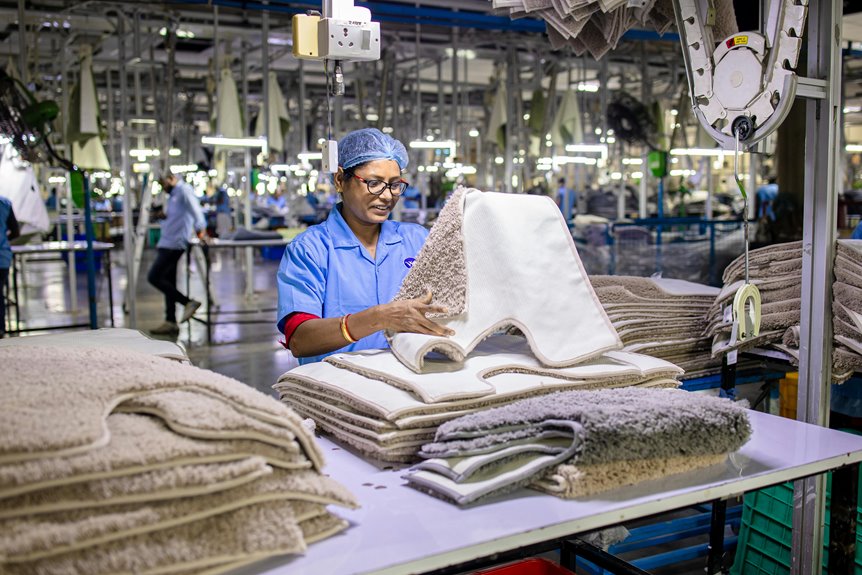
Imagine fabric as a landscape where tiny allergens either find a welcoming home or are kept at bay. When you choose textiles, the way they’re processed can make all the difference in how your skin reacts. From chemical treatments to finishing techniques, each step influences allergen buildup and comfort. Understanding these subtle effects might change how you select fabrics for sensitive skin, but there’s more beneath the surface to contemplate.
Key Takeaways
- Fabric processing techniques can smooth surfaces, reducing allergen adherence and accumulation on textiles.
- Rough or uneven fabric finishes increase allergen buildup by trapping more particles and irritants.
- Moisture absorption during processing affects allergen migration, with dampness promoting allergen retention on fabrics.
- Chemical treatments applied in processing may leave residues that trigger skin sensitivities or allergic reactions.
- Processing natural fibers minimally helps retain their inherent hypoallergenic properties and reduces irritation risks.
Chemical Treatments and Their Effects on Skin Sensitivity
Although chemical treatments can enhance fabric durability and appearance, they often affect your skin’s sensitivity.
When fabrics undergo chemical exposure during processing, residues may remain on the material. These residues can trigger skin reactions, especially if you have sensitive or allergy-prone skin. You might experience itching, redness, or rashes after wearing chemically treated fabrics.
The intensity of these reactions varies depending on the chemicals used and your unique skin type. By understanding how chemical treatments impact skin sensitivity, you can make informed choices about the fabrics you wear.
Opting for textiles processed with fewer or milder chemicals reduces your risk of adverse skin reactions. Staying aware helps you protect your skin while still enjoying durable, attractive clothing.
Influence of Fiber Origin on Hypoallergenic Properties
You’ll find that the origin of fibers plays a big role in how your skin reacts.
Natural fibers like cotton often cause fewer allergies, while some synthetic fibers can trigger irritations.
Understanding these differences helps you choose fabrics that keep your skin comfortable and safe.
Natural Fibers and Allergies
When you choose natural fibers, you often reduce the risk of allergic reactions because these materials come from sources less likely to irritate sensitive skin. Natural fiber allergies are less common, thanks to the hypoallergenic properties inherent in cotton, silk, and linen. These fibers breathe well and absorb moisture, helping keep your skin comfortable.
| Fiber Type | Hypoallergenic Properties | Emotional Benefit |
|---|---|---|
| Cotton | Soft, breathable | Feels gentle, soothing |
| Silk | Smooth, less irritant | Luxurious comfort |
| Linen | Moisture-wicking | Fresh and calming |
| Wool | Can irritate some | Cozy but watch for allergies |
Choosing natural fibers supports your skin’s health and reduces allergy risks effectively.
Synthetic Fiber Allergen Risks
Natural fibers often reduce allergy risks, but synthetic fibers can present different challenges for sensitive skin. When you wear clothing made from synthetic fibers, you might increase your allergen exposure because these fabrics can trap dust mites, chemicals, and other irritants more easily.
Unlike natural fibers, synthetics don’t breathe as well, which can cause moisture buildup and create an environment where allergens thrive. Additionally, the chemicals used in producing synthetic fibers may cause skin irritation or allergic reactions in some people.
To minimize allergen exposure, you should look for synthetics labeled hypoallergenic or treated to reduce irritants. Regular washing and choosing high-quality synthetic fabrics can also help you avoid potential allergic responses tied to synthetic fiber use.
Role of Dyeing and Finishing Processes in Allergen Exposure
Although dyeing and finishing processes enhance fabric appearance and texture, they can also introduce chemicals that trigger allergic reactions.
When you choose fabrics, keep in mind that certain dyeing techniques use synthetic dyes containing allergens like azo compounds. These can irritate sensitive skin or cause allergic responses.
Similarly, finishing agents applied to improve softness, wrinkle resistance, or water repellency may contain formaldehyde or other irritants.
If you have allergies, it’s wise to look for fabrics labeled hypoallergenic or those processed with natural dyes and safer finishing agents.
Understanding how these treatments affect allergen exposure helps you make better choices, reducing the risk of skin irritation while still enjoying stylish, comfortable fabrics in your wardrobe or home.
How Fabric Processing Affects Allergen Retention and Buildup
Since fabric processing alters the structure and surface of textiles, it directly influences how allergens stick to and accumulate on them.
Fabric processing changes textile surfaces, directly affecting allergen adherence and buildup.
When you choose fabrics, keep in mind that the fabric composition plays a key role in allergen retention. Natural fibers like cotton often allow allergens to migrate more easily, while synthetic fibers might trap allergens within their tighter weaves.
Processing techniques such as mercerization or calendaring can smooth fabric surfaces, reducing places where allergens cling. Conversely, rougher finishes may increase allergen buildup.
You’ll also notice that treatments affecting moisture absorption impact allergen migration, as dampness encourages allergen accumulation.
Understanding these factors helps you select fabrics that minimize allergen retention, improving comfort if you’re sensitive or prone to allergies.
Importance of Thermal Regulation for Sensitive Skin Comfort
You want fabrics that breathe well and manage moisture to keep your skin dry and comfortable.
Soft materials reduce friction, preventing irritation on sensitive skin.
Maintaining a balanced temperature helps you avoid discomfort and supports overall skin health.
Breathability and Moisture Control
How does breathability in fabric impact your skin’s comfort? When you wear breathable materials, your skin can easily exchange heat and air, preventing overheating and irritation.
Fabrics with good breathability allow sweat to evaporate quickly, reducing moisture buildup that often triggers allergic reactions or discomfort. Moisture wicking properties are essential here—they pull sweat away from your skin to the fabric’s surface, keeping you dry and comfortable.
This moisture control helps maintain an ideal thermal environment, vital for sensitive skin. If fabric traps heat and moisture, it can cause itching, redness, or rashes.
Choosing processed fabrics that enhance breathability and moisture management guarantees your skin stays calm, dry, and comfortable throughout the day, minimizing the risk of irritation and maintaining the hypoallergenic nature of the material.
Softness and Skin Friction
Although breathability plays an essential role, the softness of fabric directly affects how much friction your skin experiences, which can impact comfort greatly.
When fabric texture is rough or coarse, it increases friction, leading to skin irritation, especially if you have sensitive skin. Softer fabrics reduce this friction, allowing your skin to glide smoothly against the material without causing discomfort or redness.
Fabric processing techniques like brushing or mercerizing can enhance softness by smoothing fibers, minimizing irritation risks. Choosing fabrics with a gentle texture helps maintain your skin’s health by preventing chafing and redness.
Temperature Balance Benefits
When your skin struggles with sensitivity, maintaining an even temperature becomes essential for comfort. Proper fabric processing enhances temperature regulation, helping you avoid sudden heat spikes or chills that can irritate delicate skin.
Fabrics designed with thermal comfort in mind wick moisture away and allow your skin to breathe, preventing overheating and excessive sweating. This balance reduces the risk of inflammation and itchiness, common issues for sensitive skin types.
Medical Perspectives on Choosing Hypoallergenic Fabrics
Why does choosing the right fabric matter to your skin’s health? Medical fabric advancements have greatly reduced patient skin reactions by focusing on hypoallergenic materials. When you select fabrics processed to minimize allergens and irritants, you protect sensitive skin and improve comfort.
| Fabric Type | Medical Benefit |
|---|---|
| Organic Cotton | Low allergen potential |
| Bamboo Fiber | Antimicrobial, gentle |
| Tencel | Moisture-wicking, soft |
| Microfiber | Resists dust mites |
| Wool (treated) | Hypoallergenic with treatment |
Frequently Asked Questions
Can Hypoallergenic Fabrics Help With Pet Allergies?
You can get allergy relief with hypoallergenic fabrics because they resist pet dander buildup. They don’t trap allergens like regular fabrics do, so you’ll breathe easier around pets and reduce allergy symptoms effectively.
How Does Fabric Processing Affect Environmental Sustainability?
You’ll find that fabric processing impacts environmental sustainability by how it uses sustainable practices and eco-friendly materials. Choosing processes that minimize waste and pollution helps you support a greener, healthier planet through your fabric choices.
Are Hypoallergenic Fabrics More Expensive Than Regular Fabrics?
You’ll find hypoallergenic fabrics often cost more than regular ones due to specialized materials and treatments. When doing a cost comparison, consider quality factors like durability and skin-friendliness, which can justify the higher price.
Do Hypoallergenic Fabrics Require Special Washing Instructions?
Oh, sure, hypoallergenic fabrics demand a royal spa day—special detergents and precise washing temperatures. But really, you’re just treating your skin to gentle care, not hosting a fabric diva’s tantrum. Keep it simple!
Can Synthetic Fabrics Be Treated to Become Hypoallergenic?
You can apply synthetic treatments to fabrics, altering fabric chemistry to reduce allergens. These treatments help synthetic fabrics become hypoallergenic by minimizing irritants, so you’ll find them gentler on sensitive skin after proper processing.