
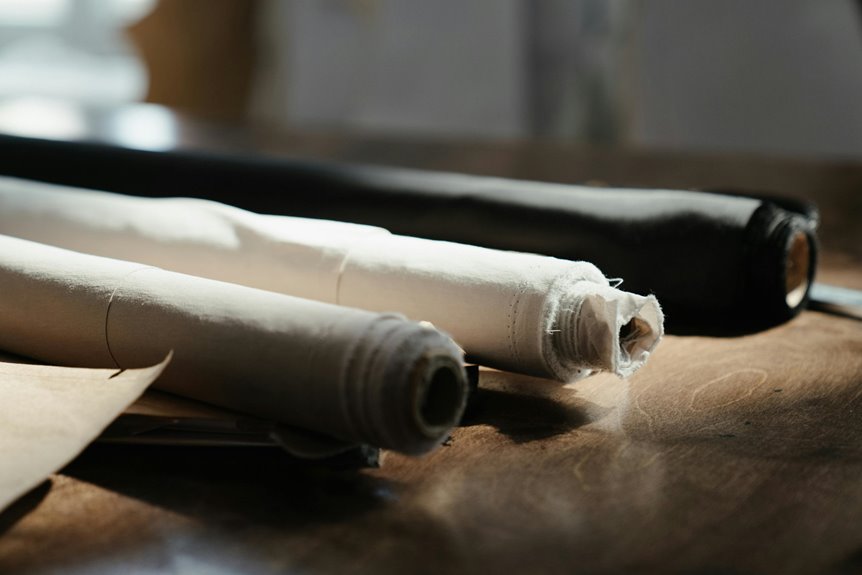
A jelly roll of batik fabric usually contains 40 pre-cut strips, each measuring 2.5 inches wide and about 42 inches long. This compact bundle is easy to handle and perfect for quilting projects. Its standardized size helps you plan your fabrics and reduce cutting time. Depending on the brand, the number of strips and thickness may vary slightly, but most stick close to this size. Keep exploring if you want to discover its full benefits and project ideas.
Key Takeaways
- A typical jelly roll of batik fabric contains 40 strips, each 2.5 inches wide and about 42 inches long.
- The rolled jelly roll measures approximately 2.5 inches in diameter, making it compact and easy to store.
- Each strip features different coordinated batik patterns, providing variety within a standardized size.
- Jelly rolls save cutting time and fabric waste, ideal for efficient batik quilting projects.
- Standardized strip size ensures accuracy in quilting and consistent design layouts for batik fabric projects.
What Is A Jelly Roll In Quilting
A jelly roll in quilting is a pre-cut bundle of fabric strips, usually measuring 2.5 inches wide and 42 inches long. When you pick up a jelly roll, you’re getting a convenient set of coordinated fabrics ready to use, saving you the hassle of cutting strips yourself.
These strips come rolled up like a jelly roll cake, which makes them easy to store and transport. You’ll find that jelly rolls typically include 40 or more strips, providing a good variety of colors and patterns.
Using a jelly roll speeds up your quilting process because all strips are uniform and pre-cut, so you can start piecing your project right away without extra prep work. It’s a smart choice for quilters who value efficiency and consistency.
Standard Dimensions Of Batik Fabric Jelly Rolls
You’ll find that batik fabric jelly rolls typically contain 40 strips, each measuring 2.5 inches wide by 42 inches long. These dimensions are standard across most manufacturers, ensuring consistency whether you’re mixing brands or patterns.
The 42-inch length corresponds to the usable width of the fabric after removing selvages, giving you ample material for quilting or crafting. The narrow 2.5-inch width makes these strips easy to sew together without cutting.
When rolled up, a jelly roll is compact and easy to store, often measuring around 2.5 inches in diameter and about 42 inches long. This standardized size helps you plan your projects efficiently, knowing exactly how much fabric you’re working with before you start cutting or piecing.
Number Of Strips Included In A Typical Jelly Roll
Most jelly rolls include exactly 40 strips of fabric, making it easy for you to estimate how much material you have at a glance. This consistent number allows you to plan projects efficiently, especially when you need uniform pieces for patchwork or quilting.
Each strip usually features a different pattern or color, giving you a varied selection without extra cutting. Knowing that your jelly roll contains 40 strips helps you quickly calculate total fabric yardage and decide if you need additional material.
When you pick up a jelly roll, you can be confident that you’re getting a standardized bundle, designed to simplify your fabric choices and streamline your creative process. This predictability makes jelly rolls a favorite among quilters and fabric enthusiasts alike.
Width And Length Of Individual Jelly Roll Strips
When you pick up a jelly roll, you’ll notice each strip is usually 2.5 inches wide.
The length typically runs the full width of the fabric, around 42 to 44 inches.
Keep in mind, though, that sizes can vary slightly depending on the brand.
Standard Strip Width
Each strip in a jelly roll typically measures 2.5 inches wide and 44 inches long, making them easy to handle and sew.
The 2.5-inch width is a standard size that quilters and sewists rely on because it’s versatile for many projects. This consistent width means you don’t have to trim or adjust strips before piecing them together, saving you time and effort.
It also allows you to create precise seams and patterns since every strip shares the same dimensions. When you pick up a jelly roll, you can expect uniformity in strip width, which is essential for accurate quilting designs.
This standard width is part of what makes jelly rolls so popular and user-friendly for both beginners and experienced crafters alike.
Typical Strip Length
You’ll find that jelly roll strips typically measure 44 inches in length, providing a generous amount of fabric for various quilting projects. This length aligns with the standard width of most quilting cotton fabric bolts, making it easier for you to piece together patterns.
Each strip maintains a consistent width, often around 2.5 inches, ensuring uniformity across your project. With these dimensions, you can cut and sew strips into blocks, borders, or appliqué with minimal waste.
The length gives you enough fabric to create multiple blocks or even larger quilt sections without needing additional cuts. Overall, the typical strip length offers you flexibility and convenience, letting you focus on your quilting design rather than worrying about fabric shortages or mismatched sizes.
Variation Among Brands
Although many jelly rolls share similar dimensions, variations in strip width and length can occur between brands.
When you buy a jelly roll, you might notice some brands offer strips that are slightly wider or longer than others. For example, while a typical strip width is about 2.5 inches, some manufacturers may produce strips closer to 2.25 or 2.75 inches.
Similarly, strip lengths usually hover around 42 inches, but you could find lengths ranging from 40 to 44 inches depending on the brand.
These differences impact how much fabric you actually get, so it’s important to check the specifications before purchasing. Knowing these variations helps you plan projects better, ensuring your fabric needs align with what each brand offers.
Variations In Jelly Roll Sizes Among Different Brands
You’ll find that jelly roll sizes can vary quite a bit depending on the brand.
While most stick to standard strip dimensions, the thickness and number of strips included might differ.
Comparing these factors helps you pick the right roll for your project.
Standard Dimensions Overview
When comparing jelly rolls from different brands, you’ll notice variations in their dimensions that can affect your project planning. Typically, a standard jelly roll consists of 40 strips of fabric, each measuring about 2.5 inches wide by 44 to 45 inches long. This gives you roughly 10 yards of fabric in total.
However, the width across the fabric strips can sometimes vary slightly, generally staying within the 42-44 inch range. These dimensions are designed to work seamlessly with quilting projects, offering a convenient pre-cut size.
Understanding these standard measurements helps you estimate how much fabric you’ll have and plan your cuts accordingly. Keep in mind, while dimensions mostly stay consistent, slight differences might impact your project’s layout or fabric requirements.
Brand Size Comparisons
Different brands offer jelly rolls that vary slightly in size, which can influence your project’s fabric yield and cutting plans. While most jelly rolls measure around 40 strips of 2.5 inches by 44 inches, some brands include fewer or more strips, or slightly different lengths. Knowing these differences helps you choose the right jelly roll for your needs without surprises.
| Brand | Number of Strips |
|---|---|
| Moda | 40 |
| Robert Kaufman | 42 |
| Timeless Treasures | 40 |
| FreeSpirit Fabrics | 39 |
| Andover Fabrics | 40 |
Check the strip count and length before purchasing; small variations can affect your total fabric and project layout.
Thickness and Fabric Count
Knowing the number of strips in a jelly roll is helpful, but thickness and fabric count also play a significant role in planning your project.
Different brands vary in fabric weight and the number of layers rolled together, affecting the roll’s overall thickness. Some jelly rolls use lightweight cotton, while others opt for denser batik fabrics, which can make the roll bulkier.
This means that even if two rolls have the same number of strips, one might feel heavier or take up more space. When selecting your jelly roll, consider how the fabric’s thickness will impact cutting, sewing, and storage.
Checking the fabric count and weight can help you anticipate how it will behave during your project, ensuring smooth handling and accurate measurements.
Benefits Of Using Jelly Rolls For Batik Quilting Projects
Although batik quilting projects can be time-consuming, using jelly rolls makes the process much more manageable. You get pre-cut strips of fabric, which saves you the hassle of measuring and cutting each piece yourself. This not only speeds up your workflow but also reduces fabric waste.
Jelly rolls offer a coordinated selection of colors and patterns, so you don’t have to spend extra time hunting for matching fabrics. Plus, the consistent size of strips helps maintain uniformity in your quilt blocks, resulting in a polished, professional look.
You’ll also find them easier to store and transport, keeping your workspace tidy. Overall, jelly rolls simplify your quilting experience, letting you focus more on creativity and less on prep work.
How To Calculate Fabric Yardage From A Jelly Roll
Using jelly rolls simplifies your fabric selection, but you might wonder how much fabric you’re actually getting. Typically, a jelly roll contains 40 strips, each measuring 2.5 inches wide by 44 inches long.
To calculate the total yardage, multiply the strip width by the number of strips, then convert inches to yards. For example, 2.5 inches × 40 strips equals 100 inches of fabric width.
Since 36 inches equal one yard, divide 100 by 36, which gives approximately 2.78 yards. So, your jelly roll provides about 2.75 yards of fabric in total length, spread across multiple strips.
Knowing this helps you plan projects accurately and guarantees you have enough fabric without overbuying or running short.
Creative Projects That Use Batik Fabric Jelly Rolls
When you want to add vibrant patterns and rich colors to your projects, batik fabric jelly rolls offer a convenient and versatile solution. You can quickly create stunning quilts by combining strips from the roll, saving time on cutting while showcasing diverse designs.
Beyond quilting, use these strips for crafting eye-catching table runners, placemats, or fabric baskets that brighten your home decor. If you enjoy sewing accessories, make unique bags, scarves, or headbands that highlight batik’s intricate patterns.
Even scrapbooking and mixed-media art benefit from these pre-cut fabrics. With a jelly roll, you have a ready-made palette at your fingertips, inspiring creativity without the hassle of measuring and cutting.
Immerse yourself in your next project and watch batik fabric transform your creations effortlessly.
Frequently Asked Questions
How Should I Store Jelly Rolls to Keep Fabric Fresh?
You should store jelly rolls in a cool, dry place away from direct sunlight. Keep them wrapped or in airtight containers to prevent dust and moisture, ensuring your fabric stays fresh and ready for your next project.
Can Jelly Rolls Be Pre-Washed Before Quilting?
When it comes to pre-washing jelly rolls, you can, but be careful—they’re a delicate bunch. Pre-washing may cause fraying or color bleeding, so test a strip first to avoid opening a can of worms later in your quilting.
Are Jelly Rolls Suitable for Beginner Quilters?
Jelly rolls are great for beginner quilters because they save time cutting fabric strips. You’ll find coordinating colors and patterns pre-cut, making it easier to focus on sewing and learning quilting techniques without overwhelming choices.
What Tools Are Best for Cutting Jelly Roll Strips?
You’ll want a rotary cutter, cutting mat, and clear acrylic ruler for precise cuts. These tools help you slice jelly roll strips cleanly and quickly, making your quilting process smoother and more accurate every time.
Can Jelly Rolls Be Used for Non-Quilting Crafts?
You can definitely use jelly rolls for non-quilting crafts! They’re perfect for making bags, table runners, or even fabric baskets. Their pre-cut strips save you time, letting you focus on creating unique projects.