
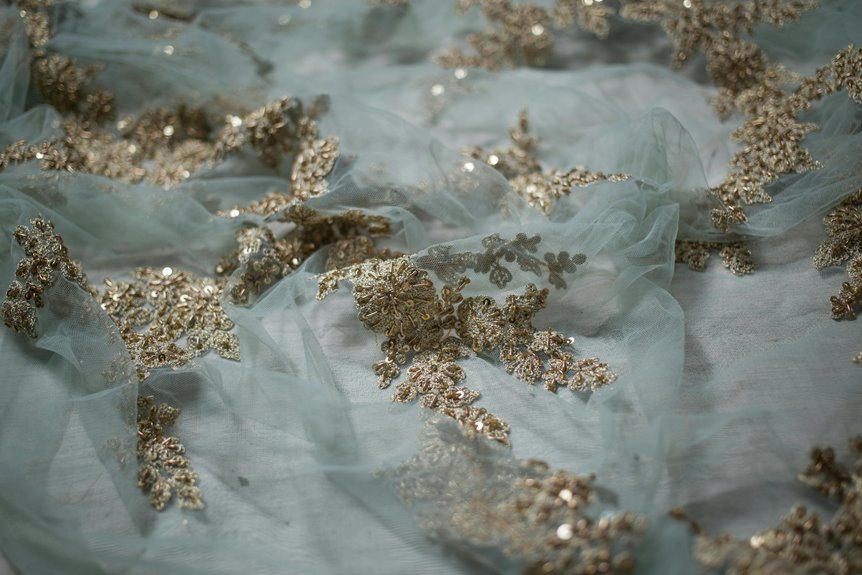
Guipure lace is a sturdy, intricately crafted fabric defined by bold, open patterns connected with bars instead of a net. You’ll find it’s prized for its three-dimensional texture and durability, often used in statement fashion pieces and bridal wear. Made through traditional stitching techniques, it combines elegance with resilience. You’ll also discover unique styling tips, care advice, and creative uses that make guipure lace a timeless and versatile choice for your wardrobe and décor.
Key Takeaways
- Guipure lace features bold, open patterns connected by thick bars or plaits instead of a net background, creating a three-dimensional texture.
- Originating in Renaissance Europe, guipure lace symbolizes luxury and traditional craftsmanship prominent in Italian and French fashion history.
- It is handmade using high-quality cotton or silk, with motifs stitched onto temporary backing and connected by sturdy bridging threads.
- Guipure lace’s durability and heavier weight help maintain shape, making it ideal for statement fashion pieces and bridal wear.
- Proper care involves gentle hand washing, air drying flat, and careful storage to preserve its intricate patterns and prevent damage.
What Is Guipure Lace?
Guipure lace is a type of decorative fabric known for its intricate, open patterns connected by bars or plaits rather than a net background.
When you look closely, you’ll notice these connected motifs create a bold, textured design that stands out.
Unlike other lace types that rely on a mesh or tulle base, guipure’s strength comes from these thick, bridging threads, giving it a sturdy yet delicate feel.
Guipure lace stands out with thick, bridging threads that offer both strength and delicate beauty.
You’ll often find guipure lace used in fashion for its striking appearance, adding elegance without heaviness.
Whether you’re choosing fabric for a dress, accessory, or home décor, understanding guipure’s structure helps you appreciate its craftsmanship and durability.
It’s lace that combines beauty with resilience in a unique way.
The History of Guipure Lace
Although lace has adorned fashion and décor for centuries, the distinct style of guipure emerged in Europe during the Renaissance period.
You’ll find that guipure lace first gained popularity in Italy and France, where artisans crafted it without a net background, connecting motifs with bars or plaits instead. This technique made the lace sturdy and visually striking, ideal for the elaborate clothing and religious garments of the time.
As you explore its history, you’ll notice guipure’s rise continued through the 17th and 18th centuries, becoming a symbol of luxury and refinement.
Today, understanding its roots helps you appreciate how guipure lace combines traditional craftsmanship with timeless elegance, making it a favorite for modern fashion designers and decorators alike.
How Guipure Lace Is Made
You’ll find that guipure lace is crafted using traditional techniques that have been passed down for generations.
The process starts with selecting high-quality materials, often fine threads like cotton or silk.
Step by step, these threads are woven and connected to create the intricate patterns that define guipure lace.
Traditional Crafting Techniques
When you explore the art of guipure lace, you’ll find that traditional crafting techniques rely heavily on skilled handwork and patience.
You start by creating intricate patterns, often drawing designs onto a temporary backing. Then, using a needle or bobbin, you carefully stitch the motifs, connecting them with bars or plaits instead of a net background. This method requires precision to maintain the lace’s open, airy structure.
You’ll notice that each loop and knot matters, as they give guipure its distinctive raised texture. Unlike machine-made lace, this handcrafting allows for subtle variations, making every piece unique.
While time-consuming, these traditional techniques preserve the lace’s authentic beauty and durability, keeping centuries-old artistry alive in every thread you weave.
Materials Used in Guipure
Creating guipure lace starts with selecting the right materials, as they directly impact the lace’s texture and durability. You’ll typically work with fine threads like cotton, silk, or linen, chosen for their strength and smooth finish.
Modern guipure also incorporates synthetic fibers such as polyester or nylon, which add resilience and make the lace easier to care for. The thickness of the thread you pick influences the lace’s boldness; thicker threads create more pronounced motifs, while finer threads give delicate detail.
You’ll notice that quality threads guarantee the lace holds its shape without fraying. By carefully choosing materials, you set the foundation for guipure lace that’s both beautiful and long-lasting.
Step-by-Step Production Process
Choosing the right materials sets the stage for crafting guipure lace, but understanding how these elements come together is just as important.
You start by laying out the design, often tracing intricate motifs onto a water-soluble backing. Next, you embroider or machine-stitch thick threads over this pattern, connecting the motifs without a net base. Finally, you dissolve the backing, leaving the raised, interconnected lace structure.
Here’s a quick overview of the process:
- Design Transfer: Outline the pattern on a soluble fabric.
- Stitching: Embroider dense threads linking the motifs.
- Backing Removal: Wash away the base to reveal the lace.
Distinctive Features of Guipure Lace
Guipure lace stands out because of its bold, open pattern connected by bars or plaits rather than a net background.
When you look closely, you’ll notice the lace’s intricate motifs are linked with these sturdy threads, giving it a three-dimensional texture that feels both delicate and durable.
This structure allows the design to pop, making it perfect for adding visual interest to garments or décor.
You’ll also appreciate its heavier weight compared to other laces, which helps it maintain shape and resist stretching.
Plus, the patterns often showcase floral or geometric shapes, but what truly defines guipure lace is that absence of mesh—its motifs float connected only by those distinctive bars, giving it a unique, striking appearance you won’t find in other lace types.
Types of Guipure Lace Patterns
Although you mightn’t realize it at first glance, guipure lace comes in various pattern styles that each bring a unique character to your projects.
When you choose guipure lace, you’re selecting from intricate designs that range from bold and geometric to delicate and floral. Each style can dramatically influence the overall feel of your garment or décor.
Here are three popular types of guipure lace patterns you should know:
- Floral motifs: Featuring detailed flowers linked by decorative bars, perfect for romantic or vintage looks.
- Geometric patterns: Incorporating shapes like diamonds and circles, offering a modern and structured aesthetic.
- Scroll designs: Flowing curves and spirals create elegance and movement, ideal for formal wear.
Understanding these patterns helps you pick the right lace for your creative vision.
Comparing Guipure Lace to Other Laces
When you compare guipure lace to other laces, you’ll notice its unique structure without a net background.
This difference affects how each lace is used, with guipure often favored for bold, decorative designs.
Understanding these contrasts helps you choose the right lace for your project.
Structural Differences
While other laces rely on fine netting or mesh to connect their motifs, you’ll find that guipure lace uses thicker, embroidered threads to link its patterns.
This structural choice gives guipure lace a bold, open appearance, distinguishing it from more delicate, sheer laces like Chantilly or Alençon.
When you examine guipure lace, the absence of a net background stands out, as its motifs are joined by bridges or bars of thread, creating a sturdy yet intricate design.
Here’s what sets guipure lace apart structurally:
- Thread Bridges: Connect motifs without mesh, forming a heavier, more textured fabric.
- Motif Density: Larger, more pronounced motifs linked closely for visual impact.
- Flexibility: Its thicker structure offers less stretch but more durability than finer laces.
Understanding these differences helps you appreciate guipure’s unique design and feel.
Usage and Applications
Because guipure lace has a bold texture and sturdy structure, you’ll find it better suited for garments and décor that require visual impact and durability.
Unlike delicate Chantilly or Alençon laces, guipure stands out in bridal gowns, evening wear, and statement accessories where its raised patterns add depth and character.
You can also use it in home décor, like curtains or table runners, where durability matters.
While other laces often rely on sheer netting for a delicate look, guipure’s lack of a mesh base lets you showcase intricate motifs without compromising strength.
Popular Uses of Guipure Lace in Fashion
Although guipure lace has a rich history, you’ll find it remains a favorite in modern fashion for its bold texture and intricate patterns.
When you wear guipure lace, you’re embracing a fabric that adds elegance and dimension to any outfit. Designers often use it to create standout pieces that catch the eye and elevate style effortlessly.
You’ll see guipure lace featured in:
- Statement tops and blouses that pair well with simple bottoms
- Stylish jackets and overlays that add texture without bulk
- Accessories like scarves and gloves that bring a touch of luxury
Guipure Lace in Bridal Wear
When you choose guipure lace for your bridal gown, you’re selecting a fabric that combines timeless beauty with intricate artistry. Its bold patterns and sturdy texture make it perfect for creating statement pieces like bodices, sleeves, or overlays that stand out. Guipure lace adds a vintage yet modern feel, enhancing your dress’s elegance without overwhelming it.
Here’s why guipure lace is a top choice in bridal wear:
| Feature | Benefit |
|---|---|
| Bold Patterns | Creates striking visual impact |
| Durable Texture | Supports structured designs |
| Versatility | Works for classic or modern looks |
Using guipure lace, you’ll have a gown that’s both beautiful and uniquely yours on your special day.
Caring for Guipure Lace Garments
To keep your guipure lace garments looking their best, you’ll want to follow specific washing and drying tips.
Proper storage and regular maintenance are just as important to preserve their delicate texture.
Let’s explore how to care for these beautiful pieces effectively.
Washing and Drying Tips
Caring for guipure lace garments requires gentle washing to preserve their intricate patterns and delicate structure.
When you wash your guipure lace, always opt for hand washing with a mild detergent in cool water. Avoid wringing or twisting the fabric, as this can damage the lace.
After washing, rinse thoroughly to remove all soap residue. For drying, lay the garment flat on a clean towel to air dry, keeping it out of direct sunlight to prevent discoloration. Avoid using a dryer, as heat can weaken the fibers and ruin the delicate texture.
- Use a gentle, non-alkaline detergent specifically for delicate fabrics
- Gently press out excess water without twisting
- Reshape the garment while damp to maintain its form
These steps will help your guipure lace stay beautiful longer.
Storage and Maintenance
Proper storage and regular maintenance play essential roles in preserving the beauty of your guipure lace garments.
Always store them flat or gently folded to prevent stretching or distortion. Avoid hanging, as this can cause the lace to lose shape over time. Use acid-free tissue paper between folds to reduce creasing and protect delicate patterns.
Keep your lace away from direct sunlight and damp areas to prevent fading and mildew.
When maintaining your guipure lace, inspect it regularly for loose threads or minor damages and repair them promptly to avoid further unraveling. If you need to freshen the fabric, opt for gentle steaming rather than ironing to maintain its texture.
With these simple steps, your guipure lace will stay stunning for years to come.
Styling Tips for Wearing Guipure Lace
Although guipure lace stands out on its own, you can elevate your look by pairing it with simple, solid-colored pieces that let the intricate patterns shine.
When styling guipure lace, focus on balance to avoid overwhelming your outfit. Choose accessories and shoes that complement rather than compete with the lace’s texture.
Consider these tips:
- Layer guipure lace over a neutral slip or camisole to highlight its design without distraction.
- Opt for minimalist jewelry, like delicate studs or a thin bracelet, to keep the attention on the lace.
- Pair your guipure lace garment with tailored pieces, such as a sleek blazer or fitted trousers, to create a polished, sophisticated silhouette.
Guipure Lace in Home Decor
When you incorporate guipure lace into your home decor, you instantly add a touch of elegance and texture that’s hard to match.
Use guipure lace as a delicate overlay on curtains or pillow covers to create a sophisticated, vintage-inspired look. You can also frame small pieces of guipure lace for unique wall art that highlights its intricate patterns.
Draping it over lampshades softens lighting, adding warmth and charm to any room. Because guipure lace is sturdy and detailed, it works well on table runners or placemats, elevating dining experiences without overwhelming the space.
Where to Buy Authentic Guipure Lace
Wondering where to find authentic guipure lace that truly stands out? You’ll want to explore specialized sources that guarantee quality and craftsmanship.
Start by checking out high-end fabric boutiques known for their curated lace collections. These shops often carry genuine guipure lace imported from traditional lace-making regions.
Online marketplaces can also be a goldmine, but make sure you buy from reputable sellers with clear product descriptions and customer reviews.
Finally, consider visiting artisan markets or craft fairs where local lace makers showcase their work, allowing you to inspect the lace firsthand.
In conclusion, here are your best options:
- Specialized fabric boutiques with expert staff
- Verified online retailers with positive feedback
- Artisan markets featuring handmade lace collections
This approach guarantees you get authentic guipure lace that fits your style perfectly.
Frequently Asked Questions
Can Guipure Lace Be Dyed Different Colors at Home?
Dyeing guipure lace at home is like painting a delicate masterpiece; you’ll need gentle fabric dye and patience. It can absorb colors well, but test a small piece first to avoid uneven or damaged results.
Is Guipure Lace Suitable for Outdoor Events in Hot Weather?
You’ll find guipure lace suitable for outdoor events in hot weather since it’s breathable and lightweight. Just remember, it’s delicate, so avoid rough activities or exposure to dirt and sweat to keep it looking great.
How Does Guipure Lace Affect Skin Sensitivity or Allergies?
You might find guipure lace a bit rough if you have sensitive skin since it’s thicker and less soft than other laces. Always test it first to avoid irritation or allergic reactions before wearing it for long periods.
Are There Eco-Friendly Alternatives to Traditional Guipure Lace?
You’d think eco-friendly lace was a myth, but you’re in luck! Organic cotton and recycled polyester mimic guipure’s charm while saving the planet. You can wear stunning, guilt-free lace without sacrificing style or sustainability.
What Tools Are Best for Repairing Small Tears in Guipure Lace?
You’ll want fine needles, matching thread, and small sharp scissors for repairing small tears. A magnifying glass helps with precision, and fabric glue can stabilize delicate areas. Work carefully to keep the lace’s intricate design intact.