
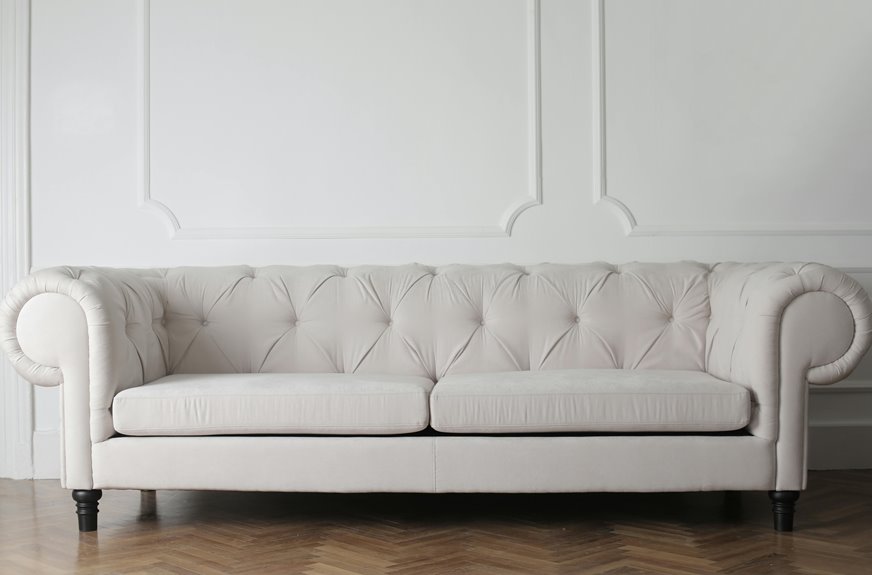
To restore your cat-damaged leather couch, first clean the surface gently with a leather cleaner and a soft cloth. Soften minor scratches using leather conditioner, and for deeper damage, apply a leather repair kit to fill and color the spots. Finish by sealing the repair with a clear leather finish to protect it. To keep your couch looking smooth and vibrant, you’ll want to learn how to prevent future scratches and maintain the leather’s beauty over time.
Key Takeaways
- Assess the extent of scratches and gather leather cleaner, filler, sandpaper, and a matching leather repair kit for restoration.
- Clean the couch gently with a soft cloth and mild leather cleaner, ensuring the surface is dry before repairs.
- Use leather conditioner for minor scratches and apply filler and color from a repair kit for deeper damage, sealing afterward.
- Apply matching leather dye in thin layers, blend edges smoothly, and seal with a clear finish for durability.
- Prevent future damage by providing scratching posts, using deterrents on leather, trimming cat nails, and regularly conditioning the couch.
Assessing the Damage on Your Leather Couch
Before you start repairing, take a close look at the damage on your leather couch.
Check for scratches, tears, and areas where the leather has worn thin. Identify if the damage is surface-level or if it’s deeper, exposing the fabric or foam beneath.
Note the size and location of each affected spot, as this will help you decide the best restoration approach. Also, pay attention to any discoloration or stains caused by your cat.
This assessment helps you prioritize repairs and avoid surprises during the restoration process.
Gathering Necessary Tools and Materials
Before you start fixing your leather couch, you’ll need to gather the right tools and materials.
Choosing high-quality leather repair products guarantees a durable and seamless restoration.
Let’s go over the essential supplies you’ll need to get the job done right.
Essential Repair Supplies
You’ll need a handful of essential repair supplies to fix your cat-damaged leather couch effectively. Having the right tools on hand not only speeds up the process but guarantees a smooth, professional result. Here’s a quick guide to the must-haves:
| Supply | Purpose | Why It Matters |
|---|---|---|
| Leather Cleaner | Prepares surface | Removes dirt & oils |
| Leather Filler | Repairs scratches | Smooths damaged areas |
| Sandpaper (400 grit) | Smooths filler | Creates an even finish |
Be certain you also have soft cloths, a palette knife for applying filler, and leather conditioner to restore softness afterward. Each supply plays an essential role in turning scratched, worn leather back into an inviting, beautiful couch.
Choosing Quality Leather Products
Although selecting the right leather products can feel overwhelming, choosing quality materials guarantees a lasting repair that blends seamlessly with your couch’s original finish.
Start by picking a leather repair kit that matches your couch’s color and texture closely. Look for kits with pigment-rich dyes and flexible fillers designed specifically for leather. Avoid generic products, as they may not adhere well or withstand wear.
Also, select a leather cleaner and conditioner to prep and protect the surface properly. Investing in a good-quality leather adhesive and repair compound guarantees cracks and scratches mend securely without peeling.
Cleaning the Leather Surface Properly
Start by gently wiping the leather surface with a soft, damp cloth to remove any dust or dirt. Avoid harsh chemicals; instead, use a mild leather cleaner suited for your couch type. Test any cleaner on a hidden spot first to prevent damage. After cleaning, allow the leather to air dry completely before moving on.
| Step | Action | Tip |
|---|---|---|
| 1 | Wipe with damp cloth | Use microfiber for softness |
| 2 | Apply mild cleaner | Test in an inconspicuous area |
| 3 | Gently rub cleaner in | Use circular motions |
| 4 | Remove excess cleaner | Use a clean, damp cloth |
| 5 | Let leather air dry | Avoid direct sunlight |
Proper cleaning preps your couch for restoration without further harm.
Softening the Scratched Leather Area
Before repairing the scratches, you need to soften the leather fibers to prevent further cracking.
Start by applying a small amount of warm water to a clean cloth and gently dab the scratched area. This helps loosen the fibers without soaking the leather.
Gently dab the scratched area with warm water on a clean cloth to loosen leather fibers without soaking.
Next, use a leather softener or a mild, pH-balanced leather cleaner specifically designed to soften the material. Apply it sparingly with a soft cloth, massaging it into the damaged spots in circular motions.
Let the leather absorb the product for about 15 minutes. Avoid using harsh chemicals or excessive water, as they can dry out the leather.
Softening the scratched area prepares the surface for effective repair and helps maintain the couch’s flexibility and appearance.
Repairing Minor Scratches With Leather Conditioner
Once the leather is softened, you can address minor scratches by applying a leather conditioner.
Choose a high-quality conditioner designed specifically for leather furniture. Use a soft, clean cloth to apply a small amount directly onto the scratched area. Gently rub the conditioner into the leather using circular motions, which helps the leather absorb moisture and nutrients, reducing the appearance of scratches.
Allow the conditioner to sit for about 10 to 15 minutes, then buff the area lightly with a dry cloth to restore the leather’s natural shine.
Regular conditioning not only improves minor imperfections but also strengthens the leather against future damage.
Using Leather Repair Kits for Deeper Scratches
When dealing with deeper scratches, you’ll want to pick a leather repair kit that matches your couch’s color and type.
Follow the step-by-step instructions carefully to guarantee a smooth, lasting fix.
With the right kit and technique, you can make those scratches almost disappear.
Choosing the Right Kit
Although minor scratches can often be fixed with simple conditioners, deeper damage requires a specialized leather repair kit to restore your couch effectively.
Choosing the right kit guarantees you get the best results without wasting time or money. When selecting a kit, consider these factors:
- Compatibility with your leather type (aniline, semi-aniline, or pigmented)
- Inclusion of color compounds for a perfect match
- Presence of filler compounds to smooth out deep scratches
- User-friendly tools like applicators and sandpaper
- Clear instructions or video guides to help you through the process
Picking a kit that meets these criteria will make your repair job easier and more successful, bringing your cat-damaged leather couch back to life in no time.
Step-by-Step Application Guide
Since deeper scratches need careful attention, you’ll want to follow a precise process to confirm the repair kit works effectively.
First, clean the damaged area with a mild leather cleaner and let it dry completely.
Next, use the filler included in your kit to carefully fill the scratch, applying thin layers and allowing each to dry before adding the next.
Once the filler is level with the leather surface, gently sand it smooth with the provided sanding pad.
Then, apply the colorant to match your couch’s shade, blending carefully with a sponge or brush.
Finish by sealing the area with the kit’s protective finish to confirm durability.
Following these steps will restore your leather couch’s look and protect it from future damage.
Applying Leather Dye to Restore Color
Before you apply leather dye, make sure the damaged area is clean and dry to guarantee even absorption. This step ensures the dye adheres properly and blends seamlessly with the rest of the couch.
Next, choose a dye color that matches your leather perfectly.
- Test the dye on a hidden spot to check color match.
- Use a sponge or soft cloth to apply dye evenly.
- Work in thin layers, allowing each to dry before adding more.
- Blend the edges carefully to avoid harsh lines.
- Let the final coat dry completely in a well-ventilated area.
Applying the dye with patience restores the leather’s original richness and hides scratches effectively, giving your couch a refreshed, uniform look.
Sealing the Repair for Longevity
To protect your work and guarantee the repair lasts, you’ll need to seal the dyed area properly. Start by choosing a clear leather finish or sealant designed for your couch’s type.
Use a soft cloth or sponge to apply a thin, even coat over the repaired spot. Avoid heavy layers—they can cause cracking or peeling. Let the sealant dry completely according to the product instructions, usually a few hours.
Applying two to three light coats will reinforce durability without altering texture. This protective barrier prevents moisture, dirt, and daily wear from damaging your repair.
Once sealed, your couch will resist fading and maintain a consistent appearance. Remember, sealing is the final step in restoration that locks in color and strengthens the leather’s surface for lasting results.
Preventing Future Cat Scratches on Leather Furniture
Although cats naturally scratch to mark territory and keep their claws healthy, you can take effective steps to protect your leather furniture from future damage.
Start by redirecting your cat’s scratching instincts to more suitable items. Here’s how you can prevent those pesky scratches:
- Provide sturdy scratching posts or pads near your leather couch.
- Use double-sided tape or a pet-safe deterrent spray on leather surfaces.
- Keep your cat’s nails trimmed regularly to reduce potential damage.
- Cover vulnerable areas with slipcovers or protective leather guards.
- Offer plenty of playtime and enrichment to reduce stress-related scratching.
Tips for Maintaining a Beautiful Leather Couch
Protecting your leather couch from scratches is just one part of keeping it looking great. To maintain its beauty, clean spills immediately, and condition the leather every 6-12 months to prevent drying. Avoid placing your couch in direct sunlight or near heat sources, which can cause fading and cracking. Use a soft cloth for dusting and a leather cleaner formulated for your couch type.
| Task | Frequency | Tip |
|---|---|---|
| Cleaning | Weekly | Use a damp, soft cloth |
| Conditioning | Every 6-12 months | Apply leather conditioner |
| Protection | Always | Keep away from sunlight |
Follow these steps consistently, and your leather couch will stay smooth, supple, and beautiful for years to come.
Frequently Asked Questions
Can Cats Be Trained to Avoid Leather Furniture?
Think of training cats like steering a ship—you can guide them away from leather furniture. You’ll need patience, consistent redirection, and providing appealing alternatives like scratching posts to keep them off your prized seats.
Are Certain Leather Types More Resistant to Cat Scratches?
Yes, you’ll find that full-grain and top-grain leathers resist scratches better than bonded or faux leather. They’re tougher and have tighter fibers, making it harder for your cat’s claws to cause noticeable damage.
How Long Does a Leather Repair Typically Last?
Did you know 70% of leather repairs last over five years? When you fix your leather, it typically holds up well, especially if you avoid harsh conditions and clean it gently. Your couch can stay smooth longer!
Is Professional Leather Repair Worth the Cost?
You’ll find professional leather repair worth the cost if you want a durable, high-quality fix that blends seamlessly. It saves time, prevents further damage, and maintains your couch’s value better than DIY methods.
Can Homemade Remedies Effectively Fix Leather Scratches?
You can try homemade remedies like olive oil or vinegar to reduce leather scratches, but they won’t fix deep damage. For lasting results, you’ll need specialized products or professional repair to restore your couch’s smooth look.