
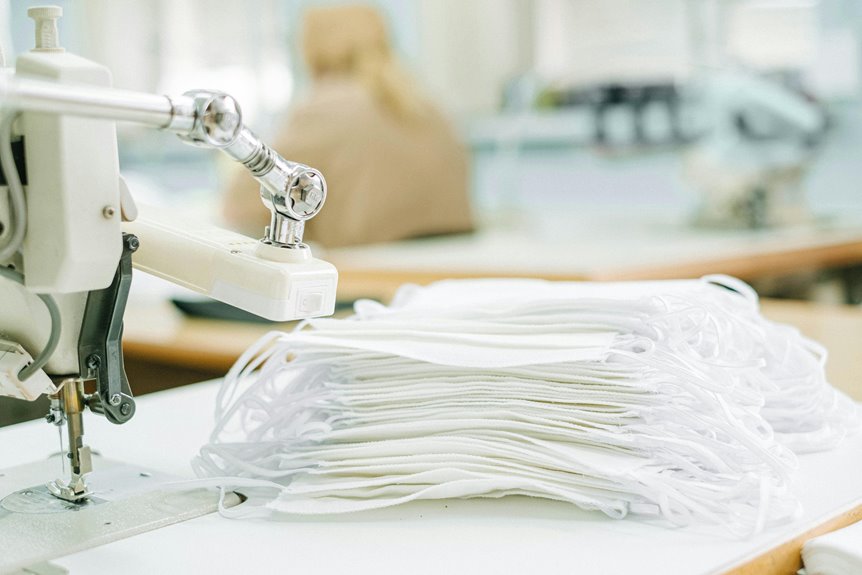
If you’re looking for melt-blown fabric manufacturers in Bangladesh for PPE, focus on companies like Envoy Textiles and Fakir Group, known for quality and timely delivery. Ascertain they meet international standards like ISO and ASTM, and verify their production capacity to meet your volume needs. Check certifications and customer feedback to guarantee reliability. Bangladesh’s local industry has grown with advanced technology to handle supply challenges. Keep exploring for tips on building strong partnerships and guaranteeing consistent supply.
Key Takeaways
- Identify manufacturers like Envoy Textiles, Fakir Group, Beximco, and Ha-Meem Group known for producing quality melt-blown fabric for PPE.
- Verify manufacturers’ compliance with international standards such as ISO 9001, ASTM, and relevant local certifications for PPE-grade fabric.
- Confirm production capacity and advanced melt-blown technology use to ensure consistent fiber quality and timely delivery.
- Review customer feedback and request test reports to validate filtration efficiency and breathability of supplied melt-blown fabric.
- Consider supply chain reliability, including raw material availability and logistics, to ensure continuous and scalable PPE fabric supply.
Overview of Melt-Blown Fabric and Its Importance in PPE
Melt-blown fabric plays an essential role in the production of personal protective equipment (PPE), especially face masks and respirators.
When you use PPE with melt-blown layers, you benefit from its fine fiber structure that filters out harmful particles and pathogens efficiently. This fabric acts as a critical barrier, trapping microscopic droplets and aerosols that could carry viruses or bacteria.
You’ll find that its electrostatic properties enhance filtration without sacrificing breathability, making it comfortable for extended wear. Since PPE effectiveness depends heavily on this material, understanding melt-blown fabric’s function helps you appreciate why high-quality production matters.
Whether you’re sourcing or using PPE, recognizing melt-blown fabric’s importance guarantees you prioritize safety and reliability in protection gear.
Key Features to Consider When Choosing a Manufacturer
Since your safety depends largely on the quality of the fabric, you should carefully evaluate manufacturers before making a choice.
First, check if they comply with international quality standards like ISO or ASTM, ensuring reliable fabric performance. Verify their production capacity to meet your volume requirements without delays.
Look for manufacturers using advanced melt-blown technology to guarantee consistent fiber distribution and filtration efficiency. Also, consider their experience in producing PPE-grade fabric, as expertise influences product reliability.
Don’t forget to review customer feedback and certifications for authenticity. Finally, assess their ability to provide prompt delivery and flexible order sizes.
Focusing on these key features helps you find a trustworthy manufacturer that supplies high-quality melt-blown fabric essential for effective PPE.
Leading Melt-Blown Fabric Manufacturers in Bangladesh
You’ll want to know which manufacturers lead the melt-blown fabric market in Bangladesh to guarantee quality and reliability.
These top industry players offer advanced manufacturing capabilities that meet PPE standards.
Understanding their strengths helps you make the best choice for your needs.
Top Industry Players
Several key players dominate Bangladesh’s melt-blown fabric market, ensuring high-quality materials for PPE production.
When you’re searching for reliable suppliers, companies like Envoy Textiles and Fakir Group stand out for their commitment to quality and timely delivery.
You’ll also find Beximco and Ha-Meem Group making significant contributions, thanks to their robust industry experience and adherence to international standards.
These manufacturers prioritize consistency, helping you meet stringent safety requirements for PPE.
By choosing any of these top players, you gain access to advanced technology and skilled expertise, which directly impacts the effectiveness of your protective gear.
Staying connected with these leaders lets you secure dependable melt-blown fabrics that support your PPE manufacturing goals efficiently.
Manufacturing Capabilities
Although the demand for high-quality melt-blown fabric has surged, leading manufacturers in Bangladesh have ramped up their production capabilities to meet stringent PPE standards. You’ll find that these manufacturers invest heavily in advanced machinery and quality control processes to guarantee consistency and filtration efficiency. When choosing a supplier, consider their output capacity, technology, and compliance certifications to ascertain reliability.
| Manufacturer | Monthly Production Capacity | Certifications |
|---|---|---|
| FabricTech Ltd. | 50 tons | ISO 13485, CE |
| SafeTex Industries | 40 tons | FDA, ISO 9001 |
| MegaFibers BD | 45 tons | CE, ISO 13485, FDA |
This table helps you quickly compare capabilities to find the best fit for your PPE needs.
Quality Standards and Certifications to Verify
When evaluating melt-blown fabric manufacturers in Bangladesh for PPE, verifying their adherence to quality standards is essential. You should look for certifications like ISO 9001, which guarantees consistent quality management systems.
Additionally, confirm compliance with ASTM and EN standards specific to PPE materials to assure the fabric meets filtration and breathability requirements.
Ensure melt-blown fabrics comply with ASTM and EN standards for optimal filtration and breathability in PPE.
Don’t overlook any local certifications or approvals from Bangladesh’s regulatory bodies, as these validate adherence to national safety guidelines.
Request documentation and test reports to verify these claims. By prioritizing manufacturers with recognized certifications, you minimize risks and guarantee the melt-blown fabric you source will perform effectively in protective equipment.
This careful vetting helps you maintain trust in your supply chain and deliver PPE that meets rigorous safety expectations.
Supply Chain and Production Capacity in Bangladesh
You’ll find that Bangladesh has ramped up local production capabilities to meet the growing demand for melt-blown fabric.
However, supply chain challenges like raw material shortages and logistics delays can impact output.
Understanding these factors helps you gauge the reliability of manufacturers in the region.
Local Production Capabilities
Since Bangladesh has rapidly expanded its textile industry, local manufacturers have built a robust supply chain for melt-blown fabric production.
You’ll find that many producers have invested in advanced machinery to meet the growing demand for PPE materials. This means you can access high-quality melt-blown fabrics domestically without relying heavily on imports.
Manufacturers often maintain flexible production lines, allowing them to scale output quickly when needed. Plus, they emphasize quality control to guarantee the fabric meets safety standards essential for PPE.
Supply Chain Challenges
While local manufacturers in Bangladesh have strengthened their melt-blown fabric production, supply chain hurdles still affect the overall availability and consistency of PPE materials. You’ll find delays in raw material imports and limited local suppliers impact production schedules. Transportation bottlenecks and fluctuating demand further complicate meeting deadlines. Understanding these challenges helps you plan better and source more reliably.
| Challenge | Impact |
|---|---|
| Raw Material Import Delays | Production slowdowns |
| Limited Local Suppliers | Higher costs, inconsistent supply |
| Transportation Bottlenecks | Delivery delays |
| Demand Fluctuations | Over- or under-production |
Tips for Negotiating and Establishing Partnerships With Manufacturers
Although negotiating with melt-blown fabric manufacturers in Bangladesh can seem challenging, approaching discussions with clear goals and respect lays a strong foundation for lasting partnerships.
Start by researching the manufacturer’s background and capabilities to tailor your proposals effectively. Be transparent about your quality standards, delivery timelines, and budget constraints.
Listen actively to their concerns and be open to compromises that benefit both parties. Establish clear terms in writing, covering price, payment schedules, and quality control measures.
Build trust by maintaining consistent communication and addressing issues promptly. Remember, successful partnerships rely on mutual benefit and reliability.
Frequently Asked Questions
What Are the Environmental Impacts of Melt-Blown Fabric Production?
You’ll find that melt-blown fabric production uses significant energy and emits pollutants. It also generates plastic waste and microplastics, which can harm ecosystems. You should consider sustainable practices to reduce these environmental impacts.
How Does Melt-Blown Fabric Compare to Other PPE Materials?
Think of melt-blown fabric as the superhero cape of PPE—it offers superior filtration compared to cotton or polyester. You’ll find it lightweight, breathable, and excellent at blocking tiny particles, making your protection exceptional and comfy.
Can Melt-Blown Fabric Be Recycled or Reused?
Melt-blown fabric isn’t easy to recycle because of its fine fibers and contamination risk. You can reuse it cautiously in non-medical settings, but for safety, it’s best to follow guidelines and avoid reusing disposable PPE made from it.
What Are the Storage Requirements for Melt-Blown Fabric?
Oh, just toss melt-blown fabric anywhere—no big deal, right? Actually, you should store it in a cool, dry place, away from sunlight and moisture, to keep its filtration powers intact and ready for action.
Are There Government Incentives for Manufacturers in Bangladesh?
You’ll find that Bangladesh offers government incentives like tax breaks, subsidies, and export benefits to manufacturers. These programs aim to boost industrial growth, so you should explore local policies to maximize your manufacturing advantages.