
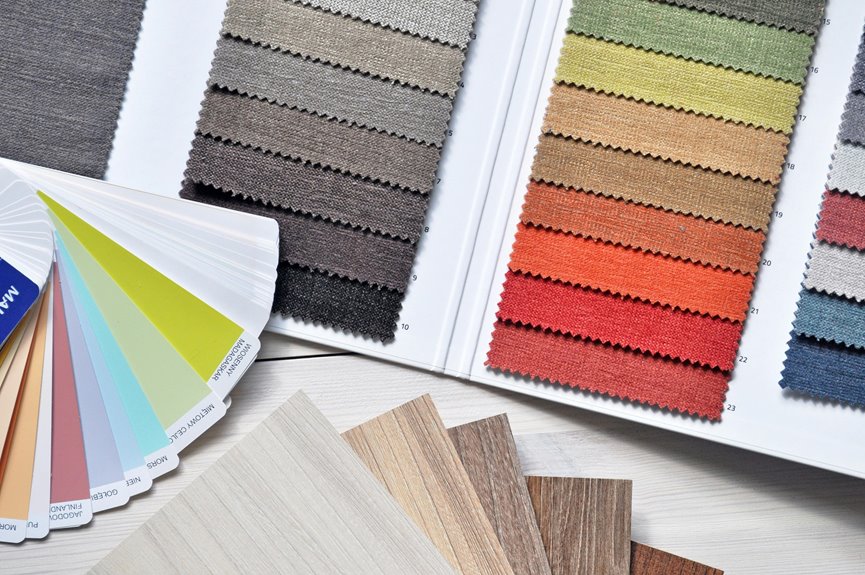
If you want fabrics similar to velvet, consider velour for a plush, stretchy feel or velveteen, which offers a cotton-based, soft alternative with less sheen. Chenille provides cozy texture, while microfiber and faux velvet give you a soft, stain-resistant option without animal fibers. For durability, suede and moleskin offer matte finishes with unique softness. Crushed velvet adds stylish dimension, and corduroy brings a ribbed look with velvet-like comfort. Explore these options to find the perfect fabric match.
Key Takeaways
- Velour offers a soft, plush velvet feel with added stretch and durability at a more affordable price.
- Velveteen provides a cotton-based, cozy alternative with a matte finish and easier maintenance than traditional velvet.
- Chenille features a fuzzy, textured surface ideal for warmth and softness in home decor and apparel.
- Faux velvet and microfiber mimic velvet’s luxurious texture with synthetic fibers, offering durability and stain resistance.
- Suede and moleskin provide soft, durable fabric options with matte finishes and unique textures distinct from velvet’s shine.
Velour: The Plush Velvet Alternative
Although velour shares velvet’s soft, luxurious feel, it offers a more affordable and durable option.
Velour provides velvet’s luxury with greater affordability and durability, perfect for everyday elegance.
When you choose velour, you get a plush texture that mimics velvet’s richness but stands up better to wear and tear. It’s made from knit fabric, which gives it stretch and flexibility, making it perfect for clothing like tracksuits or upholstery that needs to endure frequent use.
You’ll notice velour has a slight sheen and a smooth pile, providing that elegant look without the high maintenance velvet demands.
If you want something cozy yet practical, velour fits the bill. Its easy care and resilience make it a smart choice for everyday wear or home décor, giving you velvet’s charm with less hassle.
Suede: Soft and Matte Finish Fabric
Velour offers a plush, shiny surface, but if you prefer a fabric with a softer, matte finish, suede might catch your eye.
Suede is made from the underside of animal hides, giving it a unique texture that feels smooth and slightly fuzzy. You’ll notice it lacks the sheen of velvet or velour, making it perfect for a more understated, elegant look.
This fabric is durable and flexible, often used in jackets, shoes, and upholstery. While suede doesn’t reflect light like velvet, it still provides a rich, tactile experience you’ll appreciate.
Keep in mind, suede requires special care to avoid stains and water damage, but its cozy, matte appeal makes it a great alternative when you want softness without shimmer.
Chenille: Cozy and Textured Material
When you touch chenille, you’ll notice its unique, fuzzy texture that feels warm and cozy.
You can find this fabric in everything from upholstery to sweaters, adding both comfort and style.
Understanding chenille’s characteristics helps you choose the right use for its soft, textured appeal.
Chenille Fabric Characteristics
Chenille offers a soft, plush texture that makes it a favorite for cozy home decor and apparel. When you touch chenille, you’ll notice its fuzzy surface created by short, tufted yarns woven between core threads.
This unique construction gives chenille its signature velvety feel and subtle sheen. It’s also lightweight yet durable, so you can expect it to hold up well with use.
Because chenille yarns catch the light differently depending on their direction, the fabric often shows a beautiful depth and dimension. You’ll find chenille is breathable and flexible, making it comfortable to wear or use around your home.
Just keep in mind that chenille can snag easily, so handle it gently to maintain its texture and appearance.
Uses of Chenille Textile
You’ll find chenille fabric brings warmth and texture to a variety of uses, from cozy blankets and throw pillows to stylish sweaters and scarves.
Its soft, fuzzy surface makes it perfect for adding a plush feel wherever you want comfort and elegance. You can easily incorporate chenille into your home and wardrobe for both style and function.
Here are four common uses of chenille textile:
- Upholstery – Cover sofas and chairs with chenille for a luxurious, inviting look.
- Home décor – Use chenille in curtains, cushions, and throws to add depth and softness.
- Apparel – Choose chenille for sweaters, cardigans, and scarves to stay warm and stylish.
- Accessories – Find chenille in hats, gloves, and bags for a textured, cozy touch.
Moleskin: Durable and Smooth Textile
Moleskin offers a unique blend of durability and softness that makes it a great alternative to velvet. You’ll find it smooth to the touch, with a dense weave that resists wear and tear. This fabric works well for clothing and upholstery, especially when you want a plush feel paired with toughness. Unlike velvet, moleskin is often cotton-based and brushed to create a soft surface without the pile, giving it a matte finish.
| Feature | Moleskin | Velvet |
|---|---|---|
| Texture | Smooth, brushed | Soft, plush pile |
| Durability | High | Moderate |
| Appearance | Matte, muted | Shiny, rich |
Choosing moleskin means opting for long-lasting comfort with a subtle look.
Microfiber: Affordable and Versatile Option
You’ll love how microfiber mimics velvet’s soft texture without the high price tag.
It’s not only comfortable but also easy to clean and maintain, making it perfect for everyday use.
Choosing microfiber means getting both style and practicality in one fabric.
Soft Texture Appeal
Although microfiber isn’t exactly velvet, it shares a similarly soft texture that makes it a popular choice for upholstery and clothing.
When you run your hand over microfiber, you’ll notice a smooth, plush feel that mimics velvet’s luxurious touch. This softness comes from finely woven synthetic fibers designed to be gentle against your skin.
You’ll appreciate microfiber’s texture in various ways:
- Cozy blankets that invite you to snuggle up
- Upholstered sofas that feel inviting and warm
- Stylish jackets with a gentle, velvety finish
- Decorative pillows that add softness and comfort to any space
Microfiber’s soft texture gives you that velvet-like appeal without the higher cost.
Easy Maintenance Benefits
Beyond its soft texture, microfiber stands out for how easy it’s to care for. You don’t need special cleaners or complicated routines—just regular vacuuming and occasional spot cleaning keep it looking fresh.
Its dense weave resists stains and dries quickly, so spills won’t ruin your furniture or clothes. You can even machine wash many microfiber fabrics without worry, saving you time and effort.
Because it maintains its appearance well, you won’t have to replace items as often, making it a budget-friendly choice.
Whether you’re using microfiber for upholstery, clothing, or accessories, its low-maintenance nature suits busy lifestyles perfectly.
Choosing microfiber means enjoying a velvet-like look and feel without the hassle of high upkeep, giving you comfort and convenience simultaneously.
Silk Velvet: Luxurious and Lustrous Variant
Silk velvet stands out for its unmatched softness and shimmering appearance, making it a top choice when you want fabric that feels as luxurious as it looks.
When you choose silk velvet, you’re embracing a fabric that elevates any space or outfit with its rich texture and elegant sheen.
You’ll notice how:
- The light dances on its surface, creating a soft glow that changes as you move.
- It feels incredibly smooth and gentle against your skin, perfect for special occasions.
- Its natural silk fibers give it durability while maintaining a delicate, refined look.
- The deep pile adds depth, making colors appear richer and more vibrant.
Silk velvet truly offers a luxurious experience that’s hard to match with other fabrics.
Crushed Velvet: Textured and Stylish Choice
If you love the elegance of silk velvet, you’ll appreciate crushed velvet for its bold texture and dynamic look.
Unlike smooth velvet, crushed velvet has a deliberately wrinkled, irregular surface created by twisting the fabric while wet. This treatment gives it a unique shimmer and depth that catches light differently, adding a lively, tactile appeal to your garments or decor.
You’ll find crushed velvet ideal for making a statement—whether in fashion pieces like dresses and jackets or upholstery that demands attention.
It’s durable yet soft, offering both comfort and style. If you want velvet’s richness but crave something more eye-catching and less traditional, crushed velvet is a stylish choice that stands out without compromising on that lush velvet feel.
Velveteen: Cotton-Based Velvet Look-Alike
You’ll notice velveteen offers a soft, plush texture similar to velvet but with a cotton base that feels a bit sturdier.
It’s more durable for everyday use, making it easier to care for without losing its rich look.
Let’s explore how this fabric holds up and what maintenance it requires.
Texture and Feel
While velveteen closely resembles velvet, its texture and feel differ due to its cotton base. When you touch velveteen, you’ll notice a softer, less glossy surface compared to the luxurious sheen of traditional velvet.
It feels plush but not as smooth or fluid, offering a more matte and cozy vibe. Imagine running your fingers across:
- A soft, dense pile that’s slightly stiffer than silk velvet
- A fabric with a cotton warmth, making it feel homey and comfortable
- A surface with subtle ridges from the woven cotton fibers
- A fabric that’s thick and cushioned but less slippery to the touch
Velveteen gives you a warm, inviting texture that’s perfect when you want velvet’s look without the slickness.
Durability and Care
The cozy and matte feel of velveteen comes with specific care needs that differ from traditional velvet. Since velveteen is made from cotton, you’ll find it more durable and easier to maintain.
You can machine wash it on a gentle cycle with cold water, but avoid bleach to prevent damage. To keep its texture soft, air drying is best; avoid high heat from dryers that can cause shrinkage or stiffness.
Iron on a low setting if needed, placing a cloth between the iron and fabric to protect the pile. While velveteen resists wear better than silk velvet, it can still crush or flatten with heavy use, so store items carefully to maintain their plush look.
Faux Velvet: Synthetic and Animal-Friendly Fabric
Faux velvet offers a luxurious feel without relying on animal products, making it a popular choice for those who want style and ethics to go hand in hand.
Experience luxury and conscience combined with faux velvet’s ethical elegance.
When you choose faux velvet, you get a fabric that mimics the softness and depth of real velvet but is made from synthetic fibers like polyester or nylon. It’s perfect for adding elegance without compromising your values.
Imagine the texture and appearance of faux velvet as:
- A plush surface that gently catches the light.
- A smooth, soft fabric that feels warm against your skin.
- A durable and stain-resistant material suitable for daily use.
- A vibrant, rich color that doesn’t fade easily.
Faux velvet lets you enjoy luxury with a clear conscience.
Corduroy: Ribbed Fabric With Velvet-Like Feel
Corduroy combines durability with a soft, velvet-like texture thanks to its distinctive ribbed pattern. When you touch corduroy, you’ll notice raised cords or “wales” that give it a unique feel, setting it apart from smooth velvet.
This fabric is usually made from cotton or a cotton blend, making it breathable and comfortable to wear. You’ll find corduroy in various weights, from lightweight for shirts to heavy-duty for jackets and pants.
Its ribbed surface catches light differently, adding subtle depth and warmth to your outfit or upholstery. If you want velvet’s cozy vibe but need something more rugged and easy to care for, corduroy is a fantastic choice that blends texture with practicality effortlessly.
Frequently Asked Questions
How Do Velvet-Like Fabrics Differ in Breathability?
You’ll notice velvet-like fabrics vary in breathability because of their fiber content and weave. Synthetic blends trap heat more, while natural fibers like cotton velvet let air flow, keeping you cooler and more comfortable.
Which Alternative Fabrics Are Best for Outdoor Use?
Imagine your fabric is a knight braving the storm; go for solution-dyed acrylic or olefin—they resist sun and water like champions. You’ll enjoy durability and easy care while keeping style outdoors without soaking up every drop or fading fast.
Are These Velvet Alternatives Hypoallergenic?
You’ll find some velvet alternatives, like microfiber and cotton blends, are more hypoallergenic than traditional velvet. But always check specific fabric treatments or finishes, since those can affect allergy sensitivity and overall comfort for you.
How Do Care Instructions Vary Among These Fabrics?
You might think all soft fabrics need gentle care, but care instructions vary widely. Some require dry cleaning, others can be machine washed gently. Always check labels, because treating each fabric properly keeps them looking great longer.
What Are the Environmental Impacts of Synthetic Velvet Alternatives?
You should know synthetic velvet alternatives often rely on petrochemicals, contributing to pollution and non-biodegradability. They consume significant energy during production, so choosing eco-friendly options or recycling can help reduce their environmental footprint.