
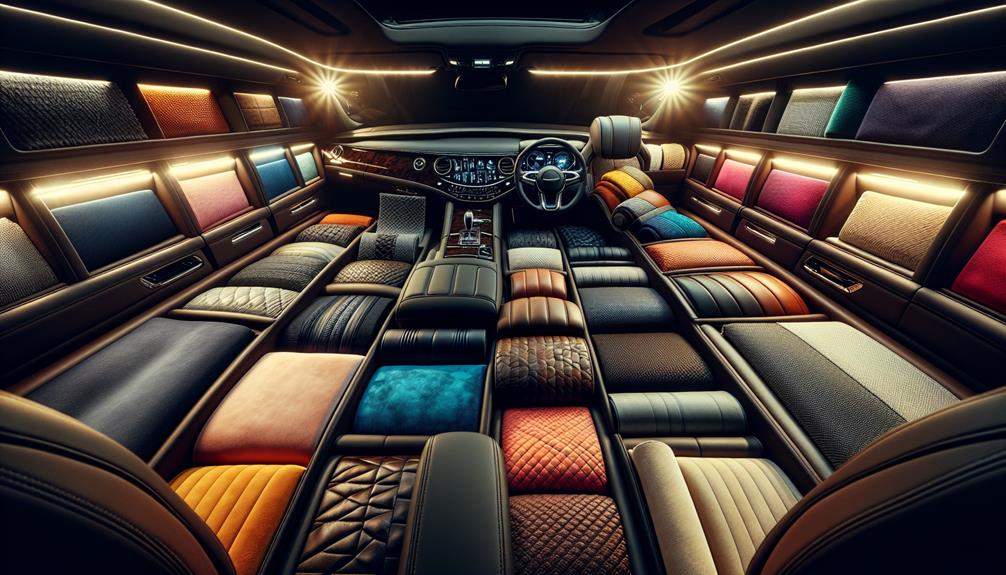
When you're faced with selecting fabrics for automotive interiors, you'll discover a wide array of choices, each with its own set of advantages. Leather, synthetic leather, cloth, and Alcantara are just a few options that balance comfort, durability, and aesthetics. But how do you determine which fabric best suits your needs? Understanding the benefits and drawbacks of each material is essential. Plus, current trends emphasize sustainability and innovative technologies. Are you ready to explore the intricacies of these choices and make an informed decision about your car's interior?
Key Takeaways
- Custom designs: Unique patterns and textures allow for personalized car interiors.
- Performance fabrics: Engineered for durability, moisture resistance, and UV protection.
- Material benefits: Leather offers luxury and durability, while synthetic leather provides a cost-effective alternative.
- Fabric selection: Consider durability, comfort, maintenance, and aesthetics when choosing interior fabrics.
- Current trends: Sustainable fabrics and smart technologies are shaping the future of automotive interiors.
Types of Automotive Fabrics
There are several types of automotive fabrics you should consider for your vehicle's interior.
First, let's talk about custom designs. Custom fabric options allow you to express your personal style and elevate your car's aesthetic. You can select unique patterns, textures, and color schemes that reflect your taste, making your vehicle truly one-of-a-kind. Custom designs are perfect if you want to make a bold statement or align the interior with the car's overall theme.
Next, let's delve into performance fabrics. These fabrics are engineered for durability and functionality, making them ideal for daily drivers and high-performance vehicles alike. Performance fabrics often feature advanced technologies like moisture resistance, UV protection, and enhanced breathability. They're designed to withstand wear and tear, keeping your car's interior looking fresh and clean for longer.
Additionally, many performance fabrics are easy to maintain, requiring minimal effort to keep them in pristine condition.
Benefits of Different Materials
Why should you consider different materials for your car's interior? Choosing the right fabric can greatly enhance both the aesthetics and functionality of your vehicle. By understanding the benefits of different materials, you can make an informed decision that balances durability vs. comfort and offers a variety in colors to match your style.
- Leather: Leather is known for its luxurious feel and high durability. It's easy to clean and ages well, developing a rich patina over time. However, it can be less comfortable in extreme temperatures.
- Synthetic Leather (Vinyl): Vinyl offers a similar look to leather but at a lower cost. It's highly durable and comes in a wide range of colors. While it's easier to maintain, it may not provide the same level of comfort as genuine leather.
- Cloth: Cloth interiors tend to be more comfortable, especially in varying temperatures. They offer better breathability but may require more maintenance to keep clean and can fade over time.
- Alcantara: This high-end synthetic material combines the best of durability vs. comfort. It's soft to the touch, easy to maintain, and available in a variety of colors, making it a premium choice for those seeking luxury.
Fabric Selection Criteria
When selecting fabrics for your car's interior, consider factors such as durability, comfort, maintenance, and aesthetics to find the perfect match for your needs.
Durability is paramount, especially if your vehicle sees high usage or if you have kids and pets. Opt for materials like leather or high-quality synthetic fabrics that can withstand wear and tear. These fabrics not only last longer but also maintain their appearance over time, contributing to the overall aesthetics of your car's interior.
Comfort is another critical factor. You'll want a fabric that feels good against your skin and provides a pleasant driving experience. Soft, breathable materials like microfiber or high-thread-count fabrics can offer the comfort you're seeking without sacrificing durability.
Cost efficiency is also essential. While it might be tempting to splurge on luxurious materials, you should weigh the initial cost against the long-term benefits. Some high-quality synthetics offer a good balance between cost and performance, proving to be a wise investment.
Maintenance and Care Tips
To prolong the lifespan and appearance of your car's interior fabrics, regular maintenance and proper care are key. Mastering cleaning techniques and preservation methods will keep your fabrics looking flawless.
- Regular Cleaning: Vacuum your car's interior weekly. This prevents dirt and debris from embedding into the fabric, which can lead to long-term damage.
- Stain Removal: Address spills promptly using a mild fabric cleaner. Blot, don't rub, to avoid spreading the stain or harming the fabric.
- Preventive Care: Apply fabric protectants to create a barrier against spills and stains. These products can greatly reduce the likelihood of permanent marks.
- Sun Protection: Use sunshades and window tints to shield your interior fabrics from UV rays, which can cause fading and deterioration over time.
Implementing these methods guarantees that your car's fabrics remain in top condition.
Regular vacuuming and immediate stain removal are essential cleaning techniques. Fabric protectants and sun protection are crucial preservation methods.
Current Trends in Auto Fabrics
In today's automotive market, manufacturers are increasingly turning to sustainable and innovative fabrics to enhance both the aesthetic and functional appeal of car interiors. You'll find that sustainability options are at the forefront, with eco-friendly materials like recycled polyester and organic cotton becoming more prevalent. These fabrics not only reduce environmental impact but also meet rigorous performance standards, guaranteeing durability and comfort.
Customization possibilities are another key trend. Modern consumers demand interiors that reflect their personal style, and auto manufacturers are responding with a wide array of customizable options. From color schemes to fabric textures, you can tailor your car's interior to match your unique tastes. Advanced digital printing technologies make it easier than ever to create bespoke designs, allowing for limitless creativity.
Moreover, innovations in smart fabrics are revolutionizing the market. These textiles can integrate functionalities such as temperature regulation and wireless charging, adding a layer of convenience and luxury. As you explore the latest offerings in auto fabrics, you'll notice a shift towards materials that not only look good but also offer superior performance and sustainability.
Staying updated on these trends ensures you choose the best options for your vehicle's interior.
Frequently Asked Questions
What Is the Environmental Impact of Automotive Fabric Production?
You should consider the environmental impact of automotive fabric production. It involves a significant carbon footprint. However, by focusing on sustainability, waste reduction, and eco-friendly alternatives, you can help mitigate these effects.
How Does Fabric Choice Affect Vehicle Resale Value?
Imagine selling a car with faded, worn-out seats. Your fabric choice affects resale value by ensuring fabric durability and color retention. High-quality materials keep interiors looking new, boosting the vehicle's appeal and price.
Are There Any Hypoallergenic Automotive Fabric Options Available?
You'll be pleased to know there are allergy-friendly options for automotive fabrics. Many manufacturers now offer hypoallergenic and sustainable materials, ensuring a comfortable and environmentally conscious choice for sensitive passengers.
How Do Automotive Fabrics Impact Cabin Noise Levels?
Automotive fabrics impact cabin noise levels by enhancing sound absorption. Material composition and fabric thickness play key roles in noise reduction. Choose high-quality, thick materials to achieve better sound absorption and a quieter cabin environment.
What Advancements Are Being Made in Smart Fabrics for Automotive Use?
You'll be intrigued to know that 70% of new cars might feature smart fabrics by 2030. Fabric sensors and interactive textiles are revolutionizing automotive interiors, enhancing comfort, safety, and connectivity in ways you've never imagined.