
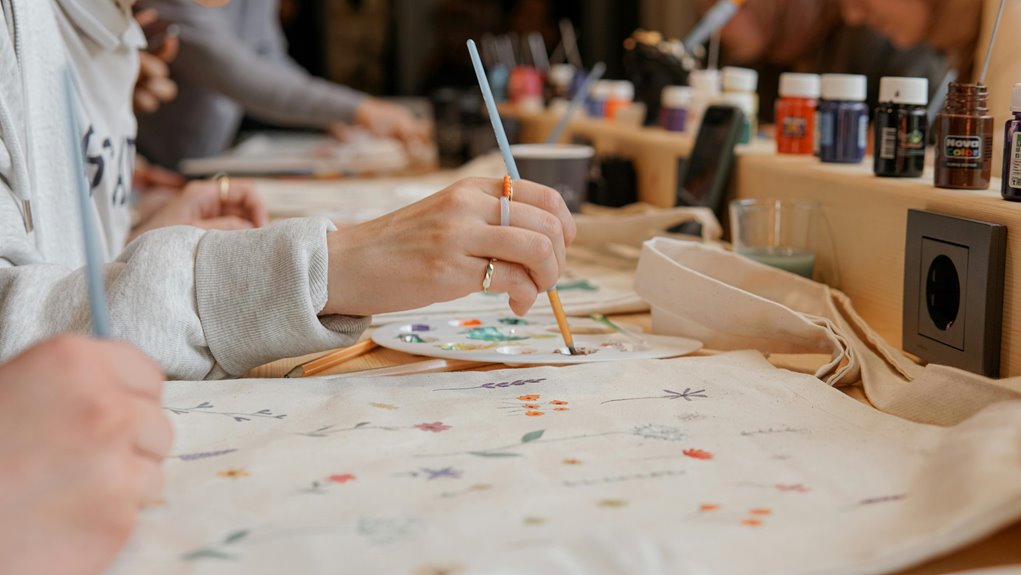
When painting on jute bags, choose acrylic or fabric paints for vibrant, flexible results. Clean and air-dry your bag thoroughly before starting, and use flat or round brushes to apply thin, even layers. Sketch your design lightly first, then seal with fabric varnish and heat set to guarantee durability. Handle your painted bag gently and avoid direct sunlight to preserve colors. Keep experimenting with techniques and tools—you’ll discover even more ways to create stunning, lasting designs.
Key Takeaways
- Use acrylic or fabric-specific paints to ensure vibrant, flexible colors that adhere well to coarse jute fibers without cracking.
- Thoroughly clean and air dry the jute bag before painting to improve paint adhesion and prevent uneven soaking.
- Apply paint in thin layers using stiff brushes or sponges, and consider sketching your design lightly beforehand for precision.
- Seal painted designs with fabric sealer or heat set with an iron to enhance durability and colorfastness.
- Handle painted jute bags gently, spot clean with mild soap, and avoid direct sunlight to preserve artwork longevity.
Selecting the Best Paints for Jute Fabric
When choosing paints for jute fabric, you’ll want to focus on those that adhere well without stiffening the material. Acrylic paints are your best bet since they offer vibrant colors and remain flexible once dry.
Acrylic paints work best on jute, providing vibrant color without making the fabric stiff or brittle.
Opt for textile-specific acrylics, as they’re formulated to bond with fabric fibers better. Fabric paints also work well, especially if you want a softer feel.
Avoid oil-based paints; they can make the jute rigid and prone to cracking. Watercolor or dye won’t stick properly on jute’s rough texture, so steer clear of those.
You might want to test a small patch first to verify the paint soaks in evenly and stays vivid. Remember, the right paint keeps your design looking fresh while preserving the jute’s natural texture.
Preparing Your Jute Bag for Painting
Before you start painting, make certain your jute bag is clean and completely dry to help the paint stick better.
You’ll also want to take into account priming the surface to create a smooth base for your design.
Taking these steps guarantees your artwork looks vibrant and lasts longer.
Cleaning and Drying
Although jute bags are sturdy, they often carry dust and oils that can interfere with paint adhesion, so you’ll want to clean them thoroughly before starting your project.
Begin by gently shaking or brushing off loose dirt. Then, hand wash your bag in cool water using a mild detergent to avoid damaging the fibers.
Avoid soaking it for too long; a quick, gentle wash is enough. Rinse thoroughly to remove all soap residue, which could affect paint adherence.
After washing, press the bag lightly with a towel to remove excess water—don’t wring it out, as this can distort the shape.
Finally, hang the bag in a well-ventilated area to air dry completely. Make sure it’s fully dry before you move on to painting.
Surface Priming Methods
Since jute has a rough and absorbent texture, you’ll want to prime its surface to guarantee your paint adheres well and colors stay vibrant.
Priming creates a smoother base, reduces paint bleeding, and enhances durability. Here are some effective methods you can try:
- Gesso: Apply a thin layer of fabric or acrylic gesso to seal fibers and create a paint-friendly surface.
- White Fabric Paint: Use a diluted coat as a primer, which also brightens colors on dark jute.
- Mod Podge or Fabric Medium: These sealers prepare the fabric while keeping it flexible.
- PVA Glue Mixture: Mix white glue with water for an affordable, easy-to-make primer.
Choose a method that suits your project, and always let the primer dry completely before painting.
Essential Tools and Brushes for Fabric Painting
To get started with fabric painting on your jute bag, you’ll need the right brushes that suit your design’s detail and texture.
Choosing fabric paint made specifically for textiles guarantees your artwork stays vibrant and durable.
Don’t forget to gather extra tools like stencils and palettes to make your painting process smoother and more precise.
Must-Have Painting Brushes
When you start fabric painting on jute bags, choosing the right brushes makes all the difference. The texture of jute demands brushes that can handle rough fibers without losing shape or detail.
You’ll want a mix of brushes to cover different techniques and effects.
Here are must-have painting brushes for your project:
- Flat brushes: Perfect for covering large areas and creating sharp edges.
- Round brushes: Great for detailed work and outlining designs.
- Filbert brushes: Ideal for blending and soft, rounded strokes.
- Fan brushes: Useful for texture effects or blending colors smoothly.
Investing in these brushes guarantees you can tackle various painting styles on jute with ease and precision.
Clean them well to prolong their lifespan and maintain brush quality.
Choosing the Right Paint
Anyone diving into fabric painting on jute bags knows that picking the right paint can make or break your design.
You want fabric paints specifically formulated for porous, textured surfaces like jute. Acrylic-based fabric paints are a solid choice—they offer vibrant colors, good adhesion, and durability after heat-setting.
Avoid regular acrylics, as they may crack or flake. Textile paints with a flexible finish keep your design intact without stiffening the fabric.
If you prefer a natural look, water-based paints are gentle and eco-friendly but may need multiple coats for opacity.
Keep in mind, testing your paint on a small jute scrap before committing guarantees compatibility.
Choosing the right paint sets the foundation for a lasting, eye-catching jute bag design.
Additional Helpful Tools
Although selecting the right paint is essential, having the proper tools can elevate your fabric painting on jute bags to the next level.
Using the right brushes and accessories helps you achieve cleaner lines, better coverage, and more detailed designs. Here are some essential tools you should have on hand:
- Flat brushes for filling larger areas smoothly
- Fine-tipped brushes to add intricate details and outlines
- Stencil brushes for applying paint evenly through stencils
- Palette or mixing tray to blend colors and control paint consistency
Having these tools ready makes your painting process smoother and your results more professional.
Don’t forget to clean your brushes immediately after use to keep them in top condition for your next creative project!
Techniques for Applying Paint on Jute
Mastering a few key techniques can transform your fabric painting on jute bags from simple decoration to stunning art.
Start by applying paint in thin layers to avoid clogging the coarse fibers. Use a stiff-bristled brush or sponge for even coverage, pressing gently to let the paint settle into the texture.
Stippling—tapping the brush lightly—adds interesting texture and depth. If you want clean lines, use painter’s tape or stencils as guides.
For detailed work, fine-tip brushes help you control the paint without bleeding. Remember to let each layer dry before adding more to prevent smudging.
Experiment with blending colors directly on the fabric for gradient effects. These techniques guarantee your designs look sharp and vibrant on jute’s unique surface.
Creating Durable and Vibrant Designs
To guarantee your painted designs on jute bags stay vibrant and last through daily use, you’ll need to focus on both the type of paint and proper finishing techniques. Start with fabric paints formulated for rough surfaces—they adhere better and resist fading.
After painting, let your design dry completely before sealing it. Use a fabric medium mixed with acrylic paint to improve flexibility and durability. Finally, heat setting your design with an iron guarantees colorfastness.
Keep these tips in mind:
- Choose high-quality fabric or acrylic paints with fabric medium.
- Allow each paint layer to dry thoroughly before adding another.
- Seal your design with a clear fabric sealer or varnish.
- Heat set using a cloth over the design and iron on medium heat for 3-5 minutes.
These steps help your jute bag look fresh longer.
Tips for Adding Intricate Details
When you add intricate details to your jute bag painting, using the right tools and techniques makes all the difference. Start with fine-tipped brushes or fabric pens for precision. Steady your hand by resting your elbow on a flat surface. Work in layers, allowing each to dry before adding more detail, to avoid smudging. Use a magnifying glass for tiny patterns and consider sketching your design lightly with a pencil first.
| Tool | Purpose | Tip |
|---|---|---|
| Fine-tipped brush | Detail work | Use gentle strokes |
| Fabric pen | Outlining & filling | Choose waterproof ink |
| Pencil | Sketching design | Light pressure to avoid marks |
| Magnifying glass | Enhancing precision | Use in good lighting |
| Stencil | Repeating patterns | Secure firmly before painting |
Caring for Painted Jute Bags to Ensure Longevity
Although jute bags are sturdy, painted designs need your care to stay vibrant and intact. To keep your artwork looking fresh, handle the bag gently and avoid rough surfaces that might scratch the paint.
When cleaning, don’t soak the bag; instead, spot clean with a damp cloth and mild soap. Store your painted jute bag away from direct sunlight to prevent colors from fading. Finally, avoid folding the painted areas to prevent cracks or peeling.
- Spot clean only with mild soap and water
- Keep away from direct sunlight for prolonged periods
- Handle gently to avoid scratches or wear
- Store flat or hang to maintain shape and design
Following these tips will help your painted jute bag last longer and look great.
Frequently Asked Questions
Can I Use Stencils for Fabric Painting on Jute Bags?
You can definitely use stencils for fabric painting on jute bags. Just make sure to secure the stencil firmly and use fabric paint for the best results. This helps create sharp, clean designs without smudging.
How Long Does the Paint Take to Dry on Jute?
You’ll find that paint usually takes about 1 to 2 hours to dry on jute, but drying time can vary depending on the paint type, thickness, and humidity. Let it dry completely before handling for best results.
Is It Safe to Wash Painted Jute Bags in a Washing Machine?
Washing painted jute bags in a machine can be like sending a delicate painting through a storm. You shouldn’t; hand wash gently instead, or the paint might crack or fade, ruining your hard work.
Can I Combine Fabric Paint With Other Mediums on Jute?
You can definitely combine fabric paint with other mediums on jute, but make sure they’re compatible and dry completely between layers. Test a small patch first to avoid unwanted reactions or texture changes before starting your design.
What Are Some Creative Design Ideas for Jute Bag Painting?
You can create bold geometric patterns, nature-inspired motifs, or playful typography on your jute bag. Try stenciling, layering colors, or adding metallic accents to make your design unique and eye-catching every time you paint.