
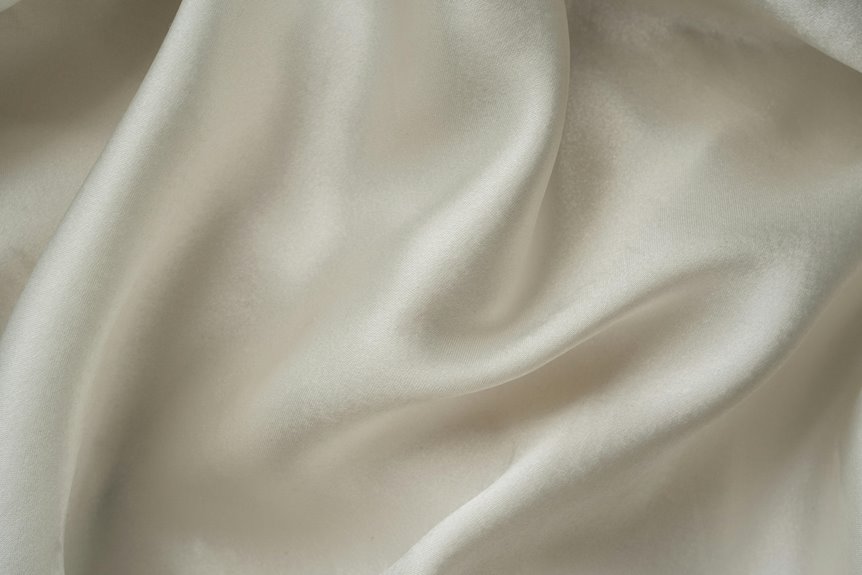
If you’re exploring Katan silk fabric designs, you’ll find a rich history rooted in India’s royal traditions with tightly twisted silk threads for strength and sheen. You’ll notice classic floral and geometric patterns enhanced with natural dyes like indigo and turmeric. Today’s designers blend these timeless motifs with modern cuts and mix Katan silk with textiles like organza or denim, crafting versatile, stylish pieces. Keep going to uncover how tradition and innovation beautifully intertwine in Katan silk.
Key Takeaways
- Katan silk features tightly twisted pure silk threads, historically woven in Indian centers like Varanasi and Gujarat for royal elegance and durability.
- Traditional designs include intricate floral motifs like lotus and jasmine, alongside geometric patterns such as diamonds and chevrons, reflecting Mughal-era artistry.
- Natural dyes from plants and minerals provide vibrant, eco-friendly colors like indigo, turmeric yellow, and madder red, enhancing Katan silk’s rich texture and sheen.
- Contemporary fashion blends Katan silk with fabrics like chiffon and denim, using minimalist cuts and bold colors for modern, versatile garment designs.
- Proper care involves gentle hand washing or dry cleaning, low-heat ironing, and storage in muslin to preserve the fabric’s vibrant patterns and delicate quality.
The History and Origins of Katan Silk
Although Katan silk might seem like a modern luxury, it actually dates back centuries, originating in the rich textile traditions of India.
When you explore its history, you’ll find that Katan silk is woven from pure silk threads twisted tightly to create a fine, durable fabric. You’ll appreciate how it became favored by royalty and nobility due to its smooth texture and subtle sheen.
As you learn more, you’ll understand that Katan silk’s origins lie in regions known for their silk production, such as Varanasi and Gujarat.
This fabric wasn’t just about beauty; it symbolized status and craftsmanship. Knowing its background helps you value the elegance and heritage woven into every piece of Katan silk you encounter today.
Traditional Weaving Techniques of Katan Silk
You’ll find that Katan silk’s traditional weaving techniques have deep historical roots tied to handloom craftsmanship.
As you explore, you’ll notice how regional weaving styles add unique character to each fabric.
Understanding these methods helps you appreciate the artistry behind every piece.
Historical Origins
When you explore the historical origins of Katan silk, you uncover traditional weaving techniques that have been carefully preserved over centuries.
Katan silk dates back to the Mughal era in India, where artisans developed a fine, tightly twisted yarn from pure mulberry silk. This method guaranteed remarkable strength and a smooth texture.
You’ll find that the fabric’s distinct crispness comes from a unique double-twisting process, setting it apart from other silks. The weaving style reflects a blend of Persian influences and indigenous Indian craftsmanship, highlighting the cultural exchange that shaped its evolution.
Understanding these origins helps you appreciate how Katan silk became a symbol of luxury, prized for its durability and elegant finish. This rich history grounds the fabric’s timeless appeal.
Handloom Craftsmanship
Since Katan silk relies heavily on its unique texture and strength, skilled artisans carefully operate handlooms to weave each fabric. You’ll notice their expertise guarantees every thread aligns perfectly, preserving the fabric’s durability and sheen.
When you explore handloom craftsmanship, focus on these key techniques:
- Warp Preparation: Artisans set strong, tightly twisted silk threads lengthwise, forming Katan’s distinctive base.
- Weft Insertion: They skillfully pass weft threads horizontally, interlacing them to create a dense, smooth surface.
- Tension Control: Maintaining consistent tension on the loom is essential to avoid uneven weaving or weak spots.
Regional Weaving Styles
The handloom techniques that shape Katan silk set the stage for diverse regional weaving styles, each adding its own cultural flair to the fabric.
When you explore regions like Varanasi, you’ll notice intricate zari work woven directly into the silk, creating rich, shimmering patterns.
In Gujarat, the weavers focus on bold geometric motifs using vibrant colors, reflecting local traditions.
Meanwhile, in parts of South India, you’ll find Katan silk with simpler, elegant designs emphasizing texture and sheen rather than heavy embellishment.
These regional differences aren’t just about aesthetics—they tell stories of heritage and craftsmanship passed down through generations.
Signature Patterns and Motifs in Katan Silk Designs
You’ll notice that Katan silk often features classic floral motifs that add timeless beauty to the fabric.
Geometric pattern variations bring a modern twist while maintaining tradition.
Plus, symbolic cultural elements make each design rich with meaning and history.
Classic Floral Motifs
Classic floral motifs bring a timeless elegance to Katan silk fabric, capturing nature’s beauty in intricate patterns.
When you choose Katan silk adorned with these designs, you embrace a tradition that highlights delicate craftsmanship and artistic expression.
Here are three signature floral motifs you’ll often find:
- Lotus Blossoms – Symbolizing purity and enlightenment, these are finely woven with subtle shading to create depth.
- Jasmine Sprigs – Representing grace and sensuality, they add a light, airy feel to the fabric.
- Chrysanthemum Clusters – Known for their longevity and significance, these motifs bring a vibrant touch to the silk.
Each motif not only enhances the fabric’s visual appeal but also connects you to rich cultural stories.
Geometric Pattern Variations
Geometric patterns offer a striking contrast to floral motifs, bringing structure and rhythm to Katan silk designs. When you explore these patterns, you’ll notice how shapes like diamonds, hexagons, and chevrons add a modern edge while maintaining traditional elegance. These patterns create visual harmony and balance, often alternating between bold and subtle lines to keep your eyes engaged.
| Pattern Type | Visual Effect | Common Use |
|---|---|---|
| Diamonds | Creates depth | Sarees, dupattas |
| Hexagons | Adds complexity | Blouses, scarves |
| Chevrons | Implies movement | Borders, pallu design |
| Stripes | Enhances length | Full fabric designs |
You’ll find these geometric variations enrich Katan silk, making it versatile for various occasions.
Symbolic Cultural Elements
Although Katan silk often showcases modern patterns, its true charm lies in symbolic cultural elements that carry deep meaning.
When you explore Katan silk designs, you’ll notice how traditional motifs tell stories and reflect heritage. These signature patterns aren’t just decorative; they connect you to rich cultural narratives.
Here are three key symbolic elements you’ll find:
- Paisley (Mango Motif): Represents fertility and life, a timeless emblem in Indian textiles.
- Floral Patterns: Symbolize beauty and growth, often inspired by nature’s elegance.
- Peacock Motifs: Stand for grace and pride, adding a regal touch to the fabric.
The Role of Natural Dyes in Katan Silk Fabric
When you explore Katan silk fabric, you’ll notice that natural dyes play an essential role in bringing its rich colors to life.
These dyes, extracted from plants, minerals, and insects, provide vibrant yet subtle hues that synthetic dyes can’t replicate. You’ll find shades like deep indigo, warm turmeric yellows, and earthy madder reds, each contributing to Katan silk’s unique appeal.
Using natural dyes also connects you to centuries-old traditions, preserving eco-friendly practices and sustainable craftsmanship.
As you touch the fabric, you’ll appreciate how these dyes enhance the silk’s natural sheen without overpowering its texture.
Modern Interpretations of Katan Silk in Fashion
You’ll find that modern designers have reinvented Katan silk by blending traditional craftsmanship with contemporary styles.
When you wear Katan silk today, it’s not just about heritage but also innovation.
Here’s how modern interpretations stand out:
Discover how contemporary twists bring fresh life and style to traditional Katan silk designs.
- Minimalist Cuts: Designers simplify intricate patterns into sleek, wearable silhouettes you can rock daily.
- Bold Color Palettes: They experiment beyond classic hues, introducing vibrant and unexpected shades that catch the eye.
- Innovative Textures: Mixing matte and glossy finishes within the same fabric adds depth and modern appeal you can’t miss.
Combining Katan Silk With Contemporary Textiles
As designers push the boundaries of fashion, they often combine Katan silk with contemporary textiles to create unique, versatile pieces.
When you blend Katan silk’s rich texture with modern fabrics like organza, chiffon, or even denim, you get a fresh, dynamic look that appeals to today’s style-conscious crowd.
This fusion allows you to enjoy the luxurious feel of Katan silk while adding durability or a casual edge through other materials.
You can experiment with layering, contrasting textures, or color blocking to highlight Katan silk’s natural sheen.
Whether you’re designing a statement jacket or a flowing dress, pairing Katan silk with contemporary textiles opens up endless creative possibilities, helping you craft garments that honor tradition but feel entirely modern.
Caring for and Maintaining Katan Silk Garments
Because Katan silk is delicate and luxurious, caring for it properly guarantees your garments stay beautiful longer.
You’ll want to treat these pieces with gentle care to preserve their rich texture and vibrant designs. Here are three essential tips:
- Hand wash or dry clean only – Avoid machine washing; use mild detergent and cold water if washing by hand.
- Store carefully – Keep your Katan silk in a cool, dry place away from direct sunlight, preferably wrapped in muslin cloth.
- Avoid harsh chemicals and heat – Don’t bleach or iron directly; use a low-heat iron with a protective cloth.
Following these steps helps maintain the fabric’s sheen and prevents damage, ensuring your Katan silk garments look stunning every time you wear them.
Frequently Asked Questions
Where Can I Buy Authentic Katan Silk Fabric Today?
If you’re chasing the golden fleece of fabrics, you can find authentic Katan silk at renowned Indian textile markets, trusted online stores like Fabindia or Craftsvilla, or specialty boutiques that honor traditional craftsmanship.
What Is the Price Range for Katan Silk Garments?
You’ll find Katan silk garments priced anywhere from $100 to over $1000, depending on the design, craftsmanship, and brand. Higher-end pieces with intricate work naturally cost more, while simpler options remain affordable.
Can Katan Silk Be Used for Upholstery or Home Decor?
You know what they say, “Don’t put all your eggs in one basket.” You can use Katan silk for upholstery or home decor, but it’s delicate—choose low-traffic areas and handle it with extra care to keep it looking beautiful.
Are There Eco-Friendly Alternatives to Traditional Katan Silk?
You can choose eco-friendly alternatives like organic silk, peace silk, or plant-based fabrics such as bamboo or hemp. These options reduce environmental impact while still offering luxurious textures similar to traditional katan silk.
How Does Katan Silk Compare to Other Silk Types in Texture?
When you touch katan silk, you’ll notice it’s as smooth as silk but with a firmer, crisp feel compared to others. It holds shape well, giving your garments a structured elegance you can’t easily find elsewhere.