
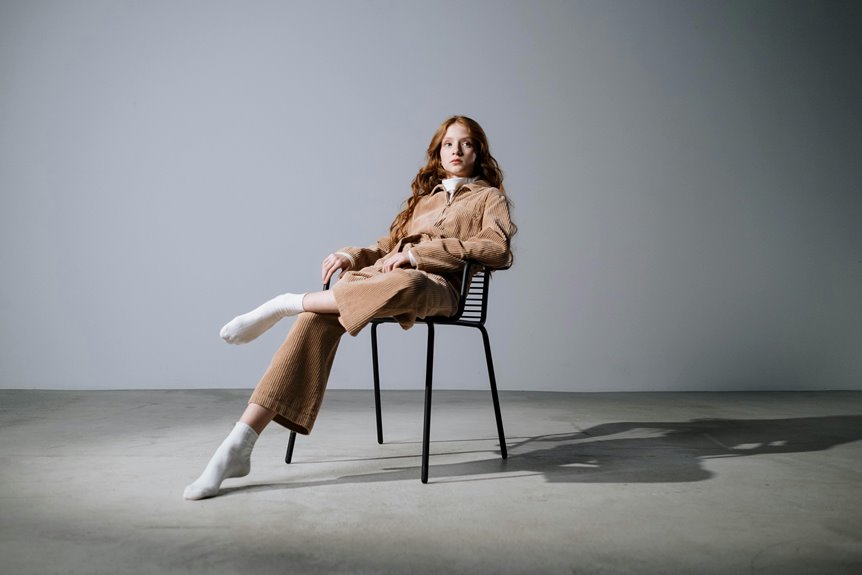
Your blackish-blue corduroy French pinafore offers a timeless blend of durability, warmth, and unique texture thanks to its raised wales and cozy feel. This fabric, with roots dating back to ancient times, adds character and depth to your outfit while standing up to daily wear. Pair it easily with classic or modern pieces for stylish versatility. Keep your pinafore looking sharp with proper care techniques. Discover how its rich heritage and practical charm enhance your wardrobe.
Key Takeaways
- Corduroy fabric features distinctive raised ridges called wales, offering a cozy texture and visual depth to your blackish-blue pinafore.
- The durable weave and natural stretch of corduroy make the pinafore comfortable and suitable for daily wear in cooler weather.
- Styling your blackish-blue corduroy pinafore pairs well with white blouses, turtlenecks, ankle boots, and minimal gold accessories for a chic look.
- Proper care includes washing inside out on a gentle cycle, air-drying, and ironing on the reverse side to preserve fabric texture and color.
- Corduroy’s rich history from functional workwear to fashion staple adds cultural significance to your French-inspired pinafore garment.
The Origins and History of Corduroy Fabric
Corduroy, known for its distinctive ridged texture, has a rich history that dates back centuries. When you wear corduroy, you’re tapping into a tradition that began as early as ancient Egypt and Rome, where similar fabrics were crafted.
By the 18th century, corduroy became popular in England, often called “corded velveteen.” It was prized for durability and warmth, making it a favorite among workers and outdoorsmen.
In 18th-century England, corduroy—known as “corded velveteen”—was valued for its warmth and durability among workers.
As you explore your blackish-blue corduroy pinafore, you connect with this heritage of practicality and style. Over time, corduroy evolved from a purely functional fabric to one embraced by fashion enthusiasts worldwide.
Knowing this history enriches your appreciation for the fabric, proving that your pinafore isn’t just clothing but a piece of cultural legacy.
Understanding the Unique Texture of Corduroy
Although it might look simple at first glance, the texture of your blackish-blue corduroy pinafore is what sets it apart from other fabrics.
Corduroy features distinct raised ridges called wales that run parallel, creating a soft, ribbed surface you can feel with your fingertips. These wales vary in width, and your pinafore likely has fine, narrow wales, giving it a smooth yet tactile finish.
This structure results from weaving extra yarns into the base fabric, which are then cut to create the tufted pile. When you run your hand across the fabric, you’ll notice a subtle directional nap, adding depth and character.
This unique texture not only enhances the visual appeal but also gives your pinafore a cozy, inviting touch you’ll appreciate every time you wear it.
Why Corduroy Is Perfect for Pinafores
The soft, textured feel of your blackish-blue corduroy pinafore makes it more than just visually appealing—it also contributes to its practicality.
Corduroy’s durable weave stands up to daily wear, so your pinafore stays looking sharp longer. Its natural stretch gives you comfort and freedom of movement, essential for an active day. The fabric’s thickness provides warmth, making it perfect for cooler weather without needing extra layers.
Corduroy also resists wrinkles and holds shape well, so your pinafore maintains its structure and neat appearance. Plus, its distinctive ribs add subtle dimension and style without overwhelming the design.
Choosing corduroy means you get a pinafore that’s not only stylish but also functional and comfortable, perfectly suited to your everyday wardrobe.
Styling Tips for a Blackish-Blue French Pinafore
When you style a blackish-blue French pinafore, you tap into a timeless yet versatile look that can easily shift from casual to chic.
Start with a crisp white blouse or a striped shirt underneath to keep the outfit fresh and classic. For cooler days, layer with a fitted turtleneck or a cozy knit sweater.
Footwear choices matter: pair it with ankle boots for an edgy vibe or ballet flats for a more feminine touch.
Don’t forget accessories—simple gold jewelry and a structured bag elevate your look without overwhelming it.
Play with textures by adding a leather belt or a wool beret to highlight the pinafore’s fabric.
With these tips, you’ll confidently wear your blackish-blue pinafore for any occasion.
Caring for Your Corduroy Garments
Styling your blackish-blue corduroy pinafore is only part of the equation; keeping it looking sharp means giving it proper care. Corduroy requires gentle handling to maintain its texture and color. Always wash your pinafore inside out on a gentle cycle with cold water to prevent fading. Avoid high heat when drying—air-drying is best to preserve the fabric’s softness and shape. Iron on the reverse side with low heat if needed.
| Care Step | Recommendation |
|---|---|
| Washing | Gentle cycle, cold water |
| Drying | Air-dry, avoid high heat |
| Ironing | Low heat, inside out |
| Storage | Hang or fold to avoid creases |
Following these tips helps your corduroy pinafore stay vibrant and cozy for seasons to come.
Combining Vintage and Modern Elements With Corduroy
You can blend the retro charm of corduroy with modern pieces to create a fresh, stylish look.
Try pairing your blackish-blue pinafore with sleek, contemporary accessories to highlight textural contrasts.
This mix will keep your outfit both nostalgic and current.
Retro Style Meets Contemporary
Although corduroy carries a distinctly vintage vibe, you can easily blend its nostalgic charm with modern pieces to create a fresh, stylish look.
Try pairing your blackish-blue corduroy pinafore with a sleek, minimalist turtleneck or a crisp white shirt to balance retro textures with contemporary cuts. Add modern accessories like chunky sneakers or a structured handbag to update the ensemble without losing corduroy’s warmth.
Don’t hesitate to mix in metallic jewelry or bold prints for a trendy twist. This combination keeps your outfit grounded in retro appeal while making it relevant today.
Textural Contrast Techniques
When blending vintage corduroy with modern pieces, contrasting textures can elevate your look instantly.
Pair your blackish-blue corduroy pinafore with sleek, smooth fabrics like silk or satin tops to create a dynamic interplay between soft sheen and ribbed texture. Incorporate leather accessories—think belts or boots—to add edge and balance the softness of corduroy.
Don’t shy away from layering with chunky knits or structured denim jackets; these elements provide dimension without overwhelming the fabric’s unique feel.
By mixing matte and glossy surfaces, rough and refined materials, you highlight corduroy’s tactile appeal while modernizing your outfit.
Experiment with contrasting textures thoughtfully, and you’ll transform your vintage pinafore into a contemporary statement piece that stands out with subtle sophistication.
Frequently Asked Questions
Can Corduroy Fabric Be Waterproofed for Outdoor Wear?
You can waterproof corduroy for outdoor wear by applying a fabric waterproofing spray or wax. Just make sure to test on a small area first, and reapply regularly to keep it protective and durable.
What Types of Thread Are Best for Sewing Corduroy?
You’ll want to use strong, polyester or cotton-wrapped polyester thread for sewing corduroy. These threads provide durability and flexibility, preventing breakage while handling the fabric’s thick, textured weave without puckering or tearing.
Is Blackish-Blue Corduroy Prone to Color Fading in Sunlight?
You’ll find that 80% of dyed fabrics, including blackish-blue corduroy, tend to fade after prolonged sunlight exposure. So, you should avoid leaving it in direct sun to keep its rich color vibrant longer.
How Heavy Is Corduroy Fabric Compared to Denim?
You’ll find corduroy generally lighter than denim, but its weight varies by wale and thickness. Denim feels denser and sturdier, while corduroy offers softness with moderate weight. Both provide durability, but corduroy’s texture adds cozy warmth.
Are There Eco-Friendly Corduroy Fabric Alternatives Available?
You can find eco-friendly corduroy alternatives made from organic cotton, recycled fibers, or Tencel. These options reduce environmental impact while keeping that classic corduroy feel. Look for certifications to guarantee sustainability.