
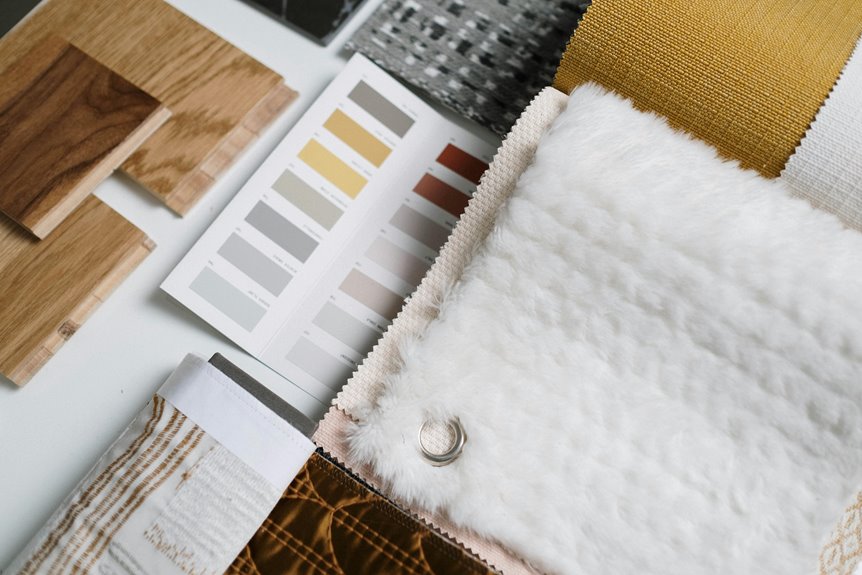
You can easily order Mulberry Home fabric samples online to test textures, colors, and durability before buying. Choose multiple samples and compare them in natural light against your existing décor. Check fabric types to match your lifestyle – cotton for durability, wool for warmth, or linen for casual elegance. Review care instructions and test how fabrics hold up to cleaning. Handle samples carefully to keep them pristine. Keep exploring to find tips on perfect coordination and avoiding common fabric mistakes.
Key Takeaways
- Order Mulberry Home fabric samples directly from their website by selecting the sample option on each fabric’s product page.
- Compare colors and patterns by viewing samples in natural light and against existing décor for perfect coordination.
- Assess fabric types like cotton, linen, wool, and polyester to match texture, durability, and maintenance needs.
- Evaluate durability with Martindale ratings and review cleaning instructions to ensure fabric suits your lifestyle.
- Handle and store samples carefully by washing hands, laying flat, avoiding sunlight, and using acid-free tissue paper.
How to Order Mulberry Home Fabric Samples
Before you commit to a full purchase, you can easily order Mulberry Home fabric samples to see the colors and textures in person.
Start by visiting their official website and browsing the fabric collections. When you find fabrics that catch your eye, select the sample option, usually available on each fabric’s product page.
You can add multiple samples to your cart, allowing you to compare several options side by side. Once you’ve chosen your samples, proceed to checkout and provide your shipping details.
Samples typically arrive within a few days, giving you the chance to feel the fabric and hold it against your décor. This simple step helps you make a confident decision before investing in larger quantities.
Understanding Fabric Types and Textures
When you explore Mulberry Home fabric samples, you’ll notice common materials like cotton, linen, and velvet each bring their own feel.
Understanding these textures helps you pick the perfect fabric for your space.
Let’s break down how different materials and textures can influence your home’s look and comfort.
Common Fabric Materials
Although choosing the right fabric can feel overwhelming, understanding common fabric materials helps you make confident decisions for your home.
You’ll often encounter cotton, a breathable, durable natural fiber perfect for everyday use.
Linen offers a crisp, cool feel but wrinkles easily, adding casual elegance.
Wool provides warmth and resilience, ideal for cozy settings.
Polyester, a popular synthetic option, resists wrinkles and stains, making maintenance simple.
Blends combine fibers to balance comfort, durability, and care.
Silk brings luxury and smoothness but requires delicate handling.
When you know these basics, you’ll better assess which fabric suits your lifestyle and aesthetic.
Keep these materials in mind as you explore Mulberry home fabric samples, ensuring your choices align with your home’s needs and your personal style.
Texture Variations Explained
Texture plays an essential role in how fabric feels and performs in your home. When you explore Mulberry home fabric samples, you’ll notice a range of textures—from smooth satins to nubby linens. Each texture affects comfort, durability, and style differently.
For instance, velvet offers a soft, luxurious feel but requires gentle care, while canvas feels rougher but is highly durable and perfect for high-traffic areas. You’ll also find woven textures that add visual interest and tactile dimension, enhancing your space’s character.
Understanding these variations helps you choose fabrics that fit your lifestyle and design goals. So, when selecting your fabric samples, focus on how the texture complements both function and aesthetic in your living space.
Tips for Comparing Colors and Patterns
How do you effectively compare colors and patterns to find the perfect match for your space? First, view fabric samples in natural light to see true colors. Avoid judging them under artificial lighting, which can distort hues.
Next, place samples against your existing furniture, walls, or flooring to guarantee harmony. Don’t be afraid to mix and match patterns—look for complementary scales and color tones to create balance.
Pay close attention to undertones; even similar colors can clash if undertones differ. Finally, step back and observe how patterns read from a distance to avoid overwhelming the room.
Evaluating Fabric Durability and Maintenance
When choosing fabrics for your home, you’ll want to take into account both durability and maintenance to guarantee they stand up to daily use and stay looking great.
Start by checking the fabric’s rub count or Martindale rating, which indicates how well it resists wear and tear. Higher ratings mean tougher fabric, ideal for high-traffic areas.
Next, consider the fiber content: natural fibers like cotton can be soft but may stain easily, while synthetics often resist stains and fading better.
Also, look into cleaning instructions—some fabrics are machine washable, while others require professional cleaning.
Choosing fabrics that match your lifestyle makes upkeep easier and extends their lifespan, saving you time and money in the long run.
Don’t forget to test samples for feel and appearance after cleaning.
Using Samples to Coordinate With Your Décor
Although selecting the right fabric might seem straightforward, using samples lets you see how colors and patterns truly work within your space. You can hold the sample against your walls, furniture, or existing textiles to guarantee harmony.
This hands-on approach helps you gauge how natural and artificial light affects the fabric’s shade throughout the day. It also allows you to mix and match textures and patterns confidently, avoiding clashes.
When coordinating with your décor, consider your room’s color palette and style—samples let you confirm if the fabric complements or contrasts effectively.
Common Mistakes to Avoid When Selecting Fabrics
Choosing the right fabric can be tricky, and if you’re not careful, common mistakes can lead to costly regrets.
One major pitfall is neglecting to test the fabric in your space. Lighting and surrounding colors affect how fabric looks, so always view samples at different times of day.
Another mistake is overlooking the fabric’s durability—make sure it suits your room’s use, especially in high-traffic areas.
Don’t ignore texture either; a fabric that looks good but feels rough can be uncomfortable.
Finally, avoid selecting a fabric without considering maintenance requirements, as some materials are harder to clean.
Caring for Your Mulberry Home Fabric Samples
To keep your Mulberry home fabric samples looking their best, you’ll want to handle and store them properly.
Always wash your hands before touching the fabrics to avoid transferring oils or dirt. When examining samples, lay them flat on a clean, dry surface to prevent creases or damage.
Handle fabrics with clean hands and lay samples flat to avoid creases and damage.
Store your samples in a cool, dry place away from direct sunlight to prevent fading. Use acid-free tissue paper between samples if stacking them, which helps maintain their texture and color.
Avoid folding the fabrics tightly; instead, roll or lay them flat if possible.
Finally, keep your samples organized by labeling each one, so you can easily reference them without unnecessary handling.
Following these care tips will guarantee your Mulberry fabrics stay fresh and ready for your next project.
Frequently Asked Questions
Can Mulberry Fabrics Be Used for Outdoor Furniture?
You might think mulberry fabrics suit outdoor furniture, but hold on. They’re delicate and not designed for weather exposure. Instead, choose specially treated fabrics made to withstand sun, rain, and wear, keeping your outdoor space vibrant.
Are Mulberry Home Fabrics Eco-Friendly or Sustainably Produced?
You’ll find that many Mulberry home fabrics prioritize eco-friendly materials and sustainable production. They often use natural fibers and responsible sourcing, so you can feel good about choosing them for a greener, stylish home.
Do Mulberry Home Fabrics Come With a Warranty?
You’ll find that Mulberry Home fabrics typically come with a warranty covering defects in materials and workmanship. Always check the specific terms before buying, so you know exactly what protections you’re getting with your fabric purchase.
Can I Return Fabric Samples if I Change My Mind?
You can usually return fabric samples if you change your mind, but it depends on the retailer’s policy. Make sure to check their return terms before ordering, so you know if returns or exchanges are allowed.
Are Mulberry Fabrics Suitable for Pets and Homes With Children?
You’ll find Mulberry fabrics durable and easy to clean, making them great for homes with pets and kids. Their stain-resistant qualities help protect against spills and scratches, so you don’t have to worry about everyday wear and tear.