
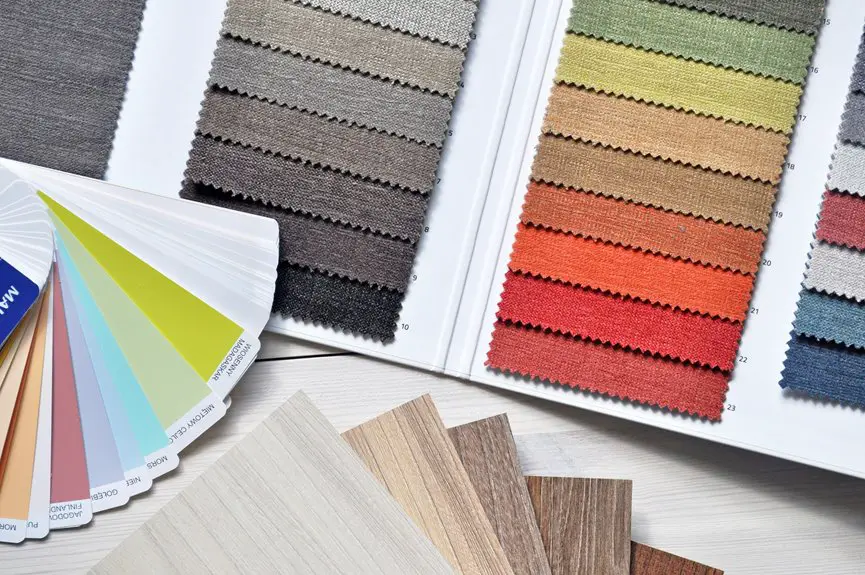
You’ll find that woven textiles are made by interlacing yarns on a loom, giving you strong, durable fabrics with a firm feel that hold their shape well. Nonwoven textiles skip weaving and bond fibers directly, so they’re faster and cheaper to produce but often less durable and more flexible. Woven works great for long-term use, while nonwoven suits disposable or specific industrial needs. Keep exploring to understand how these differences impact texture, applications, and sustainability.
Key Takeaways
- Woven textiles are made by interlacing warp and weft yarns, while nonwovens bond fibers directly through mechanical, chemical, or thermal methods.
- Woven fabrics offer high strength, durability, and shape retention; nonwovens provide flexibility and can be engineered for specific properties.
- Manufacturing woven textiles involves spinning yarns and weaving on looms; nonwovens skip weaving, enabling faster and more cost-effective production.
- Woven textiles are commonly used in apparel and upholstery; nonwovens dominate disposable products, medical supplies, and industrial applications.
- Woven fabrics are often reusable and recyclable but require more resources; nonwovens use less water and energy but are often single-use and harder to recycle.
What Are Woven Textiles?
Although you mightn’t realize it, woven textiles form the foundation of many fabrics you use daily. When you look at woven textiles, you’re seeing a fabric created by interlacing two sets of yarns—warp and weft—at right angles.
This crisscross pattern gives the fabric strength and durability, making it perfect for clothing, upholstery, and more. You can feel the texture created by the tight or loose weave, which affects breathability and flexibility.
Whether it’s denim, cotton shirting, or a delicate silk, all these fabrics start with weaving. Because of this method, woven textiles hold their shape well and resist stretching in most directions, giving you reliable performance in everyday wear and home textiles.
How Nonwoven Textiles Are Made
Since nonwoven textiles don’t rely on weaving or knitting, you’ll find they’re made by bonding or felting fibers directly together. You can create these fabrics through mechanical, chemical, or thermal methods that bind fibers without forming yarns. This approach allows for versatility and speed in production, making nonwovens suitable for disposable or specialized applications.
Here’s a quick comparison of common nonwoven bonding methods:
| Method | Process Description | Typical Use Cases |
|---|---|---|
| Mechanical | Fibers entangled by needles or water jets | Geotextiles, wipes |
| Chemical | Adhesives bond fibers | Medical gowns, filters |
| Thermal | Heat melts fibers to bond them | Disposable diapers, insulation |
Key Differences in Manufacturing Processes
When you compare woven and nonwoven textiles, you’ll notice their manufacturing processes differ fundamentally.
Woven textiles form by interlacing yarns in perpendicular directions on a loom, creating a structured, durable fabric. You control the pattern and tightness by adjusting the weave, giving woven fabrics strength and flexibility.
Nonwoven textiles, however, skip the weaving step altogether. Instead, you bond fibers directly through mechanical, chemical, or thermal methods, producing a fabric quickly and with less complexity. This process doesn’t require spinning yarns, allowing for faster production and cost efficiency.
While woven fabrics rely on yarns and looms, nonwovens depend on fiber bonding techniques. Understanding these core distinctions helps you appreciate how manufacturing shapes the characteristics and applications of each textile type.
Common Uses of Woven Fabrics
You’ll find woven fabrics everywhere, from the clothes you wear to the furniture you relax on.
They’re popular in apparel and fashion, add style to upholstery and home decor, and even serve essential roles in industrial and technical fields.
Let’s explore how these fabrics fit into your daily life and work.
Apparel and Fashion
Although woven fabrics come in countless varieties, their strength and durability make them a staple in the apparel and fashion industry. You’ll find woven textiles in everything from tailored suits to casual shirts because they hold their shape well and resist wear. Their structured nature allows designers to create sharp lines and detailed patterns, giving your wardrobe a polished look. Plus, woven fabrics breathe well, keeping you comfortable. Here’s a quick look at some common woven fabric uses in fashion:
| Apparel Type | Typical Fabrics |
|---|---|
| Formal wear | Wool, silk, cotton |
| Casual wear | Denim, chambray |
| Outerwear | Tweed, gabardine |
| Accessories | Canvas, linen |
These choices guarantee your clothes look great and last longer.
Upholstery and Home Decor
Durability and texture make woven fabrics a top choice for upholstery and home decor. When you select woven textiles for your furniture, you get strength that stands up to daily wear and tear.
Their tightly interlaced fibers provide resilience, so sofas and chairs hold up longer without sagging or fraying. Plus, woven fabrics offer a rich variety of textures and patterns, allowing you to match your style effortlessly.
You’ll find woven materials in curtains, cushions, and rugs, where their structure supports both function and aesthetic appeal. Because they resist wrinkling and maintain shape, woven textiles keep your living spaces looking crisp and inviting.
Choosing woven fabrics for upholstery and home decor means investing in lasting comfort and timeless design.
Industrial and Technical Applications
When industries demand strength and reliability, woven fabrics often deliver the best performance. You’ll find them in applications like conveyor belts, airbags, and protective clothing, where durability is essential.
Because woven textiles have interlaced yarns, they resist tearing and stretching better than many alternatives. This makes them ideal for safety gear and filtration systems that need to withstand harsh environments.
You’ll also see woven fabrics used in automotive components, such as seat belts and tire reinforcements, where consistent strength matters. Plus, their ability to maintain shape under pressure suits them well for industrial covers and tarps.
Typical Applications of Nonwoven Materials
Nonwoven materials play an essential role in many industries due to their versatility and cost-effectiveness.
When you think about everyday items like disposable face masks, wipes, or filters, nonwovens are often behind these products. You’ll find them in medical supplies such as surgical gowns and drapes, where hygiene and single-use convenience matter.
Nonwovens also shine in automotive interiors, providing sound insulation and comfort. In construction, they act as geotextiles, helping with soil stabilization and drainage.
Even in agriculture, you can use nonwoven fabrics as crop covers to protect plants. Their lightweight and customizable nature lets you tailor nonwovens to specific needs, making them a practical choice across numerous fields without the complexity of woven structures.
Strength and Durability Comparison
Although woven textiles have long been favored for their strength, you might be surprised by how nonwoven materials hold up under pressure. Wovens gain durability through interlacing yarns, providing high tensile strength and resistance to wear. Nonwovens, though lacking traditional structure, can be engineered for impressive tear resistance and flexibility. Your choice depends on the specific demands of your project.
| Property | Woven Textiles | Nonwoven Textiles |
|---|---|---|
| Tensile Strength | High | Moderate to High |
| Tear Resistance | Moderate | High |
| Abrasion Resistance | High | Moderate |
| Flexibility | Moderate | High |
| Longevity | Long-lasting | Varies, often shorter |
This table highlights the key differences in strength and durability between these textile types.
Texture and Appearance Variations
You’ll notice that woven textiles often have a smoother surface feel compared to the more varied textures of nonwoven fabrics.
The visual patterns in woven materials tend to be more structured and uniform, while nonwovens can display random or unique designs.
Understanding these differences helps you choose the right textile for your project.
Surface Feel Comparison
Texture plays an essential role in how textiles feel and look, and understanding these differences helps you choose the best fabric for your needs.
When you touch woven textiles, you’ll notice a distinct firmness and structure due to their interlaced yarns. This gives them a smooth, often more refined surface that feels consistent under your fingers.
On the other hand, nonwoven textiles tend to feel softer or sometimes rougher, depending on their bonding methods. Because they don’t have yarns woven together, their surface can be more irregular or porous.
You’ll often find nonwovens feeling lighter and more flexible, but sometimes less durable. Knowing these surface feel differences lets you pick a textile that matches the comfort, durability, and function you want.
Visual Patterns Differences
Patterns play a key role in how woven and nonwoven textiles catch your eye. When you look at woven fabrics, you’ll notice distinct, repeating patterns created by interlacing yarns. These patterns often form neat grids or intricate designs, giving woven textiles a structured, uniform appearance.
In contrast, nonwoven textiles display a more random and irregular surface because fibers are bonded together rather than woven. This randomness results in a less predictable texture and varied visual effects, which can appear fuzzy or smooth depending on the bonding method.
Environmental Impact and Sustainability Considerations
Although both woven and nonwoven textiles serve essential roles in various industries, their environmental footprints differ markedly.
When you choose woven textiles, you’re often using durable fabrics that can be reused or recycled, reducing waste over time. However, their production usually requires more water and energy due to complex weaving processes.
On the other hand, nonwoven textiles are typically made faster with less water and energy, but many are single-use and harder to recycle, creating more landfill waste.
To make sustainable choices, look for nonwovens made from biodegradable or recycled fibers. Also, consider the end-use: reusable woven fabrics suit long-term applications, while certain nonwovens can be eco-friendly for disposable items if sourced responsibly.
Your decisions directly impact environmental sustainability.
Frequently Asked Questions
Can Woven and Nonwoven Textiles Be Recycled Together?
You can’t recycle woven and nonwoven textiles together easily because they have different fiber structures. It’s best to separate them to guarantee effective recycling and avoid contamination, helping you support more efficient textile waste management.
What Are the Cost Differences Between Woven and Nonwoven Textiles?
You’ll find woven textiles usually cost more due to complex production and durability. Nonwoven textiles are cheaper and faster to make but often less durable. Your choice depends on your budget and project needs.
How Do Woven and Nonwoven Textiles Respond to Dyeing Techniques?
You might notice woven textiles absorb dye evenly, creating rich, lasting colors, while nonwovens often take dye quickly but less uniformly. You’ll find dyeing results depend on fiber type and fabric structure, impacting your final look.
Are There Health Concerns Related to Nonwoven Textile Production?
Yes, you should know nonwoven textile production can expose you to chemicals and dust, which might cause respiratory issues or skin irritation. Proper ventilation, protective gear, and safety measures help minimize these health risks effectively.
Can Woven and Nonwoven Fabrics Be Combined in a Single Product?
Yes, you can combine woven and nonwoven fabrics in one product. This mix lets you enjoy the durability of woven and the lightweight, breathable qualities of nonwoven, creating versatile, functional textiles for various uses.