
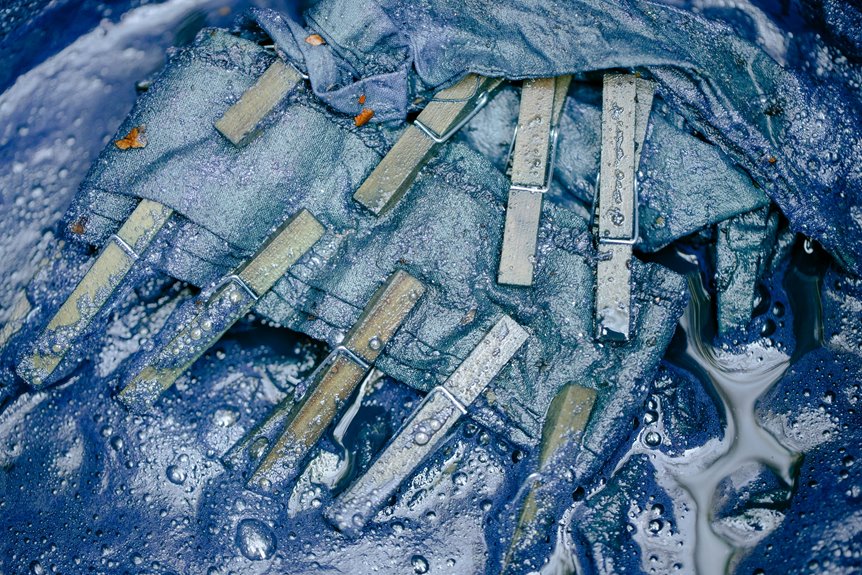
When fabric dye bleeds in the wash, act quickly! Remove the item immediately and rinse it under cold water to wash away excess dye. Soak the fabric in cold water with a gentle detergent for about 30 minutes. Use color catchers in future washes to absorb loose dyes and always sort laundry by color. You can also try special laundry products designed to prevent bleeding. Want to know more tips to protect your clothes?
Key Takeaways
- Remove the affected item from the wash immediately to stop further dye bleeding.
- Rinse the dyed area under cold running water to wash away excess dye.
- Soak the fabric in cold water with gentle detergent for 30 minutes to help lift the dye.
- Use color catchers in future washes to absorb loose dyes and prevent bleeding.
- Wash affected garments separately with a mild detergent designed for color protection.
Immediate Actions to Take
When you notice dye bleeding on your fabric, it’s essential to act quickly to minimize damage.
First, remove the item from the wash immediately to prevent further bleeding. Rinse the affected area under cold running water, ensuring the water flows through the fabric to wash away any excess dye. Avoid scrubbing, as that can spread the dye.
Remove the item from the wash and rinse under cold water to halt dye bleeding, avoiding any scrubbing.
Next, you can soak the fabric in a mixture of cold water and a gentle detergent for about 30 minutes. After soaking, rinse thoroughly with cold water again.
If the bleeding persists, consider using a color-safe bleach, but test it on a hidden area first.
Effective Use of Color Catchers
Although dye bleeding can be a frustrating issue, using color catchers effectively can help protect your fabrics during washing.
First, choose a color catcher that’s designed to absorb loose dyes. Before you start the wash, toss one or two sheets into your machine along with your laundry. Make sure to place them in with your colored items, as they work best in those loads.
It’s important to follow the manufacturer’s instructions regarding the number of sheets to use based on your load size. After the wash, check the color catcher; if it’s discolored, it’s done its job.
Washing Techniques to Minimize Dye Transfer
To minimize dye transfer during washing, it’s essential to sort your laundry by color and fabric type. This simple step can save you from the hassle of dealing with color bleeding later.
Sort your laundry by color and fabric type to prevent dye transfer and avoid the hassle of color bleeding.
Here are some effective washing techniques you can use:
- Separate darks and lights: Always wash dark colors separately from lighter ones to prevent dye transfer.
- Use cold water: Cold water helps to set dyes and reduces the risk of bleeding.
- Choose gentle cycles: Opt for a gentle cycle to minimize agitation, which can cause dyes to bleed.
- Limit the load size: Overloading the washing machine can lead to friction, increasing the chances of dye transfer.
Products That Help Prevent Further Bleeding
Preventing further dye bleeding can be achieved with the right products designed to stabilize colors in your fabrics.
One effective option is color fixatives, which you can add during the wash cycle. These products help bond dyes to the fabric, reducing the chance of future bleeding.
You might also consider using a fabric protector spray, which creates a barrier against moisture and stains.
Additionally, look for laundry detergents specifically formulated for color protection; these will help maintain vibrancy while minimizing bleeding.
Finally, cold water rinse agents can also assist in setting the colors, ensuring they stay put for longer.
Aftercare Tips for Affected Garments
If you’ve already experienced dye bleeding in your garments, taking proper care of them can help minimize damage and restore their appearance.
Follow these aftercare tips to keep your clothes looking their best:
- Wash separately: Always wash affected garments alone to prevent further dye transfer.
- Use cold water: Cold water helps to set the dye and reduces bleeding.
- Gentle detergent: Opt for a mild detergent specifically designed for color protection.
- Air dry: Avoid the dryer; instead, air dry your garments to prevent heat from setting any remaining stains.
Frequently Asked Questions
Can Dye Bleeding Be Fixed After Multiple Washes?
If your clothes are like a watercolor painting gone wrong, don’t despair! After multiple washes, fixing dye bleeding can be tough, but using color catchers or vinegar might still help restore some vibrancy.
How Can I Identify Fabrics Prone to Dye Bleeding?
To identify fabrics prone to dye bleeding, check for bright colors, especially reds and blues. Look for labels indicating “dry clean only” or “wash separately.” Testing a small swatch in water helps, too.
Is It Safe to Use Vinegar on All Fabrics?
Using vinegar on fabrics isn’t always safe. It can weaken fibers or cause discoloration, especially on delicate materials like silk or wool. Always test a small, inconspicuous area before applying vinegar to your fabric.
What Should I Do if Color Catchers Are Unavailable?
When color catchers vanish like shadows at dusk, you can toss a handful of salt or a cup of white vinegar into the wash. They’ll help keep colors from running, preserving your fabric’s beauty.
Will Soaking in Cold Water Help Before Washing?
Soaking in cold water can help prevent dye bleeding before washing. It dilutes the dye and reduces the chances of it transferring to other fabrics. Just make sure you don’t mix different colors during soaking!