
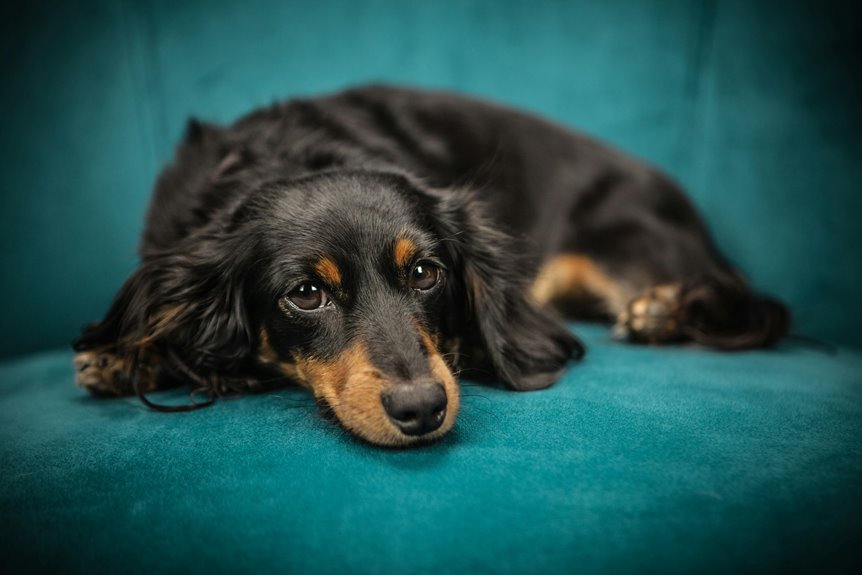
If your dog pees on your corduroy couch, act fast by blotting excess moisture gently with paper towels—don’t rub, to protect the fabric. Mix warm water, white vinegar, and mild dish soap to create a safe cleaning solution, then dab the stain carefully. Sprinkle baking soda afterward to neutralize odors and vacuum once dry. Let the couch air dry completely. Taking these steps now protects your couch and prevents lingering smells; there’s more to guarantee lasting freshness and accident prevention.
Key Takeaways
- Blot dog pee immediately with clean towels to absorb moisture without rubbing or spreading the stain on the corduroy fabric.
- Prepare a gentle cleaning solution with warm water, white vinegar, and mild dish soap, then test on a hidden spot before application.
- Dab the stain with the cleaning solution using a cloth, avoid aggressive rubbing, and let the area air dry completely.
- Sprinkle baking soda over the affected area to deodorize, leave it overnight, then vacuum thoroughly to remove odors.
- Use waterproof or washable couch covers to protect corduroy and simplify cleanup from future accidents.
Assessing the Extent of the Stain
Before you start cleaning, take a close look at the stain to understand its size and severity. You’ll want to determine how far the urine has soaked into the corduroy fabric and whether it has reached the couch cushions or frame.
Check the area by gently pressing a paper towel around the stain; if it picks up moisture, the urine has penetrated deeper. Also, note any discoloration or odor intensity, which helps gauge how stubborn the stain might be.
This assessment guides you in choosing the right cleaning method and prevents you from wasting time on ineffective solutions. By evaluating the stain carefully, you can act quickly and effectively, increasing your chances of fully removing the mess and saving your couch’s fabric integrity.
Blotting and Removing Excess Moisture
Start by grabbing several clean paper towels or a dry cloth to blot the stain gently. Avoid rubbing, as this can push the urine deeper into the corduroy fibers. Press firmly but carefully to absorb as much moisture as possible. Repeat with fresh towels until no more liquid transfers.
Here’s a quick guide to effective blotting:
| Action | Purpose |
|---|---|
| Use clean towels | Prevent spreading or staining |
| Apply gentle pressure | Absorb moisture without damage |
| Replace towels often | Maximize liquid absorption |
Preparing a Cleaning Solution for Corduroy
To tackle dog pee stains on your corduroy couch effectively, you’ll need a cleaning solution that’s both gentle and powerful enough to break down the urine without harming the fabric.
Here’s how you can prepare one at home:
- Mix one cup of warm water with one tablespoon of white vinegar to neutralize odors and disinfect.
- Add one teaspoon of mild liquid dish soap to help lift the stain without damaging the fibers.
- Stir the mixture gently to avoid creating too many suds, which can be hard to rinse out.
- Test the solution on a hidden area of your couch first to verify it doesn’t cause discoloration or damage.
This balanced solution preps your corduroy for effective cleaning while protecting its texture.
Gently Cleaning the Affected Area
To clean the affected area gently, start by blotting the spot with a clean cloth to absorb as much moisture as possible.
Use a mild cleaner that won’t damage your couch’s fabric or finish.
Finally, let the area air dry completely to prevent any lingering odors or stains.
Blotting Techniques
Although it might be tempting to rub the stain, you should gently blot the affected area instead to avoid pushing the urine deeper into the fabric. Blotting helps lift moisture without damaging the corduroy texture.
Here’s how to do it effectively:
- Use a clean, white cloth or paper towel to prevent color transfer.
- Press down gently on the stain—don’t rub—to absorb as much urine as possible.
- Replace the cloth frequently to avoid reapplying moisture back onto the fabric.
- Continue blotting until the cloth comes up mostly dry, indicating the area is well-absorbed.
Following these steps guarantees you treat the stain carefully while preserving your couch’s delicate material.
Choosing Mild Cleaners
When you start cleaning your couch, picking a mild cleaner is essential to protect the fabric while removing the urine effectively. Harsh chemicals can damage the corduroy’s texture and color, so opt for gentle solutions like diluted white vinegar or a mild dish soap mixed with water.
Test your chosen cleaner on a hidden spot first to verify it won’t cause discoloration. Apply the cleaner sparingly using a soft cloth or sponge, gently dabbing the stained area without rubbing aggressively, which could wear down the fabric.
This approach helps lift the urine without pushing it deeper. After treating the spot, blot again to remove excess moisture and cleaner residue. Choosing the right mild cleaner keeps your couch safe and fresh without compromising its delicate structure.
Air Drying Tips
Once you’ve applied a mild cleaner and gently dabbed the stain, letting the area dry properly helps prevent lingering odors and fabric damage.
To air dry your corduroy couch effectively, follow these tips:
- Open Windows: Increase airflow by opening windows to speed up drying and reduce moisture buildup.
- Use Fans: Position a fan to circulate air directly on the damp spot, but avoid high heat which can damage the fabric.
- Avoid Direct Sunlight: While sunlight helps dry, it can fade corduroy; opt for indirect light instead.
- Patience is Key: Allow the area to dry completely before using the couch to avoid trapping moisture that encourages odors or mildew.
Deodorizing to Eliminate Odors
Since dog pee can leave stubborn odors behind, you’ll need to deodorize your couch thoroughly to restore freshness.
Start by sprinkling a generous layer of baking soda over the affected area. Baking soda naturally absorbs odors and helps neutralize the lingering smell. Let it sit for several hours, or ideally overnight, to maximize its effectiveness.
Afterward, vacuum the baking soda completely from the corduroy fabric. If odors persist, mix equal parts white vinegar and water in a spray bottle and lightly mist the area.
Vinegar breaks down odor-causing compounds without damaging your couch. Allow it to air out until the vinegar smell dissipates. Avoid saturating the fabric, as excess moisture can cause damage.
Using these steps, you’ll effectively eliminate unpleasant odors and keep your couch smelling clean and fresh.
Drying the Couch Properly
Although cleaning removes stains and odors, drying your couch properly is crucial to prevent mold and mildew growth.
After treating the area, focus on drying to keep your corduroy couch fresh and safe.
- Use a clean, dry towel to blot the cleaned spot, absorbing as much moisture as possible.
- Open windows or use fans to increase air circulation around the couch.
- Avoid direct heat like hairdryers on high settings, which can damage the fabric; instead, opt for cool or warm air.
- If possible, remove cushions and dry them separately to guarantee thorough drying.
Preventing Future Accidents on Corduroy Upholstery
To protect your corduroy couch, start by training your dog to understand where they should and shouldn’t go.
Using protective covers can save you a lot of hassle if accidents happen again.
Also, keeping a consistent schedule with regular bathroom breaks helps prevent unexpected messes.
Training Techniques for Dogs
Three key training techniques can help you prevent your dog from having accidents on your corduroy upholstery. Consistency and patience are essential as you guide your dog toward proper bathroom habits.
Here are four effective training methods:
- Establish a Routine: Take your dog outside frequently, especially after meals and naps, to build a predictable bathroom schedule.
- Positive Reinforcement: Praise and reward your dog immediately after they pee outdoors to encourage the behavior.
- Supervision and Confinement: Keep a close eye on your dog indoors, using crates or gates to limit access to the couch until they’re fully trained.
- Interrupt and Redirect: If you catch your dog starting to pee inside, calmly interrupt and take them outside to finish.
Using these techniques consistently can greatly reduce accidents on your corduroy couch.
Protective Couch Covers
One simple way to shield your corduroy couch from future dog pee accidents is by using protective couch covers. These covers act as a barrier, preventing urine from seeping into the fabric and making cleanup much easier. You can choose from waterproof, washable, or slipcover options depending on your needs and style preferences.
| Cover Type | Benefits |
|---|---|
| Waterproof | Prevents liquid absorption |
| Washable | Easy to clean and maintain |
| Slipcover | Stylish, protects entire couch |
Regular Bathroom Breaks
Although accidents can happen, you can greatly reduce the chances of your dog peeing on your corduroy couch by establishing regular bathroom breaks. Consistency helps your dog understand when and where it’s appropriate to relieve itself, preventing unexpected messes on your upholstery.
Here’s how to set up an effective routine:
- Schedule bathroom breaks every 2-3 hours, especially for puppies or elderly dogs.
- Take your dog outside immediately after meals and naps to encourage timely elimination.
- Use positive reinforcement like treats and praise when your dog goes outside.
- Monitor your dog’s behavior for signs of needing to go, such as sniffing or circling, and respond promptly.
Frequently Asked Questions
Can Dog Pee Cause Permanent Damage to Corduroy Fabric?
Yes, dog pee can cause permanent damage to corduroy fabric if you don’t clean it quickly. The urine’s acidity and stains can weaken fibers and cause discoloration, so act fast to protect your couch.
Is It Safe to Use Commercial Pet Stain Removers on Corduroy?
You can use commercial pet stain removers on corduroy, but you should test a small, hidden area first. Some formulas might discolor or damage the fabric, so always follow product instructions carefully to keep your couch safe.
How Long After Cleaning Should I Wait to Use the Couch Again?
You should wait until the couch is completely dry before using it again, usually about 2 to 4 hours. This prevents odors and stains from setting and guarantees the cleaning solution fully evaporates.
Are There Specific Corduroy Couch Covers That Resist Pet Stains?
Back in the days of the Renaissance, you’d wish for magical couch covers! Luckily, today you can find corduroy covers with stain-resistant fabrics designed specifically for pets, helping you keep your couch fresh and looking great effortlessly.
Can Enzyme Cleaners Harm the Color or Texture of Corduroy?
You shouldn’t worry much; enzyme cleaners usually don’t harm corduroy’s color or texture. Still, test a small hidden spot first to be safe, since some formulas might cause slight fading or fabric changes over time.