
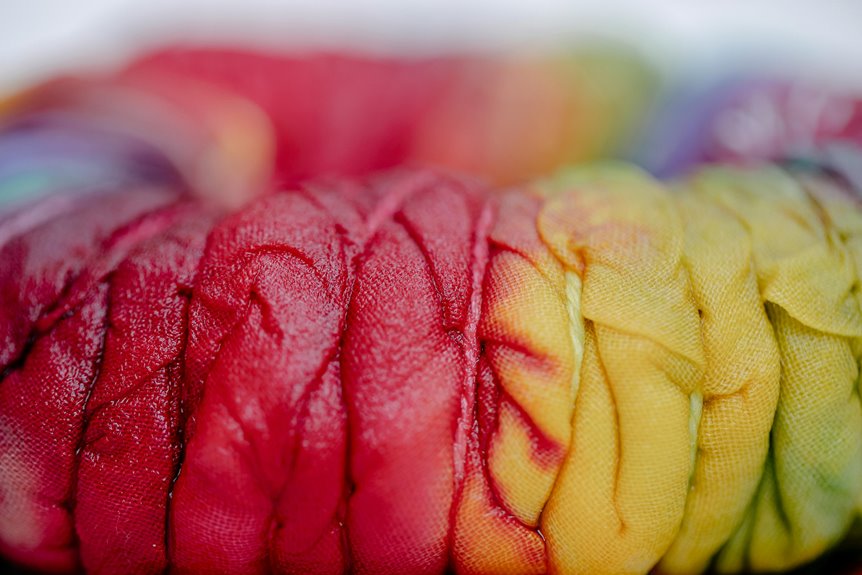
You’ll love the dry powder on wet fabric tie-dye technique for its vibrant, bold colors and creative control. Start by soaking your natural fabric, then sprinkle fiber-reactive dye powder evenly from 6-8 inches above. The moisture activates the powder for sharp or blended patterns depending on your sprinkle style. After applying, wrap it up damp to cure for at least 6 hours and then rinse carefully. Keep going to discover tips for stunning blends and lasting colors.
Key Takeaways
- Apply vibrant dry dye powder evenly on damp fabric for bold, concentrated color activation and sharp patterns.
- Pre-soak fabric, wring out excess water, and use natural fibers like cotton for optimal dye absorption.
- Layer colors carefully on wet fabric to create smooth gradients and depth in designs.
- After dye application, wrap fabric in plastic and let it cure damp for 6-8 hours to set colors.
- Rinse gently in cold water post-curing, wash with mild detergent, and air dry to preserve vibrant tie-dye results.
Understanding the Basics of Dry Powder Tie-Dye
Although dry powder tie-dye might seem complex at first, you’ll find it straightforward once you grasp the basics. This technique involves applying powdered dye directly onto wet fabric, allowing the colors to spread and blend naturally.
Dry powder tie-dye is simple once you learn to apply powdered dye on wet fabric for vibrant blends.
You’ll use vibrant, concentrated powders that activate with moisture, creating bold patterns. Unlike liquid dyes, dry powder lets you control where and how much color you want, giving you sharper lines or soft gradients depending on your application.
It’s essential to work quickly and carefully since the powder dissolves as soon as it hits the damp fabric. You’ll also want to apply the powder evenly to avoid patchy spots.
Mastering these fundamentals sets you up for beautiful, unique tie-dye designs with vivid, lasting colors.
Preparing Your Fabric for Optimal Dye Absorption
To get the best results, choose natural fabrics like cotton that soak up dye well.
Don’t skip pre-washing your fabric to remove any coatings or dirt that could block the color.
Taking these steps guarantees your tie-dye turns out vibrant and long-lasting.
Fabric Selection Tips
Choosing the right fabric plays a crucial role in how your tie-dye project turns out. Natural fibers like cotton, rayon, and silk absorb dye much better than synthetic materials. Cotton is especially popular because it soaks up colors vibrantly and evenly, giving you crisp patterns.
Avoid polyester or blends with high synthetic content, as they resist dye and lead to dull results. Look for tightly woven fabrics to prevent dye bleeding and muddiness in your design. Lightweight fabrics dry faster but may require gentler handling, while heavier ones hold dye longer, intensifying colors.
Also, consider the fabric’s color; use white or light shades to guarantee your dye shows up vividly. Choosing the right fabric upfront sets you up for a striking, successful tie-dye outcome.
Pre-Washing Importance
Once you’ve picked the perfect fabric, the next step is to pre-wash it to remove any sizing, dirt, or oils that could block dye absorption.
Skipping this step can lead to uneven colors or weak patterns because the dye won’t fully penetrate the fibers. Use a mild detergent and avoid fabric softeners, which can leave residues that repel dye.
Wash your fabric in warm water, then rinse thoroughly. After washing, don’t dry the fabric completely; it should stay damp for the best results when applying the dry powder dye.
This moisture helps the dye dissolve and spread evenly. By pre-washing, you guarantee your tie-dye design turns out vibrant and long-lasting, making your creative effort truly shine.
Selecting the Right Types of Dye Powders
When selecting dye powders, you’ll find different varieties designed for vibrant results on fabric.
It’s important to pick colorfast powders to guarantee your design stays bright after washing.
Let’s explore how to choose the right types for your tie-dye project.
Powder Dye Varieties
Different powder dyes offer unique qualities that can transform your tie-dye project. Choosing the right type helps you get vibrant, lasting colors and achieve your desired effects.
Here are three common powder dye varieties you should consider:
- Fiber Reactive Dyes – Perfect for natural fibers like cotton, these dyes bond chemically, providing bright, long-lasting colors.
- Acid Dyes – Best for protein fibers such as silk and wool, acid dyes require acidic conditions and produce rich, deep hues.
- All-Purpose Dyes – These are versatile and simple to use but may offer less vibrant results and less durability compared to fiber reactive or acid dyes.
Pick the variety that suits your fabric type and desired outcome to make your dry powder on wet fabric technique shine.
Choosing Colorfast Powders
Selecting colorfast dye powders is essential to guarantee your tie-dye designs stay vibrant and resist fading over time. When choosing powders, look for those labeled as colorfast or permanent. These dyes contain pigments designed to bond strongly with fabric fibers, ensuring long-lasting color.
Avoid cheaper powders that aren’t specifically formulated for fabric, as they tend to wash out quickly or bleed. Also, consider powder dyes made for cotton or natural fibers if that’s your fabric type, since compatibility affects color retention.
Testing a small swatch before your main project helps confirm how the color sets. By selecting high-quality, colorfast powders, you’ll enjoy brighter, more durable tie-dye results with minimal fading through washes or sun exposure.
Step-by-Step Guide to Sprinkling Dye on Wet Fabric
One essential technique for achieving vibrant tie-dye patterns is sprinkling dye on wet fabric. This method allows the dye to spread and blend naturally, creating unique effects.
Here’s a simple step-by-step guide:
- Prepare the fabric: Soak your fabric in clean water, then wring out excess moisture so it’s damp but not dripping.
- Sprinkle the dye powder: Hold your dye powder container about 6-8 inches above the fabric and sprinkle lightly and evenly over the wet areas. Avoid heavy clumps to prevent uneven color.
- Let it absorb: Allow the dye to soak into the fabric for several minutes. The wetness helps the powder dissolve and spread, producing those beautiful, soft patterns you want.
Following these steps will give your tie-dye project a lively and organic look.
Tips for Creating Stunning Color Blends and Gradients
How can you make your tie-dye colors flow seamlessly into each other? Start by lightly dampening the fabric so the dry powder dyes can diffuse naturally.
When sprinkling, apply colors close together but avoid heavy overlap to prevent muddying. Use colors that blend well, like adjacent hues on the color wheel, for smooth gradients.
Gently mist the fabric with water after sprinkling to encourage the powders to dissolve and merge softly. Tilt or rotate the fabric to help colors flow into one another without harsh lines.
Remember, less is more—apply powder sparingly to maintain control over blending.
Finally, experiment with layering colors in stages, allowing partial drying between applications to create depth and dimension in your gradients.
Common Mistakes and How to Avoid Them
Although tie-dyeing is a fun and creative process, it’s easy to make mistakes that can affect your final design. Being aware of common pitfalls helps you create vibrant, clean patterns with the dry powder on wet fabric technique.
Tie-dyeing is fun but tricky; knowing common mistakes ensures vibrant, clean dry powder designs on damp fabric.
- Applying Too Much Powder: Overloading fabric with powder causes muddy colors and loss of detail. Use moderate amounts to keep colors distinct.
- Using Fabric That’s Too Wet or Too Dry: If fabric is too wet, colors bleed uncontrollably; too dry, powder won’t dissolve properly. Aim for damp, not dripping.
- Skipping Proper Mixing: Failing to mix powders evenly can create uneven color patches. Gently mix powders before applying.
Avoid these mistakes, and your tie-dye projects will turn out crisp and colorful every time.
Curing and Setting the Dye for Long-Lasting Results
Once you’ve applied the dye, you’ll need to cure and set it properly to confirm your colors stay vibrant and don’t fade over time.
Start by wrapping your fabric in plastic to keep it damp, allowing the dye to fully absorb. Let it sit for at least 6 to 8 hours, or overnight if possible.
After curing, rinse the fabric in cold water to remove excess dye without disturbing the pattern. Then, wash it gently with a mild detergent in cold water.
Finally, air dry or tumble dry on low heat. Avoid direct sunlight during drying to prevent fading.
Following these steps assures your tie-dye maintains its brilliance and longevity, making your dry powder on wet fabric creations truly stand the test of time.
Creative Project Ideas Using the Dry Powder Technique
You can create countless vibrant and unique designs using the dry powder technique in tie-dye projects. This method lets you experiment with color intensity and blending in fresh ways.
Here are some creative ideas to try:
- Gradient T-Shirts: Apply dry powder in layers on damp fabric to achieve smooth color shifts, perfect for eye-catching tees.
- Abstract Wall Hangings: Use multiple colors and let powders mix unpredictably on wet fabric to create stunning art pieces.
- Customized Tote Bags: Design bold patterns by sprinkling dry powder on damp bags, then seal colors for a durable, stylish accessory.
Try these projects to explore the full potential of dry powder tie-dye and make your creations stand out.
Frequently Asked Questions
Can I Use Dry Powder Dyes on Synthetic Fabrics?
Dyeing synthetic fabrics with dry powder is like painting on glass—tricky but doable. You’ll want to choose disperse dyes designed for synthetics, or your colors won’t stick well and might fade quickly.
How Do Weather Conditions Affect the Drying Process?
You’ll find that warm, sunny weather speeds up drying, while cool, humid conditions slow it down. Wind helps by increasing airflow, but too much can cause uneven drying or disturb your fabric’s design.
Is It Safe to Use Dry Powder Dyes Indoors?
Think of dry powder dyes as tiny storms in a jar—using them indoors can stir up airborne particles. You’ll want good ventilation and protective gear to keep your space safe and your lungs clear while you create.
Can I Mix Dry Powder Dyes With Liquid Dyes?
You can mix dry powder dyes with liquid dyes, but be careful to blend them thoroughly for even color. Use gloves and work in a ventilated area to avoid inhaling powder particles during mixing.
What Storage Methods Prolong Dry Powder Dye Shelf Life?
To prolong your dry powder dye’s shelf life, store it in airtight containers away from moisture and sunlight. Keep it in a cool, dry place, and avoid temperature fluctuations to maintain its vibrant color and effectiveness.