
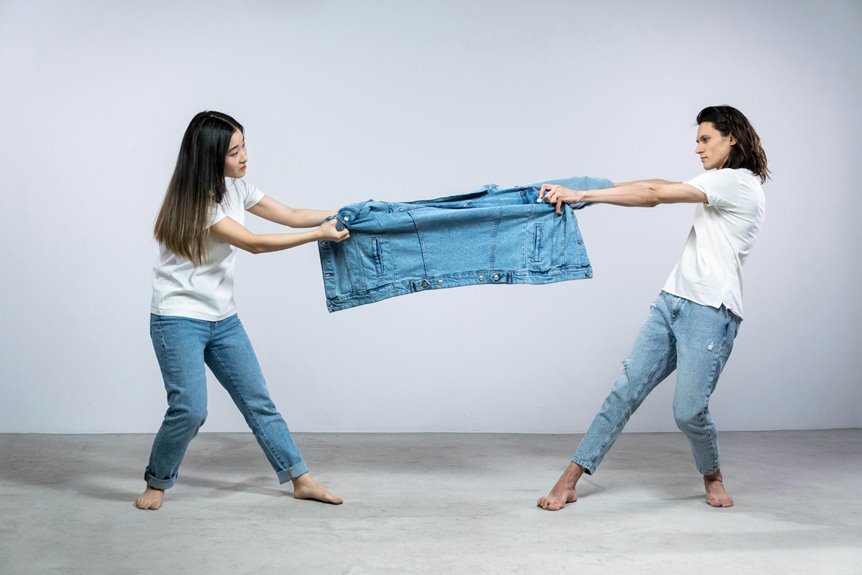
Yes, selvedge denim does stretch, but gradually. Made from 100% cotton, it feels stiff at first but softens and molds to your body with wear. Expect minimal immediate stretch, mostly around the waist and thighs after a few wears. Movement helps speed this break-in process, while washing sparingly preserves shape and durability. Over weeks, your jeans will develop a custom fit and unique fades. Keep going, and you’ll discover how to care for and enhance that perfect fit.
Key Takeaways
- Selvedge denim, made from 100% cotton, stretches minimally but gradually molds to your body with consistent wear.
- Initial stiffness softens over weeks, with noticeable stretch around the waist and thighs after 1-3 weeks of use.
- Regular movement like squats and lunges helps speed up the fabric’s natural stretching process.
- Avoid frequent washing early on to prevent fiber breakdown and maintain controlled stretch and shape retention.
- Over 3 months, selvedge denim achieves a personalized, broken-in fit with unique fades tailored to your wear patterns.
Understanding the Fabric: What Is Selvedge Denim?
Selvedge denim is a type of fabric known for its clean, finished edges that prevent unraveling. When you buy selvedge denim, you’re getting fabric woven on traditional shuttle looms, which produce a tighter, denser weave.
This process creates a distinctive edge with a colored thread, often red or blue, running along the seam. You’ll notice this edge when you cuff your jeans, showcasing their authenticity.
Unlike mass-produced denim, selvedge denim tends to feel sturdier and more durable. The cotton used is usually of higher quality, and the fabric ages beautifully, developing unique fades tailored to your wear patterns.
Understanding this fabric helps you appreciate why selvedge denim is prized by enthusiasts who value craftsmanship and longevity.
How Selvedge Denim Differs From Regular Denim
You’ll notice selvedge denim stands out because of its unique weaving technique, which uses a tightly woven edge that prevents unraveling.
Unlike regular denim, selvedge often features a different fabric composition, giving it a distinct feel and durability.
Let’s explore how these differences impact the stretch and overall quality.
Weaving Techniques Explained
Although both selvedge and regular denim share similar raw materials, their weaving techniques set them apart, affecting durability and appearance. Selvedge denim is woven on traditional shuttle looms, producing a tightly woven edge that prevents unraveling. Regular denim uses modern projectile looms, which are faster but create a less durable edge. This difference influences stretch and fade patterns.
| Feature | Selvedge Denim | Regular Denim |
|---|---|---|
| Loom Type | Shuttle loom | Projectile loom |
| Edge Finish | Self-finished (selvedge) | Cut edge |
| Weave Density | Tight and firm | Looser weave |
| Durability | Higher | Moderate |
| Stretch Behavior | Minimal initial stretch | More immediate stretch |
Understanding these techniques helps you appreciate how selvedge denim holds shape better over time.
Fabric Composition Differences
The weaving techniques set the foundation, but the fabric composition truly shapes how denim performs and feels.
When you compare selvedge denim to regular denim, you’ll notice selvedge often uses 100% cotton, which means it stretches less initially but molds to your body over time.
Regular denim frequently blends cotton with synthetic fibers like elastane, giving it immediate stretch and recovery. This difference impacts how your jeans break in and fit.
Selvedge denim’s pure cotton fabric tightens up at first, then gradually softens and stretches with wear, offering a unique, personalized fit.
In contrast, regular denim’s synthetic blend offers more flexibility from day one but may not develop the same character or durability.
Knowing this helps you set realistic expectations for comfort and longevity.
The Role of Cotton in Denim Stretch and Comfort
Because cotton forms the foundation of selvedge denim, understanding its role is key to appreciating how stretch and comfort come into play.
Cotton fibers naturally have some give, but they’re not inherently stretchy like synthetic fibers. When you wear selvedge denim made from 100% cotton, the fabric will soften and mold to your body over time, increasing comfort without significant stretch.
The cotton fibers relax and break in, making the jeans feel less rigid. However, the amount of stretch you experience depends largely on the cotton’s weave and weight.
While cotton offers breathability and durability, it also means your selvedge denim won’t stretch dramatically but will instead become more comfortable and personalized with wear.
Typical Stretch Levels in 100% Cotton Selvedge Denim
When you wear 100% cotton selvedge denim, you’ll notice its natural fiber rigidity creates a firm feel.
This means the fabric starts off stiff and holds its shape well.
Over time, you’ll see only minimal stretch, keeping that classic selvedge structure intact.
Natural Fiber Rigidity
Although 100% cotton selvedge denim offers a classic feel and durability, it doesn’t stretch much on its own. That’s because cotton fibers are naturally rigid and resist elongation.
When you wear selvedge denim made solely from cotton, expect limited flexibility. Here’s what you should know about natural fiber rigidity:
- Cotton fibers maintain their shape, so the fabric won’t stretch considerably.
- Over time, the denim softens, but the stretch remains minimal.
- You won’t get the same give as synthetic blends or stretch-infused denim.
- The rigidity contributes to the denim’s long-lasting structure and distinctive fade patterns.
Understanding this helps you set realistic expectations before breaking in your raw selvedge jeans.
Initial Stiffness Levels
You’ll notice that 100% cotton selvedge denim starts off feeling quite stiff due to the natural rigidity of cotton fibers.
When you first put on a pair, they may feel unyielding, limiting your movement slightly. This initial stiffness is a hallmark of raw selvedge denim, as it hasn’t been pre-washed or softened.
The tight weave and dense construction add to that firm texture, making the fabric feel durable but resistant to immediate stretching. You might find the denim feels almost like wearing a second skin that’s a bit rigid, especially around the knees and thighs.
This stiffness is expected and actually beneficial—it helps the denim retain its shape and develop unique creases as you wear it in over time.
Minimal Stretch Over Time
Because 100% cotton selvedge denim lacks synthetic fibers, it stretches very little over time. When you wear these jeans, you can expect them to maintain their shape better than blends with elastane or polyester.
Here’s what you’ll typically notice:
- Slight give in areas like the knees and seat after consistent wear.
- Minimal horizontal stretch—no drastic sagging or bagging.
- The waistband may loosen just a bit but won’t expand considerably.
- The denim will form subtle creases and fades without losing its fit.
This minimal stretch means you should buy selvedge denim that fits snugly at first since it won’t loosen much.
Over time, the fabric softens but won’t compromise the jean’s original silhouette or support.
How Wearing Selvedge Denim Affects Its Fit Over Time
As you wear selvedge denim, its fibers gradually adapt to your body, creating a personalized fit that improves with time.
The rigid cotton threads initially feel stiff, but with regular use, they soften and conform to your unique shape. This natural molding process allows the jeans to stretch subtly, mainly in areas under frequent movement like knees, thighs, and seat.
You’ll notice the denim loosening just enough to enhance comfort without losing its structured look. Unlike synthetic blends, selvedge denim won’t sag excessively, maintaining its classic silhouette.
Over weeks or months, the fabric’s tight weave relaxes, but the selvedge edge stays intact, ensuring durability.
Wearing your denim consistently is key to experiencing this gradual yet distinct fit evolution.
Techniques to Speed Up the Break-In Process
Although selvedge denim naturally softens and molds to your body over time, you can speed up the break-in process with a few targeted techniques.
Selvedge denim softens naturally but targeted techniques can speed up the break-in process for a perfect fit.
Here’s how to get your jeans feeling comfortable faster:
- Wear Them Often: The more you wear your selvedge denim, the quicker it will stretch and conform to your shape.
- Move Around: Do squats, lunges, or stretch while wearing them to help loosen the fabric.
- Apply Gentle Heat: Use a hairdryer on low heat to warm specific tight areas, then flex those parts to encourage stretching.
- Spot Dampening: Lightly spray water on snug spots before wearing the jeans, as moisture helps relax the fibers.
These tips help you enjoy your selvedge denim’s unique fit without waiting months.
Caring for Your Selvedge Denim to Maintain Shape
When you want your selvedge denim to keep its shape and last longer, proper care is essential.
Start by washing them sparingly—too much washing breaks down fibers and causes unwanted stretch. When it’s time, turn your jeans inside out and wash them in cold water using a gentle cycle or hand wash to reduce stress on the fabric.
Avoid using harsh detergents or bleach, as they weaken the denim. After washing, air dry your jeans flat or hang them by the waistband to prevent distortion.
Resist the temptation to tumble dry, which can shrink and warp the fit. By treating your selvedge denim with care, you’ll maintain its original shape and durability, letting you enjoy that perfect fit for years to come.
When to Expect Your Selvedge Jeans to Reach Their Best Fit
You’ll notice your selvedge jeans gradually molding to your body over time, but reaching their best fit requires patience. The denim stretches and forms uniquely to your shape with regular wear.
Selvedge jeans slowly conform to your body, offering a personalized fit that improves with consistent wear and time.
Generally, expect these milestones:
- First week: Slight stretch around waist and thighs as the fabric loosens.
- After 3-4 weeks: Denim softens and fits more comfortably without sagging.
- 1-3 months: Jeans adapt well to your body contours, showing personalized fading.
- Beyond 3 months: Achieve the ideal fit where the jeans feel broken-in yet maintain structure.
Keep wearing your selvedge consistently, and avoid excessive washing early on to speed up this process.
With time, you’ll enjoy a truly custom fit that only quality selvedge denim can deliver.
Frequently Asked Questions
Can Selvedge Denim Be Machine Washed Without Damage?
You can machine wash selvedge denim, but it’ll wear faster and lose color. Turn them inside out, use cold water, and a gentle cycle. To keep them lasting longer, hand washing or spot cleaning’s better.
Are Raw Selvedge Jeans Suitable for All Body Types?
Like a tailored suit, raw selvedge jeans can suit many body types, but they require patience as they mold to your shape over time. You’ll love the personalized fit once broken in properly.
How Does Humidity Affect Selvedge Denim Stretch?
Humidity affects your selvedge denim by increasing fabric moisture, which makes fibers swell and stretch more easily. You’ll notice your jeans feel softer and more flexible in humid conditions, speeding up the break-in process.
Can Selvedge Denim Shrink After the First Wash?
Yes, your selvedge denim can shrink after the first wash, especially if you wash it in hot water or dry it aggressively. To avoid this, use cold water and air dry your jeans gently.
What Are Common Signs That Selvedge Denim Needs Repair?
When you spot worn-out knees, fraying hems, or holes popping up, it’s time to jump on the repair bandwagon. Don’t let small tears snowball into bigger problems—you’ll want to fix them before the damage spreads.