
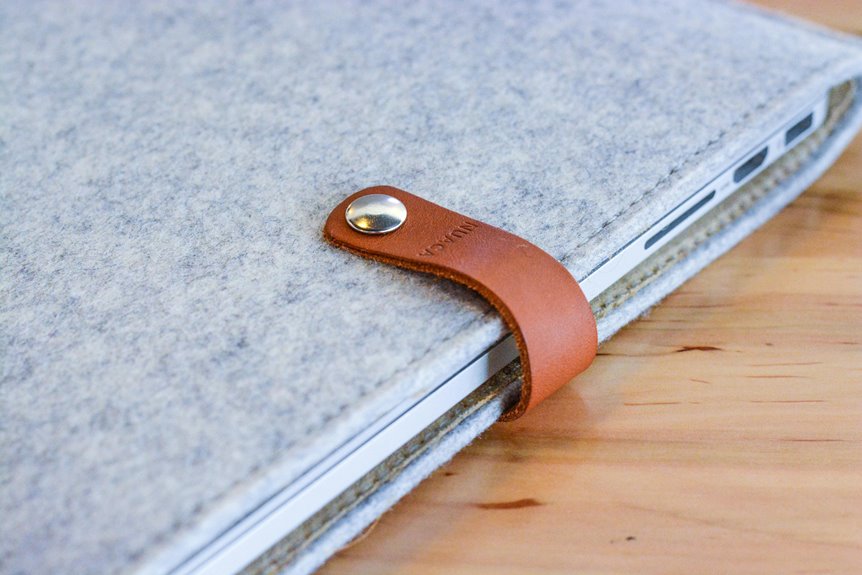
You can stick a PopSocket to fabric cases, but the grip isn’t as strong or lasting as on smooth surfaces. Fabric’s texture and porosity make the adhesive struggle to fully bond, especially with loose weaves or fuzzy materials. Cleaning and pressing firmly helps, but expect the PopSocket to loosen over a few days with regular use. If you want to understand which fabrics work better and tips to improve hold, keep exploring how these factors affect adhesion.
Key Takeaways
- PopSocket adhesives stick moderately well to tightly woven, smooth fabric cases like polyester but lose grip faster than on smooth plastic cases.
- Adhesion is weaker on porous, textured, or loosely woven fabrics such as cotton or velvet, causing quicker loosening or peeling.
- Cleaning fabric surfaces thoroughly and pressing the PopSocket firmly improves initial stickiness but cannot fully prevent reduced hold over time.
- Fabric flexibility and natural fiber absorption of oils and moisture further reduce the adhesive’s long-term durability on fabric cases.
- Using alternative adhesives like fabric-specific pads or double-sided tape can enhance PopSocket attachment on fabric phone cases.
How PopSockets Adhesive Works
PopSockets use a strong, reusable adhesive that sticks firmly to smooth surfaces, including many phone cases.
When you press a PopSocket onto your phone or case, the adhesive creates a tight bond by conforming to the surface’s texture. This grip is strong enough to hold the PopSocket in place during everyday use but allows you to remove and reposition it without leaving residue.
The adhesive relies on a flat, solid surface to maximize contact and provide stability. If the surface is uneven, porous, or textured, the adhesive struggles to form a secure hold. That’s why smooth plastic, silicone, or hard cases work best.
Understanding this helps you anticipate whether your phone case will provide the right foundation for your PopSocket to stick effectively.
Characteristics of Fabric Phone Cases
When you use a fabric phone case, its texture and material can affect how well a PopSocket sticks.
Fabric surfaces are often soft and porous, which creates challenges for the adhesive to bond securely.
Understanding these characteristics helps you know what to expect with PopSocket adhesion on fabric cases.
Texture and Material Impact
Although fabric phone cases offer a stylish and unique feel, their texture can considerably affect how well adhesive accessories stick. When you handle a fabric case, you’ll notice the surface isn’t smooth like plastic or silicone. Instead, you get fibers, weaves, and sometimes even raised patterns.
These irregular textures reduce the contact area for adhesives, making it harder for Popsockets to form a tight bond. The type of fabric matters too; tightly woven materials provide a firmer base than loosely knit or fuzzy fabrics.
Natural fibers like cotton or wool may absorb moisture and oils, affecting stickiness. Knowing this, you’ll understand why some fabric cases hold adhesive accessories better than others, purely based on their material and surface texture.
Adhesion Challenges on Fabric
The unique texture and material of fabric phone cases create specific adhesion challenges that affect how well accessories like Popsockets stay attached. Fabric surfaces are often porous and flexible, causing adhesives to bond unevenly or weaken over time. You might notice your Popsocket peeling off sooner compared to smooth cases. Additionally, any dirt or moisture trapped within the woven fibers can reduce adhesion strength. To help you understand these challenges, here’s a quick overview:
| Fabric Type | Adhesion Strength | Common Issue |
|---|---|---|
| Cotton Blend | Moderate | Absorbs moisture |
| Polyester | Low | Slippery surface |
| Nylon | Moderate | Slightly textured |
| Wool | Low | Highly porous fibers |
Knowing this, you can better choose or prepare your fabric case for Popsocket use.
Common Challenges With Adhesives on Fabric
You’ll notice adhesives often struggle to stick on fabric cases because the texture can be uneven and porous.
This surface makes it tough for glue to form a strong bond. Understanding these challenges helps you know why Popsockets mightn’t hold as well on fabric.
Adhesion Issues on Textiles
When you try to attach Popsockets to fabric cases, you’ll quickly notice that adhesives often struggle to form a strong bond. Fabric’s flexible and porous nature can absorb glue, weakening adhesion. Plus, fibers shift when you move your phone, causing the Popsocket to loosen or fall off.
| Challenge | Explanation |
|---|---|
| Porosity | Fabric absorbs adhesive, reducing stickiness. |
| Flexibility | Movement causes stress on the bond. |
| Fiber Texture | Uneven surface prevents full contact. |
| Dirt & Oils | Contaminants block adhesive from bonding. |
| Washing & Wear | Cleaning degrades adhesive over time. |
To get a lasting hold, you’ll need adhesives designed specifically for textiles or consider alternative attachment methods.
Surface Texture Impact
Although fabric cases offer unique style and texture, their uneven surfaces make it tough for adhesives like those on Popsockets to stick securely.
When you try attaching a PopSocket, the adhesive struggles to bond because fabric fibers create tiny gaps and irregularities. These gaps prevent the adhesive from making full contact, reducing its grip and causing the PopSocket to loosen or fall off over time.
Additionally, some fabrics have a soft or fuzzy texture, which further limits adhesion. If you want your PopSocket to stay put, consider using a smoother, less porous surface or applying a thin, rigid backing between the fabric and the adhesive.
Otherwise, expect weaker adhesion and a higher chance of your accessory detaching unexpectedly.
Testing Methodology for PopSocket Adhesion
Since PopSockets rely on adhesive strength, testing their grip on fabric cases requires a clear and consistent methodology.
You’ll want to start by selecting various fabric phone cases with different textures and materials. Clean each case surface thoroughly to remove dust and oils, guaranteeing fair adhesion conditions.
Next, firmly press the PopSocket onto each case, applying uniform pressure for the same duration to mimic typical use. Allow the adhesive to cure for 24 hours at room temperature.
Press PopSocket firmly with consistent pressure, then let adhesive cure 24 hours at room temperature for best results.
To test adhesion, you can apply gradual pulling force, measuring the amount needed to detach the PopSocket. Document any shifts, peeling, or complete detachment.
Repeating these steps across multiple samples helps you identify patterns and differences in adhesion strength. This method guarantees your findings reflect real-world usage accurately.
Results: PopSocket Adhesion on Different Fabric Textures
You’ll notice that PopSockets stick well to cotton fabric, providing a reliable hold for everyday use.
Polyester cases, on the other hand, offer less adhesion but give you a better grip thanks to their texture.
Understanding these differences helps you choose the right case for your PopSocket needs.
Adhesion on Cotton
When you try to attach a PopSocket to cotton fabric cases, you might notice the grip isn’t as strong as on smooth surfaces. The natural fibers and slight texture of cotton make it harder for the adhesive to form a lasting bond. You’ll find the PopSocket holds initially but may loosen over time, especially with frequent handling.
| Fabric Type | Initial Stickiness | Durability (Days) |
|---|---|---|
| Cotton (Smooth Weave) | Moderate | 3-5 |
| Cotton (Ribbed Texture) | Low | 2-4 |
| Cotton Blend | Moderate | 4-6 |
Grip on Polyester
Although polyester cases offer a smoother surface than cotton, the PopSocket’s adhesive still faces challenges gripping firmly.
When you attach a PopSocket to polyester, you might notice it sticks better initially compared to cotton, thanks to polyester’s tighter weave and slight sheen.
However, over time, the adhesive tends to weaken, especially with regular handling and exposure to oils from your hands.
You’ll find that while the grip feels more secure at first, it isn’t as durable as on hard, flat surfaces.
If you want your PopSocket to stay put longer, make sure the polyester case is clean and dry before application.
Still, keep in mind that polyester’s fabric texture isn’t the best match for strong, lasting adhesion.
Factors Affecting PopSocket Stickiness on Fabric
Since fabric cases vary widely in texture and material, several factors influence how well a PopSocket sticks to them. You need to evaluate the fabric’s weave, surface roughness, and finish. A tightly woven, smooth fabric generally provides a better surface for adhesion. Meanwhile, rough or fuzzy textures reduce contact area, weakening the stickiness.
Here are key factors affecting PopSocket adhesion on fabric cases:
- Fabric Texture: Smooth fabrics like nylon offer more grip than fuzzy or napped fabrics like velvet.
- Surface Cleanliness: Dirt, dust, or oils interfere with adhesive strength, so cleaning the fabric helps.
- Fabric Flexibility: Stiff fabrics hold the PopSocket better, while stretchy or loose fabrics can cause peeling or shifting.
Understanding these will help you set realistic expectations for PopSocket performance on fabric cases.
Alternative Attachment Methods for Fabric Cases
If you’ve noticed that PopSockets don’t always stick well to fabric cases due to texture or flexibility, you might want to explore other ways to attach them.
One option is using a PopSocket with a reusable adhesive base, which can offer stronger grip on fabric surfaces.
Alternatively, you could try securing the PopSocket with a compatible phone ring holder or a phone grip that clips onto the case edges, bypassing the fabric entirely.
Some users also opt for fabric-friendly adhesive pads or double-sided tape designed for textiles to improve hold without damaging the case.
Tips to Improve PopSocket Adhesion on Fabric
When you want your PopSocket to stick securely to a fabric case, preparing the surface properly can make a big difference. Fabric’s texture and flexibility often reduce adhesion, but you can boost it with a few simple steps.
First, clean the area thoroughly to remove dust or oils that block the adhesive. Then, press the PopSocket firmly for at least 30 seconds to guarantee it bonds well. Finally, give the adhesive time to set—waiting a few hours before use helps strengthen the hold.
Clean the area, press firmly for 30 seconds, and let the adhesive set for a few hours.
Here are key tips to improve adhesion on fabric cases:
- Use a lint roller or tape to clear fibers from the fabric surface
- Apply gentle heat with a hairdryer to slightly soften the adhesive
- Avoid repositioning once placed to maintain a strong initial bond
These steps help your PopSocket stick better and last longer on fabric.
Comparing PopSocket Performance on Fabric vs. Smooth Cases
Understanding how to improve PopSocket adhesion on fabric cases sets the stage for comparing their overall performance against smooth cases.
When you attach a PopSocket to a smooth case, it usually sticks firmly and lasts longer because the surface is flat and non-porous.
Fabric cases, on the other hand, pose challenges—the textured, porous material makes it harder for the adhesive to bond securely. You might notice that PopSockets on fabric cases can loosen or peel off more quickly, especially with frequent handling.
However, if you prep the fabric well and press firmly during installation, you can boost adhesion.
Still, smooth cases generally provide a more reliable grip and longer-lasting stickiness, making them the better choice if you want your PopSocket to stay put without extra fuss.
User Experiences With Popsockets on Fabric Cases
How well do PopSockets actually hold up on fabric cases in real life? Many users find the grip less reliable compared to smooth surfaces.
You might notice the adhesive struggles to bond firmly, especially if the fabric has a loose weave or texture. Here’s what people commonly report:
- The PopSocket may loosen after a few days, requiring reattachment.
- Sweat and oils can weaken the stickiness faster on fabric.
- Some users suggest applying a small adhesive pad between the PopSocket and case for better hold.
If you’re planning to use a PopSocket with a fabric case, keep in mind it often demands extra care to maintain the connection.
Your experience will depend on the fabric type and how frequently you adjust or pull on the PopSocket.
Final Thoughts on Using Popsockets With Fabric Phone Cases
Although fabric cases offer a unique look and feel, you’ll find that attaching a PopSocket requires extra attention to keep it secure. The textured surface may reduce adhesion, so prepping the area and pressing firmly are key. If you want a reliable grip and stand, consider these factors before committing.
| Aspect | Fabric Case | PopSocket Use Tips |
|---|---|---|
| Adhesion | Less sticky | Clean surface; press hard |
| Durability | Can wear over time | Check regularly |
| Aesthetics | Stylish, textured | Choose complementary design |
| Comfort | Soft, cozy | Position for easy grip |
| Removal | May leave fibers | Peel slowly and gently |
Keep these points in mind to enjoy your PopSocket without frustration on fabric cases.
Frequently Asked Questions
Can Popsockets Damage Fabric Phone Cases?
You might worry about Popsockets damaging fabric cases, but they usually won’t. Just be gentle when removing them, as peeling too hard could fray or stretch the fabric. So, handle with care to avoid damage.
Are Popsockets Reusable on Fabric Cases?
Think of Popsockets like a trusty pocket watch—they’re reusable but not forever. You can reposition them on fabric cases a few times, but overuse weakens the stickiness, so don’t expect them to last like new indefinitely.
Will Heat Affect Popsocket Adhesion on Fabric?
Heat can weaken your PopSocket’s adhesive on fabric cases, causing it to lose grip over time. You’ll want to avoid exposing it to high temperatures to keep it sticking firmly and prevent it from falling off unexpectedly.
How Do Fabric Patterns Affect Popsocket Placement?
Fabric patterns can impact where you place your PopSocket because textured or raised designs might reduce adhesion. You’ll want to choose smoother areas to guarantee a secure grip and prevent your PopSocket from peeling off easily.
Can Popsockets Be Removed Without Residue on Fabric?
About 70% of users report Popsockets peel off fabric cases cleanly. You can remove them without residue by gently lifting and slowly peeling. Avoid harsh scrubbing to keep your fabric case looking fresh and undamaged.