
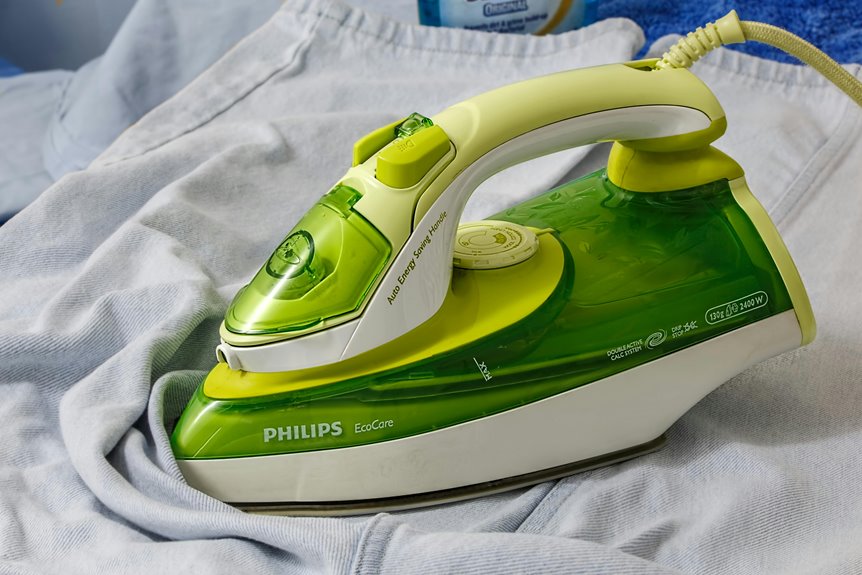
Percale sheets, made from tightly woven cotton, tend to wrinkle easily, so you’ll likely need to iron them to keep their crisp, smooth feel. Ironing at medium heat with steam relaxes fibers and enhances breathability, but you can also minimize wrinkles by using gentle washing cycles, low heat drying, and promptly removing sheets from the dryer. Proper folding and storing helps too. Keep going to discover more tips on caring for your percale sheets and keeping them wrinkle-free.
Key Takeaways
- Percale sheets often wrinkle easily due to their tight cotton weave, so ironing is recommended for a crisp, smooth appearance.
- Use medium to high heat with steam when ironing to relax fibers without damaging the fabric.
- Washing in cold water on a gentle cycle and low-heat drying reduces wrinkles before ironing.
- Remove sheets promptly from the dryer and shake them out to minimize creasing.
- Store sheets neatly folded in a cool, dry place or hang them to maintain wrinkle-free texture.
What Are Percale Sheets Made Of?
Percale sheets are typically made from tightly woven cotton fibers, giving them a crisp and breathable feel.
When you choose percale, you’re opting for a fabric with a plain weave, meaning the threads cross over and under each other in a simple pattern. This construction creates a matte finish and a smooth texture that feels cool against your skin.
Most percale sheets use long-staple cotton, which improves durability and softness. You might also find blends with polyester or other fibers to enhance wrinkle resistance or affordability.
However, pure cotton percale remains popular for its natural breathability and comfort. Understanding what percale sheets are made of helps you appreciate their lightweight structure and why they’re favored for warmer climates and those who enjoy a crisp bed linen.
Why Do Percale Sheets Wrinkle Easily?
Although you might appreciate their crisp feel, these sheets tend to wrinkle easily because of their tight, plain weave and the natural fibers used.
Percale sheets are usually made from cotton or linen, both of which wrinkle more than synthetic fabrics. The tight weave gives you that smooth, matte finish but also makes the fabric less flexible, so it creases when you move or fold it.
When you sleep or store your sheets, the fibers compress and create wrinkles. Since natural fibers absorb moisture, any sweat or humidity can cause the fabric to crumple more readily.
Understanding this helps you realize why percale sheets often need a bit of extra care to keep them looking crisp, especially if you prefer a wrinkle-free bed.
Factors That Affect Wrinkling in Percale Sheets
When you choose percale sheets, several factors influence how much they wrinkle. Understanding these can help you manage or reduce wrinkles effectively.
First, the fabric’s thread count plays a role—lower thread counts tend to wrinkle more.
Next, the fiber content matters; 100% cotton percale wrinkles more than blends with synthetic fibers.
How you wash and dry your sheets also impacts wrinkling; high heat and over-drying increase creases.
Finally, storage and folding techniques affect wrinkle formation; leaving sheets crumpled or stuffed can cause more wrinkles.
- Thread count: lower counts wrinkle easier
- Fiber type: pure cotton wrinkles more than blends
- Laundry method: high heat drying causes creases
- Storage: careful folding reduces wrinkles
Knowing these helps you keep your percale sheets smoother.
Is Ironing Necessary for Percale Sheets?
Percale sheets tend to wrinkle easily due to their crisp, lightweight weave.
You might wonder if ironing is the only way to keep them smooth.
Luckily, there are alternative methods to reduce wrinkles without reaching for the iron.
Percale Fabric Wrinkle Traits
Because of its crisp, tightly woven cotton, percale fabric tends to wrinkle more easily than softer weaves. When you run your fingers over percale sheets, you’ll notice slight creases after washing or sleeping.
These wrinkles are a natural trait of the fabric and don’t necessarily mean your sheets are dirty or worn out. Here’s what you should know about percale fabric wrinkle traits:
- Wrinkles form quickly due to the matte finish and tight weave.
- The fabric holds creases longer compared to sateen or jersey.
- High thread count percale can sometimes reduce but not eliminate wrinkles.
- Washing in warm water and promptly drying can minimize severe wrinkling.
Understanding these traits helps you decide whether ironing fits your routine.
Ironing Alternatives for Wrinkles
You might wonder if ironing is the best way to handle the natural wrinkles that come with percale sheets. Luckily, it’s not your only option.
You can toss your sheets in the dryer on a low heat setting with a damp cloth for about 10 minutes; the steam helps smooth out wrinkles.
Another trick is to pull the sheets tight when making your bed, smoothing out creases with your hands.
If you prefer, a handheld steamer works well to quickly relax the fabric without risking damage.
Finally, hanging your sheets to dry naturally in a breezy spot often reduces wrinkles considerably.
These alternatives save time and effort, letting you enjoy crisp percale sheets without the hassle of ironing.
Benefits of Ironing Percale Sheets
Anyone who values a crisp, smooth bed will appreciate the benefits of ironing percale sheets. Ironing removes stubborn wrinkles that other methods might miss, giving your bedding a polished, neat look.
It also helps maintain the fabric’s firmness, enhancing the cooling, breathable qualities percale is known for. Plus, ironing can extend the lifespan of your sheets by smoothing out fibers and reducing wear.
Here’s why you might want to iron your percale sheets:
- Achieve a perfectly wrinkle-free, fresh appearance
- Restore fabric crispness for a cool, comfortable feel
- Kill bacteria and allergens with the heat of the iron
- Prolong the durability of your sheets by maintaining fiber integrity
Ironing percale sheets elevates your bedding’s look and feel, making your sleep environment truly inviting.
How to Iron Percale Sheets Properly
To iron percale sheets properly, you’ll need to set your iron to the ideal temperature to avoid damage.
Follow a simple step-by-step guide to smooth out wrinkles efficiently without wasting time.
Let’s walk through the best way to get your sheets crisp and fresh.
Ideal Ironing Temperature
Although percale sheets are known for their crisp texture, ironing them at the right temperature is essential to avoid damage. You want to set your iron to a medium to high heat, typically between 300°F and 400°F (150°C to 205°C), depending on your iron’s settings.
Too low, and wrinkles won’t smooth out; too high, and you risk scorching the fabric.
Keep these tips in mind for the ideal ironing temperature:
- Check your sheet’s care label for specific temperature recommendations.
- Use steam to help relax fibers without overheating.
- Avoid using the highest setting unless the label explicitly allows it.
- Test the iron on a small, hidden area first to prevent burns or shine marks.
This approach keeps your percale sheets looking crisp and fresh without damage.
Step-by-Step Ironing Guide
Once you’ve set the right temperature and prepared your iron, it’s time to start ironing your percale sheets properly.
Lay the sheet flat on the ironing board, smoothing out any large wrinkles with your hands.
Begin ironing from one edge, moving the iron in straight, even strokes to avoid creating new creases. Use steam if your iron has this feature—it helps relax the fibers and removes wrinkles more efficiently.
Pay special attention to corners and seams, pressing firmly but gently. Keep the sheet taut with your free hand to prevent bunching.
After finishing one section, move on systematically until the entire sheet is wrinkle-free.
Hang or fold the sheet immediately to maintain its crisp look.
This method keeps your percale sheets smooth and comfortable.
Alternatives to Ironing Percale Sheets
While ironing percale sheets can be time-consuming, you don’t have to rely on an iron to keep them smooth. Several alternatives help reduce wrinkles and maintain that crisp feel without the hassle.
For instance, you can try using a fabric steamer, which quickly relaxes fibers without direct contact. Another option is tossing your sheets in the dryer on a low heat setting with a damp cloth; this helps remove creases naturally.
Hanging your sheets immediately after washing lets gravity smooth out wrinkles as they dry. Finally, folding or stretching your sheets gently right after drying prevents deep creases from setting in.
- Use a fabric steamer to relax wrinkles gently
- Toss sheets in the dryer with a damp cloth on low heat
- Hang sheets immediately after washing to air dry smooth
- Fold or stretch sheets right after drying to avoid creases
Tips for Washing Percale Sheets to Minimize Wrinkles
Washing your percale sheets the right way can greatly cut down on wrinkles and save you time on smoothing them out later.
Proper washing techniques significantly reduce wrinkles and ease the effort needed to keep your percale sheets smooth.
Start by using cold or lukewarm water to protect the fabric’s crispness. Choose a gentle cycle to reduce agitation, which can cause creasing. Avoid overloading your washing machine; your sheets need room to move freely.
Use mild detergent without additives like fabric softeners, as they can leave residue and affect the fabric’s texture. If your sheets are heavily soiled, pre-soak them briefly to loosen dirt without harsh washing.
Finally, remove your sheets promptly once the cycle ends to prevent deep-set wrinkles. Taking these steps during washing helps keep your percale sheets smooth and fresh, minimizing the need for extra wrinkle management afterward.
Best Drying Methods to Reduce Wrinkles
Two key drying techniques can greatly reduce wrinkles in your percale sheets.
First, use a low heat setting on your dryer to prevent excessive creasing. High heat can weaken fibers and cause stubborn wrinkles.
Second, remove the sheets promptly once the cycle ends to stop wrinkles from setting in.
To further minimize wrinkles, try these methods:
- Toss in dryer balls or clean tennis balls to keep sheets moving and separate.
- Avoid overloading the dryer; give sheets enough space to tumble freely.
- If possible, partially dry sheets and finish drying by air-drying on a flat surface or clothesline.
- Shake out the sheets before placing them in the dryer to reduce folds.
Using Fabric Softeners and Wrinkle Release Sprays
If you want to keep your percale sheets soft and wrinkle-free, using fabric softeners and wrinkle release sprays can be a big help.
Fabric softeners coat the fibers, reducing stiffness and preventing wrinkles from setting in after washing. Just add them during the rinse cycle, but avoid overusing to maintain your sheets’ breathability.
Adding fabric softener during the rinse cycle keeps percale sheets soft and wrinkle-free without sacrificing breathability.
Wrinkle release sprays are perfect for quick fixes—you simply spray lightly on wrinkled areas, then smooth the fabric with your hands. These sprays relax the fibers, making wrinkles disappear without ironing.
Remember to choose products that are gentle and compatible with cotton to avoid damage.
Storing Percale Sheets to Keep Them Wrinkle-Free
Although proper washing keeps your percale sheets fresh, how you store them plays an essential role in preventing wrinkles. To maintain their crisp, smooth texture, avoid tossing them in a heap or cramming them into a tight space.
Instead, follow these tips to keep your percale sheets wrinkle-free:
- Fold sheets neatly along natural creases to minimize new wrinkles.
- Store them in a cool, dry place to prevent moisture buildup.
- Avoid stacking too many sheets on top of each other to reduce pressure creasing.
- Use breathable cotton storage bags or pillowcases rather than plastic, which traps humidity.
When to Consider Professional Laundry Services for Percale Sheets
When you want to keep your percale sheets looking crisp and fresh without spending extra time on care, professional laundry services can be a smart choice.
If you struggle with stubborn wrinkles despite proper washing and drying, a professional cleaner’s expertise can make a difference. Consider using their services if you don’t have the time or equipment to iron your sheets properly.
Professionals use commercial-grade machines and pressing techniques that help maintain the fabric’s smooth texture and durability. Also, if you own high-quality or delicate percale sheets, entrusting them to experts reduces the risk of damage.
Ultimately, if convenience, care quality, and preserving your sheets’ longevity matter to you, professional laundry services are worth considering.
Frequently Asked Questions
Can Percale Sheets Cause Allergies or Skin Irritation?
You won’t usually get allergies or skin irritation from percale sheets since they’re made from breathable cotton. But if you have sensitive skin or allergies to certain detergents, you might want to choose hypoallergenic options and wash them thoroughly.
How Do Percale Sheets Compare to Sateen Sheets in Comfort?
Imagine you prefer crisp, breathable bedding; percale sheets offer that cool, matte feel, while sateen sheets provide a silky, smooth texture with a slight sheen. You’ll find percale perfect for hot nights, sateen for cozy comfort.
Are Percale Sheets Suitable for Hot Climates?
You’ll love percale sheets in hot climates because they’re lightweight and breathable. Their crisp, cool feel helps you stay comfortable all night, making them a great choice to beat the heat and enjoy restful sleep.
How Long Do Percale Sheets Typically Last?
You can expect percale sheets to last around 3 to 5 years with regular use. Their durability depends on fabric quality and care, so washing gently and avoiding harsh detergents will help keep them lasting longer.
Can Percale Sheets Be Used for Upholstery or Other Home Décor?
You can use percale sheets for upholstery or home décor, but keep in mind their lightweight, crisp texture may not be as durable as traditional upholstery fabrics. They’re best for decorative pillows or light-use items.