
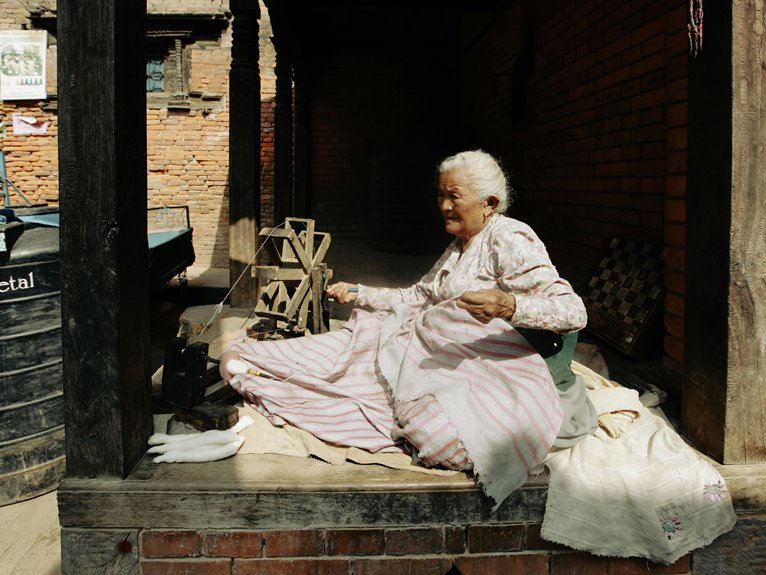
To blend angora with other fibers, start by gently washing and drying your angora and chosen fibers like wool, silk, or alpaca for strength and softness balance. Align fibers by hand or use carders to mix evenly without compressing them. When spinning, use a light draft and moderate tension to maintain angora’s delicate texture and reduce shedding. Store finished yarn away from heat and light to preserve softness. Keep following along to discover easy tips for spinning smooth, luxurious angora blends.
Key Takeaways
- Gently wash and dry angora fibers before blending to maintain softness and remove dirt or oils.
- Use hand carders to evenly distribute and align angora with resilient fibers like wool or alpaca for a consistent blend.
- Avoid compressing fibers too tightly and handle them gently to preserve angora’s delicate loft and prevent shedding.
- Use a light draft and moderate tension during spinning to align fibers smoothly without felting or overstressing angora.
- Blend angora with silk or wool to enhance strength, elasticity, and sheen while maintaining softness in the final yarn.
Understanding the Characteristics of Angora Fiber
Although you might already know angora fiber is soft, understanding its unique characteristics can help you blend it effectively with other fibers. Angora comes from the Angora rabbit, and its softness is due to its fine, hollow fibers that trap air, providing excellent insulation.
Angora’s fine, hollow fibers create unmatched softness and warmth, making it ideal for blending with other fibers.
You’ll notice it’s lightweight but warm, with a silky texture and a natural sheen. However, angora is delicate and prone to shedding, so you need to handle it gently during spinning.
Its fibers are shorter than many wools, which affects how well it binds with others. Angora also lacks elasticity, so it benefits from blending with more resilient fibers to improve durability and strength.
Knowing these traits guarantees you can create balanced, comfortable yarns every time.
Choosing Compatible Fibers to Blend With Angora
Since angora fibers are delicate and lack elasticity, blending them with compatible fibers helps enhance your yarn’s strength and durability.
When choosing fibers, look for those with good elasticity and resilience, like wool or alpaca. These fibers add bounce and structure, making your yarn easier to spin and wear. Silk is another excellent choice; it boosts sheen and smoothness without compromising softness.
Avoid fibers that are too coarse or stiff, as they can overshadow angora’s softness and delicate halo. You’ll also want to take into account fiber length and preparation method to guarantee a smooth blend.
Preparing Angora and Other Fibers for Blending
Preparing angora and other fibers for blending starts with properly cleaning and aligning them. First, gently wash the angora to remove dirt and oils without damaging its delicate fibers. Next, verify all fibers are dry before you begin. Align the fibers by hand or with combs to create a smooth, even base. This step prevents clumps and guarantees an even blend.
Here’s a quick guide to fiber preparation:
| Step | Purpose |
|---|---|
| Washing | Removes dirt and oils |
| Drying | Prevents fiber damage |
| Picking/Combing | Aligns fibers evenly |
| Removing Debris | Ensures purity in the blend |
| Pre-Blending | Prepares for smooth mixing |
Techniques for Blending Fibers by Hand
Before you start blending, make sure your angora and other fibers are clean and prepped for easy handling.
Using hand carders, you can gently mix the fibers while keeping control over the texture.
Focus on distributing the fibers evenly to create a smooth, consistent blend.
Preparing Fibers for Blending
To blend angora with other fibers effectively, you’ll need to start by carefully separating and aligning the fibers by hand.
Gently tease apart any clumps to loosen the fibers without damaging their delicate structure.
Lay out small amounts of each fiber on a clean surface, then align their lengths so they run parallel. This alignment guarantees a consistent blend and smoother spinning.
Take your time to mix the fibers evenly by layering thin sections atop one another, repeating until you achieve the desired ratio.
Avoid compressing the fibers too tightly, as this can make blending harder.
Once aligned and mixed, your fibers will be ready for the next blending stage, guaranteeing a balanced texture and strength in the final yarn.
Hand Carding Methods
Although blending fibers by hand can seem intimidating at first, hand carding offers a straightforward way to mix angora with other fibers evenly. You start by placing small amounts of each fiber on one card, then gently brushing with the other card to interlock them. Repeat this process until the fibers feel consistent. Remember to avoid pressing too hard to keep the fibers light and airy.
Here’s a simple sequence to guide you:
| Step | Action |
|---|---|
| 1 | Load fibers on one card |
| 2 | Brush with the second card |
| 3 | Transfer fibers between cards |
| 4 | Repeat until blended evenly |
Hand carding lets you control the blend, preparing your fibers well for spinning.
Achieving Even Fiber Distribution
When you blend angora with other fibers by hand, achieving an even distribution guarantees a smooth, consistent yarn. Start by dividing your fibers into small, manageable portions. Lay them out evenly before you begin blending.
Use hand carders to gently brush the fibers, alternating the direction with each pass. This process opens the fibers and mixes them thoroughly without matting.
Check your work by pulling small tufts from different spots—each should contain a balanced mix of angora and the other fibers. If you spot uneven patches, card those areas again.
Patience is key; take your time to avoid clumps or streaks. With practice, your hand-blended fibers will spin into a uniformly soft, luxurious yarn every time.
Using a Drum Carder to Blend Angora and Other Fibers
You’ll find that using a drum carder is one of the easiest ways to blend angora with other fibers evenly. Start by adding small amounts of angora and your chosen fiber onto the feeder tray.
Turn the drum carder’s handle steadily to feed the fibers through the drums, which will align and mix them thoroughly. Repeat the process, layering fibers as needed to achieve your desired blend ratio.
Once blended, remove the batt from the drum and inspect it for consistency. If you notice any clumps or uneven spots, run it through the carder again.
This method not only guarantees a smooth, uniform blend but also helps prepare the fibers for spinning by opening them up and removing debris, making your spinning experience much easier and more enjoyable.
Tips for Spinning Angora Blends Smoothly
To spin angora blends smoothly, start by handling your fibers gently to preserve their softness and loft.
Avoid over-twisting as angora is delicate and can felt easily. Use a light draft when spinning to allow the fibers to align without stressing them.
If your blend includes slippery fibers like silk, keep your tension moderate to maintain control. It helps to pre-draft your fiber before spinning, which creates a consistent feed and reduces strain.
Use a spindle or wheel speed that feels comfortable; too fast can cause breakage.
Finally, keep your hands clean and dry to prevent oils or moisture from affecting the angora’s texture.
With these tips, you’ll create a smooth, soft yarn that showcases angora’s luxurious qualities.
Caring for Yarn Made From Angora Blends
You’ll want to handle your angora blend yarn with care when washing to keep it soft and intact.
Use gentle drying techniques to avoid stretching or felting the fibers.
Proper storage is key to maintaining its quality and preventing damage over time.
Washing Angora Blend
When washing your angora blend yarn, handle it gently to preserve its softness and structure.
Fill a basin with cool water and add a mild wool-friendly detergent. Submerge the yarn carefully, avoiding agitation that can cause felting or stretching. Let it soak for about 10 to 15 minutes.
After soaking, gently press out the water without wringing or twisting the yarn. Rinse the yarn in clean, cool water until all soap is removed. You might need to repeat rinsing a couple of times to guarantee no detergent residue remains.
Drying Techniques
Proper drying preserves the delicate texture and strength of angora blends.
After washing, gently squeeze out excess water without wringing, which can stretch or damage fibers. Lay your yarn flat on a clean, dry towel, then roll the towel to absorb moisture. Unroll and reshape the yarn to its original form.
Avoid hanging wet angora yarn, as gravity can stretch it out. Instead, dry it flat in a well-ventilated area away from direct sunlight or heat sources, which can cause brittleness or fading. Flip or rotate the yarn occasionally to guarantee even drying.
Patience is key—rushing the drying process risks weakening the fibers and ruining your carefully blended creation. Taking these steps will keep your angora blend soft and durable for your projects.
Storage Tips
A breathable storage container can make all the difference in preserving your angora blend yarn.
Angora fibers are delicate and prone to damage from moisture, pests, and crushing. To keep your yarn in top shape, follow these essential storage tips:
- Use cotton or linen bags instead of plastic to allow airflow and prevent mildew.
- Store yarn in a cool, dry place away from direct sunlight to avoid fading and fiber weakening.
- Add natural moth repellents like lavender or cedar blocks to protect against pests.
- Avoid overstuffing containers to prevent yarn from becoming misshapen or felted.
Creative Project Ideas Using Angora Fiber Blends
Although angora fiber blends can feel delicate, you’ll find they add unmatched softness and warmth to your projects.
Try spinning a blend of angora and merino for cozy scarves that feel luxurious against your skin. You can also mix angora with silk to create lightweight, shiny yarn perfect for elegant shawls or wraps.
Spin angora with merino or silk for scarves and shawls that are soft, warm, and elegantly lightweight.
For a fun twist, blend angora with alpaca to make mittens or hats that are both warm and breathable. Don’t hesitate to experiment with small batches to find your favorite fiber ratios.
Using angora blends for baby clothes or soft accessories is another great idea since they’re gentle and comforting.
With these blends, your handmade creations will stand out with unique texture and exceptional comfort.
Frequently Asked Questions
Where Can I Source Ethically Harvested Angora Fiber?
You can find ethically harvested angora fiber from reputable farms or suppliers who prioritize animal welfare. Check certifications, read reviews, and contact sellers directly to guarantee they follow humane practices before purchasing your fiber.
How Does Angora Fiber Affect Allergy Sufferers?
Imagine soft clouds brushing your skin; angora fiber’s fine texture can still trigger allergies since it contains proteins that irritate sensitive people. If you’re allergic to animal fibers, you might want to avoid or test it carefully.
What Are the Environmental Impacts of Angora Farming?
You should know angora farming can impact the environment through land use, water consumption, and waste management. Sustainable practices help reduce harm, but unchecked farming might lead to habitat disruption and resource depletion, so choose responsibly.
Can Angora Fiber Be Machine Washed Safely?
Wondering if you can machine wash angora fiber safely? You shouldn’t—it’s delicate and prone to felting. Instead, hand wash with cool water and mild detergent to keep it soft and fluffy without damage.
What Is the Typical Cost per Ounce of Angora Fiber?
You’ll usually find angora fiber costs around $5 to $15 per ounce, depending on quality and source. Higher-grade or specialty blends might run pricier, so it’s smart to shop around before buying.