
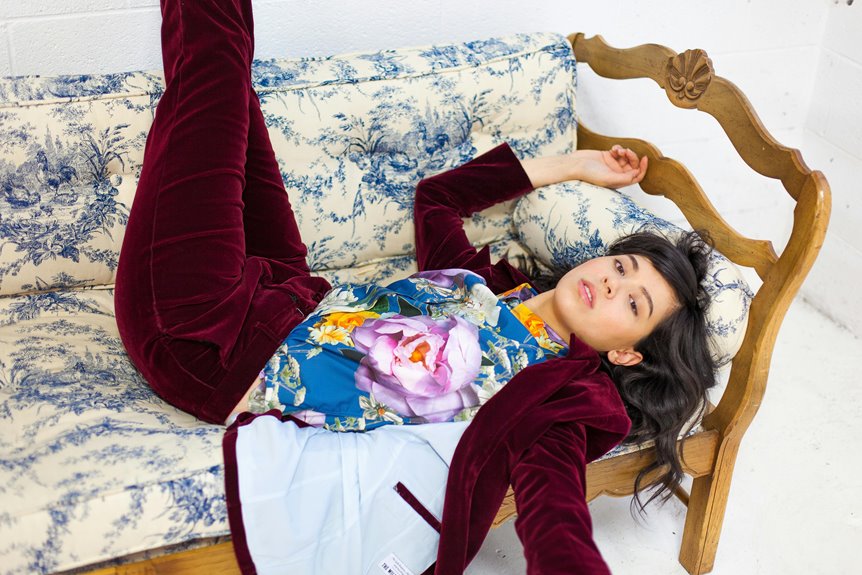
You’ll love corduroy velvet for its blend of soft velvet plushness and distinctive ribbed texture, offering warmth, durability, and subtle sheen. This fabric’s raised ridges give it a unique striped look while keeping you cozy in cooler weather. Whether in jackets, trousers, or home décor, it adds timeless elegance with practicality. If you want to explore its rich history, care tips, and versatile styling options, there’s plenty more to uncover about this charming fabric.
Key Takeaways
- Corduroy velvet combines velvet’s plush softness with corduroy’s distinctive ribbed texture, creating a unique tactile and visual appeal.
- Its raised parallel ridges, called wales, give the fabric a signature striped pattern and subtle sheen.
- Durable and warm, corduroy velvet is ideal for cozy, stylish clothing and upholstery in cooler weather.
- The fabric’s history blends luxury and practicality, connecting modern users to centuries of comfort and style.
- Caring for corduroy velvet involves gentle cleaning and avoiding direct sunlight to maintain its plushness and vibrant look.
What Is Corduroy Velvet?
Corduroy velvet combines the soft, luxurious texture of velvet with the distinctive ribbed pattern of corduroy. When you touch it, you’ll notice the plushness typical of velvet, but with raised parallel ridges that give it structure and depth.
This fabric is made by weaving extra sets of fibers into the base fabric, creating those signature cords, then cutting the pile to achieve velvet’s smoothness. You’ll find corduroy velvet used in clothing and upholstery because it offers warmth, durability, and a unique tactile experience.
Its combination of softness and texture makes it stand out from regular velvet or corduroy alone. So, when you pick corduroy velvet, you’re choosing a fabric that’s both elegant and practical.
The History Behind Corduroy Velvet Fabrics
Although you mightn’t realize it, the fabric combining velvet’s softness with corduroy’s ridges has a rich history dating back centuries.
The fabric blending velvet’s softness with corduroy’s texture carries centuries of rich history and tradition.
Corduroy itself originated in ancient Egypt and later gained popularity in Europe during the Middle Ages as durable workwear. Velvet dates back even further, prized for its luxurious texture in royal courts.
Over time, artisans experimented by merging velvet’s plush pile with corduroy’s characteristic ribs, creating a fabric that balanced elegance and resilience. By the 18th century, corduroy velvet became favored for both practical clothing and refined garments, especially in colder climates due to its warmth.
When you wear or work with corduroy velvet today, you’re connecting with a tradition that blends comfort, style, and functionality developed through generations.
Key Characteristics of Corduroy Velvet
The unique texture of corduroy velvet sets it apart from other fabrics, combining soft, plush surfaces with distinct raised ridges you can both see and feel.
These ridges, called wales, run parallel and vary in width, giving corduroy velvet its signature striped appearance. You’ll notice the fabric’s durability and thickness, making it ideal for cooler weather and long-lasting use.
Corduroy velvet also offers a subtle sheen, enhancing its luxurious feel without being overly shiny. Its flexibility allows it to drape smoothly, yet it maintains enough structure for tailored garments.
Plus, the fabric’s ability to trap warmth makes it cozy and comfortable. When you choose corduroy velvet, you get a perfect balance of tactile interest, visual appeal, and practical wearability.
How Corduroy Velvet Is Made
Understanding what gives corduroy velvet its unique texture and durability starts with how it’s made. You’ll find the process involves weaving extra sets of fibers into the base fabric, creating raised ridges known as wales.
These wales are then cut and brushed to give corduroy velvet its soft, plush feel. Here’s what you should know about the production steps:
- Weaving: Multiple yarns are woven simultaneously to form the distinctive ribbed texture.
- Cutting: The raised loops are sliced to create the soft pile characteristic of velvet.
- Finishing: The fabric undergoes brushing and shearing to enhance softness and uniformity.
Popular Uses for Corduroy Velvet in Fashion
When you choose corduroy velvet for your wardrobe, you tap into a fabric that blends comfort with style effortlessly. You’ll find it popular in jackets, offering warmth and a rich texture that elevates your look.
Corduroy velvet trousers give you a polished yet cozy feel, perfect for both casual and semi-formal settings. Don’t overlook skirts and dresses made from this fabric; they add depth and visual interest while remaining soft to the touch.
Accessories like bags and hats also benefit from corduroy velvet’s durability and unique pattern, making them stand out. Whether you’re dressing up or down, incorporating corduroy velvet helps you maintain a sophisticated edge with a tactile, fashionable appeal that’s hard to match.
Incorporating Corduroy Velvet Into Home Décor
If you want to add warmth and texture to your living space, incorporating corduroy velvet into your home décor is a smart choice.
This fabric’s soft ridges and rich feel instantly elevate any room, blending comfort with style. You can use corduroy velvet in various ways to create a cozy, inviting atmosphere.
Soft ridges and rich texture add instant warmth and style, making any space cozy and inviting.
Consider these ideas:
- Upholster chairs or sofas with corduroy velvet to add tactile interest and durability.
- Use corduroy velvet cushions or throw pillows for a pop of texture and color.
- Drape corduroy velvet curtains to enhance both warmth and elegance.
Caring for and Maintaining Corduroy Velvet
Adding corduroy velvet to your home décor brings both style and comfort, but keeping it looking its best takes some care.
To maintain its soft texture and rich appearance, vacuum your corduroy velvet regularly using a brush attachment. This removes dust and prevents dirt buildup in the fabric’s distinctive ridges.
When spills happen, blot immediately with a clean cloth—avoid rubbing to prevent damage. For deeper cleaning, check the manufacturer’s instructions; many corduroy velvets respond well to gentle hand washing or dry cleaning.
Avoid direct sunlight to prevent fading, and keep the fabric away from heat sources that can dry it out.
With consistent care, your corduroy velvet will stay plush and vibrant for years to come.
Styling Tips for Wearing Corduroy Velvet
When styling corduroy velvet, focus on pairing rich colors and contrasting textures to create a balanced look.
You’ll find this fabric works perfectly for layering in cooler seasons, adding warmth and depth to your outfit.
Let’s explore some seasonal ideas and color combos that highlight corduroy velvet’s unique appeal.
Pairing Colors and Textures
Although corduroy velvet has a rich texture that stands out on its own, pairing it with complementary colors and fabrics can elevate your outfit even more.
When you mix and match, you create depth and interest that draws attention in just the right way. To master this balance, keep these tips in mind:
- Pair warm corduroy velvet tones like rust or burgundy with cool neutrals, such as charcoal gray or navy, for a sophisticated contrast.
- Combine corduroy velvet with smooth fabrics like silk or satin to balance texture and add elegance.
- Use lighter shades like cream or pastel hues alongside darker corduroy velvet to brighten your look without losing richness.
Experiment confidently, and you’ll find your styling options expand beautifully!
Seasonal Outfit Ideas
Since corduroy velvet offers both warmth and style, you can easily adapt it for every season with the right outfit choices. In cooler months, layer a corduroy velvet jacket over a turtleneck. For spring, pair a velvet skirt with a light blouse. Summer calls for lightweight velvet shorts or a sleeveless top. Fall is perfect for corduroy velvet pants matched with cozy knits. Here’s a quick guide to styling corduroy velvet throughout the year:
| Season | Outfit Idea |
|---|---|
| Winter | Velvet jacket + turtleneck |
| Spring | Velvet skirt + light blouse |
| Summer | Velvet shorts + sleeveless top |
| Fall | Velvet pants + cozy knit |
| All Year | Velvet accessories for subtle flair |
Try these combos to enjoy corduroy velvet’s unique texture anytime!
Frequently Asked Questions
Can Corduroy Velvet Be Recycled or Is It Eco-Friendly?
You can recycle corduroy velvet, but it depends on local facilities and fabric blends. While it’s durable, its eco-friendliness varies since synthetic fibers might be involved. Always check care labels and recycling options to stay green.
Are There Any Allergy Concerns With Corduroy Velvet Fabrics?
Like walking through a garden, you might encounter allergens in corduroy velvet. If you’re sensitive to dust or synthetic fibers, it could irritate you. Always check fabric content and wash it before use to be safe.
How Does Corduroy Velvet Compare in Cost to Other Velvet Types?
You’ll find corduroy velvet generally costs less than traditional velvet types like silk or rayon. Its durability and unique texture make it a budget-friendly option without sacrificing style or comfort in your projects.
Can Corduroy Velvet Be Used for Outdoor Furniture?
You might think corduroy velvet is a delicate flower, but it isn’t ideal for outdoor furniture. Its texture and moisture sensitivity make it prone to damage, so you’ll want to choose more weather-resistant fabrics instead.
What Are the Best Seasons to Wear Corduroy Velvet?
You’ll find corduroy velvet perfect for fall and winter since it’s warm and cozy. Its soft texture and insulating qualities keep you comfortable during cooler months, making it less ideal for hot, humid seasons.