
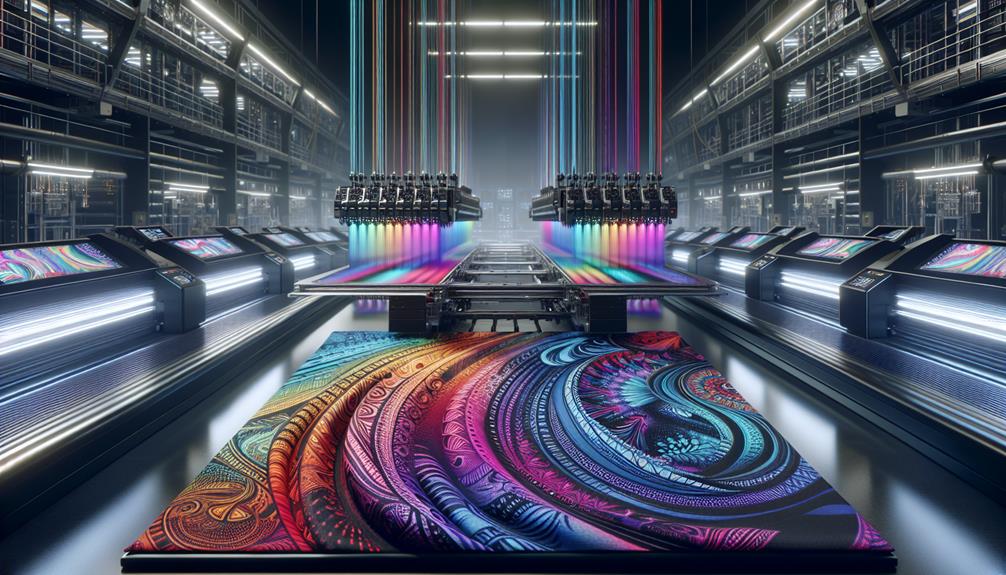
You're witnessing a revolution in digital fabric printing, where trends like eco-friendly practices and customization are setting new industry standards. Imagine using water-based inks that minimize environmental impact or opting for recycled textiles that promote sustainability. The vibrant color reproduction achieved through advanced techniques like dye sublimation and digital direct-to-garment printing is nothing short of remarkable. And don't overlook the rise of smart textiles—integrating technology into fabrics opens up a world of functional possibilities. Curious about how these innovations are reshaping the market and what the future holds? There's much more to explore.
Key Takeaways
- AI integration enhances efficient, customizable fabric creation and design.
- Dye sublimation and 3D printing enable intricate and multi-layered patterns.
- Digital fabric printing offers on-demand production for trend responsiveness and waste reduction.
- Sustainable practices include using water-based inks and recycled textiles for eco-friendly printing.
- Smart textiles incorporate wearable technology for interactive and functional garments.
Eco-Friendly Printing
In the world of digital fabric printing, eco-friendly practices are revolutionizing the industry by reducing waste and minimizing environmental impact. You can make a significant difference by adopting sustainable methods like using water-based inks and recycled textiles.
Water-based inks, unlike traditional solvent-based options, are free of harmful chemicals and generate less pollution. They're not only safer for the environment but also for the people handling them. These inks penetrate the fabric more effectively, ensuring a durable and high-quality finish.
Incorporating recycled textiles into your printing process is another powerful way to embrace eco-friendly practices. By using fabrics made from recycled materials, such as PET bottles or repurposed garments, you're helping reduce landfill waste and the demand for virgin resources. Recycled textiles often require less water and energy to produce, further decreasing your ecological footprint.
Adopting these sustainable practices doesn't mean compromising on quality. Water-based inks and recycled textiles can deliver exceptional results, allowing you to create stunning and environmentally responsible designs. By integrating these elements into your workflow, you not only enhance your craft but also contribute to a more sustainable future.
Vibrant Color Reproduction
While embracing eco-friendly practices, you can still achieve vibrant color reproduction in digital fabric printing. Today's advanced technologies play a vital role in maintaining color accuracy. One of the key innovations in this space is dye sublimation. This process involves converting solid dye into gas without going through a liquid phase, allowing the dye to deeply permeate the fabric, resulting in vivid and long-lasting colors.
By utilizing high-quality inks and precise calibration, you can replicate colors accurately on various fabrics. Selecting the appropriate combination of printer, ink, and fabric is crucial in preserving color fidelity. Here's a quick comparison to assist you:
| Technique | Benefits |
|---|---|
| Dye Sublimation | Deep color penetration |
| Pigment Printing | High color accuracy on natural fabrics |
| Reactive Printing | Excellent for cotton and silk |
Dye sublimation stands out for its capacity to produce strikingly vibrant colors on polyester fabrics. It is vital to ensure that the printed designs are not only vivid but also durable, enduring multiple washes without fading. When you prioritize color accuracy and select the right methods, your digital fabric prints will consistently showcase exceptional vibrancy.
Customization Capabilities
Digital fabric printing empowers you with unparalleled customization capabilities, enabling personalized designs that cater to individual preferences. Imagine having the ability to bring your unique vision to life, whether you're a fashion designer, interior decorator, or a DIY enthusiast. This technology offers you the creative freedom to experiment with colors, patterns, and textures without the limitations of traditional fabric production methods.
With digital fabric printing, you can create bespoke pieces tailored to specific tastes and requirements. Whether it's for a limited-edition collection or a one-off piece, the precision and flexibility of this technology make it possible. You can easily adjust designs to fit various sizes and shapes, ensuring that each creation is perfectly aligned with your vision.
Moreover, digital fabric printing allows you to respond quickly to trends and customer demands. Gone are the days of lengthy production runs and excessive inventory. Instead, you can produce on-demand, reducing waste and making your operations more sustainable. This agility not only meets market needs but also enhances your ability to innovate continuously.
In essence, digital fabric printing provides you with the tools to elevate your craft, offering a level of customization that transforms your creative ideas into reality.
Smart Textiles Integration
With the rise of smart textiles, integrating digital fabric printing opens up new possibilities for creating innovative and functional garments. By combining wearable technology with interactive textiles, you can revolutionize the fashion landscape.
Imagine garments that don't just look good but also provide practical benefits. Digital fabric printing allows you to design fabrics that incorporate sensors, conductive threads, or even LED lights. This means you can create clothing that monitors health metrics, changes color based on environmental factors, or even displays messages and patterns in real-time.
Here are three key benefits of integrating digital fabric printing with smart textiles:
- Customization: Tailor garments to fit specific user needs, whether that's athletes needing moisture-wicking fabrics with embedded fitness trackers or healthcare professionals requiring uniforms that monitor essential signs.
- Sustainability: Reduce waste by printing only what you need and incorporating energy-efficient technologies, making your process more environmentally friendly.
- Innovation: Stay ahead of the curve by offering cutting-edge products that blend fashion and function, setting you apart in a competitive market.
Advanced Printing Techniques
Pioneering advanced printing methods can elevate your designs to new levels of detail and vibrancy. By leveraging high resolution designs and cutting-edge technology, you can achieve intricate patterns and vivid color palettes that were previously unattainable. This precision guarantees that every detail of your concept is accurately reproduced, making your fabrics stand out in a competitive market.
Incorporating innovative production methods into your workflow is essential for staying ahead. Digital transformation has revolutionized the fabric printing industry, allowing for faster turnaround times and greater customization. Techniques such as digital direct-to-garment (DTG) printing and dye-sublimation offer unparalleled flexibility, enabling you to experiment with various materials and finishes without compromising on quality.
To fully harness the potential of these advanced printing techniques, you need to stay updated with the latest advancements. Cutting-edge technology is constantly evolving, and keeping abreast of new developments ensures you remain at the forefront of the industry.
Adopting these innovations not only enhances your creative capabilities but also streamlines production, reducing waste and improving efficiency. By mastering these techniques, you can push the boundaries of what's achievable in fabric design and production.
Sustainable Materials
While mastering advanced printing techniques is essential, selecting sustainable materials plays an equally vital role in modern fabric design and production. You can't ignore the impact of your material choices on both the environment and your brand's reputation.
Utilizing sustainable options like recycled fabrics and organic dyes not only reduces your carbon footprint but also appeals to the eco-conscious consumer.
To dig deeper, consider the following:
- Recycled Fabrics: Using recycled materials, such as those crafted from post-consumer plastic bottles or discarded textiles, greatly reduces waste. These materials offer durability and quality comparable to new fabrics, ensuring that your designs remain top-quality.
- Organic Dyes: Conventional dyes often contain harmful chemicals that can harm ecosystems. Organic dyes, sourced from natural origins, offer vibrant colors without the environmental impact. They're biodegradable and safer for both workers and end-users.
- Eco-certifications: Look for certifications like GOTS (Global Organic Textile Standard) and OEKO-TEX, which ensure that your materials meet strict environmental and social standards. These certifications can distinguish your brand and foster trust with your audience.
Market Trends
You'll notice that sustainability in fabric printing is gaining traction, driven by consumer demand for eco-friendly options.
Technological advancements are also playing a pivotal role, making digital fabric printing more efficient and versatile.
As these trends evolve, you'll see a significant shift in the market landscape.
Sustainability in Fabric Printing
In recent years, sustainability has become a key driver of innovation and consumer demand in the fabric printing industry. You're likely aware that the shift to more eco-friendly practices isn't just trendy but essential.
One of the most compelling advancements is the use of recycled fibers, which dramatically reduces the need for virgin materials and minimizes waste. By opting for fabrics made from recycled fibers, you're not only reducing environmental impact but also setting a new standard for industry practices.
Energy efficiency is another critical area where the industry is making strides. Digital fabric printing techniques consume notably less energy compared to traditional methods, allowing you to lower operational costs while being kinder to the planet. Adopting these practices can enhance your company's reputation and appeal to eco-conscious consumers.
To further illustrate the importance of sustainability in fabric printing, consider these key points:
- Resource Conservation: Utilizing recycled fibers helps conserve natural resources and reduces landfill waste.
- Cost Savings: Implementing energy-efficient technologies can lead to substantial long-term savings.
- Market Appeal: A commitment to sustainability can differentiate your brand in a competitive market.
Technological Advancements Impact
Advancements in digital fabric printing technology are transforming the market, offering you quicker production times and superior quality outputs. Automation efficiency is at the forefront, enabling you to streamline operations and reduce manual labor. This translates into significant cost-effectiveness, allowing you to allocate resources more strategically.
With digital design capabilities, you can now explore creative possibilities that were previously unattainable. The precision and versatility that digital printing offers empower you to experiment with intricate patterns and vibrant colors, pushing the boundaries of what's achievable in fabric design. Imagine transforming your most complex ideas into reality with just a few clicks.
Moreover, technological advancements have improved the reliability and consistency of digital fabric printing. High-definition prints and color accuracy ensure that your final product meets the highest standards. This reliability builds trust with your clients, knowing they'll receive excellent quality every time.
In addition, the speed of digital printing technology means shorter turnaround times. This agility allows you to respond swiftly to market demands and trends, keeping you ahead of the competition.
Future Innovations
As the digital fabric printing industry evolves, expect to see groundbreaking technologies that will redefine design possibilities. Imagine AI integration enabling you to create intricate patterns that adapt to trends instantly. This, combined with wearable technology, will revolutionize how we interact with fashion. You'll find garments that not only look good but also function in ways we've never seen before, responding to your environment or even your mood.
Next, consider the potential of 3D printing in fabric production. This innovation allows for the creation of complex, multi-dimensional textures and structures that traditional methods can't achieve. Interactive designs will take center stage, giving you the ability to personalize clothing in real-time. Imagine a dress that changes its pattern based on your preferences, right before your eyes.
To grasp the magnitude of these innovations, consider the following:
- AI Integration: Automated design adjustments and predictive analytics will make fabric creation more efficient and customizable.
- 3D Printing: Enables the production of intricate, multi-layered designs previously impossible with traditional methods.
- Wearable Technology: Opens doors to smart textiles that interact with their surroundings and the wearer.
These advancements are set to redefine the very fabric of fashion, pushing the boundaries of what's possible.
Frequently Asked Questions
How Does Digital Fabric Printing Compare to Traditional Methods in Terms of Cost?
You might think traditional methods are cheaper, but digital fabric printing offers a better cost comparison due to its efficiency benefits. You'll save on setup costs, reduce waste, and enjoy faster turnaround times, enhancing overall productivity.
What Software Is Typically Used for Designing Patterns in Digital Fabric Printing?
You typically use graphic design software like Adobe Photoshop or Illustrator for designing patterns. These creative tools offer advanced features that let you master intricate designs, ensuring your digital fabric printing projects stand out.
Are There Limitations on the Types of Fabrics That Can Be Digitally Printed?
Imagine the sky's the limit, but you can't print on every fabric. While silk printing and polyester printing are popular, some materials resist digital printing techniques, causing issues with ink absorption and color vibrancy.
How Durable Are Digitally Printed Fabrics After Multiple Washes?
You'll find that digitally printed fabrics often maintain excellent fabric durability and printing quality even after multiple washes. However, it's important to follow care instructions to maintain the longevity and vibrancy of the prints.
What Are the Common Challenges Faced in Digital Fabric Printing?
So, you think digital fabric printing is a breeze? Think again. You'll wrestle with color accuracy like it's a slippery eel and struggle to maintain print resolution as if you're chasing a mirage.