
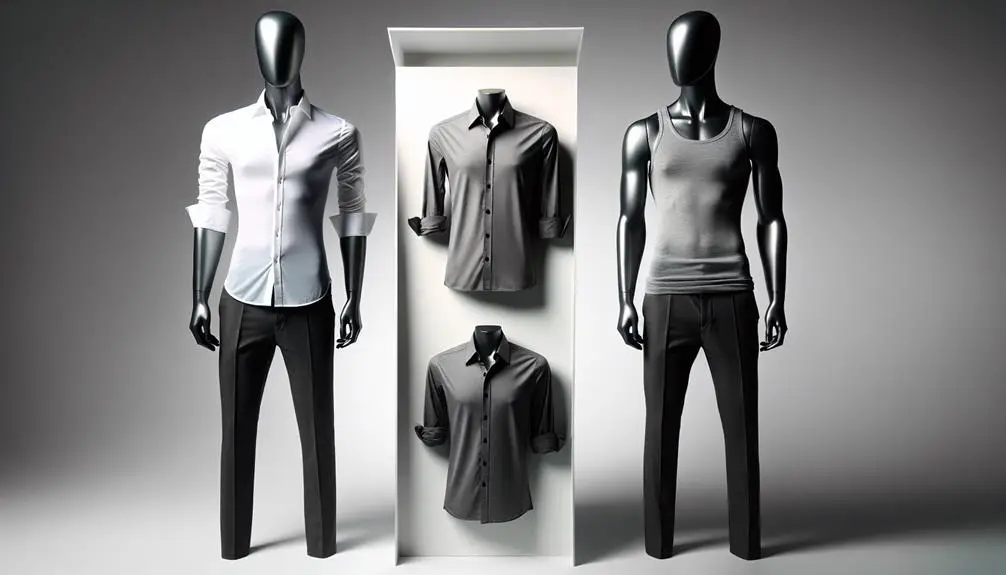
As I sift through my wardrobe, the subtle distinctions between a shirt and a tank top become apparent. The way they drape, the feel of the fabric against my skin—it's as if each piece tells a unique story.
But what truly sets them apart goes beyond the surface. Understanding the intricacies of their design, functionality, and versatility can elevate our style choices to a whole new level.
So, let's unravel the mystery behind these wardrobe staples and discover how a simple garment choice can make a world of difference in our everyday looks.
Key Takeaways
- Tank tops offer a variety of fabrics and vibrant colors, while A-shirts stick to midweight cotton and classic hues.
- A-shirts lack collars and focus on layering, whereas tank tops come in various collar styles for different outfits.
- Tank tops have a range of armhole styles for ventilation, ideal for outdoor activities, while A-shirts offer larger armholes for freedom of movement.
- A-shirts are suitable for professional wear and layering under dress shirts, while tank tops are versatile for casual, everyday activities.
Fabric Differences
When comparing shirt and tank top options, the fabric differences play a crucial role in determining the overall comfort and style preferences for the wearer.
Tank tops offer a broader variety of fabrics compared to shirts. While A-shirts are typically crafted from lightweight ribbed cotton, tank tops come in options like ribbed cotton, jersey-knit cotton, and synthetic blends. The versatility of tank tops allows for different fabric weights, ranging from lightweight to midweight, making them suitable for standalone wear.
On the other hand, A-shirts, also known as wife beaters or undershirts, are commonly made from midweight cotton, ideal for layering under other garments. Cotton remains a popular choice for both tank tops and A-shirts due to its softness and easy maintenance. These fabric variances cater to specific preferences concerning fit, comfort, and style, offering wearers a range of options to express their individuality.
Collar Variances
Moving from the fabric variances between shirts and tank tops, the collar variances play a significant role in distinguishing the two garments and their suitability for various styles and occasions. A-shirts, known for their lack of collars, are perfect for seamless layering beneath dress shirts or other outer garments, serving their traditional purpose as undershirts. On the other hand, tank tops offer a more fashion-forward approach with a variety of collar styles, enhancing the neckline designs and overall aesthetic of the garment. The collar variations on tank tops can range from basic crew necklines to trendy halter neck designs, catering to different preferences and outfit needs. This versatility in collar styles makes tank tops more versatile for different occasions, allowing for a mix of casual and formal looks. The distinct purposes served by collar variations in A-shirts and tank tops highlight their unique functions in the realm of fashion and outfit choices.
| Collar Styles | Distinct Purposes | Fashion-Forward |
|---|---|---|
| Basic Crew Neck | Undershirts | Yes |
| Halter Neck | Layering | Yes |
| No Collar | Traditional | No |
Color Variances
When it comes to color variances between shirts and tank tops, the difference is striking. Tank tops offer a plethora of vibrant hues and lively patterns, catering to diverse style preferences.
In contrast, A-shirts typically stick to solid, classic colors for a more understated look.
Fabric Types
In exploring fabric types for shirt versus tank top, the color variances offer a glimpse into the diverse style options each garment provides. Tank tops present a broader range of choices, including solid colors, graphics, and prints, catering to varied preferences. They feature fabric blends such as cotton, polyester, and silk, enabling multiple material options for wearers.
On the other hand, A-shirts, made primarily of lightweight ribbed cotton, maintain a more conservative color palette and simplistic design. Tank tops, whether using ribbed cotton, jersey-knit cotton, or synthetic blends, offer different textures and weights for individuals seeking versatility in their clothing. This contrast in fabric types between tank tops and A-shirts underscores the unique aesthetic appeal each garment brings.
Style Differences
Tank tops burst with a vibrant array of color options and eye-catching designs, setting them apart from the more subdued and traditional hues typically found in A-shirts. Here are the key style differences in color variances between tank tops and A-shirts:
- Solid Colors: A-shirts typically offer solid and plain colors for a discreet look.
- Graphics: Tank tops provide a variety of graphics and printed options for a more expressive style.
- Plain Colors: A-shirts stick to conservative and basic hues, maintaining a classic aesthetic.
- Vibrant Choices: Tank tops feature neon shades, fun patterns, and bold graphics, adding a dynamic and colorful appeal to outfits.
In essence, while A-shirts lean towards simplicity with solid colors, tank tops embrace a more vibrant and expressive approach through a wide range of color choices and designs.
Armhole Variances
Comparing the armhole sizes between A-shirts and tank tops reveals distinct variations that cater to individual preferences for fit and functionality. A-shirts are known for their larger armholes, providing ample freedom of movement, making them ideal as undershirts. The design of A-shirt armholes focuses on comfort and ease of movement, perfect for layering under other garments.
On the other hand, tank tops offer a range of armhole styles, including deep cuts or standard sizes, depending on the design. Tank tops with wide or deep armholes are favored for sports and hot weather due to their ventilation and breathability properties.
These differences in armhole sizes between A-shirts and tank tops address the diverse needs of consumers seeking specific features in their clothing, whether for everyday wear or specific activities. Understanding these distinctions can help individuals choose the most suitable option based on their preferences for comfort and functionality.
Cost Variations
When it comes to deciding between a shirt and a tank top, one crucial aspect to weigh is the cost variations.
The price differences between these two clothing items can significantly impact budget considerations. Understanding these cost discrepancies can help in making an informed choice based on both style preferences and financial constraints.
Price Differences
In exploring the price differences between shirts and tank tops, one can find that A-shirts generally offer a more budget-friendly option compared to the varying price range of tank tops. When considering the price variations:
- A-shirts: Basic A-shirts are typically priced around $5 to $15, making them affordable options for sleeveless undershirts.
- Tank Tops: Tank tops can range from $10 to $50 or more, depending on factors like brand, material, and design.
- Quality: Higher-end tank tops made from premium materials like silk or modal may cost between $30 to $50 due to their quality.
- Brand Influence: Price differences in tank tops can also be influenced by brand reputation, designer labels, and special features like built-in bras or unique designs.
Budget Considerations
For those seeking practical clothing choices without breaking the bank, evaluating the budget considerations between A-shirts and tank tops can help in making a savvy purchase decision. A-shirts are often more budget-friendly and cost-effective compared to tank tops, making them a suitable option for basic undershirts.
On the other hand, tank tops can vary significantly in price due to factors such as brand, material, and design, offering a broader price range. When considering budget-friendly options, it's essential to think about the intended use and desired quality. Keep an eye out for sales, discounts, or bulk packs to save money when buying in larger quantities.
Remember that designer brands or higher-end tank tops may come with a higher price tag compared to basic A-shirts.
Best Usage Scenarios
Choosing between a shirt and a tank top depends on the setting and comfort level desired. When deciding which to wear, consider the following scenarios:
- Professional Settings: A-shirts are best suited for formal or professional settings as they provide optimal comfort and a polished look when worn as undershirts beneath dress shirts.
- Casual Wear: Tank tops are ideal for casual wear, offering a versatile style that can be worn alone, making them a perfect choice for everyday activities or hot weather.
- Outdoor Activities: Tank tops provide freedom of movement and ventilation, making them ideal for outdoor activities, sports, or exercises where breathability is essential.
- Layering: A-shirts are perfect for layering, ensuring coverage and comfort, which is particularly useful in colder weather or when a more put-together look is desired.
Understanding these best usage scenarios for A-shirts and tank tops can help you make the right choice based on the occasion and your comfort preferences.
Frequently Asked Questions
Does a Tank Top Count as a Shirt?
Yes, a tank top counts as a shirt. It covers the torso like a traditional shirt, just without sleeves. Tank tops are versatile for various occasions and can be worn alone or as layering pieces.
Why Is a Shirt Called a Tank Top?
A shirt is often called a tank top due to its sleeveless design resembling soldiers' undershirts. The term is an ode to its military origins. This connection adds a touch of toughness to the garment, making it versatile and stylish.
Is a Tank Top Still a Shirt?
Yes, a tank top is still a shirt. While sleeveless, it falls under the broad category of shirts due to its fabric and design. Tank tops offer versatility and are commonly recognized as a type of shirt in the fashion industry.
What Is the Difference Between Tank and Top?
I'll break it down simply. Tank tops have wider straps and come in various styles and fabrics, offering more design options compared to A-shirts. They're versatile for casual wear, layering, or as standalone tops.