
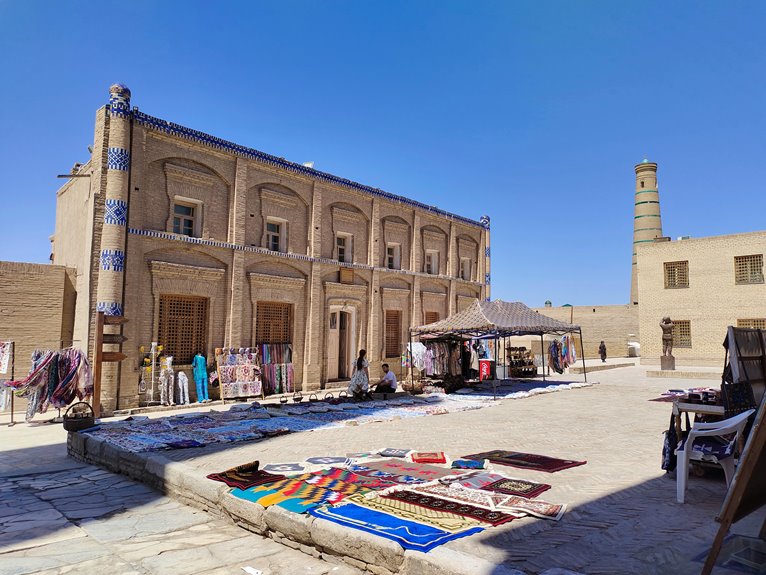
When you explore Uzbek Adras Ikat fabric, you’ll find centuries-old artistry rooted in vibrant, symbolic patterns made using a unique resist dyeing technique. These fabrics use natural dyes and traditional tools to create rich colors and intricate designs, reflecting regional styles and cultural meanings tied to prosperity and protection. From ceremonial wear to modern fashion, Adras weaves heritage with innovation. Keep going to uncover its fascinating craftsmanship, cultural importance, and how it’s evolving today.
Key Takeaways
- Uzbek Adras Ikat fabric reflects centuries-old cultural heritage with vibrant patterns symbolizing protection, prosperity, and regional identity.
- The Ikat technique involves resist dyeing yarns with natural dyes, creating intricate, handwoven designs using traditional looms.
- Regional variations include Samarkand’s bold stripes, Bukhara’s pastel florals, and Khiva’s earthy geometric motifs.
- Modern uses span fashion, home decor, and art, supported by preservation efforts teaching artisans sustainable craftsmanship.
- Authentic Adras fabric features slight pattern irregularities, natural dye hues, and a soft yet durable texture indicating its handwoven origin.
The Historical Roots of Uzbek Adras Ikat
Although many fabrics boast rich histories, Uzbek Adras Ikat stands out for its deep cultural significance and intricate craftsmanship.
When you explore its origins, you’ll find that this fabric dates back centuries, rooted in the rich traditions of Central Asia. You’ll discover that Uzbek artisans developed Adras Ikat as a symbol of identity, status, and artistry.
The fabric’s vibrant patterns and colors reflect social customs and regional influences, making each piece a visual story. As you learn about its historical journey, you’ll see how it evolved through trade routes and cultural exchanges, yet stayed true to its traditional methods.
Understanding these roots helps you appreciate the fabric’s role beyond decoration—it’s a living link to Uzbek heritage and craftsmanship.
Understanding the Ikat Dyeing Technique
To master Uzbek Adras Ikat fabric, you need to grasp the Ikat resist dyeing process.
You’ll see how yarn preparation techniques play a vital role in creating those intricate patterns.
Let’s explore how these steps shape the final design.
Ikat Resist Dyeing Process
Discover how artisans create the intricate patterns of Uzbek Adras Ikat fabric by mastering the ikat resist dyeing process. You’ll see that this method involves carefully binding sections of yarn to resist dye, letting colors form distinct, blurred-edged designs. The precision in tying determines the final pattern’s clarity. After dyeing, the bindings are removed, disclosing the unique motifs.
| Step | Description |
|---|---|
| 1. Tying | Bind yarn sections tightly to resist dye |
| 2. Dyeing | Submerge yarn in dye; untied areas absorb color |
| 3. Drying | Air dry yarn carefully to preserve ties |
| 4. Untying | Remove bindings to disclose patterns |
This resist technique gives Uzbek Adras its signature look—vibrant, detailed, and full of life.
Yarn Preparation Techniques
Preparing the yarn properly is essential to achieving the vibrant patterns characteristic of Uzbek Adras Ikat fabric.
You’ll begin by selecting high-quality cotton or silk threads, then carefully straighten and align them to guarantee uniform dye absorption.
Next, you’ll bundle the yarns on a frame, allowing precise control over the dyeing areas.
Using a skilled hand, you’ll tightly bind sections of yarn with wax or resistant material according to the desired pattern. This resist prevents dye from penetrating those parts, creating the signature blurred edges in the final design.
After binding, you’ll submerge the yarn bundles in dye baths, repeating the process with different colors if needed.
Proper yarn preparation guarantees the intricate patterns emerge sharply once the threads are woven into fabric.
Materials and Tools Used in Adras Fabric Production
Although Adras fabric is admired for its vibrant patterns, the quality of the materials and tools used in its production plays an equally essential role.
You’ll start with high-quality cotton or silk yarns, chosen for their strength and smoothness, which guarantee durability and vibrant dye absorption. Natural dyes extracted from plants, roots, and minerals give the fabric its rich, lasting colors.
To create the precise patterns, you’ll use wooden frames and bamboo rods to tightly bind sections of yarn before dyeing, a critical technique in ikat weaving. A traditional backstrap loom lets you control tension and weave intricately patterned cloth.
Each tool and material you use contributes to the distinctive texture and brilliance that make Adras fabric truly exceptional.
Regional Variations in Adras Patterns and Colors
The materials and tools you choose set the foundation, but the true character of Adras fabric shines through in its regional variations.
Each Uzbek region brings unique patterns and color palettes that reflect local tastes and traditions. When exploring Adras, notice these differences:
- Samarkand: You’ll find bold, contrasting stripes with deep reds and blues, embodying the city’s vibrant history.
- Bukhara: Here, colors soften into pastel hues, and patterns often include intricate floral motifs.
- Khiva: Expect geometric designs with earthy tones, highlighting the desert landscape nearby.
Symbolism and Cultural Significance in Uzbek Adras
When you look closely at Uzbek Adras, you’ll notice traditional motifs that carry deep meanings tied to protection, fertility, and prosperity.
You’ll also find these fabrics play important roles in ceremonies like weddings and festivals, symbolizing cultural identity and unity.
Plus, different regions add their unique symbols, making each Adras piece a distinct story of its origin.
Traditional Motifs Meaning
Symbols woven into Uzbek Adras fabrics carry deep meanings that connect you to the region’s rich history and culture. Each motif tells a story, reflecting values, beliefs, and the natural world. When you examine these patterns, you’ll notice their significance:
- Tulip motifs symbolize prosperity and beauty, inviting good fortune into your life.
- Ram’s horns represent strength and protection, connecting you with resilience and courage.
- Tree of life designs embody growth and continuity, reminding you of your roots and the cycle of life.
Understanding these motifs deepens your appreciation for Adras, as they’re more than decoration—they’re a visual language passed down through generations.
Ceremonial Uses
Wearing or displaying Uzbek Adras goes beyond style—it’s a way to honor important life moments and cultural traditions. When you wear Adras at weddings, it symbolizes joy and prosperity, connecting you to generations before you.
During festivals and religious ceremonies, the fabric’s vibrant patterns express respect for heritage and spiritual beliefs. You might also see Adras used in rituals marking births or significant achievements, where its colors and motifs carry blessings and good fortune.
Regional Symbol Variations
Each region in Uzbekistan boasts unique Adras patterns that tell stories of local beliefs and history.
When you examine these fabrics, you’ll notice distinct symbols reflecting regional identity and values. Understanding these variations helps you appreciate the cultural tapestry woven into every thread.
- Samarkand motifs often incorporate floral designs symbolizing growth and prosperity.
- Bukhara patterns feature geometric shapes representing protection and unity.
- Khorezm Adras includes animal figures that convey strength and resilience.
The Role of Adras Ikat in Traditional Uzbek Clothing
Adras Ikat plays an essential role in traditional Uzbek clothing, showcasing vibrant patterns that reflect the region’s rich cultural heritage. When you wear garments made from Adras Ikat, you connect with centuries of artistry and symbolism. This fabric is often used in robes, dresses, and headscarves, symbolizing social status, regional identity, and celebration. Each pattern and color combination tells a story, making your attire not just beautiful but meaningful.
| Garment Type | Common Patterns | Cultural Significance |
|---|---|---|
| Robe (Chapan) | Stripes, diamonds | Status and protection |
| Dress (Kalta) | Floral, geometric | Femininity and festivity |
| Headscarf | Zigzag, waves | Modesty and regional pride |
| Waistband | Bold lines | Strength and unity |
| Shawl | Complex motifs | Heritage and craftsmanship |
Modern Applications and Contemporary Adaptations
While traditional Uzbek clothing continues to celebrate Adras Ikat‘s rich symbolism, you’ll also find this fabric making its mark in modern fashion and design.
Adras Ikat’s timeless symbolism thrives both in traditional attire and cutting-edge fashion.
You can incorporate Adras Ikat into contemporary wardrobes in several creative ways:
- Fashion Statements: Designers use Adras Ikat for chic dresses, jackets, and accessories, blending heritage with current trends.
- Home Decor: You’ll see vibrant Adras patterns on pillows, curtains, and upholstery, adding cultural flair to interiors.
- Contemporary Art: Artists and craftspeople adapt Adras Ikat motifs in paintings and installations, keeping the tradition alive in new forms.
Preservation Efforts and the Future of Adras Craftsmanship
The preservation of Uzbek Adras Ikat craftsmanship depends on the dedication of artisans, communities, and cultural organizations.
You’ll see that local workshops and cultural centers actively teach younger generations the intricate dyeing and weaving techniques to keep the tradition alive. By supporting these initiatives, you help maintain the fabric’s cultural significance and encourage sustainable artisan livelihoods.
International exhibitions and collaborations also raise awareness, connecting you with the fabric’s story beyond Uzbekistan.
Looking ahead, technology and innovation blend with tradition, ensuring Adras evolves without losing its essence.
When you choose Adras Ikat, you contribute to a future where this vibrant art form thrives, honoring its rich heritage while adapting to modern tastes and markets.
Your role is crucial in this ongoing cultural journey.
How to Identify Authentic Uzbek Adras Ikat Fabric
Supporting preservation efforts naturally leads to wanting to recognize genuine Uzbek Adras Ikat fabric. When you identify authentic Adras, you not only appreciate its beauty but also support traditional artisans.
To spot real Adras Ikat, focus on these key points:
- Pattern Precision: Look for slight irregularities in the ikat patterns. Authentic Adras is handwoven, so perfect symmetry is rare, unlike machine-made imitations.
- Vibrant, Natural Dyes: Genuine fabric uses natural dyes that produce rich yet slightly muted colors, not overly bright or synthetic-looking shades.
- Texture and Weight: Feel the fabric. Real Adras is typically soft but sturdy, with a distinctive sheen from the silk or cotton blend used in traditional weaving.
Frequently Asked Questions
How Do Washing and Care Affect the Durability of Adras Ikat Fabric?
Oh, sure, just toss your delicate fabric in a blender! But if you want it to last, you’ll hand wash gently, avoid harsh detergents, and air dry—otherwise, you’ll kill its vibrant charm faster than you think.
Can Adras Ikat Fabrics Be Customized for Modern Fashion Designers?
You can absolutely customize Adras Ikat fabrics for modern fashion. Designers often blend traditional patterns with contemporary styles, creating unique pieces that honor heritage while appealing to today’s trends. Just choose your colors and patterns carefully.
What Are the Common Misconceptions About Uzbek Adras Ikat?
You might think Uzbek Adras Ikat is just old-fashioned or plain, but it’s actually vibrant and intricate. People often overlook its cultural significance and the skill needed to create those unique, colorful patterns by hand.
How Long Does It Typically Take to Create One Adras Ikat Textile?
You won’t believe it, but creating one Adras Ikat textile takes weeks, sometimes even months. You’ll patiently watch intricate dyeing meet precise weaving, blending time and skill into a stunning, vibrant masterpiece you’ll truly appreciate.
Are There Any Famous International Exhibitions Featuring Uzbek Adras Ikat?
You’ll find Uzbek Adras Ikat featured in international textile exhibitions like the Victoria and Albert Museum’s displays and the Smithsonian’s cultural showcases. These events highlight its vibrant patterns and traditional craftsmanship globally.