
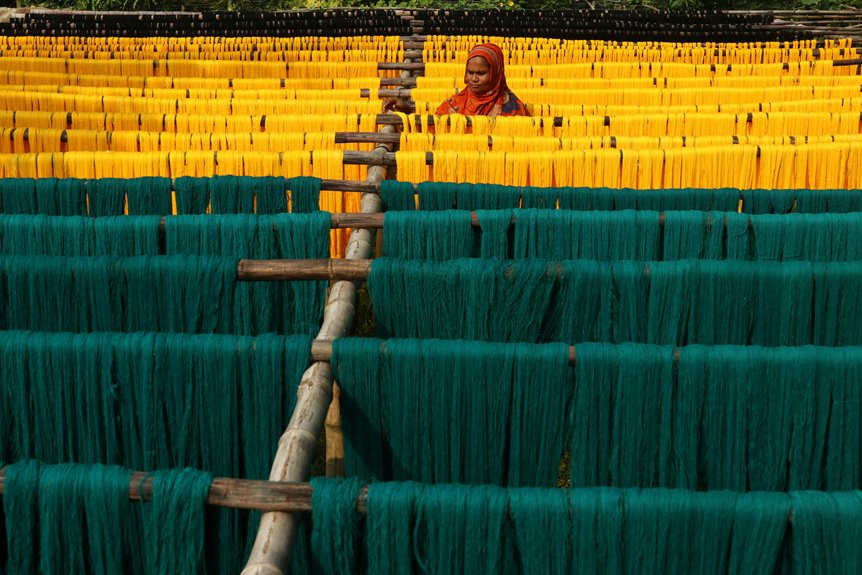
If you’re checking current rayon fabric prices in Bangladesh, expect variations due to raw material costs, seasonal demand, and regional supply differences. Prices in Dhaka tend to be competitive, while areas like Sylhet or Chittagong might be slightly higher. Global factors like pulp costs and supply chain disruptions also play a role in price shifts. Understanding these elements can help you make smarter buying choices. Keep exploring to discover how these trends might impact your sourcing strategy.
Key Takeaways
- Rayon fabric prices in Bangladesh vary by region, with Dhaka generally offering more competitive rates than Chittagong or Sylhet.
- Current prices reflect increases in raw material costs, particularly cellulose and wood pulp, driving up production expenses.
- Seasonal demand fluctuations and export market trends significantly impact rayon fabric prices in Bangladesh.
- Rayon prices are typically higher than cotton but lower than some specialty fabrics, balancing cost with breathability and drape.
- Buyers are advised to monitor market trends, negotiate with multiple suppliers, and consider bulk purchases to manage price volatility.
Overview of Rayon Fabric in Bangladesh
Rayon fabric plays a significant role in Bangladesh’s textile industry, known for its versatility and affordability. When you work with rayon, you’ll notice its smooth texture and excellent draping quality, making it popular for both casual and formal wear.
Bangladesh produces various types of rayon, including viscose and modal, catering to different market needs. You’ll find that many manufacturers focus on blending rayon with other fibers to enhance durability and comfort.
The fabric’s lightweight nature also appeals to customers in warmer climates, and its ability to absorb dyes means vibrant colors are common. As you explore the textile market here, you’ll see rayon’s widespread use in garments, home textiles, and industrial products, solidifying its importance in Bangladesh’s economy and export sector.
Factors Affecting Rayon Fabric Prices
Although many factors come into play, you’ll find that raw material costs, production methods, and market demand heavily influence fabric prices in Bangladesh. When raw materials like wood pulp or chemicals get pricier, you’ll see a direct impact on rayon fabric costs. Also, how the fabric is produced—whether through traditional or advanced techniques—affects pricing. Market demand fluctuates seasonally and due to fashion trends, so you should monitor these changes closely.
| Factor | Impact on Price |
|---|---|
| Raw Material Costs | Directly increases prices |
| Production Methods | Advanced methods raise costs |
| Market Demand | High demand elevates prices |
| Import/Export Duties | Adds to overall cost |
Understanding these factors helps you anticipate price changes better.
Recent Price Trends in Rayon Fabric
As global demand for lightweight and breathable fabrics shifts, you’ll notice significant fluctuations in the prices of rayon fabric in Bangladesh.
Recently, prices have experienced moderate increases due to rising production costs and higher demand in both domestic and export markets. Seasonal changes also influence these trends, with peak demand periods driving prices upward.
You’ll find that while prices remain competitive, there’s a noticeable uptick compared to last year. Additionally, manufacturers are adjusting their pricing strategies to balance cost pressures with market expectations.
If you’re sourcing rayon fabric, staying updated on these trends helps you negotiate better deals and plan purchases strategically. Keeping an eye on price movements guarantees you can respond promptly to market shifts without compromising on quality or budget.
Impact of Global Supply Chain Issues
You’ve likely noticed that recent price changes in rayon fabric aren’t happening in isolation. Global supply chain issues play a big role in shaping costs you face.
Disruptions like shipping delays, raw material shortages, and increased freight charges push prices upward. When ports get congested or factories pause production, it slows down material flow, making rayon fabrics scarcer and more expensive.
You also see how fluctuating fuel prices affect transportation costs, which ripple through the supply chain. Additionally, geopolitical tensions and trade restrictions can limit access to key inputs, further squeezing availability.
Understanding these dynamics helps you anticipate price shifts and plan purchases better. Staying informed about global supply challenges lets you navigate the market more strategically and avoid surprises in rayon fabric costs.
Comparison of Rayon Fabric Prices With Other Fabrics
When you compare rayon fabric prices with cotton, you’ll notice some key differences driven by production costs and demand.
Polyester often comes in cheaper than both, but each fabric’s price trends shift based on market factors.
Understanding these comparisons helps you make smarter choices for your textile needs.
Rayon Vs Cotton Costs
Although rayon and cotton share some similarities, their costs differ considerably due to factors like production methods and material sourcing.
When you look at rayon, you’ll notice it’s a semi-synthetic fiber derived from cellulose, requiring chemical processing that adds to its price.
Cotton, on the other hand, is a natural fiber harvested directly from cotton plants, which often makes it more affordable in Bangladesh, thanks to local cultivation and established supply chains.
However, rayon’s smooth texture and versatility sometimes justify its slightly higher cost if you need specific fabric qualities.
If you’re balancing budget and fabric properties, cotton usually offers a cost-effective option.
Still, your choice depends on the end product’s requirements, since rayon’s price reflects its unique processing and feel compared to cotton.
Rayon and Polyester Pricing
Since both rayon and polyester serve as popular fabric choices in Bangladesh, comparing their prices helps you decide which suits your budget and needs better.
Rayon typically costs a bit more than polyester due to its semi-synthetic nature and softer feel. Polyester, being fully synthetic, is generally cheaper and more durable, making it a cost-effective option for many users.
However, rayon offers better breathability and a more natural drape, which might justify its slightly higher price if comfort is your priority.
When shopping, you’ll find polyester priced lower per meter, making it attractive for bulk purchases or items needing durability.
Ultimately, your choice depends on balancing cost with fabric qualities you value most, as each fabric serves different purposes at distinct price points.
Price Trends in Fabrics
If you’re tracking fabric costs in Bangladesh, you’ll notice that rayon prices fluctuate differently compared to other popular materials like cotton, silk, and polyester.
Rayon often sits between cotton and polyester in price, offering a balance of affordability and quality. Cotton prices tend to be more stable due to local production, while silk remains the most expensive because of its luxury status and import costs.
Polyester usually stays low-cost but can vary depending on raw material prices. Rayon’s price shifts are influenced by both natural fiber availability and synthetic processing costs.
When choosing fabric, you’ll find rayon provides a cost-effective alternative without sacrificing texture or appearance. Understanding these trends helps you make smarter purchasing decisions, especially if you need to balance budget and fabric performance.
Regional Price Variations Within Bangladesh
When you explore rayon fabric prices across Bangladesh, you’ll notice distinct variations depending on the region. In Dhaka, the commercial hub, prices tend to be more competitive due to higher demand and numerous suppliers.
Meanwhile, in Chittagong, costs might be slightly higher because of transportation and fewer wholesale markets. Sylhet’s prices often reflect local demand and limited supply, sometimes causing fluctuations.
If you shop in rural areas, expect prices to vary based on accessibility and fewer retailers. Knowing these regional differences helps you negotiate better deals and choose where to buy.
Understanding local market dynamics guarantees you don’t overpay for rayon fabric, allowing you to plan purchases strategically based on your location or willingness to travel for better prices.
Influence of Raw Material Costs on Rayon Prices
You’ll notice that fluctuating raw material costs have a direct impact on rayon fabric prices in Bangladesh.
Since the industry relies heavily on imports, global market trends play a big role in price shifts.
Understanding these factors helps you see why prices can change unexpectedly.
Fluctuating Raw Material Costs
Although rayon fabric’s appeal remains strong, its price in Bangladesh often swings due to fluctuating raw material costs. You’ll notice that when prices of cellulose, the key raw material, rise, the cost of rayon fabric follows suit. Supply disruptions or changes in demand for raw materials like wood pulp and cotton linters can cause these swings. As a buyer or seller, keeping an eye on these raw material trends helps you anticipate price changes in rayon fabric.
| Raw Material | Price Trend Impact |
|---|---|
| Wood Pulp | High volatility |
| Cotton Linters | Moderate fluctuations |
| Chemical Additives | Relatively stable |
Understanding these shifts lets you make smarter purchasing decisions in Bangladesh’s dynamic market.
Import Dependency Effects
Since Bangladesh relies heavily on importing raw materials for rayon production, fluctuations in global prices directly affect local fabric costs.
When you buy rayon fabric, you feel the impact of changes in the prices of imported cellulose and chemicals. If these raw materials become more expensive due to supply chain issues or currency exchange rates, manufacturers pass those costs onto you.
You’ll notice price hikes in rayon fabrics during such times. Conversely, when import costs drop, fabric prices tend to stabilize or decrease, benefiting your budget.
Because local production depends on these imports, you can’t ignore how sensitive the market is to international factors. Understanding this import dependency helps you anticipate and adapt to the shifting costs of rayon fabric in Bangladesh.
Global Market Price Trends
When global raw material costs rise, you can expect rayon fabric prices in Bangladesh to follow suit.
Rayon production relies heavily on chemicals like cellulose and solvents, whose prices fluctuate based on global supply and demand. If crude oil or pulp prices increase, manufacturers pass these higher costs onto you through increased fabric prices.
Additionally, geopolitical tensions or supply chain disruptions can cause sudden raw material shortages, pushing prices up further. Conversely, when raw material costs drop, you’ll likely see more competitive rayon fabric prices.
Staying aware of these global market trends helps you anticipate price changes and make informed buying decisions. Ultimately, raw material cost shifts directly influence how much you pay for rayon fabric in Bangladesh’s market.
Future Price Predictions for Rayon Fabric
As global demand for sustainable textiles grows, you’ll likely see rayon fabric prices in Bangladesh fluctuate in response to shifting raw material costs and production technologies.
Increased availability of eco-friendly sourcing methods may lower costs, but supply chain disruptions could cause temporary spikes. Additionally, advancements in production efficiency could help stabilize prices, making rayon more competitive compared to synthetic alternatives.
However, factors like changes in government policies, export tariffs, and international trade agreements might also influence pricing. You’ll want to keep an eye on global trends in raw materials such as wood pulp, as these directly impact production expenses.
Strategies for Buyers to Navigate Price Changes
Although rayon fabric prices in Bangladesh can fluctuate, you can adopt several strategies to manage these changes effectively.
First, build strong relationships with multiple suppliers to compare prices and secure better deals.
Next, consider bulk purchasing during lower price periods to hedge against future increases.
You should also stay informed about market trends and economic factors affecting prices, enabling you to anticipate shifts.
Additionally, negotiate flexible contract terms that allow adjustments based on price changes.
Explore alternative fabrics or blends to diversify your options if rayon prices spike.
Finally, maintain clear communication with your team and suppliers to respond quickly to price fluctuations, ensuring your sourcing remains cost-effective and your production schedule stays on track.
Frequently Asked Questions
How Is Rayon Fabric Manufactured in Bangladesh?
You might not know that Bangladesh produces over 500,000 tons of rayon annually. You start by dissolving cellulose, then regenerate it into fibers through spinning, drying, and weaving, creating soft, breathable rayon fabric efficiently.
What Are the Environmental Impacts of Rayon Production?
You should know rayon production can harm the environment by using toxic chemicals, causing water pollution, and deforestation for raw materials. However, choosing sustainable sources and eco-friendly processes helps reduce these negative impacts greatly.
Which Brands Use Rayon Fabric Sourced From Bangladesh?
Though rayon’s not a medieval fabric, you’ll find brands like H&M and Zara using rayon sourced from Bangladesh. They’re tapping into its softness and affordability, blending tradition with modern fashion demands to keep styles fresh and eco-aware.
How Does Rayon Fabric Quality Vary Across Different Manufacturers?
You’ll notice rayon fabric quality varies by manufacturers due to differences in raw materials, weaving techniques, and finishing processes. Some prioritize softness and durability, while others focus on cost-effectiveness, impacting the fabric’s feel and longevity.
Are There Any Government Regulations on Rayon Fabric Production?
Just like the unseen hand guiding a playwright, you’ll find government regulations on rayon fabric production shaping quality and safety standards. They guarantee manufacturers comply with environmental and labor laws, keeping production ethical and sustainable for you and the industry.