
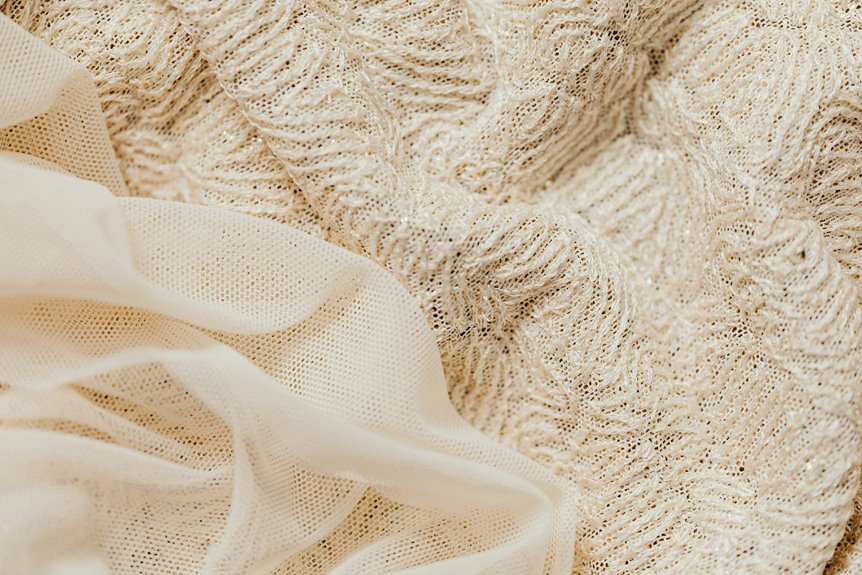
When choosing between crepe and chiffon, you’ll find crepe has a textured, slightly rough surface with a structured drape that holds its shape well, perfect for tailored looks. Chiffon, on the other hand, feels smooth, sheer, and lightweight, flowing softly for an airy, elegant effect. Crepe is thicker and denser, while chiffon’s sheerness makes it delicate and floaty. Keep exploring to see how these differences impact style, care, and usage.
Key Takeaways
- Crepe has a textured, crinkled surface with a grainy feel, while chiffon is smooth, soft, and has a delicate glassy finish.
- Crepe is denser and thicker, holding structured shapes, whereas chiffon is lightweight and flows with airy, soft drapes.
- Crepe’s twisted yarns create a slightly rough texture, contrasting chiffon’s plain weave that results in sheer, translucent fabric.
- Chiffon’s sheerness makes it ideal for layered, ethereal garments; crepe suits more formal, tailored designs needing body.
- Crepe resists clinging and maintains formality; chiffon drapes fluidly, enhancing softness and elegance in evening wear and scarves.
Origin and Fabric Composition
Although both crepe and chiffon are popular in fashion, they come from distinct origins and fabric compositions that set them apart.
You’ll find crepe made from various fibers like silk, wool, or synthetic materials, giving it versatility and a slightly rough texture. Its unique grainy surface comes from tightly twisted yarns.
On the other hand, chiffon is typically crafted from silk or synthetic fibers such as polyester, resulting in a lightweight, sheer fabric with a smooth, slightly glossy finish.
When you choose between crepe and chiffon, understanding these differences helps you pick the right fabric for your project.
Crepe’s textured feel contrasts with chiffon’s delicate transparency, reflecting their unique manufacturing histories and fiber choices that influence how they look and behave in garments.
Weaving Techniques of Crepe and Chiffon
You’ll notice crepe uses tightly twisted yarns that create its signature crinkled texture, while chiffon relies on a plain weave with finer threads for a sheer, smooth finish.
Understanding these weaving differences helps you pick the right fabric for your project.
Let’s compare how their yarn twists and weave patterns affect their look and feel.
Yarn Twist Variations
When you examine the yarn twist techniques behind crepe and chiffon, you’ll notice they create distinct textures that define each fabric’s character.
Crepe uses tightly twisted yarns, often alternating between S and Z twists, which introduces a gritty, pebbly surface and enhances its natural crinkle. This high twist tension gives crepe its signature grainy feel and adds body to the fabric.
On the other hand, chiffon employs lightly twisted yarns with a more uniform twist direction, resulting in a smoother, softer hand. The lower twist count in chiffon yarns contributes to its sheer, flowing quality, allowing it to drape delicately.
Understanding these yarn twist variations helps you appreciate why crepe feels textured and substantial, while chiffon remains light and airy.
Weave Patterns Comparison
The way crepe and chiffon are woven plays a big role in shaping their unique looks and feels.
Crepe uses a plain or sometimes a crepe weave, which involves tightly twisted yarns woven in a balanced pattern. This technique gives crepe its characteristic pebbly texture and slightly rough surface.
On the other hand, chiffon employs a plain weave with highly twisted yarns but a much finer gauge. This results in a lightweight, sheer fabric with a smooth, soft hand and subtle translucency.
When you choose crepe, you get more texture and body due to its weave, making it ideal for structured garments.
Chiffon’s weave offers airy drape and elegance, perfect for flowy, delicate designs.
Understanding these weave differences helps you select the best fabric for your project.
Texture and Surface Appearance
Texture plays an essential role in distinguishing crepe from chiffon. When you touch crepe, you’ll notice its slightly rough, crinkled surface, giving it a unique, pebbled texture that adds depth and character. This textured finish helps crepe stand out, making it feel more substantial and less slippery compared to chiffon.
On the other hand, chiffon feels smooth and soft with a delicate, almost glassy surface that reflects light subtly, creating an airy, ethereal look. You’ll find chiffon’s surface more uniform and sleek, enhancing its sheer, lightweight appeal.
Weight and Thickness Comparison
You’ll notice that crepe is generally denser and thicker than chiffon, which affects how each fabric feels when you wear it.
This difference in weight influences their drape and suitability for various seasons.
Understanding these traits helps you pick the right fabric for your outfit’s comfort and style.
Fabric Density Differences
Fabric density plays a crucial role in how crepe and chiffon feel and perform. When you examine these fabrics, you’ll notice crepe generally has a higher density, making it feel more substantial.
Chiffon, by contrast, is lighter and more open in structure. This density difference affects durability, drape, and how the fabric moves on your body.
Consider these points:
- Crepe’s tighter weave creates a denser, heavier fabric.
- Chiffon’s loose weave results in a lighter, airier feel.
- Denser crepe offers better opacity and resilience.
- Lighter chiffon provides a delicate, flowing silhouette.
- Fabric density influences breathability and layering options.
Understanding these nuances helps you choose the right fabric for your project’s needs and style.
Thickness Impact on Wear
Although crepe and chiffon might look similar at a glance, their differences in weight and thickness greatly affect how they wear throughout the day.
Crepe is generally thicker and heavier, giving you more coverage and durability. This means it holds its shape well and resists wrinkles, making it ideal if you want a fabric that stays polished longer.
On the other hand, chiffon is lightweight and sheer, which lets air flow through easily, keeping you cooler but also making it more delicate. If you choose chiffon, you’ll want to handle it gently to avoid snags or tears.
Understanding these thickness and weight variations helps you pick the right fabric for your needs—crepe for structure and resilience, chiffon for lightness and elegance.
Draping Characteristics of Both Fabrics
When you drape crepe, you’ll notice it holds a more structured shape, offering a textured, slightly crinkled appearance that adds depth to your garment.
In contrast, chiffon flows with a light, airy grace, creating soft, fluid folds that move with ease. This difference impacts how each fabric complements your outfit’s silhouette and style.
Consider these draping traits:
- Crepe resists clinging, maintaining formality and shape
- Chiffon cascades gently, ideal for layered, flowing designs
- Crepe’s weight supports tailored cuts and structured garments
- Chiffon’s lightness suits delicate, ethereal aesthetics
- Both fabrics enhance movement differently, influencing garment dynamics
Understanding these characteristics helps you select the right fabric for your intended look and feel.
Sheerness and Transparency Levels
Since crepe and chiffon serve different style purposes, their sheerness and transparency levels vary greatly.
When you choose chiffon, expect a lightweight, sheer fabric that allows light to pass through easily. This transparency creates an airy, delicate look, perfect for layering or adding a subtle hint of skin. You’ll often need a lining or slip underneath chiffon garments to avoid revealing too much.
On the other hand, crepe is much more opaque, offering full coverage without sacrificing elegance. Its textured surface diffuses light, reducing transparency considerably.
Comfort and Feel on the Skin
Because comfort is key in choosing the right fabric, understanding how crepe and chiffon feel against your skin matters a lot.
Crepe offers a slightly textured surface that feels substantial yet soft, giving you a cozy sensation without overheating. Chiffon, on the other hand, is ultra-light and smooth but can sometimes feel a bit delicate or slightly scratchy depending on the fiber content.
Consider these comfort factors when deciding between the two:
- Crepe’s textured weave provides gentle grip, preventing slippage.
- Chiffon’s sheer nature allows more airflow, keeping you cooler.
- Crepe usually feels warmer, ideal for cooler climates.
- Chiffon’s smoothness enhances a light, airy sensation.
- Both fabrics can vary in softness based on their fiber blends.
You’ll want to pick based on your skin sensitivity and climate needs.
Common Uses in Fashion and Apparel
Understanding how crepe and chiffon feel can help you decide which fabric suits your style and comfort needs, but knowing where each fabric shines in fashion is just as important.
You’ll find crepe often used in tailored pieces like blazers, trousers, and dresses because of its structured drape and slightly textured surface. It’s perfect when you want something that holds shape yet moves gracefully.
On the other hand, chiffon excels in flowy, delicate garments such as evening gowns, scarves, and blouses, thanks to its lightweight, sheer quality that adds romantic elegance.
If you want a fabric that offers versatility for both casual and formal wear, crepe is a solid choice. For airy, ethereal looks, chiffon is your go-to.
Choosing between them depends on the style and silhouette you’re aiming to create.
Care and Maintenance Tips
To keep your crepe and chiffon garments looking their best, you’ll want to follow specific washing guidelines tailored to each fabric.
Proper storage is just as important to prevent wrinkles and damage.
Let’s explore how to care for these delicate materials so they last longer.
Washing Guidelines
Although both crepe and chiffon fabrics require gentle care, their washing guidelines differ to preserve their unique textures and longevity.
When you wash crepe, you can usually use a gentle machine cycle, but chiffon demands hand washing or delicate machine settings to avoid damage. Always use cold water for both to prevent shrinking or color fading.
Keep these tips in mind:
- Use mild detergent suited for delicate fabrics
- Avoid bleach and fabric softeners that can weaken fibers
- Rinse thoroughly to remove all soap residues
- Gently squeeze out excess water; never wring chiffon
- Lay flat to dry crepe, and hang chiffon in a shaded area
Following these steps helps maintain your fabric’s drape and softness over time.
Storage Recommendations
Proper storage plays an essential role in keeping your crepe and chiffon garments looking their best. For both fabrics, hang them on padded hangers to maintain shape and avoid creases.
Chiffon is delicate, so keep it away from direct sunlight to prevent fading. You can also store chiffon in breathable garment bags to protect it from dust and snags.
Crepe is a bit sturdier but still benefits from a cool, dry environment to prevent moisture damage. Avoid overcrowding your closet to reduce wrinkles and fabric stress.
If you must fold crepe, place tissue paper between folds to minimize creasing. Regularly check your stored garments for signs of wear or pests.
Following these tips helps your fabrics stay fresh, vibrant, and ready to wear.
Price Range and Availability
Since both crepe and chiffon are popular fabrics, you’ll find them at various price points depending on quality and fiber content.
Generally, synthetic versions of both fabrics are more affordable, while natural fibers like silk push the price higher. Availability also varies by location and season, so it’s wise to check multiple sources if you’re hunting for specific types.
Here’s what to take into account about price and availability:
- Synthetic crepe and chiffon are budget-friendly and widely available.
- Silk chiffon and crepe command premium prices due to their luxurious feel.
- Specialty blends or designer fabrics cost more and are less common.
- Online retailers offer a broader selection than local stores.
- Bulk purchases often reduce the per-yard cost.
Knowing this helps you plan your fabric shopping smartly.
Frequently Asked Questions
Can Crepe and Chiffon Be Blended Together in a Single Garment?
You can definitely blend crepe and chiffon in one garment to combine their unique textures. Just make sure the fabrics complement each other in weight and drape, so your piece looks cohesive and feels comfortable.
Are There Eco-Friendly Alternatives to Traditional Crepe and Chiffon Fabrics?
You can choose eco-friendly fabrics like organic cotton crepe or recycled polyester chiffon. These options reduce environmental impact while keeping the elegance you want. Look for certifications to guarantee sustainability and ethical production practices.
How Do Crepe and Chiffon Fabrics Perform in Extreme Weather Conditions?
You want fabrics that breathe and insulate; crepe offers warmth and resists wrinkles, while chiffon keeps you cool but’s delicate in harsh weather. Choose crepe for cold, chiffon for mild, and layer wisely in extremes.
Do Crepe and Chiffon Fabrics Have Any Hypoallergenic Properties?
You’ll find that neither crepe nor chiffon is inherently hypoallergenic, but natural fiber versions can reduce irritation. If you have sensitive skin, opt for silk or cotton blends, and always check fabric treatments and dyes.
Can Crepe and Chiffon Fabrics Be Used for Upholstery or Home Décor?
Imagine upholstering a delicate chair with chiffon—it won’t hold up well. You’ll want to avoid using chiffon for upholstery, but crepe can work for light drapes or cushions, offering durability and elegance in home décor.