
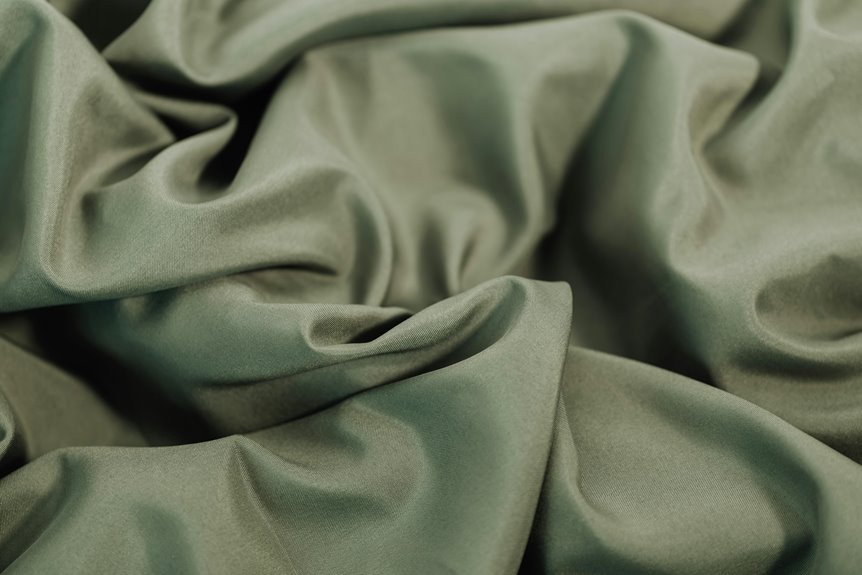
If you’re working with crepe fabric, you should know key terms like crepe de Chine (lightweight with a subtle sheen), georgette (sheer and slightly rough), and wool crepe (heavier with great drape). Understand textures like grainy, pebbly, and crinkle crepe, plus qualities such as stretch, wrinkle resistance, and matte finish. Knowing these helps you handle sewing challenges like slippage and fraying. Keep exploring to master techniques and discover how top designers use this versatile fabric.
Key Takeaways
- Crepe fabric features a crinkled texture with varieties like Crepe de Chine, Georgette, wool crepe, and stretch crepe for different uses.
- Textures include grainy, pebbly, smooth, and crinkle, each affecting drape and tactile feel in garment design.
- Common terms include drape, wrinkle resistance, breathability, resilience, and matte finish describing crepe’s fabric qualities.
- Sewing terms to know: fraying, pressing, seam finishing, needle type, and fabric stretch for handling crepe effectively.
- Designer usage highlights crepe’s role in structured, flowing, and formal garments, emphasizing its adaptability and elegant drape.
What Is Crepe Fabric?
Crepe fabric is known for its distinctive crinkled texture and lightweight feel. When you work with crepe, you’ll notice it drapes beautifully, making it a favorite for garments that need fluid movement.
It’s made using a special weaving or twisting technique on the yarns, which creates that unique surface texture. You’ll find crepe made from various fibers like silk, wool, polyester, or cotton, each lending different qualities.
This versatility means crepe suits a range of projects, from elegant dresses to casual blouses. As you explore fabric options, understanding what crepe is helps you choose the right material that combines comfort, style, and a subtle texture that sets your designs apart.
Characteristics of Crepe
You’ll immediately notice the fabric’s distinctive crinkled texture and graceful drape when you work with it.
Crepe’s surface isn’t smooth; that pebbly or grainy feel sets it apart and adds visual interest to your projects. It’s lightweight yet sturdy, giving you versatility for garments that flow without losing shape.
The fabric stretches slightly but keeps its structure, making it comfortable and flattering. You’ll also appreciate how crepe resists wrinkles, so your creations look polished longer.
Its matte finish helps colors appear rich without glare, perfect for elegant or casual wear.
Whether you’re sewing dresses, blouses, or scarves, crepe’s unique hand and fluid movement make it a favorite choice that elevates your designs effortlessly.
Types of Crepe Fabric
You’ll find several common crepe varieties, each with its own unique texture and feel.
Understanding these differences helps you pick the best fabric for your project.
Let’s explore how texture impacts use and which types suit specific needs.
Common Crepe Varieties
Varieties of crepe fabric offer distinct textures and finishes that suit different styles and purposes.
When you explore crepe, you’ll encounter types like Crepe de Chine, known for its lightweight, smooth feel and subtle sheen—perfect for blouses and dresses.
Georgette crepe stands out with its slightly rough texture and sheer quality, ideal for flowing garments.
You might also work with Wool Crepe, which is heavier and provides excellent drape for tailored suits and coats.
If you want something with more stretch, stretch crepe blends synthetic fibers with natural ones for comfort and flexibility.
Each crepe variety serves a unique function, so picking the right one depends on your project’s requirements and desired fabric behavior.
Recognizing these common crepes helps you make informed fabric choices.
Texture Differences Explained
Three main crepe textures—grainy, pebbly, and smooth—define how the fabric feels and behaves.
Understanding these differences helps you choose the right crepe for your project.
- Grainy Crepe: Features a rough, sandpaper-like surface, offering a tactile, textured feel.
- Pebbly Crepe: Has small, raised bumps resembling tiny pebbles, creating a lively texture.
- Smooth Crepe: Exhibits a sleek, flat surface with minimal texture, giving a polished look.
- Crinkle Crepe: Shows a permanently wrinkled texture, adding depth and dimension.
Each texture results from unique weaving or finishing techniques, impacting drape and hand.
Best Uses by Type
Each type of crepe fabric brings unique qualities that make it ideal for specific uses.
If you choose crepe de chine, you’ll appreciate its lightweight, smooth texture, perfect for blouses and dresses that flow elegantly.
For a more structured look, crepe wool works well in suits and tailored garments due to its warmth and durability.
When you want a fabric with a bit of stretch and drape, try crepe jersey—it’s great for casual wear and form-fitting designs.
Crepe chiffon offers an airy, sheer feel, making it your go-to for evening gowns and scarves.
Finally, crepe satin combines a lustrous finish with the signature crinkled texture, ideal for luxurious formalwear.
Knowing these uses helps you pick the right crepe for your project.
Crepe De Chine Explained
Crepe de Chine offers a lightweight, luxurious fabric known for its slightly crinkled texture and smooth finish. When you choose this fabric, you get a silk or polyester blend that feels soft against your skin yet drapes beautifully.
Here’s what makes it stand out:
- Texture: Fine, subtle pebbled surface created by twisted yarns.
- Weight: Light and breathable, ideal for warm weather garments.
- Drape: Fluid and elegant, perfect for blouses, dresses, and scarves.
- Care: Usually requires gentle washing or dry cleaning to maintain texture.
Using crepe de Chine, you can create garments that combine comfort and sophistication effortlessly, making it a favorite among designers and sewists who want both style and ease.
Georgette Crepe Overview
You’ll notice Georgette crepe has a lightweight, slightly crinkled texture that feels soft and airy against your skin.
It’s popular for flowing dresses and blouses because of its elegant drape and breathability.
To keep it looking great, you’ll want to handle it gently with careful washing and proper storage.
Texture and Feel
The unique texture of georgette crepe gives it a slightly rough, pebbled surface that feels light and airy against your skin.
When you touch it, you’ll notice its distinctive grain and slight stretch, offering both comfort and elegance.
Here’s what to expect from georgette crepe’s texture and feel:
- Slightly Rough Surface – The tiny pebble-like texture adds visual interest and tactile depth.
- Lightweight and Flowing – It drapes effortlessly, making movement feel natural.
- Semi-Sheer Quality – You’ll find it translucent, perfect for layering.
- Soft Yet Crisp – Though soft, it maintains a crisp structure without stiffness.
This combination makes georgette crepe unique and versatile for your creative projects.
Common Uses
Although georgette crepe might seem delicate, it suits a wide range of uses from elegant evening gowns to casual blouses.
You’ll find it popular for dresses that require flow and movement, thanks to its lightweight and slightly sheer quality. Designers often choose georgette for skirts and scarves because it drapes beautifully and adds a touch of sophistication.
It also works well for layering pieces, like kimonos or lightweight jackets, where you want a soft, textured look without bulk. If you enjoy making bridal wear or special occasion outfits, georgette crepe gives you that refined, airy feel.
Plus, you can use it for stylish tops and tunics that balance comfort with elegance. Overall, it’s versatile enough to fit both formal and everyday wardrobes effortlessly.
Care and Maintenance
Because georgette crepe is delicate and lightweight, it needs gentle care to keep its texture and drape intact.
When handling this fabric, you want to avoid harsh treatments that can damage its fine fibers. Here’s how to care for your georgette crepe:
- Always hand wash in cold water with a mild detergent to prevent shrinking or distortion.
- Avoid wringing; gently squeeze out excess water and lay flat on a towel to dry.
- Iron on a low setting with a pressing cloth to protect the fabric from direct heat.
- Store georgette crepe garments hanging or folded in a cool, dry place to prevent wrinkles and maintain shape.
Wool Crepe Features
Wool crepe offers a unique blend of texture and durability that sets it apart from other crepe fabrics. When you work with wool crepe, you’ll notice its distinct pebbled surface created by tightly twisted yarns. This texture not only adds visual interest but also provides a subtle stretch, making it comfortable to wear.
Wool crepe drapes beautifully, so it’s perfect for tailored garments like suits, skirts, and dresses. You’ll appreciate its natural wrinkle resistance, which helps your creations maintain a crisp look throughout the day.
Additionally, wool crepe breathes well and offers excellent insulation, keeping you warm without overheating. Its resilience means it holds shape and resists pilling, ensuring your pieces look polished over time.
Synthetic vs. Natural Crepe
When choosing crepe fabric, you’ll want to understand the differences between synthetic and natural fibers.
Each type affects how the fabric performs and how you should care for it.
Let’s compare their sources, durability, and maintenance to help you make the best choice.
Fiber Sources Comparison
Although both synthetic and natural fibers create crepe fabric, you’ll notice distinct differences in texture, durability, and care requirements.
When choosing between them, consider these key points:
- Source: Natural crepe comes from fibers like silk, wool, or cotton, while synthetic crepe is made from polyester or nylon.
- Texture: Natural fibers often feel softer and more breathable; synthetic fibers can have a smoother or more uniform texture.
- Strength: Synthetic crepe tends to resist stretching and wrinkling better than natural crepe.
- Environmental Impact: Natural fibers are biodegradable and renewable, whereas synthetic fibers rely on petrochemicals and take longer to break down.
Understanding these differences helps you pick the right crepe fabric for your project’s look and feel.
Performance and Care Differences
Because synthetic and natural crepe fabrics behave differently, understanding their performance and care is essential for maintaining your garments.
Synthetic crepes, like polyester or nylon, are generally more durable, wrinkle-resistant, and quick-drying. You can machine wash them on gentle cycles and they often require less ironing.
Natural crepes, such as silk or wool, offer breathability and a luxurious feel but demand gentler handling. You’ll want to hand wash or dry clean natural crepe to prevent damage and shrinking.
Avoid high heat when ironing natural fibers, using a pressing cloth to protect the fabric.
Crepe Back Satin Details
Crepe Back Satin combines the smooth, lustrous finish of satin with the textured, matte crepe underside, giving you a fabric that’s both elegant and versatile.
When working with Crepe Back Satin, here are key details to keep in mind:
- Dual Texture: One side shines with satin’s glossy appeal, while the reverse offers a subtle crepe texture, perfect for reversible designs.
- Drape & Flow: It drapes beautifully, making it ideal for gowns, blouses, and scarves that require movement and fluidity.
- Sewing Tips: Use sharp needles and fine thread to avoid snags; consider lining for added structure.
- Care Instructions: Dry clean is usually recommended to maintain the fabric’s sheen and texture without damage.
Understanding these details helps you maximize Crepe Back Satin’s stunning potential.
Understanding Crepe Yarn
You’ll want to know the types of crepe yarn to truly understand how crepe fabric gets its unique texture.
Crepe yarns vary in twist and thickness, giving the fabric its characteristic crinkled appearance.
Let’s explore what makes these yarns special and how they affect the final fabric.
Types of Crepe Yarn
Yarn plays an essential role in determining the texture and quality of crepe fabric. When choosing crepe yarn, you’ll encounter several distinct types, each influencing the final fabric’s feel and appearance.
Here are four common types of crepe yarn you should know:
- S-twist yarn – Twisted in a clockwise direction, it gives a smoother, softer crepe surface.
- Z-twist yarn – Twisted counterclockwise, it produces a crisper texture with more pronounced grain.
- Hard-twist yarn – Tightly twisted for added strength and a firm, pebbly texture typical of crepe fabrics.
- Soft-twist yarn – Loosely twisted, resulting in a lighter, more flowing fabric.
Understanding these types helps you select the right yarn to achieve the crepe fabric qualities you want for your project.
Crepe Yarn Characteristics
Although understanding the types of crepe yarn is important, knowing their characteristics will help you better predict how the fabric behaves.
Crepe yarn is typically twisted tightly, giving it a crinkled texture and a slightly rough hand feel. This high twist creates fabric with excellent elasticity and drape, allowing your garments to move gracefully.
You’ll also notice crepe yarn often resists wrinkles, making it practical for everyday wear. Because of its twist, the yarn can be a bit delicate during sewing, so you’ll want to use appropriate needles and tension settings.
Additionally, crepe yarn’s texture can vary—from fine and smooth to coarse and pebbly—affecting the final fabric’s appearance and weight. Understanding these traits helps you choose the right crepe for your project.
Crepe Weave Techniques
Crepe weave techniques create the distinctive crinkled texture that defines crepe fabric.
When you work with crepe, understanding these weaving methods helps you choose the right fabric for your project.
Here are four common techniques:
- Plain Weave Crepe – Uses tightly twisted yarns, producing a subtle, pebbly surface.
- Crepe Satin Weave – Combines smooth satin areas with crepe’s characteristic texture for contrast.
- Momme Crepe Weave – Employs a balanced weave that enhances fabric strength and texture.
- Crepe Georgette Weave – Features a lightweight, sheer finish with a pronounced crinkle effect.
Crepe Fabric Weight and Drape
When you select fabric for your project, understanding weight and drape is key to achieving the look and feel you want.
Crepe fabrics come in various weights, from lightweight chiffony types to heavier, textured styles. The weight influences how the fabric hangs and moves.
Lightweight crepes drape softly and flow elegantly, perfect for blouses or dresses that require fluidity. Heavier crepes have more structure, holding shapes well in tailored garments like jackets or skirts.
Drape refers to how the fabric falls when cut—crepe’s natural crinkled texture enhances its graceful, slightly springy drape.
Crepe Fabric Care Tips
Since crepe fabrics vary widely in fiber content and texture, you’ll want to tailor your care routine to preserve their unique qualities.
Crepe fabrics differ greatly, so customize your care to maintain their distinct texture and feel.
Here are four essential tips to help you maintain your crepe garments:
- Check the label: Always follow specific care instructions on the tag, as synthetic and natural crepes differ in washing needs.
- Hand wash or gentle cycle: Use cold water and mild detergent to avoid damaging the fabric’s texture.
- Avoid wringing: Instead, gently squeeze out excess water and lay flat or hang to dry away from direct sunlight.
- Iron carefully: Use a low heat setting and press on the reverse side with a cloth to prevent shine or distortion.
Common Uses for Crepe
The unique texture and versatility of crepe make it a popular choice across many types of clothing and accessories.
You’ll find crepe fabric in elegant dresses, blouses, and skirts because it drapes beautifully and resists wrinkles. It’s also a favorite for tailored suits and trousers, offering a refined yet comfortable fit.
When crafting evening wear or bridal gowns, crepe adds a subtle texture that enhances sophistication.
Beyond apparel, crepe works well for scarves and shawls, providing a lightweight feel with a distinctive look.
If you’re designing home décor, crepe can be used for curtains or pillow covers, where its textured surface adds depth.
Knowing crepe’s common uses helps you select the right fabric for your next creative project.
Differences Between Crepe and Chiffon
When you compare crepe and chiffon, you’ll notice crepe has a textured surface while chiffon feels smooth and sheer.
Crepe tends to be heavier and less transparent, making it great for structured garments, whereas chiffon is lightweight and airy.
Understanding these differences helps you choose the right fabric for your project.
Fabric Texture Comparison
Although both crepe and chiffon are lightweight fabrics favored in fashion, you’ll notice distinct differences in their texture that affect how they look and feel. Understanding these can help you choose the right fabric for your design.
- Crepe has a crinkled, pebbly surface, giving it a slightly rough texture, while chiffon feels smooth and soft.
- Crepe’s texture adds a subtle dimension, making garments appear more structured.
- Chiffon drapes fluidly due to its fine, sheer weave, creating an airy, delicate finish.
- When you run your fingers over crepe, you’ll feel a grainy resistance; chiffon glides effortlessly.
These texture differences influence not just appearance but also the fabric’s behavior in your sewing projects.
Weight and Sheerness
Feeling the texture differences between crepe and chiffon sets the stage for understanding how their weight and sheerness impact your design choices.
Crepe is generally heavier and more opaque, giving your garment structure and coverage without needing extra layers. It drapes well but holds shape better, making it ideal when you want a bit more substance.
Chiffon, on the other hand, is lightweight and sheer, offering an airy, delicate look. You’ll often need to line chiffon or layer it to avoid transparency, which adds to its ethereal appeal.
When you pick between the two, consider how much opacity and weight your project demands. With crepe, you get more body and modesty; with chiffon, you embrace lightness and translucency, affecting both the garment’s feel and visual impact.
Typical Uses Differences
Since crepe offers more structure and opacity, you’ll often find it used for tailored garments like suits, dresses, and skirts that benefit from its body and durability.
On the other hand, chiffon is lightweight and sheer, perfect for flowy, delicate pieces.
When deciding between crepe and chiffon, consider these typical uses:
- Crepe works great for formal wear requiring shape, like blazers and pencil skirts.
- Chiffon excels in layering and creating soft, airy dresses or blouses.
- Crepe’s texture holds up well for evening gowns with draping that needs support.
- Chiffon suits accessories such as scarves or overlays where transparency adds elegance.
Understanding these differences helps you pick the right fabric to achieve your design’s look and function.
Crepe Fabric Dyeing Process
When you dye crepe fabric, you’ll notice that its unique texture affects how the color absorbs and sets. The fabric’s crinkled surface creates uneven dye uptake, resulting in a rich, variegated appearance.
To achieve the best results, you need to pre-wash the fabric to remove any sizing or finishes that could block dye penetration. Use fiber-reactive or acid dyes depending on the fiber content—cotton crepe responds well to fiber-reactive dyes, while silk or wool crepe requires acid dyes.
Keep the temperature and pH consistent during the dye bath to guarantee even color. After dyeing, rinse thoroughly to remove excess dye and prevent bleeding.
Finally, dry the fabric flat or hang it carefully to maintain the crepe’s texture without stretching or distorting it.
Crepe Texture Variations
Crepe fabric offers a range of texture variations that can transform the look and feel of your project.
Understanding these textures helps you pick the perfect crepe for your design needs. Here are four common crepe texture variations:
Grasping crepe textures guides you to select the ideal fabric that suits your design vision perfectly.
- Grainy Crepe – Features a pebbled surface that adds subtle dimension and hides wrinkles well.
- Crêpey Crepe – Exhibits a tight, crinkled texture, offering a lightweight, flowy drape.
- Georgette Crepe – Has a slightly rough, crepey feel with a semi-sheer finish, ideal for delicate garments.
- Satin-Backed Crepe – Combines a smooth, shiny back with a crepe front for contrast and versatility.
Choosing among these textures lets you control your fabric’s visual and tactile impact precisely.
Crepe Fabric Stretch and Recovery
Understanding how fabric stretches and bounces back is key to choosing the right crepe for your project. Crepe fabrics vary in their stretch depending on fiber content and weave.
Some crepes, especially those with added elastane or spandex, offer good stretch and excellent recovery, making them ideal for fitted garments that need flexibility.
Others, like pure silk or wool crepe, have little to no stretch and rely on their natural drape. When you pick a crepe with stretch, test its recovery by gently pulling and releasing it—if it snaps back without sagging, it’ll hold its shape well over time.
Knowing these qualities helps you avoid unwanted sagging or tightness, ensuring your finished piece feels comfortable and looks sharp.
Sewing Challenges With Crepe
Knowing how your crepe fabric stretches and recovers helps, but sewing it can still present unique challenges. You’ll want to handle it carefully to avoid puckering or distortion.
Here are key challenges you might face:
- Slippery Texture – Crepe can slide under your presser foot, making precise stitching tricky.
- Fraying Edges – It tends to fray easily, so finishing seams is essential.
- Needle Choice – Using the wrong needle can cause skipped stitches or fabric damage.
- Pressing Sensitivity – Crepe is delicate when pressed; too much heat can ruin its texture.
How to Identify Quality Crepe
Although it might look similar at first glance, high-quality crepe stands out through its texture, weight, and drape.
When you touch the fabric, it should feel slightly grainy but not rough, with a consistent pebbled surface. Check the weight; quality crepe feels substantial without being heavy or stiff.
Hold it up and notice how it falls—premium crepe drapes fluidly, creating elegant folds without puckering or stiffness.
Examine the weave closely; it should be tight and even, without loose threads or snags. Also, test its resilience by gently scrunching it—good crepe bounces back quickly without permanent creases.
Finally, look for color depth and uniformity, as well-dyed crepe maintains vibrancy and resists fading.
With these tips, you’ll confidently select crepe that performs and looks great.
Popular Designers Using Crepe Fabric
When you explore high fashion, you’ll quickly notice that many top designers favor crepe fabric for its versatility and elegance.
Crepe’s unique texture and drape make it a staple in luxury collections. If you’re curious about who’s using it, here are four popular designers embracing crepe:
- Alexander McQueen – Known for dramatic silhouettes, McQueen often uses crepe to add structure and flow.
- Stella McCartney – She chooses crepe for its sustainable and sleek qualities in her eco-friendly lines.
- Valentino – Crepe enables Valentino’s romantic gowns to maintain shape while feeling light.
- Victoria Beckham – Her minimalist designs rely on crepe’s smooth finish to highlight clean lines.
When you work with crepe, you’re in great company with these influential designers.
Frequently Asked Questions
Can Crepe Fabric Be Used for Upholstery Projects?
You can use crepe fabric for upholstery, but remember it’s lightweight and delicate. It’s better suited for decorative pieces or low-traffic areas. For durability, choose heavier, more robust fabrics designed specifically for upholstery projects.
Is Crepe Fabric Hypoallergenic?
Crepe fabric isn’t inherently hypoallergenic, but if you’re sensitive, you might want to check the fiber content. Natural fibers like silk or cotton crepe are gentler, while synthetic blends could cause irritation for some people.
What Is the Environmental Impact of Crepe Fabric Production?
Imagine rivers tinted by dye runoff and fields drained by water-hungry crops; crepe production can strain ecosystems. You’ll want to choose eco-friendly options to reduce pollution, conserve water, and support sustainable farming practices.
How Does Crepe Fabric Respond to Steam Ironing?
You’ll find crepe fabric responds well to steam ironing, as the steam helps relax wrinkles without damaging the texture. Just use a low to medium heat setting and avoid pressing too hard to maintain its crinkled look.
Are There Vintage Crepe Fabric Styles Still Popular Today?
You’ll find vintage crepe styles, like crepe de chine and wool crepe, still popular today for their timeless texture and elegance. They’re great for classic dresses and suits, offering a nostalgic yet chic look you’ll love.