
When comparing natural fibers, you’ll find abaca stands out for its impressive tensile strength (400-700 MPa) and relatively high density (1.45 g/cm³). It’s stronger and denser than jute and coir and rivals hemp in durability, making it perfect for heavy-duty uses like marine ropes. Plus, its lightweight yet robust nature offers excellent resistance to wear. If you want to understand how abaca stacks up against other fibers and why that matters, there’s more to explore.
Key Takeaways
- Abaca fiber has a tensile strength of approximately 400-700 MPa, which is higher than hemp, jute, and coir fibers.
- With a density of 1.45 g/cm³, abaca is denser and stronger than jute (1.30 g/cm³) and coir (1.20 g/cm³), but slightly less dense than hemp (1.48 g/cm³).
- Abaca’s long, smooth fibers contribute to its durability and make it ideal for heavy-duty applications like ropes and marine use.
- Its excellent resistance to saltwater damage sets abaca apart from other natural fibers like flax, which absorbs moisture and deteriorates faster.
- Abaca’s combination of high strength, moderate density, and low environmental impact makes it a superior choice for sustainable, durable materials.
Overview of Abaca Fiber Characteristics
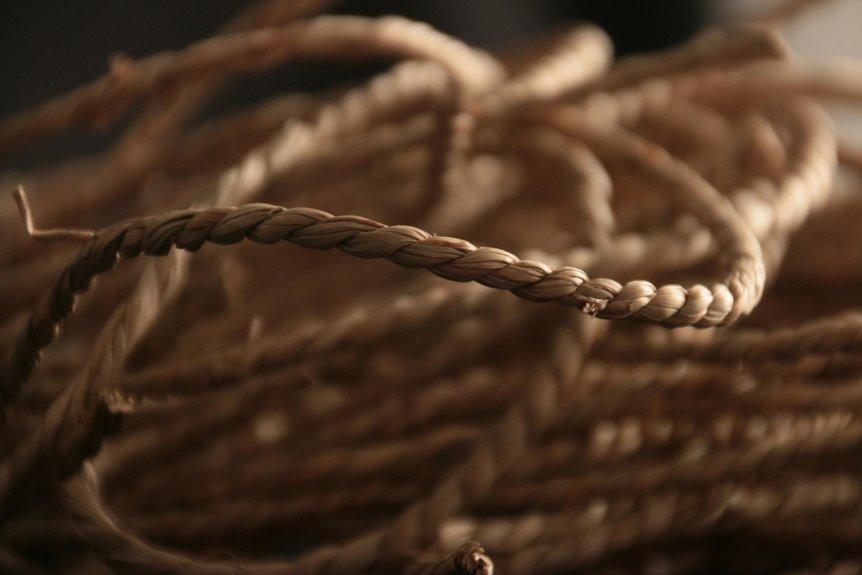
Abaca fiber stands out for its remarkable strength and lightweight nature, making it a valuable natural material. When you handle abaca, you’ll notice its long, smooth fibers, which contribute to its durability.
This fiber comes from the abaca plant, a type of banana native to the Philippines. Its unique structure gives it excellent resistance to saltwater damage, so it’s often used in marine ropes and specialty papers.
You’ll find abaca fibers naturally glossy, adding to their appeal for textiles and handicrafts. Plus, abaca’s moisture absorbency helps it dry quickly, which is useful in humid environments.
Understanding Fiber Strength: Key Metrics
You’ll want to focus on tensile strength, which measures how much pulling force a fiber can handle before breaking.
Density also matters because it influences the fiber’s durability and weight.
Understanding these metrics helps you gauge the overall performance of abaca fibers.
Tensile Strength Explained
Although natural fibers vary widely, understanding tensile strength is vital if you want to evaluate their performance accurately.
Tensile strength measures how much pulling force a fiber can withstand before breaking. When you test a fiber’s tensile strength, you basically stretch it until it snaps, and the maximum force it endures indicates its strength.
This metric helps you determine which fibers suit applications demanding durability and resistance to stress. For example, abaca’s high tensile strength makes it ideal for products like ropes and heavy-duty textiles.
Density’s Role in Durability
When evaluating fiber strength, you can’t overlook density’s impact on durability. Density determines how tightly packed the fibers are, which directly influences how well they resist wear and tear.
If a fiber is denser, it often means it can withstand more pressure without breaking down. Take abaca, for example—it has a relatively high density compared to other natural fibers, making it more durable in applications where strength matters.
This density helps abaca resist moisture absorption and mechanical stress better than less dense fibers.
Density Comparison Among Natural Fibers
You’ll notice that natural fibers vary considerably in density, which affects their overall performance.
Comparing abaca to other fibers, you’ll see how its unique density contributes to its remarkable strength.
Understanding these differences helps you choose the right material for your needs.
Density Values Overview
Density plays an essential role in determining the suitability of natural fibers for various applications. When you consider fibers like abaca, jute, and coir, their density values directly impact weight, durability, and texture in your final product.
Here’s a quick look at typical density values:
| Fiber | Density (g/cm³) |
|---|---|
| Abaca | 1.45 |
| Jute | 1.30 |
| Coir | 1.20 |
As you can see, abaca has a higher density compared to jute and coir. This means abaca tends to be heavier and stronger, which can be a significant factor depending on your specific needs. Understanding these values helps you choose the right fiber for your project’s performance and feel.
Abaca Vs Other Fibers
Comparing abaca to other natural fibers highlights its unique strength and weight characteristics.
When you look at density, abaca typically falls between 1.3 and 1.5 g/cm³, making it denser than jute and coir but lighter than hemp. This balance means abaca offers a sturdy yet manageable weight for various applications.
For instance, cotton has a density around 1.54 g/cm³, slightly higher than abaca, while flax is close but often varies depending on processing.
If you need a fiber that provides strength without excessive heaviness, abaca stands out. It’s denser than softer fibers like ramie but doesn’t carry the bulk of some heavier natural fibers, giving you flexibility in material choice while maintaining durability and ease of use.
Impact on Material Strength
Although natural fibers vary widely in composition, their density plays an essential role in determining material strength.
When you choose a fiber like abaca, you’re opting for a balance of lightness and durability. Its density is higher than cotton but lower than coir, giving it moderate weight without sacrificing toughness. This means abaca fibers resist breaking under tension better than many lighter fibers, providing enhanced strength in woven products.
You’ll find that materials made from abaca hold up well under stress, making them ideal for ropes, sacks, and even paper products.
Strength Analysis: Abaca Vs Hemp
When you examine the tensile strength of abaca and hemp fibers, you’ll find that each offers unique advantages depending on the application. Abaca stands out for its exceptional strength, often surpassing hemp in fiber tensile strength, making it ideal for heavy-duty uses like ropes and specialty paper. Hemp, however, balances strength with flexibility and durability, making it popular in textiles and composites.
| Property | Abaca | Hemp |
|---|---|---|
| Tensile Strength | ~400-700 MPa | ~350-600 MPa |
| Density | ~1.5 g/cm³ | ~1.48 g/cm³ |
| Flexibility | Less flexible | More flexible |
Understanding these differences helps you pick the right fiber for your project’s strength and flexibility needs.
Strength Analysis: Abaca Vs Jute
Just as abaca and hemp showcase distinct strengths, abaca and jute offer their own unique profiles in fiber strength and density.
When you compare the two, you’ll find abaca generally outperforms jute in tensile strength, making it more resistant to breaking under stress. This makes abaca ideal for applications requiring durability, like ropes and heavy-duty textiles.
On the other hand, jute is lighter and has a lower density, which means it’s easier to handle and more flexible for certain uses such as packaging and upholstery.
If you need a fiber that balances strength with moderate weight, abaca’s higher density and robustness give you that edge.
Strength Analysis: Abaca Vs Flax
Comparing abaca and flax reveals important differences in their strength and density that affect how you might use each fiber.
Abaca stands out for its exceptional tensile strength, often surpassing flax, making it ideal when durability is vital. However, flax offers a finer texture and slightly lower density, which might suit you better for lightweight applications.
Abaca excels in strength for durability, while flax’s finer texture suits lightweight uses.
Consider these points when evaluating both fibers:
- Abaca has higher tensile strength, resisting breakage under stress.
- Flax fibers are smoother, lending a softer feel to textiles.
- Abaca’s density is greater, contributing to sturdier products.
- Flax absorbs moisture more readily, affecting durability in damp environments.
- Abaca’s natural resistance to saltwater suits marine uses better than flax.
This comparison helps you weigh your options based on strength and density.
Practical Applications Influenced by Fiber Strength
Understanding the differences in strength and density between abaca and flax directly shapes how you apply these fibers in real-world projects. Abaca’s superior tensile strength makes it ideal for heavy-duty uses, while flax’s lighter density suits delicate applications. You’ll find abaca excels in ropes, sacks, and paper products needing durability. Flax, being finer, works well in textiles and composites requiring flexibility.
| Application | Best Fiber Choice |
|---|---|
| Heavy-duty ropes | Abaca |
| Textiles | Flax |
| Composite materials | Flax |
Environmental Impact and Sustainability Considerations
While both abaca and flax offer valuable qualities, you’ll want to contemplate their environmental impact before choosing which fiber to use. Abaca grows quickly without heavy pesticide use, making it a low-impact crop. Flax, on the other hand, requires less water but may involve more chemical treatments.
Considering sustainability means looking beyond just growth conditions.
Here’s what you should keep in mind:
- Abaca’s cultivation supports biodiversity by thriving in diverse ecosystems
- Flax processing often consumes more energy and water
- Abaca fibers are fully biodegradable and compostable
- Flax cultivation can lead to soil depletion if not managed properly
- Both fibers reduce reliance on synthetic materials, but abaca’s minimal inputs give it an edge
Frequently Asked Questions
How Does the Cost of Abaca Fiber Compare to Other Natural Fibers?
You’ll find abaca fiber usually costs more than common natural fibers like cotton or jute because of its labor-intensive harvesting and processing. However, its unique strength and durability often justify the higher price for specialized uses.
What Are the Historical Uses of Abaca Fiber in Different Cultures?
You’ll find abaca fiber historically used in the Philippines for ropes and textiles, in Japan for traditional paper, and in Hawaii for clothing. Many cultures valued its strength and durability for everyday and ceremonial items.
Can Abaca Fiber Be Dyed or Colored Easily?
You’d think abaca fiber could swallow dye whole—it’s pretty absorbent! While it can be dyed, its natural texture makes colors a bit muted. You’ll love experimenting, but expect earthy, subtle shades rather than bright hues.
What Are the Common Harvesting Methods for Abaca Plants?
You typically harvest abaca by cutting mature stalks, stripping the outer layers to extract fibers, then drying them. Manual harvesting is common, but some farmers use simple tools to speed up the process efficiently.
How Does Abaca Fiber Perform in Moisture Absorption?
Imagine warm air wrapping around you; abaca fiber soaks up moisture like a sponge, keeping you dry and comfortable. You’ll find it absorbs water well, making it ideal for humid environments and breathable textiles you’ll love.