
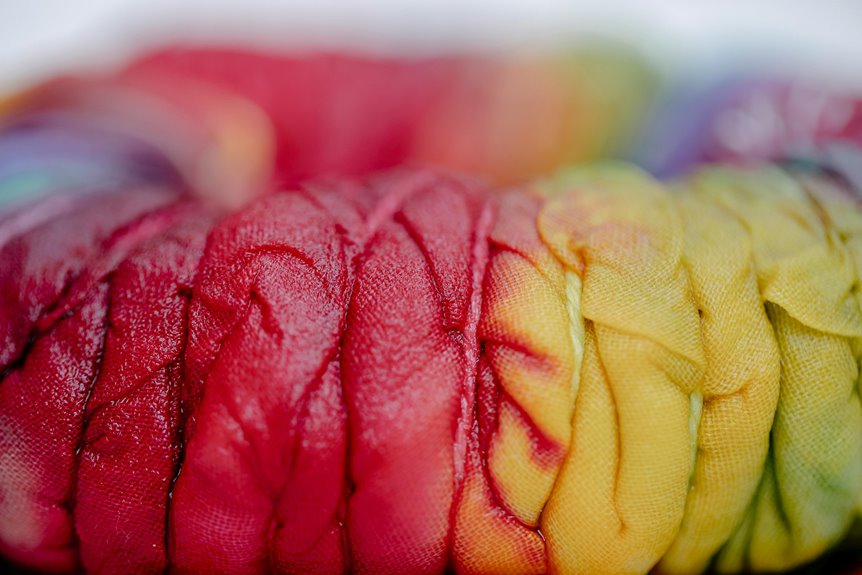
When you try ice dyeing, expect vibrant colors with soft, organic gradients as ice melts over fabric, creating unique patterns. Crumple dyeing gives you bold, random textures and wrinkle effects on damp fabric, making each piece one-of-a-kind. Liquid dye lets you control color placement precisely for detailed designs and quicker drying. Natural fibers like cotton and silk work best across all methods. If you want to master these techniques and nail consistent results, there’s plenty more to explore.
Key Takeaways
- Ice dyeing produces vibrant colors with soft gradients and organic patterns through melting ice carrying dye gradually onto fabric.
- Crumple dyeing creates unique wrinkle textures and dynamic, irregular splotches from uneven dye absorption on crumpled fabric.
- Liquid dye application offers precise color placement and detailed designs with quick drying but lacks spontaneous blending effects.
- Natural fibers like cotton and silk show the best color vibrancy and absorption across all dyeing methods.
- Ice dyeing excels in fluid color shifts, crumple dyeing in texture variation, and liquid dyeing in controlled, predictable results.
What Is Ice Dyeing and How Does It Work?
Although ice dyeing might seem complex at first, you’ll find it’s a straightforward and creative way to add vibrant patterns to fabric.
Ice dyeing is an easy, creative method to transform fabric with vibrant, one-of-a-kind patterns.
You start by laying your fabric flat, often on a rack above a tray to catch melting water. Then, you cover it with ice, piling it thickly.
As the ice melts slowly, you sprinkle powdered dye over the ice, allowing the melting water to carry the color down onto the fabric. This gradual process creates unique, unpredictable patterns with soft blends and distinct edges.
You’ll love how the ice controls the flow of dye, giving you a beautiful, organic look that’s hard to replicate with other methods.
It’s a fun, hands-on technique that turns dyeing into a bit of magic.
Techniques and Tools Used in Crumple Dyeing
Crumple dyeing relies on just a few simple tools and techniques that you can easily master.
To start, you’ll need fabric, fiber-reactive dyes, rubber gloves, a plastic bin or tray, and plastic wrap or a plastic bag.
First, dampen your fabric slightly to help the dye absorb evenly. Then, crumple or scrunch the fabric tightly into a compact mound.
Apply dye directly onto the crumpled fabric using squeeze bottles or by sprinkling powdered dye. Be sure to cover different areas for varied color distribution.
After dye application, wrap the fabric in plastic to keep it moist and let it sit for 12-24 hours.
Finally, rinse and wash as usual. This hands-on method creates vibrant, random patterns with minimal fuss and equipment.
Understanding Liquid Dye Application Methods
Liquid dye application offers you versatile ways to infuse vibrant colors into your fabric with control and ease.
You can use spray bottles to apply dye evenly or create gradients by varying the pressure and distance. Alternatively, squeeze bottles let you target specific areas or draw patterns with precision.
For larger projects, dipping your fabric into a dye bath guarantees consistent saturation. You might also consider brushing the dye on for detailed designs or combining methods to achieve unique effects.
Remember to wear gloves and work on a protected surface to avoid stains.
Color Vibrancy and Blending in Ice Dye
While mastering various liquid dye application methods gives you great control over your designs, ice dye offers a different kind of magic when it comes to color vibrancy and blending.
As the ice melts slowly, it allows the dye to seep and mingle in unpredictable ways, creating vibrant, fluid shifts you won’t get with direct application.
You’ll notice:
- Intense, saturated colors that deepen as the ice melts and dye concentrates
- Soft gradients where hues blend seamlessly, thanks to gradual water diffusion
- Unique, organic patterns formed by the random melting process, enhancing visual interest
This method gives you vibrant, dynamic results that feel alive and spontaneous.
You can’t replicate this exact effect with liquid dyes applied directly, making ice dye a fantastic choice when you want bold, blended color expressions.
Texture and Pattern Effects Produced by Crumple Dye
When you use crumple dye, you’ll notice unique wrinkle textures that give your fabric a distinct feel.
The color distribution varies widely, creating a dynamic and unpredictable look.
This technique naturally forms organic patterns that add depth and character to your project.
Unique Wrinkle Textures
Crumple dye brings out striking wrinkle textures that you won’t find with other dyeing methods.
When you scrunch your fabric tightly, the dye settles unevenly, creating unique patterns that feel almost three-dimensional. These textures add depth and character to your project, making each piece truly one-of-a-kind.
You’ll notice:
- Uneven creases that capture dye differently, creating light and dark contrasts
- Random folds that produce organic, natural-looking lines and shapes
- A tactile surface where raised wrinkles invite touch and visual interest
Color Distribution Variability
The striking wrinkle textures you create also influence how color spreads across your fabric. With crumple dye, the folds and creases act like tiny barriers and channels, causing dye to pool unevenly. This results in a dynamic mix of saturated spots and lighter patches, giving your piece rich depth and complexity.
Because the fabric’s surface is irregular, dyes can’t soak uniformly, so you’ll notice unpredictable shifts in color intensity. This variability is part of the charm, making each project unique. However, you should expect less control compared to flat dyeing methods.
The interplay between texture and color intensity guarantees that no two crumple-dyed fabrics look alike, offering you a bold, tactile pattern that’s full of energy and surprise.
Organic Pattern Formation
Although you might expect uniformity, the texture created by crumple dye naturally produces organic patterns that feel spontaneous and alive.
When you scrunch the fabric, you introduce folds and creases that resist the dye unevenly, resulting in unique designs every time. This method gives your project a natural, imperfect beauty that’s hard to replicate with other techniques.
Here’s what you can expect from crumple dye’s organic pattern formation:
- Irregular splotches and streaks that mimic natural elements like stone or bark
- Soft gradients where dye pools in deeper folds and fades on raised areas
- Unexpected overlaps and color blends that create depth and visual interest
Precision and Control With Liquid Dye Techniques
When you choose liquid dye techniques, you gain unmatched precision and control over your designs. Unlike ice or crumple dyeing, where patterns form spontaneously, liquid dye lets you apply color exactly where you want it.
You can use brushes, droppers, or spray bottles to create sharp lines, gradients, or detailed motifs. This control means you can plan complex patterns or subtle shading effects with confidence.
You also control the dye’s intensity by adjusting concentration or layering colors, allowing rich or soft hues. Plus, liquid dye dries quickly, so you can make adjustments on the spot.
If you enjoy crafting intentional, intricate designs, liquid dyeing is your best bet for predictable, repeatable results that stand out sharply against fabric.
Comparing Drying Times and Fabric Handling
Since drying times directly affect your workflow and fabric handling, understanding how each dye method behaves is essential.
With ice dye, the melting ice slows the drying process, so you’ll find it takes longer for the fabric to dry completely.
Crumple dye tends to dry faster since the fabric is more exposed to air.
Liquid dye, applied in concentrated areas, often results in quicker drying but can leave you handling wetter spots longer.
Consider these factors when planning:
- Ice dye: slower drying, requires careful handling to avoid smudging.
- Crumple dye: faster drying, easier to manage fabric without distortion.
- Liquid dye: uneven drying times, demands attention to wet patches.
This knowledge helps you optimize your timing and fabric care during dyeing.
Best Fabric Types for Each Dyeing Method
You’ll find that ice dye works best on natural fibers like cotton and silk, which soak up the colors beautifully.
For crumple dye, fabrics with good texture, such as linen or rayon, really bring out the unique patterns.
Choosing the right fabric will make your dyeing results pop every time.
Ideal Fabrics for Ice Dye
Choosing the right fabric can make all the difference in achieving vibrant, lasting colors with ice dyeing. Natural fibers work best because they absorb dye more effectively, giving you those rich, dynamic patterns ice dye is known for.
When selecting your fabric, focus on:
- Cotton: It’s highly absorbent and shows color vividly.
- Rayon: This semi-synthetic fiber takes dye beautifully and feels soft.
- Silk: It offers a luxurious sheen and rich color depth.
Avoid synthetic fabrics like polyester, as they repel dye and result in dull or uneven coloration.
Also, pre-wash your fabric to remove any finishes or sizing, ensuring the dye adheres properly. Picking the right fabric sets you up for stunning ice-dye results every time.
Crumple Dye Fabric Choices
Natural fibers don’t just excel with ice dye—they also respond beautifully to crumple dye techniques. When you choose fabrics like cotton, linen, or rayon, you’ll notice the dye soaks in evenly, creating vibrant, textured patterns.
These fibers absorb the dye well, allowing the crumple method’s random folds to produce rich color variations. You can also experiment with silk for a softer, more fluid effect, but be mindful that it’s more delicate and requires gentle handling.
Avoid synthetic fabrics like polyester, as they typically resist the dye, resulting in dull or uneven colors. If you want your crumple dye project to pop, stick with natural materials—they’re your best bet for bold, dynamic results that showcase the technique’s unique charm.
Tips for Achieving Desired Results With Each Technique
Although each dyeing method offers unique effects, mastering a few key techniques will help you get the most vibrant and consistent results from ice dye, crumple dye, and liquid dye.
First, prep your fabric thoroughly by washing and drying it to remove any sizing or oils that could block dye absorption.
Next, control dye application carefully: ice dye benefits from even ice coverage, crumple dye thrives on random fabric folds, and liquid dye requires precise pouring or brushing for defined patterns.
Finally, don’t rush the setting process—let your fabric sit long enough for colors to fully develop and fix.
- Use gloves and work in a well-ventilated area to avoid skin irritation and inhaling fumes.
- Experiment with dye concentrations to find your preferred vibrancy.
- Always rinse fabric in cold water until clear to prevent color bleeding.
Frequently Asked Questions
Are These Dye Methods Safe for Children to Use at Home?
You can safely use these dye methods at home with kids, but you’ll want to supervise closely, use non-toxic dyes, and protect surfaces and clothing to avoid stains. Always follow safety instructions on the dye packaging.
What Are the Environmental Impacts of Each Dyeing Technique?
You’re painting with nature’s palette, so choose wisely. Ice dye uses less water but can release chemicals; crumple dye might waste fabric; liquid dye often involves synthetic ingredients. Always opt for eco-friendly, biodegradable options to protect Earth.
Can These Dye Techniques Be Used on Synthetic Fabrics?
You can use these dye techniques on some synthetic fabrics, but results vary. Synthetic fibers like polyester often need special dyes or treatments since regular dyes don’t absorb well, so expect different colors or effects.
How Do These Dyeing Methods Affect Fabric Durability Over Time?
You’ll find that dyeing methods can impact fabric durability differently; some may cause slight weakening or fading over time, so it’s best to follow care instructions closely to maintain both color vibrancy and fabric strength.
What Are the Best Storage Practices for Dyed Fabrics?
Think of dyed fabrics as delicate treasures; you’ll want to store them away from direct sunlight, in cool, dry places. Avoid plastic bags—breathable cotton storage bags work best to keep colors vibrant and fabric fresh.