
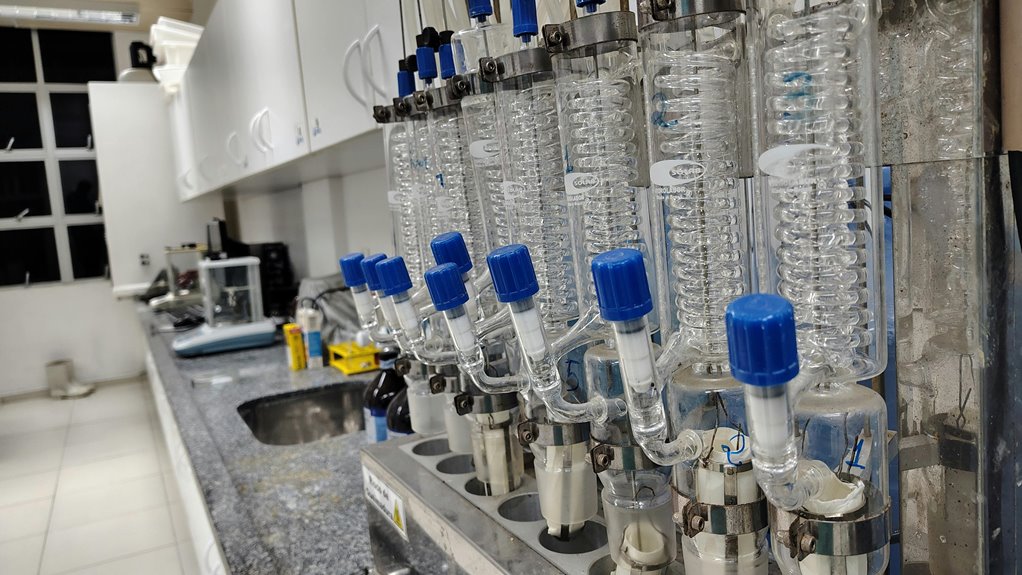
You start with hexamethylene diamine, a reactive molecule with two amine groups, and combine it with adipic acid containing carboxyl groups. Through a condensation reaction, these monomers bond by forming strong amide linkages, releasing water and creating long polyamide chains. This polymerization produces nylon fibers known for strength, flexibility, and chemical resistance. The process is essential for durable textiles and industrial materials. If you want to understand the full chemistry and its applications, there’s more fascinating detail ahead.
Key Takeaways
- Hexamethylene diamine contains two reactive amine groups enabling it to bond with diacids during polymerization.
- Polymerization involves condensation reactions between hexamethylene diamine and adipic acid, releasing water and forming strong amide linkages.
- Repeated amide bond formation creates long polyamide chains, which provide strength and flexibility to the resulting material.
- Adipic acid supplies carboxyl groups essential for amide bond formation, influencing polyamide crystallinity and melting point.
- The final polyamide exhibits high tensile strength, chemical resistance, and thermal stability, suitable for fibers like nylon.
What Is Hexamethylene Diamine?
Hexamethylene diamine is a chemical compound that plays a key role in producing nylon and other polymers. When you handle hexamethylene diamine, you’re working with a molecule made up of six carbon atoms arranged in a straight chain, with two amine groups (-NH2) attached at each end.
This structure makes it highly reactive and ideal for polymer formation. You’ll find it as a clear liquid with a slight ammonia-like odor. Its reactivity allows it to combine with other compounds, especially acids, to form strong, durable materials.
In industrial settings, you use hexamethylene diamine primarily as a building block to create long chains of molecules, which eventually transform into everyday materials like nylon fibers. Understanding its structure helps you appreciate why it’s so valuable in polymer chemistry.
Understanding Polyamides and Their Uses
When you combine diamines like hexamethylene diamine with acids, you create polyamides—strong, versatile polymers used in many products.
You’ll find polyamides in everyday items like textiles, carpets, and automotive parts because they’re durable and resistant to wear.
Nylon, a common polyamide, offers excellent strength and flexibility, making it perfect for clothing and industrial uses.
Polyamides also resist chemicals and heat, so you can rely on them in harsh environments.
Whether in fishing lines, machine parts, or packaging, these polymers provide reliable performance.
The Chemistry Behind Polymerization
You’ll start by looking at the structure of hexamethylene diamine as the key monomer.
Then, you’ll see how these monomers link together to form long polymer chains.
Finally, you’ll explore the detailed reaction mechanisms that drive this polymerization process.
Monomer Structure Overview
Although understanding polymerization can seem complex, grasping the monomer structure is key to simplifying the process.
Hexamethylene diamine, the monomer here, has a straightforward structure: a six-carbon linear chain with an amine group (-NH2) at each end. These amine groups are essential because they’re reactive sites that enable bonding during polymerization.
The carbon chain provides flexibility and spacing, influencing the properties of the resulting polymer. When you look closely, you’ll see that the symmetrical placement of the amine groups allows for consistent linkage with other monomers.
This arrangement sets the stage for forming strong, repeating units. By focusing on this structural layout, you get a clear picture of how hexamethylene diamine‘s molecular makeup drives the initial steps of polyamide creation.
Polymer Chain Formation
Since hexamethylene diamine contains reactive amine groups at both ends, it easily links with other monomers through chemical reactions.
When you start the polymer chain formation, you’ll notice these key steps:
- Monomers align so their amine and acid groups face each other.
- A condensation reaction occurs, releasing a small molecule like water.
- The amine group bonds covalently with the acid group, forming an amide linkage.
- This process repeats, adding more monomers and extending the chain.
Reaction Mechanism Details
Understanding the specific chemical steps behind polymer chain formation helps clarify how hexamethylene diamine reacts at the molecular level.
When you mix hexamethylene diamine with adipic acid, their amine (-NH2) and carboxyl (-COOH) groups react through a condensation reaction, releasing water molecules.
You’ll see the amine group attack the carbonyl carbon of the acid, forming an amide linkage (-CONH-). This process repeats, creating long polyamide chains.
Each step involves nucleophilic attack, proton transfer, and bond formation, driving the polymerization forward.
Controlling conditions like temperature and stoichiometry helps you steer the reaction toward high molecular weight polymers.
Step-by-Step Process of Hexamethylene Diamine Polymerization
When you plunge into the polymerization of hexamethylene diamine, you’ll see it involves a series of carefully controlled chemical reactions that build long polymer chains.
Here’s how the process unfolds:
Here’s the step-by-step journey of transforming molecules into durable polymer chains.
- Preparation: You start by mixing hexamethylene diamine with a complementary monomer under specific conditions.
- Initiation: The reactive amine groups open up, ready to form bonds with other molecules.
- Chain Growth: You witness the amine groups reacting with carboxyl groups, forming strong amide bonds, extending the polymer chain step-by-step.
- Termination and Solidification: Finally, the polymer chains reach the desired length, and you solidify the material into fibers or films for practical use.
Role of Adipic Acid in Polyamide Formation
You’ll see that adipic acid plays an essential role by reacting with hexamethylene diamine through its chemical structure to form strong amide bonds.
Understanding this reaction mechanism helps you grasp how the polymer chain grows.
Plus, adipic acid directly influences the final polymer’s strength, flexibility, and durability.
Chemical Structure Interaction
Although hexamethylene diamine provides the amine groups essential for polyamide chains, adipic acid plays an equally important role by supplying the carboxyl groups needed for polymerization.
When you combine these two molecules, their chemical structures interact to form strong amide bonds, creating the backbone of the polyamide.
Here’s what you should know about their interaction:
- The carboxyl groups from adipic acid react with amine groups from hexamethylene diamine.
- This reaction creates repeating amide linkages, which define the polymer’s strength.
- The linear nature of both molecules allows tight, orderly packing in the polymer chain.
- Hydrogen bonding between chains enhances the material’s durability and heat resistance.
Understanding this interaction gives you insight into why nylon is so strong and versatile.
Reaction Mechanism Insights
Since adipic acid supplies the essential carboxyl groups, it actively drives the formation of amide bonds during polyamide synthesis.
You’ll see that its two carboxyl ends react with the amine groups on hexamethylene diamine through a condensation reaction. This process releases water molecules as byproducts, linking monomers into long chains.
You can picture the carboxyl group’s carbonyl carbon undergoing nucleophilic attack by the amine’s nitrogen, forming a tetrahedral intermediate. This intermediate then collapses, expelling water and creating a strong amide bond.
By repeating this step, you effectively build the polymer chain. Adipic acid’s bifunctionality guarantees it connects with diamine molecules at both ends, enabling chain growth and network formation essential for polyamide structure.
Understanding this mechanism helps you grasp how molecular interactions shape polymer formation.
Influence on Polymer Properties
Understanding how adipic acid drives amide bond formation gives you a clearer picture of its impact on the final polymer’s properties.
When adipic acid reacts with hexamethylene diamine, it not only forms strong amide linkages but also influences the polymer’s characteristics considerably.
Here’s how adipic acid shapes the polyamide you get:
- Controls crystallinity, affecting strength and flexibility.
- Determines melting point, influencing thermal stability.
- Affects moisture absorption, which impacts durability and comfort in textiles.
- Modifies polymer chain length and molecular weight, altering toughness and processability.
Properties of Polyamide Materials
Polyamide materials exhibit a unique combination of strength, flexibility, and chemical resistance that makes them ideal for various applications.
When you handle polyamides, you’ll notice their high tensile strength allows them to withstand significant mechanical stress without breaking. They also offer excellent abrasion resistance, so they resist wear and tear over time.
You’ll appreciate their ability to absorb moisture, which can affect their mechanical properties but also provides some flexibility. Polyamides maintain stability against many chemicals, including oils and solvents, making them durable in harsh environments.
Additionally, their thermal resistance lets you use them across a range of temperatures without degradation.
These properties stem from the strong hydrogen bonding between polymer chains formed during polymerization, giving polyamides their characteristic toughness and resilience.
Industrial Applications of Nylon Fibers
When you choose nylon fibers for industrial use, you’re tapping into materials known for their exceptional durability and versatility. Nylon’s strength and resistance to abrasion make it ideal for heavy-duty applications.
Nylon fibers offer unmatched durability and abrasion resistance, perfect for demanding industrial applications.
You’ll find nylon fibers extensively used in:
- Textile manufacturing, including sportswear and hosiery, due to their elasticity and comfort.
- Automotive parts like tire cords and engine covers, benefiting from nylon’s heat resistance.
- Industrial ropes and fishing nets, where high tensile strength and flexibility are critical.
- Conveyor belts and mechanical components that require wear resistance and longevity.
Environmental Impact and Recycling of Polyamides
Nylon fibers offer impressive performance across industries, but their widespread use also raises concerns about environmental impact.
You should know that producing polyamides consumes significant energy and relies heavily on non-renewable petroleum resources, contributing to greenhouse gas emissions.
Plus, nylon’s durability means it persists in landfills for decades if not properly managed.
To reduce this footprint, recycling plays a crucial role.
You can recycle nylon through mechanical processes that melt and reshape fibers or via chemical recycling that breaks polymers back into monomers for reuse.
Incorporating recycled nylon lowers demand for virgin materials and cuts waste.
Frequently Asked Questions
What Safety Precautions Are Needed When Handling Hexamethylene Diamine?
You should wear gloves, goggles, and a lab coat when handling hexamethylene diamine. Avoid inhaling fumes by working in a well-ventilated area or fume hood, and wash your skin immediately if contact occurs.
How Is the Molecular Weight of Polyamide Controlled During Polymerization?
Think of molecular weight as a ship’s size—you control it by adjusting the monomer ratio and reaction time during polymerization. You’ll also use catalysts or chain terminators to steer the process toward your desired polymer length.
What Are the Common Catalysts Used in Hexamethylene Diamine Polymerization?
You’ll commonly use acid catalysts like sulfuric acid or phosphoric acid to speed up the polymerization. Sometimes, metal catalysts such as titanium or zinc compounds help control the reaction and improve the polyamide’s properties.
How Does Temperature Affect the Polymerization Reaction Rate?
Think of temperature as the accelerator pedal in your car; when you press it, the polymerization reaction speeds up. You’ll notice higher temperatures increase reaction rates, but too high can cause unwanted side reactions, so balance is key.
Can Hexamethylene Diamine Be Polymerized With Acids Other Than Adipic Acid?
Yes, you can polymerize hexamethylene diamine with other dicarboxylic acids besides adipic acid. Different acids will create various polyamides, so you’ll get materials with unique properties depending on your choice.