
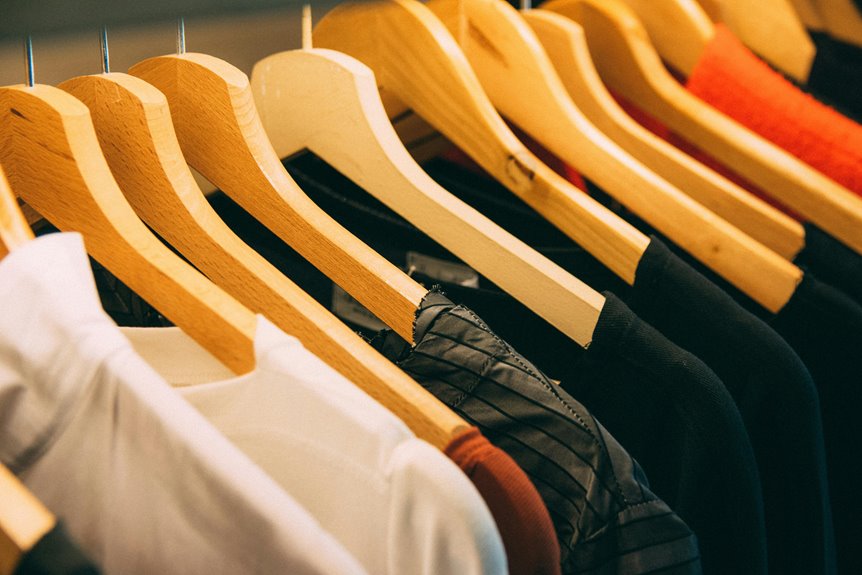
When choosing between charmeuse and taffeta for formal wear, you’ll notice charmeuse offers a soft, silky feel with a gentle sheen and fluid drape, perfect for elegant, flowing gowns. Taffeta, on the other hand, gives you a crisp texture and structured shape with a metallic shine, ideal for dramatic silhouettes and volume. Both have different care and durability needs, so picking the right fabric depends on your event and style preferences. Keep exploring to see which suits your look best.
Key Takeaways
- Charmeuse offers a soft, silky sheen with fluid drape ideal for flowing formal gowns, while taffeta provides a crisp, structured silhouette with a metallic shine.
- Taffeta is more durable and easier to maintain, whereas charmeuse requires gentle care due to its delicate, smooth texture.
- Charmeuse suits elegant, romantic occasions with its lightweight comfort, whereas taffeta excels in dramatic, architectural styles for formal events.
- Charmeuse tends to be pricier and is often silk-based, while taffeta is more affordable and widely available, especially during prom and wedding seasons.
- Styling charmeuse with minimal accessories highlights its graceful flow; taffeta pairs well with bold jewelry to emphasize its structured volume.
Understanding Charmeuse Fabric
Although charmeuse might look delicate, it’s surprisingly durable and versatile, making it a favorite for elegant garments.
Charmeuse blends delicate beauty with surprising durability, perfect for crafting timeless, elegant pieces.
When you touch charmeuse, you’ll notice its smooth, glossy surface that catches the light beautifully, adding a subtle sheen. This fabric usually comes from silk or synthetic fibers, giving it a soft, fluid drape that feels luxurious against your skin.
You’ll find charmeuse ideal for dresses, blouses, and lingerie because it moves gracefully and enhances your silhouette. It’s lightweight yet strong, so it holds up well over time if you handle it carefully.
While charmeuse can wrinkle, its natural resilience means you won’t need constant ironing. Choosing charmeuse means picking a fabric that combines beauty with practicality for your sophisticated wardrobe.
Exploring Taffeta Fabric
When you explore taffeta fabric, you’ll find it has a rich history and a crisp texture that sets it apart.
Its smooth, slightly stiff feel gives formalwear a structured, elegant look. You’ll often see taffeta in gowns and tuxedo linings, where its shine and body really stand out.
Taffeta Fabric Origins
Since you’ve likely encountered taffeta in elegant gowns or decorative accents, it’s worth knowing that this fabric has roots stretching back centuries, originating in ancient Persia before gaining popularity across Europe.
Back then, taffeta was prized for its crispness and ability to hold shape, making it perfect for the structured styles favored by nobility.
As silk weaving techniques spread, Italian and French artisans refined taffeta, elevating it to a luxury textile often used in high fashion and royal wardrobes.
When you choose taffeta today, you’re connecting with a rich history of craftsmanship that blends tradition with elegance.
Understanding where taffeta comes from helps you appreciate why it remains a go-to fabric for formal occasions and timeless style.
Texture and Appearance
Taffeta’s texture instantly catches your attention with its crisp, smooth surface that feels cool to the touch.
You’ll notice a subtle rustling sound when you move, thanks to its tightly woven structure. This fabric has a slight sheen that gives it an elegant, almost metallic finish, making it stand out under lights.
Unlike softer fabrics, taffeta holds its shape well, so it often appears structured and polished. Its smoothness contrasts with its stiffness, creating a unique tactile experience that’s both firm and sleek.
When you run your fingers across taffeta, you’ll feel a fine, almost papery texture beneath the smoothness. This distinctive combination of texture and appearance makes taffeta a timeless choice for formal attire.
Uses in Formalwear
Although it may not be as soft as some other fabrics, taffeta excels in formalwear because it adds structure and sophistication to any outfit.
When you choose taffeta, you get crisp, elegant shapes that hold up well, perfect for gowns with volume or sharp pleats. Its slight sheen catches the light beautifully, making your dress or suit stand out at events like weddings, galas, or proms.
You’ll often find taffeta in ball gowns, cocktail dresses, and tailored suits because it supports dramatic silhouettes without losing form. Plus, it works well for layered designs or as an accent fabric, giving your ensemble a polished finish.
If you want to make a statement while maintaining classic elegance, taffeta is a reliable choice.
Texture and Feel Comparison
You’ll notice charmeuse feels incredibly smooth and soft against your skin, almost like a gentle caress.
Taffeta, on the other hand, has a crisp texture that gives it more body and structure.
Understanding these differences helps you choose the right fabric for your project.
Smoothness and Softness
Texture plays a key role when choosing between charmeuse and taffeta, especially if you’re looking for softness against your skin.
Charmeuse feels incredibly smooth and silky, gliding gently as you move. Its satin weave gives it a luxurious softness that feels almost like a second skin, making it ideal for gowns or dresses you want to feel delicate and comfortable in.
On the other hand, taffeta is stiffer and less pliable, offering a crisp texture that lacks charmeuse’s softness. If you prefer a fabric that’s smooth but not buttery soft, taffeta might work, but it won’t have the same gentle touch.
When softness is your priority, charmeuse clearly stands out, giving you that elegant, smooth feel you’ll want close to your body.
Crispness and Body
When you want a fabric that holds its shape and adds structure, taffeta delivers with its crispness and body.
You’ll notice its firm texture instantly, making it ideal for garments that need volume or defined silhouettes, like ball gowns or structured skirts. Taffeta’s stiffness helps create dramatic shapes that stand out.
On the other hand, charmeuse feels fluid and lightweight, draping softly over your body. It lacks the firmness of taffeta, so it won’t hold a shape but will move gracefully with you.
If your goal is elegance with gentle flow, charmeuse is your fabric.
But when you need bold definition and a tactile, almost rustling feel, taffeta’s crispness shines, giving your formal wear a striking, polished presence.
Appearance and Sheen Differences
Although both charmeuse and taffeta are popular choices for elegant garments, they differ markedly in appearance and sheen.
When you look at charmeuse, you’ll notice its smooth, glossy surface that reflects light softly, giving it a luxurious, silky glow. This fabric drapes fluidly, enhancing your outfit’s elegance with a subtle shimmer.
On the other hand, taffeta has a crisp, slightly stiff texture with a more pronounced, crisp shine. It catches light with a brighter, almost metallic glint, making your formal wear stand out with a structured, polished look.
While charmeuse offers a gentle radiance ideal for flowing gowns, taffeta’s sheen adds drama and formality, perfect when you want your attire to command attention with a bold, sculpted silhouette.
Durability and Care Requirements
Since you’ll likely want your garments to last, understanding the durability and care requirements of charmeuse and taffeta is essential.
Charmeuse, often made from silk or synthetic fibers, is delicate and prone to snags or runs. You’ll need to handle it gently, opting for hand washing or dry cleaning. Avoid harsh detergents and high heat when ironing.
Charmeuse is delicate and best cared for with gentle hand washing or dry cleaning, avoiding heat and harsh detergents.
Taffeta, on the other hand, is stiffer and more resilient, with a crisp finish that holds shape well. It’s generally easier to care for but still benefits from dry cleaning to maintain its structure and prevent wrinkles.
While charmeuse demands more cautious care, taffeta offers greater durability, making it a practical choice if you want something tough yet elegant for repeated use.
Breathability and Comfort Levels
Beyond durability and care, you’ll want to contemplate how breathable and comfortable charmeuse and taffeta feel against your skin.
Charmeuse, with its smooth satin weave, feels silky and soft, allowing moderate airflow. It drapes beautifully but can sometimes trap heat, especially in warmer settings.
Taffeta, on the other hand, is crisp and slightly stiff. It’s less breathable due to its tightly woven structure, which can make it feel warmer and less forgiving during extended wear.
If comfort is your priority and you expect to move a lot or wear the garment for hours, charmeuse generally offers a gentler touch.
However, if you prefer structure and don’t mind a firmer feel, taffeta can work well despite being less breathable.
Your choice hinges on balancing comfort with style.
Ideal Occasions for Charmeuse
When you choose charmeuse, you’re opting for a fabric that shines in elegant, intimate settings. Its smooth sheen and fluid drape make it perfect for occasions where sophistication and subtle glamour are key. Think cocktail parties, evening galas, or romantic dinners. Charmeuse’s lightweight feel lets you move gracefully, enhancing your confidence and comfort.
| Occasion | Why Charmeuse Works | Style Tip |
|---|---|---|
| Cocktail Parties | Soft shine, elegant drape | Pair with delicate jewelry |
| Evening Galas | Luxurious look, comfortable | Floor-length gowns |
| Romantic Dinners | Intimate, flattering fabric | Slip dresses |
| Weddings (Guest) | Formal but not stiff | Pastel shades |
| Award Ceremonies | Glamorous, eye-catching | Bold colors |
Best Uses for Taffeta
Taffeta commands attention with its crisp texture and subtle rustle, making it ideal for occasions that call for structure and drama.
When you want a gown that holds its shape, like ball gowns or A-line dresses, taffeta delivers elegant volume without losing form. It’s perfect for creating striking silhouettes with pleats, ruffles, or layered designs, giving your outfit a polished, sophisticated edge.
Taffeta also works well for tailored pieces such as skirts and jackets, where you need fabric that stands up to sharp lines.
If you’re aiming for a standout look at weddings, proms, or formal galas, taffeta’s sheen and body add a luxurious touch that won’t go unnoticed. Trust it to bring architectural interest to your formal wear.
Cost and Availability Insights
When choosing between charmeuse and taffeta, you’ll want to take into account their price differences and how easy they’re to find.
Charmeuse often comes at a higher cost, while taffeta tends to be more budget-friendly and widely available.
Understanding these factors can help you make the best fabric choice for your project.
Price Comparison Overview
Understanding the price differences between charmeuse and taffeta can help you make smarter fabric choices for your projects.
Charmeuse, known for its silky sheen, often costs more due to its luxurious feel and complex weaving process. You’ll typically find charmeuse priced higher per yard, especially if it’s made from silk rather than synthetic fibers.
On the other hand, taffeta is generally more budget-friendly and widely available in various blends, making it a practical option if you’re watching costs.
However, prices fluctuate based on fiber content, weave quality, and brand.
When planning your formal wear, consider how much you’re willing to invest without compromising the garment’s look and feel.
This overview lets you weigh cost against the desired aesthetic and fabric performance.
Market Accessibility Trends
Many factors influence how easily you can find charmeuse and taffeta on the market today.
Charmeuse, often made from silk or polyester, tends to be more widely available due to its popularity in both luxury and affordable fashion. You’ll find charmeuse in many fabric stores and online shops, with prices varying based on fiber content.
Taffeta, known for its crisp texture, is slightly less common but still accessible, especially for formal wear. High-quality silk taffeta can be pricier and harder to source, while synthetic versions are more budget-friendly and easier to find.
Seasonal demand also affects availability—expect taffeta to be more prominent during prom and wedding seasons. Understanding these trends helps you make smarter choices when shopping for formal fabrics.
Styling Tips for Each Fabric
Although charmeuse and taffeta each bring unique textures and finishes to your wardrobe, you can easily highlight their best features with the right styling choices. For charmeuse, embrace its fluidity by choosing draped silhouettes that flow with your movements. Pair it with delicate accessories to complement its soft sheen. Taffeta, on the other hand, shines in structured designs—think voluminous skirts or sharp pleats—to showcase its crisp finish. Bold jewelry works well, enhancing its dramatic flair without overpowering the fabric.
| Fabric | Styling Tip |
|---|---|
| Charmeuse | Opt for flowing dresses, minimal accessories |
| Taffeta | Choose structured pieces, statement jewelry |
| Both | Pair with elegant heels for formal occasions |
Frequently Asked Questions
Can Charmeuse and Taffeta Be Mixed in One Garment?
You can definitely mix charmeuse and taffeta in one garment. Combining their textures creates unique contrast and adds visual interest, so don’t hesitate to blend their shiny and crisp qualities for a stunning, elegant look.
Which Fabric Is Better for Allergy-Sensitive Skin?
Did you know 15% of people suffer from textile allergies? You’ll find charmeuse, made from silk or satin, gentler on sensitive skin compared to taffeta, which can feel rough and trigger irritation more easily.
Are Charmeuse and Taffeta Environmentally Sustainable?
You’ll find that both charmeuse and taffeta can be less sustainable, especially if made from synthetic fibers. Choosing natural or recycled versions helps, but always check labels and production practices to make eco-friendly fabric choices.
Do Either Fabric Types Shrink After Washing?
You’ll find that charmeuse can shrink if washed improperly, especially with heat or agitation. Taffeta is less prone to shrinking but still demands gentle care. Always follow care labels to avoid damage and maintain fabric quality.
Can Both Fabrics Be Dyed Easily at Home?
Dyeing fabric at home can be like painting on silk—charmeuse absorbs dye smoothly, but taffeta’s stiffness might resist. You’ll find charmeuse easier to dye evenly, while taffeta may need extra care for vibrant color.