
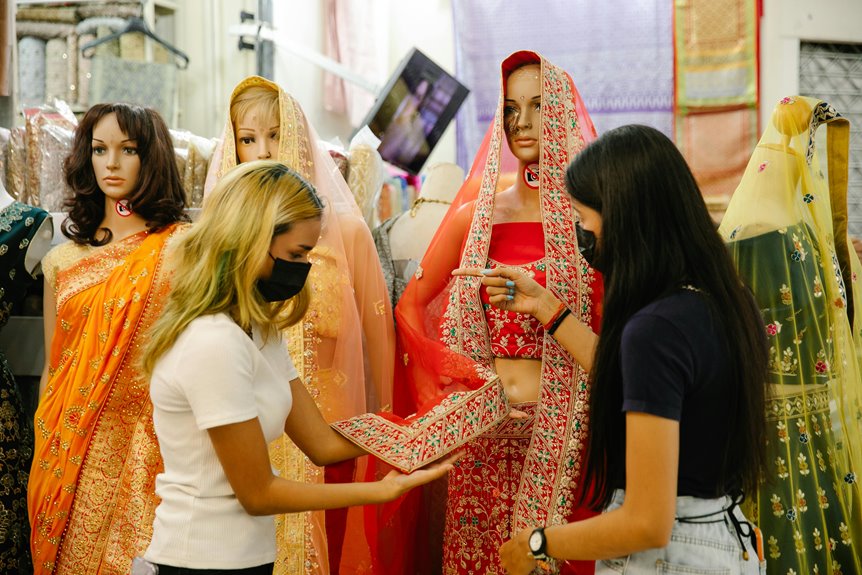
You’ll notice Chanderi sarees are lightweight, blending silk and cotton for a sheer, breathable feel with delicate, subtle patterns. Banarasi sarees, by contrast, are rich pure silk, heavier, and embroidered with intricate gold or silver zari designs showcasing Mughal artistry. Both hold deep cultural roots but differ in fabric, craftsmanship, and occasion wear. If you want to understand their origins, designs, and when to choose each, keep exploring their unique stories and styles.
Key Takeaways
- Chanderi sarees blend silk and cotton, offering a lightweight, sheer fabric, while Banarasi sarees use pure silk for a heavier, richer texture.
- Chanderi designs feature delicate floral and geometric patterns with subtle zari, whereas Banarasi sarees showcase bold, intricate Mughal-inspired motifs with heavy zari work.
- Chanderi weaving emphasizes fine handloom finesse and breathability; Banarasi weaving highlights elaborate brocade craftsmanship with gold or silver threads.
- Banarasi sarees originate from Varanasi with Mughal royal influences, while Chanderi sarees reflect a fusion of Malwa and Bundelkhand cultural heritage.
- Banarasi sarees are generally more expensive due to complex weaving and premium silk, whereas Chanderi sarees are more affordable and widely accessible.
Historical Background and Origins
Although both Chanderi and Banarasi sarees are celebrated for their rich heritage, they come from distinct regions and histories that shape their unique identities.
When you explore Chanderi sarees, you’ll find they originate from Chanderi, a town in Madhya Pradesh. These sarees reflect a blend of Malwa and Bundelkhand cultures, with roots tracing back over 700 years.
On the other hand, Banarasi sarees come from Varanasi, Uttar Pradesh, known as Banaras, a city steeped in ancient weaving traditions dating back to the Mughal era.
You’ll notice Banarasi sarees carry influences of Mughal artistry and symbolism, often linked to royal patronage.
Understanding these origins helps you appreciate the cultural significance and craftsmanship behind each saree’s story.
Fabric and Material Differences
When you compare Chanderi and Banarasi sarees, their fabric choices immediately stand out.
Chanderi sarees are primarily made from a blend of silk and cotton, giving them a lightweight, sheer texture that’s perfect for warm weather. You’ll notice the natural sheen but also feel the breathability.
On the other hand, Banarasi sarees are woven mostly from pure silk, resulting in a heavier, richer fabric. This silk lends Banarasi sarees their signature luxurious feel and durability.
While Chanderi’s cotton-silk mix offers comfort with elegance, Banarasi’s pure silk emphasizes opulence.
So, when you pick between them, consider if you want something airy and light or something with a more substantial, regal touch.
Your choice of fabric directly influences the saree’s look and wearability.
Weaving Techniques and Craftsmanship
Since the weaving techniques define the soul of both Chanderi and Banarasi sarees, you’ll find their craftsmanship truly enchanting. Chanderi sarees use fine handloom weaving with a mix of silk and cotton, creating a light, sheer texture. Banarasi sarees rely on intricate brocade weaving, often with gold or silver zari threads, producing a rich and heavy fabric.
Here’s a quick comparison:
| Aspect | Chanderi | Banarasi |
|---|---|---|
| Weaving Style | Handloom, lightweight | Brocade, dense and heavy |
| Thread Usage | Cotton and silk blend | Silk with zari (metallic threads) |
| Craftsmanship Focus | Sheerness and finesse | Opulence and intricate patterns |
You’ll appreciate how these techniques reflect the cultural heritage behind each saree.
Design Patterns and Motifs
You’ll notice that Chanderi and Banarasi sarees showcase distinct design patterns and motifs that capture their unique identities.
When you look at Chanderi sarees, you’ll find delicate floral and geometric patterns inspired by nature and architecture, often subtle and elegant. These motifs are usually woven with fine zari work that adds a light shimmer without overpowering the design.
On the other hand, Banarasi sarees feature rich, intricate motifs such as paisleys, Mughal-inspired floral patterns, and elaborate foliate designs. You’ll see heavy gold and silver zari work creating bold, opulent patterns that make these sarees stand out.
Occasions and Styling Tips
You’ll find that Chanderi sarees suit daytime events and casual gatherings, while Banarasi sarees shine at weddings and festive occasions.
Choosing the right accessories can elevate each look, from delicate jewelry with Chanderi to heavier, ornate pieces with Banarasi.
Let’s explore how to style these sarees perfectly for your next event.
Ideal Events to Wear
Though both Chanderi and Banarasi sarees exude elegance, choosing the right one depends on the event and your personal style. Banarasi sarees, with their rich zari work, suit grand weddings and festive occasions. Chanderi sarees, lighter and more breathable, are perfect for daytime events and casual celebrations.
| Occasion | Best Saree Choice |
|---|---|
| Wedding Ceremony | Banarasi |
| Daytime Party | Chanderi |
| Religious Festival | Banarasi |
| Casual Family Gatherings | Chanderi |
| Formal Office Event | Chanderi |
Pick Banarasi if you want to make a statement. Choose Chanderi to stay comfortable yet elegant. Both elevate your look when styled thoughtfully.
Accessorizing Each Saree
How do you elevate the look of Chanderi and Banarasi sarees with accessories?
For Chanderi sarees, keep it subtle to match their light elegance. Opt for pearl or kundan jewelry and a sleek clutch. Minimalist bangles or a delicate watch work well for daytime events or casual gatherings.
Banarasi sarees demand bold accessories that match their rich texture. Go for statement gold or antique jewelry—heavy necklaces, jhumkas, and bangles amplify the regal vibe. Pair them with embellished clutches for weddings or grand celebrations.
When styling, tie your hair in a neat bun or soft waves to complement each saree’s character. Choosing the right footwear, like embellished sandals for Banarasi and simple flats for Chanderi, completes your look effortlessly.
Price Range and Availability
When choosing between Chanderi and Banarasi sarees, you’ll notice differences in price that reflect their craftsmanship and materials.
You’ll also find that availability varies depending on where you shop, with some markets specializing in one type more than the other.
Understanding these factors will help you pick the perfect saree without stretching your budget.
Cost Comparison
Many factors influence the cost of Chanderi and Banarasi sarees, making their price ranges quite distinct.
When you compare the two, you’ll notice that Banarasi sarees often come with a higher price tag due to their intricate zari work and heavy silk fabric.
Chanderi sarees, while elegant, typically use lighter materials like cotton and silk blends, which affects their pricing.
Consider these cost-related aspects:
- Material Quality: Banarasi silk is premium and costly; Chanderi blends are lighter and less expensive.
- Weaving Complexity: Banarasi sarees feature dense, elaborate patterns, raising production costs.
- Craftsmanship Time: Banarasi sarees often require more labor hours than Chanderi, impacting price.
Understanding these elements helps you choose based on budget and preference.
Market Accessibility
Although both Chanderi and Banarasi sarees hold a special place in traditional Indian wardrobes, you’ll find significant differences in their market accessibility. Chanderi sarees tend to be more affordable and easier to find in various markets, while Banarasi sarees often come with a higher price tag and limited availability due to intricate craftsmanship.
| Aspect | Chanderi Sarees |
|---|---|
| Price Range | ₹3,000 – ₹15,000 |
| Availability | Widely available |
| Purchase Options | Online & local markets |
| Regional Access | Central India (Madhya Pradesh) |
| Customization | Moderate |
| Aspect | Banarasi Sarees |
| Price Range | ₹10,000 – ₹100,000+ |
| Availability | Select boutiques & fairs |
| Purchase Options | Mostly in-person |
| Regional Access | Northern India (Varanasi) |
| Customization | High |
Frequently Asked Questions
How Do Chanderi and Banarasi Sarees Compare in Terms of Care and Maintenance?
You should handle both delicately, but Chanderi sarees need gentle hand washing or dry cleaning, while Banarasi sarees require careful dry cleaning to maintain their intricate zari work and avoid tarnishing or damage.
Which Saree Is More Eco-Friendly in Its Production Process?
You’ll find Chanderi sarees more eco-friendly since they use natural fibers like silk and cotton with minimal chemical processing. Banarasi sarees often involve synthetic dyes and heavier embellishments, making their production less sustainable.
Are There Regional Variations Within Chanderi or Banarasi Sarees?
You’ll find Chanderi sarees bloom with subtle regional patterns, while Banarasi sarees sparkle differently across Varanasi’s lanes. Each variation weaves its own story, reflecting local artistry and cultural whispers in every thread.
Can These Sarees Be Customized for Modern Fashion Trends?
You can definitely customize these sarees to fit modern fashion trends. Designers often blend traditional patterns with contemporary cuts, colors, and fabrics, letting you wear timeless elegance while staying trendy and unique in your style.
What Are the Popular Color Choices for Each Saree Type?
Looking for vibrant colors? You’ll find Chanderi sarees in pastel shades like mint, peach, and beige, while Banarasi sarees boast rich hues like gold, red, and royal blue. Which colors call to you most?