
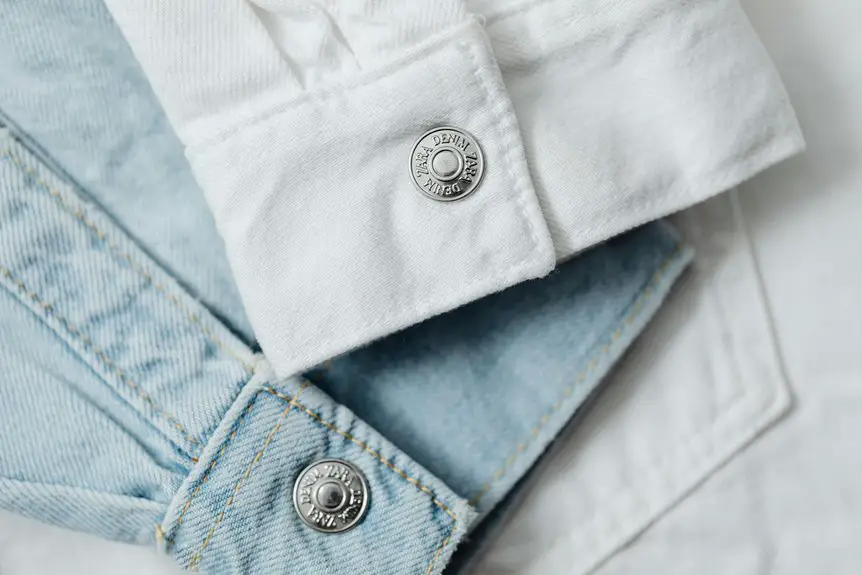
If you want a smooth, polished look with a tight weave, casement fabric is your go-to—it feels soft and hangs neatly, perfect for tailored curtains or clothing. On the other hand, slub fabric offers a unique, textured appearance with uneven yarn bumps that add rustic charm and depth. Both fabrics have distinct vibes and care needs, so understanding their differences helps you pick the best fit for your project’s style and function. Keep exploring to find out more about these fabrics’ uses and maintenance.
Key Takeaways
- Casement fabric has a smooth, even surface with a tight weave, providing a polished and refined look.
- Slub fabric features irregular, uneven texture due to varying yarn thickness, creating natural bumps and ridges.
- Visually, casement fabric appears structured and formal, while slub fabric offers a relaxed, artisanal charm.
- Casement fabric reflects light evenly for sleek elegance; slub fabric’s texture catches light variably for dynamic appearance.
- Choice depends on desired style: casement suits clean, tailored designs; slub enhances rustic, organic aesthetics.
Understanding Casement Fabric: Definition and Characteristics
Casement fabric is a type of durable textile commonly used for window treatments like curtains and drapes. When you choose casement fabric, you’re selecting a material designed to withstand daily wear while maintaining its structure.
You’ll notice it often features a tight weave that offers excellent light filtering and privacy. This fabric tends to have a smooth, even surface, which helps your curtains hang neatly without sagging or wrinkling.
Since casement fabric is typically made from cotton, linen, or blends, you can expect a comfortable weight that’s neither too heavy nor too flimsy. Its durability and clean appearance make it a practical choice if you want window treatments that look crisp and last long without frequent replacement.
Exploring Slub Fabric: Definition and Characteristics
When you look at slub fabric, you’ll notice its distinctive texture created by uneven yarn thickness.
These unique yarn variations give the fabric natural visual imperfections that add character.
You’ll find that these irregularities make slub fabric stand out compared to smoother textiles.
Slub Fabric Texture
Texture plays a key role in defining slub fabric, giving it a distinctive, uneven surface that sets it apart from smoother materials.
When you touch slub fabric, you’ll notice its irregular bumps and subtle ridges, which create a tactile experience unlike any other. These textural variations add depth and character, making the fabric feel more natural and organic.
Unlike uniform fabrics, slub’s uneven surface catches light differently, giving your garments or home textiles a dynamic, lived-in look. This texture not only enhances visual interest but also adds a cozy, casual vibe.
When you choose slub fabric, you’re embracing an aesthetic that’s both unique and inviting, perfect for adding personality without overwhelming your design.
Unique Yarn Variations
Yarn variations give slub fabric its unmistakable character and charm.
When you look closely, you’ll notice the yarn isn’t uniform; it features thick and thin sections that create a tactile, uneven surface. These variations occur naturally during spinning, adding depth and interest to the fabric’s texture.
You won’t find perfectly smooth threads here—slub yarns showcase irregularities that set them apart from traditional, consistent yarns. This uniqueness not only enhances the fabric’s visual appeal but also makes each piece distinct.
When you choose slub fabric, you embrace these natural inconsistencies as a design feature, lending your project an organic, handcrafted feel that stands out.
It’s this irregular yarn structure that gives slub fabric its lively, textured personality.
Visual Imperfections Explained
Although slub fabric’s uneven surface might seem like a flaw at first glance, these visual imperfections are actually what give it character and charm.
When you look closely, you’ll notice irregular thick and thin sections along the yarn, creating a textured, organic feel. These variations occur naturally during the spinning process, making each piece unique.
Unlike smooth, uniform fabrics, slub fabric embraces its quirks, adding depth and visual interest to your garments or home textiles. Instead of hiding these inconsistencies, the fabric highlights them, giving you a more relaxed, artisanal look.
Key Differences in Texture Between Casement and Slub Fabrics
When you run your hand over casement fabric, you’ll notice its smooth and even surface, designed for a refined and polished look.
This fabric typically feels soft and consistent, with a tight weave that provides a uniform texture.
In contrast, slub fabric has an intentionally uneven texture due to its thick and thin yarns, giving it a natural, tactile feel.
You’ll sense subtle bumps and ridges as you touch slub fabric, which adds character and depth.
While casement fabric offers a sleek, almost silky touch, slub fabric feels more rustic and organic.
Understanding these texture differences helps you choose the right fabric for your needs, whether you want smooth elegance or textured charm in your projects.
Visual Appearance: How Casement and Slub Fabrics Compare
While both casement and slub fabrics serve distinct aesthetic purposes, you’ll notice clear differences in their visual appeal.
Casement fabric typically presents a smooth, even surface with a refined, polished look. Its uniform weave gives it a crisp, tailored appearance, often making it ideal when you want a clean and sophisticated style.
On the other hand, slub fabric instantly grabs attention with its irregular, textured pattern created by uneven yarn thickness. This natural variation lends a casual, organic vibe that feels warm and inviting.
When you compare them side by side, casement feels more structured and formal, while slub offers a relaxed, artisanal charm. Choosing between them depends on the mood and style you want to create in your space or wardrobe.
Common Uses for Casement Fabric in Home Decor and Fashion
Casement fabric offers versatility that makes it a popular choice for both home decor and fashion.
Casement fabric’s versatility makes it a favored choice for stylish home decor and fashionable clothing.
In your home, you’ll find casement fabric commonly used for lightweight curtains and drapes because it allows natural light to filter through while providing privacy. It’s also great for decorative throw pillows and slipcovers, adding a subtle texture without overwhelming your space.
When it comes to fashion, casement fabric’s smooth yet structured feel makes it ideal for tailored shirts, blouses, and summer dresses that need a crisp, clean look. You can also rely on it for lightweight jackets or skirts that require a bit of body without stiffness.
Whether updating your living room or wardrobe, casement fabric delivers a refined, versatile option you’ll appreciate.
Popular Applications for Slub Fabric in Various Projects
Slub fabric brings a unique texture and casual charm that suits a wide range of creative projects.
You’ll find it popular in clothing, especially for making relaxed shirts, dresses, and lightweight jackets that offer both comfort and style. Its subtle irregularities add visual interest, making it perfect for casual wear.
Beyond fashion, slub fabric works well for home decor items like throw pillows, curtains, and table linens, where its natural texture enhances a cozy, lived-in feel.
You can also use it for crafting projects such as tote bags or fabric wall art, where the distinctive weave stands out.
Whether you’re aiming for rustic appeal or understated elegance, slub fabric’s versatility lets you bring your creative ideas to life with ease.
Choosing the Right Fabric Based on Project Needs and Aesthetic
Because each fabric brings its own texture, durability, and style, you’ll want to match your choice to the specific needs of your project.
Here’s how to decide between casement and slub fabric effectively:
- Consider durability: Choose casement for long-lasting, tightly woven projects; slub suits casual, less intensive use.
- Evaluate texture: Pick slub fabric if you want a unique, tactile feel; casement offers smooth, uniform surfaces.
- Match aesthetics: Use casement for clean, modern looks; slub works well in rustic or eclectic designs.
- Assess project type: For upholstery or curtains needing structure, casement wins; for decorative pillows or throws, slub adds character.
Care and Maintenance Tips for Casement and Slub Fabrics
You’ll want to follow specific cleaning guidelines to keep casement and slub fabrics looking their best.
Proper storage is also key to preventing damage and extending their lifespan.
Let’s explore how to care for each fabric type effectively.
Cleaning Guidelines
Although both casement and slub fabrics offer durability, their unique weaves require specific cleaning approaches to maintain their appearance and texture. You’ll want to handle them gently to avoid damage or distortion.
- Vacuum regularly using a soft brush attachment to remove dust and debris without fraying fibers.
- Spot clean stains promptly with a mild detergent and cold water, blotting instead of rubbing.
- Avoid harsh chemicals or bleach, as they can weaken the fabric and alter colors.
- For deeper cleaning, check the manufacturer’s instructions—some casement fabrics tolerate gentle machine washing, while slub fabrics often need professional cleaning.
Storage Recommendations
Proper cleaning sets the foundation for effective storage of casement and slub fabrics. After washing, make sure the fabric is completely dry to prevent mold and mildew.
Store your fabrics in a cool, dry place away from direct sunlight, which can fade colors and weaken fibers. Use breathable cotton bags or acid-free tissue paper to wrap the fabric, avoiding plastic that traps moisture.
Keep fabrics flat or loosely rolled to prevent creases and distortion, especially for slub fabric with its textured surface. Check on your stored fabrics periodically to catch any signs of damage early.
Following these steps helps maintain the texture and appearance of both casement and slub fabrics, ensuring they stay fresh and ready for use whenever you need them.
Frequently Asked Questions
Are Casement and Slub Fabrics Environmentally Sustainable?
You might expect all fabrics to be eco-friendly, but casement and slub fabrics vary. Depending on fiber origins and production methods, you’ll find some sustainable options, while others rely on less green processes. Choose wisely!
Can Casement and Slub Fabrics Be Blended Together?
You can definitely blend casement and slub fabrics to create unique textures and visual interest. Mixing them gives you a customized fabric that combines smoothness with subtle irregularities, perfect for stylish, tactile designs.
What Are the Price Differences Between Casement and Slub Fabrics?
Imagine shopping at a medieval market: you’ll find slub fabric usually costs less than casement fabric because it’s more rustic and less refined. Casement’s smoother weave and durability justify its slightly higher price tag.
How Do Casement and Slub Fabrics Perform in Extreme Weather?
You’ll find casement fabric handles extreme weather well due to its tight weave, while slub fabric, with its uneven texture, may wear faster. Choose casement for durability and slub for casual, less intense conditions.
Are There Any Allergy Concerns With Casement or Slub Fabrics?
Think of fabrics as silent guardians of your comfort. You won’t usually face allergy issues with casement or slub fabrics, but if you’re sensitive, choosing hypoallergenic options and washing regularly keeps irritants at bay.