
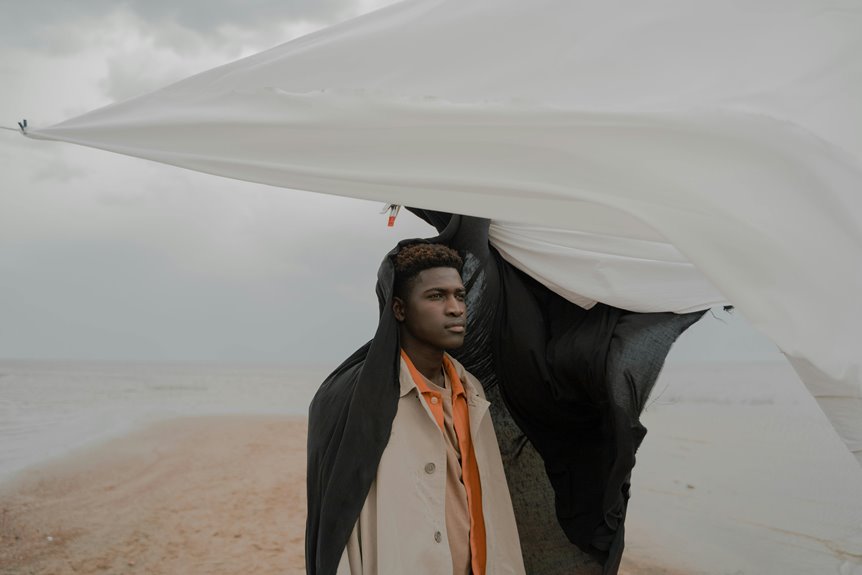
You know how a trusty raincoat can save the day during a downpour? Everyday fabrics can be just as dependable with the right treatments. By exploring various methods to enhance their weather resistance, you can transform your wardrobe. From waterproof coatings to natural solutions, there are plenty of options to contemplate. Curious about the best techniques and how they work?
Key Takeaways
- Apply water-resistant coatings like Durable Water Repellent (DWR) or polyurethane to enhance fabric protection against moisture.
- Use waterproof membranes such as Gore-Tex to create a barrier while allowing breathability.
- Implement natural waterproofing techniques, like beeswax or lanolin, to create an eco-friendly waterproof barrier.
- Seal seams with waterproof tape to prevent moisture from entering through stitching areas.
- Regularly maintain and reapply treatments to ensure long-lasting weather resistance and fabric performance.
Understanding Waterproof Membranes
Waterproof membranes are the unsung heroes of weather-resistant fabrics. These thin layers act as barriers, preventing water from penetrating while allowing moisture vapor to escape.
When you wear a jacket with a waterproof membrane, you’re shielded from rain and snow, staying dry and comfortable. This technology typically uses materials like Gore-Tex or eVent, which combine durability with breathability.
You might think that waterproof means heavy, but these membranes are surprisingly lightweight, making them perfect for active lifestyles.
Whether you’re hiking, cycling, or simply caught in an unexpected downpour, a fabric with a waterproof membrane can be a game-changer.
Understanding this technology empowers you to make informed choices for your outdoor gear and everyday clothing. Stay dry without sacrificing comfort!
Exploring Water-Resistant Coatings
When you’re looking to make fabrics water-resistant, understanding the different types of coatings is essential.
You’ll also want to take into account the best application techniques to guarantee peak performance, while keeping environmental factors in mind.
Let’s explore how these elements come together to enhance your fabric’s durability against the elements.
Types of Coatings
Though you might be familiar with various fabric treatments, understanding the different types of water-resistant coatings can help you choose the right one for your needs. Here’s a quick overview of some popular options:
| Coating Type | Benefits | Best For |
|---|---|---|
| Durable Water Repellent (DWR) | Lightweight, breathability | Outdoor apparel |
| Polyurethane (PU) | Flexibility, strong barrier | Outdoor gear, tents |
| Silicone | Excellent water repellency | Tarps, backpacks |
| Wax Coating | Natural look, eco-friendly | Casual wear, canvas |
| Laminated Coating | High durability, waterproofing | Heavy-duty applications |
Application Techniques
Understanding water-resistant coatings is just the beginning; applying them correctly is key to achieving peak performance.
Here are four essential techniques to guarantee your application is effective:
- Surface Preparation: Clean and dry the fabric thoroughly to remove any dirt or oils that could hinder adhesion.
- Spray Application: Use a spray bottle for even distribution, holding it 6-12 inches away from the fabric to avoid saturation.
- Layering: Apply multiple thin coats rather than one thick layer. This helps improve durability and effectiveness.
- Curing Time: Allow adequate drying time between coats, and follow the manufacturer’s instructions for best results.
Environmental Considerations
As you explore water-resistant coatings, it’s crucial to take into account their environmental impact. Many coatings contain chemicals that can harm ecosystems when they wash off during cleaning or wear.
Look for eco-friendly alternatives like silicone-based or bio-based coatings, which are less toxic and biodegradable. Additionally, consider the longevity of the coating; a durable solution reduces the frequency of reapplications, minimizing waste.
When selecting coatings, check for certifications that guarantee lower environmental footprints. By opting for greener options, you not only protect your fabrics but also contribute to a healthier planet.
Ultimately, striking a balance between functionality and sustainability is key to making informed choices about water-resistant coatings.
Natural Waterproofing Techniques
When it comes to making fabrics weather resistant, natural waterproofing techniques offer effective and eco-friendly solutions. You can easily enhance your fabrics by using some simple methods.
Here are four techniques to examine:
- Beeswax: Melt beeswax and apply it to your fabric, then heat it to allow absorption.
- Lanolin: This natural wool grease works well to repel water; just rub it onto the fabric.
- Soy Wax: Similar to beeswax, soy wax can be melted and applied to create a waterproof barrier.
- Oil Treatment: Natural oils, like flaxseed or olive oil, can be used to coat fabrics, giving them a water-resistant finish.
These techniques not only protect your fabrics but also reduce your environmental footprint.
The Importance of Taped Seams
Natural waterproofing techniques provide a solid foundation for weather-resistant fabrics, but they can be further enhanced with the addition of taped seams.
Taped seams play a vital role in preventing moisture from seeping through the stitching areas, which are often vulnerable points. When you sew fabric together, tiny holes form, allowing water to penetrate. By applying a waterproof tape over these seams, you create an effective barrier that keeps you dry.
This technique is particularly beneficial in jackets, tents, and outdoor gear. You’ll notice that garments with taped seams offer superior performance in wet conditions, ensuring you stay comfortable and protected.
Durable Water Repellent Treatments
Many outdoor enthusiasts rely on durable water repellent (DWR) treatments to keep their gear effective in wet conditions.
These treatments create a protective layer on the fabric, helping water bead up and roll off instead of soaking in.
If you’re considering DWR treatments, here are some key points to remember:
- Application: You can usually apply DWR sprays or wash-in treatments at home.
- Maintenance: Reapply after several washes or when you notice water absorbing instead of repelling.
- Compatibility: Verify the DWR product works with the fabric type of your gear.
- Drying: Heat activation, through a dryer or iron, often enhances the DWR’s effectiveness.
Utilizing DWR treatments can greatly improve your gear’s performance in challenging weather conditions.
Benefits of Tightly Woven Fabrics
Tightly woven fabrics offer significant advantages for weather resistance, especially in outdoor gear. When you choose these materials, you gain enhanced protection against wind, rain, and even UV rays. The tight weave creates a barrier that reduces water penetration and prevents moisture from seeping through. This means you stay drier and more comfortable during unpredictable weather conditions.
Moreover, tightly woven fabrics tend to be more durable, holding up better against abrasions and wear. This durability can extend the life of your gear, saving you money in the long run.
Additionally, these fabrics often require less maintenance, as they’re less prone to damage from the elements. By opting for tightly woven options, you equip yourself for outdoor adventures with confidence.
Assessing Fabric Durability
When evaluating fabric durability, you need to take into account the composition of the material and how it holds up over time.
Treatment longevity plays an essential role in how well the fabric withstands the elements, so keep that in mind.
Plus, regular maintenance and care can greatly extend the life of your weather-resistant fabrics.
Fabric Composition Importance
Understanding fabric composition is essential for evaluating durability, especially if you want your garments and outdoor gear to withstand the test of time.
The right materials can make a big difference in performance and longevity. Here are four key factors to take into account:
- Fiber Type: Natural fibers like cotton and wool offer breathability, while synthetic fibers like polyester and nylon provide strength and resistance.
- Weave Structure: Tightly woven fabrics can resist moisture and wind better than looser weaves.
- Weight: Heavier fabrics often indicate durability, but they may also affect comfort.
- Finish: Treatments like water repellents enhance performance but can vary in effectiveness over time.
Treatment Longevity Considerations
Although fabric treatments can greatly enhance weather resistance, their longevity often depends on several factors that you should consider.
First, the type of treatment you choose plays a significant role; some treatments are designed for short-term use, while others offer long-lasting protection.
Next, think about the fabric’s composition; natural fibers may wear down faster than synthetic ones.
Additionally, exposure to UV rays, moisture, and harsh chemicals can degrade the treatment over time.
You should also consider how often the fabric will be used and cleaned, as frequent washing can diminish the effectiveness of the treatment.
Finally, environmental conditions, like humidity and temperature fluctuations, can impact durability.
Keeping these factors in mind will help you make informed decisions for long-lasting results.
Maintenance and Care Tips
To guarantee your weather-resistant fabrics maintain their durability, regular maintenance and proper care are essential. Here are some tips to keep them in top shape:
- Wash gently: Use a mild detergent and cold water to prevent wear and tear. Avoid bleach, as it can strip protective coatings.
- Air dry: Instead of using a dryer, hang your fabrics to dry. This prevents heat damage and maintains the integrity of weather-resistant treatments.
- Store properly: When not in use, store fabrics in a cool, dry place. Avoid direct sunlight to prevent fading and degradation.
- Inspect regularly: Check for any signs of wear or damage, and treat any issues promptly to extend the life of your weather-resistant fabrics.
Application Methods for Waterproofing
How do you guarantee your fabrics stay dry in wet conditions? You can apply waterproofing treatments to enhance their resistance.
Start with a spray-on waterproofing solution, making certain of even coverage. Hold the can about six inches away and apply in light layers, allowing each layer to dry before adding another.
For a more durable option, consider a wash-in waterproofing treatment. Just toss your fabric into the washing machine with the treatment, following the manufacturer’s instructions.
If you’re working with outdoor gear, seam sealing can add an extra layer of protection; use a seam sealant tape along stitched areas.
Whichever method you choose, always test on a small area first to verify compatibility with your fabric.
Keep your fabrics dry and ready for adventure!
Environmental Considerations in Waterproofing
When waterproofing fabrics, it’s important to think about the environmental impact of the treatments you choose. You want to guarantee that you’re not only protecting your materials but also being kind to the planet.
Here are some considerations to keep in mind:
Considerations for environmentally friendly waterproofing include chemical composition, water usage, durability, and recyclability.
- Chemical Composition: Opt for treatments with non-toxic, biodegradable components that won’t harm ecosystems.
- Water Usage: Choose processes that minimize water waste during application.
- Durability: Select long-lasting waterproofing methods to reduce the need for frequent reapplications.
- Recyclability: Consider treatments that allow the fabric to be recycled at the end of its life cycle.
Frequently Asked Questions
Can I Waterproof My Fabric at Home Easily?
You can easily waterproof your fabric at home using spray-on waterproofing solutions or wax. Just apply it evenly, let it dry, and enjoy your newly protected materials, ready to face the elements like a modern-day knight!
How Long Does Waterproofing Last on Fabrics?
Waterproofing on fabrics typically lasts several washes or months, depending on the product used and fabric type. To maintain effectiveness, reapply treatments as needed and follow care instructions to prolong the waterproofing benefits.
Are There Any Fabric Types Unsuitable for Waterproofing?
Think of fabrics as sponges; some absorb too much to waterproof effectively. Delicate materials like silk and certain knits often resist waterproofing treatments, as they can lose their texture or breathability when coated.
Will Waterproofing Change the Color of My Fabric?
Waterproofing your fabric might change its color slightly, depending on the treatment used. Some methods can enhance vibrancy, while others may dull shades. Always test on a small area first to see how it reacts.
Can I Wash Waterproofed Fabrics Without Damaging Them?
Yes, you can wash waterproofed fabrics without damaging them, but always check the care label. Use a gentle cycle and mild detergent, avoiding fabric softeners, to maintain their protective qualities and extend their lifespan.