
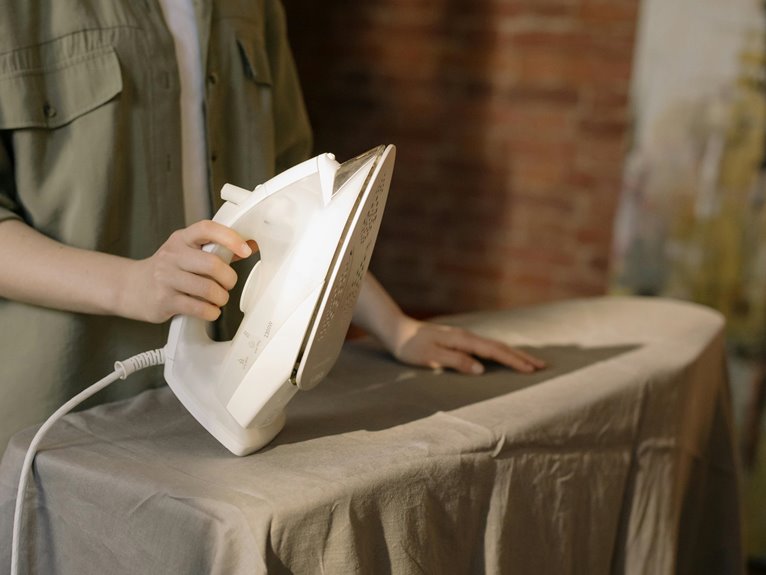
You can iron polyamide, but you need to be cautious since it’s sensitive to heat. Use a low setting around 110°C (230°F) and always test on a hidden spot first. Iron with a protective cloth to avoid direct contact, and don’t use steam to prevent fiber damage. Avoid high heat or lingering too long in one place to prevent melting or shiny marks. If you want to keep your polyamide garments looking great, there’s more you should know about proper care and alternatives.
Key Takeaways
- Polyamide can be ironed at low temperatures, ideally around 110°C (230°F), to avoid melting or damaging the fabric.
- Always use a pressing cloth and test on a hidden area before ironing the entire garment.
- Avoid using steam or high heat settings, as steam can weaken fibers and high heat can cause melting.
- Iron gently without applying excessive pressure or lingering too long in one spot to prevent distortion.
- Consider alternatives like steaming, hanging in a steamy bathroom, or using a low dryer setting to remove wrinkles safely.
Understanding Polyamide Fabric
Although polyamide might sound unfamiliar, you likely encounter it often since it’s a common synthetic fabric used in clothing and accessories. When you wear nylon stockings, swimsuits, or lightweight jackets, you’re probably wearing polyamide.
This fabric is prized for its strength, elasticity, and resistance to abrasion, making it ideal for activewear and outdoor gear. Polyamide fibers are smooth and lightweight, which helps your clothes feel comfortable while maintaining durability.
You’ll also find it blended with other fabrics to improve stretch and shape retention. Understanding polyamide helps you care for your garments properly, ensuring they last longer without losing their shape or texture.
Knowing its properties can guide you in handling, washing, and yes, even ironing the fabric correctly.
Heat Sensitivity of Polyamide
You need to be careful with polyamide’s heat sensitivity since it melts at a relatively low temperature.
Ironing it too hot can damage the fabric, so knowing the safe temperature range is essential.
Let’s explore how to protect your polyamide clothes while keeping them wrinkle-free.
Melting Point Considerations
When ironing polyamide, understanding its melting point is crucial because the fabric is highly heat-sensitive.
Polyamide typically melts around 215 to 265°C (419 to 509°F), but damage can occur at lower temperatures. If you apply heat exceeding its tolerance, the fibers may melt, deform, or develop shiny spots. You won’t want to ruin your garment by overheating it, so knowing this range helps you avoid setting your iron too high.
Also, the fabric’s synthetic nature means it doesn’t respond well to direct, intense heat. Instead, it’s better to respect its melting point limits to maintain the material’s integrity and appearance.
Being cautious with the melting point guarantees you keep your polyamide clothing looking great without damage.
Safe Ironing Temperatures
Knowing the melting point of polyamide sets the stage for selecting the right ironing temperature. Since polyamide melts around 215–265°C (419–509°F), you’ll want to keep the iron much cooler to avoid damage.
Typically, setting your iron to a low or synthetic setting (around 110°C or 230°F) is safest. Here’s what to keep in mind:
- Use the lowest temperature that smooths wrinkles effectively
- Avoid steam if possible, as moisture plus heat can weaken fibers
- Test on a hidden area before ironing the whole garment
- Place a pressing cloth between the iron and fabric to protect it
- Never leave the iron in one spot for too long to prevent melting
Following these tips helps you keep your polyamide clothes in great shape.
Ideal Ironing Temperature for Polyamide
You’ll want to set your iron to a low heat, usually around 110°C (230°F), to protect polyamide fibers.
Using the recommended temperature prevents melting or damage while smoothing wrinkles effectively.
Always check your garment’s label and avoid using steam if it’s not advised.
Recommended Heat Settings
An ideal ironing temperature for polyamide typically falls between low to medium heat settings, usually around 110°C (230°F).
You want to avoid high heat to prevent melting or damaging the fabric. When setting your iron, use these tips:
- Select the synthetic or nylon setting if available
- Avoid steam unless the fabric label permits it
- Always iron on the reverse side to protect the surface
- Use a pressing cloth for extra protection
- Test on a small, hidden area first to gauge heat tolerance
Ironing Temperature Guidelines
Although polyamide is a durable synthetic fabric, you need to keep the ironing temperature controlled to avoid damage.
Set your iron to a low heat setting, usually around 110°C (230°F), to prevent melting or warping the fibers. Many irons have a synthetic or nylon setting that works well for polyamide. Always double-check the garment’s care label for specific temperature recommendations.
Use a pressing cloth between the iron and fabric to add a protective layer, reducing direct heat contact. Avoid using steam unless the care label explicitly allows it, as excess moisture combined with heat may affect the fabric’s integrity.
Avoiding Heat Damage
Keeping the iron temperature low is key when working with polyamide to avoid heat damage. Polyamide fibers can melt or deform if exposed to high heat, so you want to set your iron to a low or synthetic setting, usually below 120°C (248°F).
To protect your garment, follow these tips:
- Use a pressing cloth between the iron and fabric
- Avoid steam, which can weaken fibers
- Test on a small, hidden area first
- Iron quickly without lingering too long in one spot
- Turn the garment inside out before ironing
Preparing Polyamide Garments for Ironing
Before you start ironing polyamide garments, you’ll want to take a few simple steps to protect the fabric.
First, check the care label for specific instructions—some polyamide blends require extra caution.
Always start by reading the care label, as some polyamide blends need special handling.
Turn the garment inside out to minimize direct heat on the surface and reduce the risk of shiny spots.
Make sure the fabric is slightly damp; if it’s dry, lightly mist it with water using a spray bottle.
Remove any wrinkles by gently smoothing the fabric with your hands before ironing.
Set your iron to a low heat or synthetic setting, avoiding steam if the label advises against it.
Preparing your polyamide garment this way helps maintain its shape and appearance while preventing damage during ironing.
Using a Protective Cloth While Ironing
Using a protective cloth is one of the easiest ways to shield your polyamide garment from direct heat while ironing. You simply place a thin cotton or muslin cloth between the iron and your fabric to prevent scorching or melting. This layer distributes heat evenly and reduces the risk of shiny spots or damage.
When choosing or using a protective cloth, keep these tips in mind:
- Use a clean, dry cloth to avoid transferring dirt or moisture.
- Avoid synthetic fabrics as a protective layer; stick to natural fibers.
- Make certain the cloth fully covers the area you’re ironing.
- Check the cloth’s temperature tolerance before ironing.
- Replace the cloth if it becomes stained or worn to maintain protection.
This simple step helps keep your polyamide looking fresh and intact.
Steam Ironing vs. Dry Ironing Polyamide
How should you approach ironing polyamide: with steam or dry heat? Generally, dry ironing is safer for polyamide fabrics because steam can cause moisture-related damage or shrinkage. However, if you use steam, keep the iron at a low temperature and avoid direct contact by using a protective cloth to prevent melting or distortion.
| Method | Benefits |
|---|---|
| Dry Ironing | Avoids moisture damage |
| Controls heat better | |
| Steam Ironing | Can remove stubborn wrinkles |
| Requires caution with heat |
If you prefer steam ironing, always test on a small area first. Dry ironing gives you more control, making it the preferred choice for most polyamide garments.
Common Mistakes When Ironing Polyamide
Although polyamide is a durable fabric, ironing it incorrectly can easily cause damage. You need to be cautious to keep your clothes looking their best.
Avoid these common mistakes when ironing polyamide:
- Using high heat settings that can melt or warp the fabric.
- Ironing directly on the fabric without a pressing cloth.
- Neglecting to check care labels for specific instructions.
- Applying too much pressure, which can stretch or distort the material.
- Ignoring steam settings, as too much moisture can leave watermarks.
Alternatives to Ironing Polyamide
If you want to avoid the risks of ironing polyamide, several alternatives can help keep your clothes wrinkle-free.
You can use a steamer, which gently removes wrinkles without direct heat contact, reducing the chance of damage.
Hanging your polyamide garments in a steamy bathroom also works well; the moisture helps relax wrinkles naturally.
Another option is to lay the fabric flat and smooth out wrinkles with your hands when damp.
If you prefer machine solutions, toss the item in the dryer on a low or air-fluff setting with a damp cloth for a few minutes to help release creases.
These methods protect your polyamide fabric and maintain its shape without exposing it to the high heat an iron produces.
Caring for Polyamide After Ironing
After ironing your polyamide garment, let it cool completely to set the shape and avoid wrinkles.
Make sure to store it properly—hang it up or fold it carefully to maintain its smooth appearance.
Taking these simple steps will help keep your polyamide looking fresh longer.
Cooling and Setting
When you finish ironing polyamide, let the fabric cool completely before wearing or storing it. This step guarantees the fibers set properly and helps maintain the smooth, wrinkle-free finish.
Cooling prevents new wrinkles from forming and avoids any heat-sensitive damage. As the fabric relaxes, it retains its shape and appearance better.
To help with cooling and setting, keep these tips in mind:
- Lay the garment flat on a clean surface
- Avoid folding or bunching the fabric while warm
- Allow at least 10–15 minutes for cooling
- Keep away from direct sunlight or heat sources during cooling
- Handle gently to preserve the smooth finish
Storage Tips After Ironing
Proper storage plays an essential role in maintaining the quality of your polyamide garments once you’ve ironed them.
After ironing, make sure your clothes have completely cooled to avoid wrinkles or fabric damage. Hang them on padded or wide hangers to preserve their shape and prevent stretching.
If you fold polyamide items, do so gently along natural seams to avoid creases. Store garments in a cool, dry place away from direct sunlight, which can cause discoloration and weaken fibers over time.
Avoid overcrowding your closet to allow air circulation, reducing the risk of moisture buildup.
Finally, consider using breathable garment bags for long-term storage to protect your polyamide pieces from dust and pests while allowing the fabric to breathe.
Tips for Maintaining Polyamide Fabric Appearance
Although polyamide fabrics are durable, you’ll want to handle them carefully to keep their appearance sharp. Proper care helps avoid damage like pilling, fading, or stretching.
Handle polyamide fabrics with care to prevent pilling, fading, and stretching, keeping them looking sharp and durable.
Here are some tips to maintain your polyamide garments looking their best:
- Wash in cold water to prevent shrinking and color loss
- Use a gentle cycle and mild detergent to protect fibers
- Avoid fabric softeners, which can break down polyamide over time
- Air dry flat or hang to prevent wrinkles and distortion
- Store folded or hung in a cool, dry place away from direct sunlight
Frequently Asked Questions
Is Polyamide Fabric Recyclable?
You can recycle polyamide fabric, but it depends on local facilities. Some places accept it for textile recycling, while others don’t. Always check your area’s guidelines to guarantee you’re recycling it properly and responsibly.
What Is the Origin of Polyamide Fibers?
You’ll find polyamide fibers originate from synthetic polymers derived from petrochemicals. Scientists created them in the 1930s to mimic natural fibers like silk, making them strong, elastic, and widely used in textiles and industrial products.
How Does Polyamide Compare to Polyester?
Like comparing a sleek sports car to a reliable sedan, polyamide feels softer and more elastic, while polyester’s durability and resistance to wrinkles stand out. You’ll notice polyamide breathes better but polyester’s easier to care for.
Can Polyamide Cause Allergies?
You might experience allergies from polyamide if you have sensitive skin or specific chemical sensitivities. While it’s generally safe, some people react to additives or dyes used in polyamide fabrics, so watch for any irritation.
Is Polyamide Used in Sportswear Only?
Think of polyamide as a versatile chameleon; you won’t find it only in sportswear. You’ll spot it in lingerie, outerwear, and even carpets. So, it’s not limited to gym gear; it adapts to many uses.