
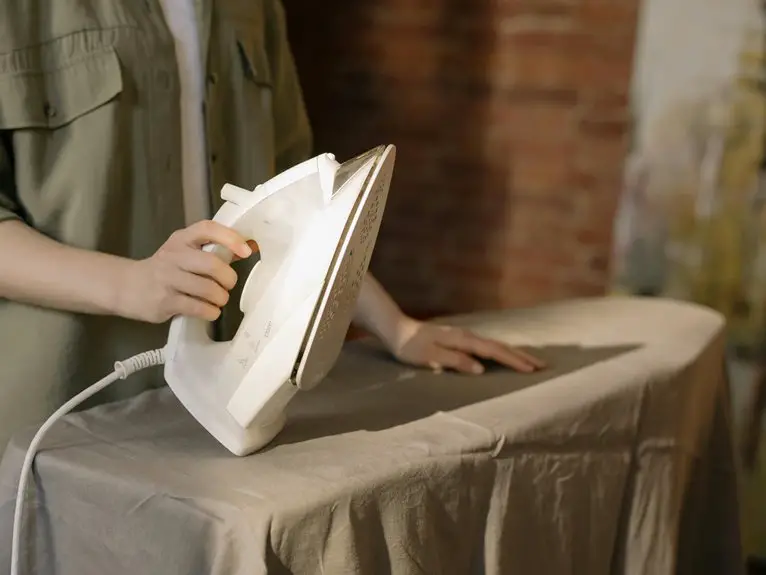
Yes, you can iron lyocell safely by using a medium heat setting, ideally around 300°F (150°C), and always placing a pressing cloth between the iron and fabric. Make sure your garment is slightly damp or use light steam to relax fibers without soaking them. Iron gently on the reverse side to avoid shining or damaging the fabric. Take care with temperature and pressure, and you’ll keep your lyocell smooth and soft. Keep going to discover more tips for perfect care.
Key Takeaways
- Iron lyocell on medium heat, ideally around 300°F (150°C), to avoid scorching or weakening fibers.
- Always use a pressing cloth between the iron and fabric to protect lyocell’s delicate fibers.
- Iron lyocell inside out and move the iron gently without applying excessive pressure.
- Lightly dampen the fabric or use a low steam setting to relax wrinkles without saturating the fabric.
- Avoid high heat and direct steam; test on a hidden area to prevent shiny marks or damage.
What Is Lyocell Fabric?
Lyocell fabric is a type of sustainable textile made from wood pulp, primarily sourced from eucalyptus trees. When you choose lyocell, you’re opting for an eco-friendly material that’s biodegradable and produced with a closed-loop process, which means minimal waste and chemicals.
You’ll find lyocell soft, smooth, and breathable, making it comfortable for everyday wear. It drapes well and resists wrinkles better than cotton or linen, but it’s still important to care for it gently.
Because lyocell blends the qualities of natural and synthetic fibers, it offers durability alongside a silky feel. Whether in clothing or home textiles, lyocell’s versatility and sustainability make it a smart fabric choice you can feel good about.
Why Is Lyocell Considered Delicate?
You need to handle lyocell carefully because its fiber structure is sensitive to stress.
High moisture and heat can weaken the fabric and cause damage.
Understanding this helps you iron lyocell without ruining it.
Fiber Structure Sensitivity
Because its fibers have a unique, smooth structure, this fabric demands extra care during ironing.
Lyocell fibers are made from wood pulp and have a fine, silky surface that’s more prone to damage than sturdier fabrics. When you iron, applying too much pressure or heat can crush or distort these delicate fibers, causing visible changes like shiny spots or weakened fabric strength.
You’ll want to handle lyocell gently to preserve its softness and smooth appearance. Unlike cotton or synthetic blends, lyocell’s fiber arrangement doesn’t tolerate rough treatment well, so being mindful of your ironing technique helps maintain the fabric’s integrity.
Treating it with care means your lyocell garments will look great for longer without losing their natural drape.
Moisture and Heat Effects
The delicate nature of lyocell fibers means moisture and heat have a significant impact during ironing. When you apply heat, the fibers soften, making them more susceptible to damage if the temperature is too high.
At the same time, moisture helps relax wrinkles but can also weaken the fiber structure if excessive. You need to strike a balance—use a moderate iron temperature combined with a light steam or damp cloth to protect the fabric.
Avoid high heat or soaking the material, as this can cause shrinking, distortion, or weakening of the fibers. Understanding how moisture and heat interact with lyocell will help you iron safely without compromising the fabric’s strength or smooth finish.
Always test on a small area first to verify your method works.
Ideal Ironing Temperature for Lyocell
Setting your iron to a medium heat, typically around 300°F (150°C), works best for lyocell fabrics. This temperature is hot enough to smooth out wrinkles without damaging the fibers.
Avoid using high heat, as lyocell is sensitive and can scorch or weaken under excessive temperatures. If your iron has specific fabric settings, choose the one labeled for synthetic or delicate fabrics, which usually aligns with the ideal temperature range.
Always start at the lower end of the medium setting and adjust if necessary. Using steam can help relax the fibers and make ironing easier, but be cautious not to saturate the fabric.
Preparing Your Lyocell Garment for Ironing
Before you start ironing, always check your lyocell garment’s care label to confirm the recommended settings.
Make sure the fabric is clean and completely dry to avoid any damage or unwanted marks.
To protect the material, use a thin cloth between the iron and your garment while pressing.
Check Care Label
How do you guarantee your lyocell garment stays in great shape during ironing?
Start by checking the care label carefully. This small tag holds important instructions specific to your fabric, guiding you on the safest ironing temperature and any precautions you should take.
If the label says “cool iron” or specifies a low heat setting, follow it strictly to avoid damaging the fibers. Some lyocell blends might require special attention or recommend using a pressing cloth.
Ignoring these instructions could lead to shrinking, shiny spots, or weakening of the fabric.
Clean and Dry
After you’ve checked the care label, make certain your lyocell garment is clean and completely dry before ironing. Dirt or moisture can cause stains or damage the fabric when heated. Wash your item according to instructions and air-dry it thoroughly. Avoid ironing damp lyocell as it may stretch or lose shape.
Here’s a quick checklist to prepare your lyocell for ironing:
| Step | Tip |
|---|---|
| 1. Wash | Use mild detergent |
| 2. Rinse | Confirm no detergent residue |
| 3. Dry | Air-dry flat or hang |
| 4. Check dryness | Fabric should feel dry to touch |
| 5. Inspect | Remove any stains or marks |
Following these steps guarantees your lyocell garment is ready for safe, effective ironing.
Use Protective Cloth
When you’re ready to iron your lyocell garment, placing a protective cloth between the iron and fabric prevents direct heat damage. This simple step shields the delicate fibers from scorching or shiny spots.
To do this right:
- Choose a clean, thin cotton cloth or a pressing cloth specifically designed for ironing.
- Lay the protective cloth smoothly over the area you plan to iron, ensuring no wrinkles that could imprint on your fabric.
- Press the iron gently on top of the cloth, moving it steadily without applying too much pressure.
Following these steps helps preserve your lyocell’s texture and appearance.
Using a Pressing Cloth With Lyocell
Although lyocell is a durable fabric, you should always use a pressing cloth to protect it during ironing.
Protect your durable lyocell fabric by always using a pressing cloth when ironing.
A pressing cloth acts as a barrier, preventing direct heat from your iron that could scorch or shine the fabric. It also helps distribute heat evenly, reducing the risk of water spots and wrinkles.
You can use a clean, thin cotton cloth or a specially designed pressing cloth for best results. Simply lay the pressing cloth over the lyocell garment before applying your iron.
This extra step preserves the fabric’s smooth texture and vibrant color, ensuring your clothes look their best. Using a pressing cloth is a simple but essential habit that extends the life of your lyocell items while keeping them wrinkle-free.
Step-by-Step Guide to Ironing Lyocell
Before you start ironing your lyocell fabric, make sure it’s properly prepared and slightly damp for the best results.
Next, adjust your iron to the right temperature setting to avoid damaging the material.
Finally, use effective ironing techniques and helpful tips to keep your lyocell looking smooth and fresh.
Preparing Lyocell Fabric
Since lyocell is a delicate fabric, you’ll want to handle it gently to avoid damage during ironing. Proper preparation guarantees smooth results without harming the fibers. Here’s how to get your lyocell fabric ready:
- Check the Care Label: Always start by reading the garment’s care instructions to confirm ironing is safe and see any specific recommendations.
- Wash and Dry Carefully: Wash lyocell in cold water on a gentle cycle. Afterward, let it air dry or tumble dry on low heat to prevent shrinkage or distortion.
- Dampen the Fabric: Lightly mist the fabric with water using a spray bottle or iron it while slightly damp, which helps remove wrinkles more effectively and protects the fibers.
Adjusting Iron Settings
When you start ironing lyocell, you’ll want to set your iron to a low or medium heat to protect the delicate fibers.
Begin by turning off any steam function, as too much moisture can damage the fabric. Check your iron’s temperature dial and select the synthetic or silk setting if available, or keep it below 300°F (150°C).
If your iron has a temperature guide, lyocell typically falls under the “cool” to “medium” range. Always test the heat on a hidden seam or scrap piece first to avoid scorching.
Adjust the iron settings gradually if wrinkles persist, but avoid high heat to prevent shine or fabric weakening. Properly adjusting your iron guarantees you get smooth results without harming your lyocell garment.
Ironing Techniques and Tips
To iron lyocell effectively, you’ll want to approach it with care and patience. Start by laying the garment flat on the ironing board to avoid wrinkles and creases.
Here’s a simple step-by-step guide to get you started:
- Use a pressing cloth: Place a lightweight cloth between the iron and lyocell fabric to prevent direct heat damage.
- Iron inside out: This protects the surface of the fabric and keeps it looking smooth and fresh.
- Move the iron gently: Glide the iron slowly without applying too much pressure to avoid stretching or distorting the fabric.
How to Avoid Shiny Marks on Lyocell
Although lyocell offers a smooth finish, you need to be careful during ironing to prevent shiny marks from forming. These marks happen when heat and pressure flatten the fabric’s fibers unevenly.
To avoid this, always iron lyocell on the reverse side or use a pressing cloth between the iron and fabric. Set your iron to a low or medium heat setting and avoid using steam directly, as excess moisture can contribute to shine.
Don’t press too hard; instead, glide the iron gently and keep it moving. If you notice any shiny spots, stop immediately and lower the temperature.
Taking these precautions helps maintain lyocell’s natural luster without damaging its appearance or texture, so your clothes look great after each ironing session.
Alternatives to Ironing Lyocell
If you’d rather skip ironing altogether, several effective alternatives can keep your lyocell garments looking crisp.
Here are three simple methods to try:
- Steaming: Use a handheld steamer to gently release wrinkles without direct heat contact, preserving fabric integrity.
- Hang in the Bathroom: Hang your lyocell clothes in the bathroom during a hot shower; the steam naturally smooths out creases.
- Damp Cloth Press: Lay a damp cloth over your garment and press lightly with your hands to ease wrinkles without risking shiny marks.
These techniques save time and reduce wear on your lyocell, keeping your clothes fresh and wrinkle-free without the hassle of ironing.
Give them a shot next time you want a quick refresh!
Tips for Maintaining Lyocell Fabric Quality
When you want your lyocell garments to stay soft and vibrant, proper care is essential. Follow these tips to maintain fabric quality and extend your clothing’s lifespan.
| Care Tip | Why It Matters | How to Do It |
|---|---|---|
| Wash in cold water | Prevents shrinking | Use gentle cycle, cold water |
| Avoid bleach | Protects fibers and color | Skip chlorine-based products |
| Hang dry or lay flat | Maintains shape and softness | Avoid tumble drying |
Common Mistakes When Ironing Lyocell
Why do so many people struggle with ironing lyocell without damaging it? The answer lies in common mistakes that are easy to avoid once you know them.
Here are three frequent errors:
- Using high heat settings: Lyocell is sensitive to heat, so cranking up your iron can cause scorching or shine marks.
- Ironing dry fabric: Ironing lyocell without a moisture barrier or steam can lead to stubborn wrinkles or fabric damage.
- Skipping the protective cloth: Not using a pressing cloth exposes the fabric directly to the iron, increasing the risk of burns or shine.
Avoid these pitfalls by adjusting your technique for lyocell’s delicate nature, and you’ll keep your garments looking smooth and fresh without harm.
Caring for Lyocell After Ironing
Although ironing lyocell requires care, proper post-ironing handling is just as important to maintain its smooth appearance.
Once you finish ironing, let the fabric cool completely before folding or wearing it. This prevents new wrinkles from forming.
Avoid hanging lyocell in direct sunlight, as prolonged exposure can fade colors and weaken fibers. Instead, store your garment in a cool, dry place on a padded hanger to keep its shape intact.
If you need to wash it again, follow the care label, using gentle cycles and mild detergents to preserve the fabric’s texture.
Frequently Asked Questions
Can Lyocell Be Machine Washed Without Shrinking?
Imagine you toss your favorite lyocell shirt into the washer; you can machine wash it on a gentle, cold cycle without shrinking. Just avoid hot water and high heat drying to keep it looking great!
Is Lyocell Fabric Environmentally Friendly?
You’ll find lyocell fabric environmentally friendly because it’s made from sustainably sourced wood pulp using a closed-loop process that recycles water and solvents. This reduces waste and pollution, making it a greener choice for your wardrobe.
How Long Does Lyocell Fabric Typically Last?
Did you know lyocell fabric can last 5 to 10 years with proper care? If you treat it gently, avoid harsh chemicals, and wash it correctly, you’ll enjoy its softness and durability for a long time.
Does Lyocell Fabric Wrinkle Easily Compared to Cotton?
Lyocell wrinkles less easily than cotton because it’s smoother and more resistant to creasing. You’ll find it stays looking fresh longer, making it a great choice if you want low-maintenance, wrinkle-resistant fabric.
Can Lyocell Be Dyed or Printed on at Home?
Like an artist with a blank canvas, you can dye or print lyocell at home, but it demands care. Use fiber-reactive dyes and test small patches to verify vibrant, lasting colors without damaging the fabric.