
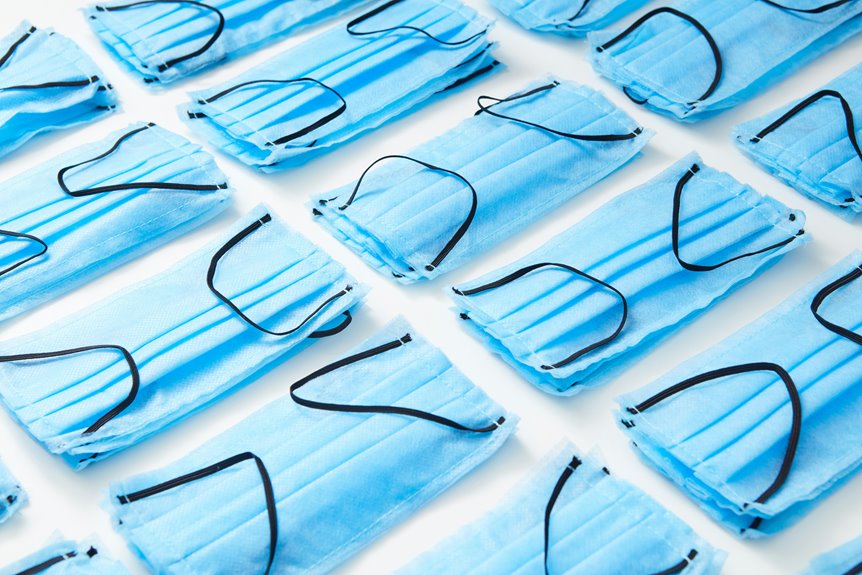
Yes, you can use polypropylene fabric for face masks because it’s lightweight, breathable, and provides effective filtration against many airborne particles. It’s moisture-resistant and comfortable for long wear, making it a practical choice. Most people find it safe with minimal skin irritation, but fit and care matter for comfort. While not as protective as N95s, polypropylene masks offer a good balance of protection and breathability. Keep exploring to understand how it stacks up against other materials and best practices.
Key Takeaways
- Polypropylene fabric is widely used for face masks due to its lightweight, moisture-resistant, and durable properties.
- It effectively filters airborne particles as small as 0.3 microns, providing strong protection against pathogens.
- Masks made with polypropylene balance filtration efficiency and breathability, ensuring comfortable, extended wear.
- The material is generally hypoallergenic but may cause irritation for sensitive skin with prolonged use.
- Polypropylene masks outperform cotton or silk in filtration and water resistance but offer less protection than N95 respirators.
Properties of Polypropylene Relevant to Face Masks
Polypropylene stands out because of its lightweight, durable, and moisture-resistant nature, making it ideal for face masks.
When you wear a mask made from polypropylene, you’ll notice it stays comfortable over long periods since it’s breathable yet sturdy. This fabric doesn’t easily absorb moisture, which helps keep the mask dry and reduces discomfort.
Plus, polypropylene resists wear and tear, so your mask can handle repeated use without falling apart quickly. Its non-woven structure also contributes to a soft texture that won’t irritate your skin.
You’ll appreciate that polypropylene masks maintain their shape well, ensuring a snug fit. Overall, these properties make polypropylene a practical choice to keep you comfortable and protected throughout the day.
Filtration Efficiency of Polypropylene Fabric
Several studies show that masks made from polypropylene fabric can filter out a notable percentage of airborne particles, including droplets and aerosols.
When you use polypropylene in face masks, you benefit from its fine fiber structure and electrostatic properties, which enhance particle capture. These masks can block particles as small as 0.3 microns, making them effective against many pathogens.
The filtration efficiency depends on factors like fabric density, layering, and manufacturing methods. For instance, melt-blown polypropylene layers notably improve filtration compared to spunbond layers.
While not medical-grade by default, well-constructed polypropylene masks can approach the performance of surgical masks.
Breathability and Comfort Considerations
Although filtration efficiency is essential, you’ll also want to take into account breathability and comfort when choosing a face mask.
Polypropylene fabric is lightweight and allows air to pass through easily, making it a good option if you need to wear a mask for extended periods. You won’t feel as restricted when breathing compared to denser materials.
However, the mask’s design and layers also affect airflow, so a well-constructed polypropylene mask balances filtration with breathability.
Pay attention to fit, too—if it’s too tight, it can reduce comfort and make breathing harder.
Ultimately, you want a mask that protects you effectively without causing discomfort or interfering with your daily activities.
Polypropylene often hits the right balance, but testing different masks helps you find what suits you best.
Safety and Skin Sensitivity Issues
Wearing a mask comfortably is important, but you also need to contemplate how it interacts with your skin. Polypropylene fabric is generally safe and hypoallergenic, making it suitable for most people.
However, if you have sensitive skin, you might experience irritation or redness from prolonged use. It’s crucial to monitor your skin’s response, especially if you wear the mask for hours daily.
To reduce irritation, verify your mask fits properly without excessive friction. Washing reusable polypropylene masks regularly helps remove sweat and oils that can aggravate your skin.
If you notice persistent discomfort, consider using a barrier like a soft cotton liner between the mask and your skin. Always consult a dermatologist if irritation worsens or doesn’t improve.
Your skin’s health should never be compromised for protection.
Comparing Polypropylene Masks to Other Materials
When choosing a face mask, understanding how polypropylene compares to other materials can help you make a better decision.
Polypropylene masks often outperform cotton or silk ones in filtration efficiency, capturing more airborne particles. Unlike cotton, which absorbs moisture and can become damp quickly, polypropylene repels water, keeping you more comfortable during extended wear.
You’ll also find polypropylene masks tend to be lighter and breathable, reducing heat buildup. However, some people prefer natural fibers like cotton for their softness and skin-friendliness, especially if they’ve sensitive skin.
Compared to N95 respirators, polypropylene masks offer less protection but are more affordable and reusable. Knowing these differences lets you pick a mask that balances protection, comfort, and cost based on your needs.
Frequently Asked Questions
How Should Polypropylene Face Masks Be Washed and Maintained?
You should hand wash polypropylene face masks gently with mild soap and warm water. Avoid harsh detergents or bleach, then air dry completely. Don’t wring or use high heat to keep the fabric’s protective properties intact.
Are Polypropylene Masks Environmentally Friendly or Recyclable?
You’ll find polypropylene masks aren’t very eco-friendly since they’re plastic-based and don’t biodegrade quickly. While some recycling programs accept them, many don’t, so you should check locally before disposing to reduce environmental impact.
Can Polypropylene Masks Be Safely Used for Children?
You wouldn’t want your kids wearing anything less than superhero-level protection! Polypropylene masks can be safe for children if they fit well and are used properly, but always check for comfort and breathability first.
What Are the Storage Recommendations for Polypropylene Face Masks?
You should store polypropylene face masks in a cool, dry place away from direct sunlight and moisture. Keep them in a clean, breathable container or sealed bag to maintain their filtration efficiency and prevent contamination.
Do Polypropylene Masks Comply With Medical or Safety Standards?
You’ll find many polypropylene masks meet medical and safety standards like ASTM or NIOSH when properly manufactured. Always check certification labels to confirm the mask complies with required filtration and safety regulations before use.