
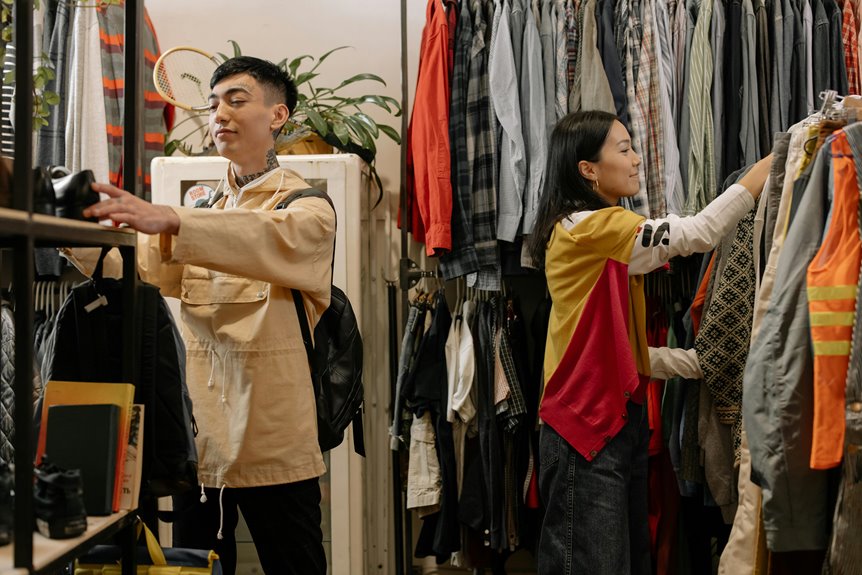
Imagine a tree, its roots intertwined with both new soil and old earth, representing the choices we make in fashion today. When deciding between new “sustainable” clothes and secondhand options, you might wonder which truly nurtures the environment. While one offers the allure of innovation, the other carries the weight of history and responsibility. The answer to which path is greener may surprise you as you consider the broader implications of your wardrobe choices.
Key Takeaways
- Secondhand shopping can cut carbon emissions by up to 82%, significantly reducing environmental impact compared to new sustainable clothes.
- Buying secondhand prevents waste and gives clothing a second life, whereas new sustainable clothing still generates carbon emissions during production.
- Secondhand items often offer unique styles and vintage pieces, enhancing personal fashion without the environmental cost of new production.
- Supporting secondhand markets fosters local economies and charities, promoting social responsibility alongside sustainability.
- While new sustainable clothing uses eco-friendly materials, it does not match the overall environmental benefits of choosing secondhand.
Understanding Fast Fashion’s Environmental Impact
As you explore the world of fashion, it’s important to understand how fast fashion greatly impacts the environment. This industry thrives on producing clothing at an alarming rate, leading to wasteful consumption and pollution.
You mightn’t realize it, but the production process uses vast amounts of water and energy, contributing to climate change. Additionally, synthetic fibers shed microplastics into our oceans, harming marine life.
Landfills overflow with discarded garments, as trends change rapidly and clothes are often worn only a few times. By choosing to support fast fashion, you’re unintentionally endorsing these harmful practices.
It’s vital to recognize this impact and consider more sustainable options in your wardrobe choices to protect the planet for future generations.
The Benefits of Secondhand Clothing
While you might be tempted to buy new clothes, opting for secondhand options offers numerous benefits that can positively impact both your wardrobe and the environment.
First, buying secondhand helps reduce waste by giving pre-loved items a new life, minimizing the demand for new production. You’ll also find unique and vintage pieces that set your style apart from the mainstream, making your wardrobe truly yours.
Plus, shopping secondhand is often more budget-friendly, allowing you to score high-quality items at a fraction of the price. It’s a win-win—you’re saving money while making eco-conscious choices.
Finally, many secondhand shops support local charities, meaning your purchase can contribute to your community. Embracing secondhand clothing is a stylish and sustainable choice!
Comparing Carbon Footprints: New vs. Secondhand
When you think about your clothing choices, it’s essential to contemplate the carbon emissions they generate.
New clothes often come with a hefty carbon footprint due to production and transportation, while secondhand options can greatly lower these emissions.
Understanding the lifecycle of each can help you make a more informed decision about your wardrobe.
Carbon Emissions Comparison
How do the carbon footprints of sustainable clothes stack up against those of secondhand options? When you buy new sustainable clothing, you’re supporting eco-friendly practices, but the production process still generates significant carbon emissions.
Factors like farming, manufacturing, and transportation contribute to this footprint. On the other hand, purchasing secondhand items drastically reduces these emissions. By giving pre-loved garments a second life, you bypass the resource-intensive production phase entirely.
Research shows that secondhand shopping can cut carbon emissions by up to 82% compared to buying new. So, if you’re aiming to minimize your carbon impact, opting for secondhand is often the better choice.
Lifecycle Analysis Importance
Understanding the lifecycle analysis of clothing is essential for making informed choices between new sustainable garments and secondhand options.
When you consider the entire lifecycle—from production to disposal—you realize that new clothes often have a larger carbon footprint due to resource-intensive manufacturing processes. Even sustainable brands can contribute notably to emissions if you factor in transportation and energy usage.
In contrast, purchasing secondhand clothes bypasses much of this impact. By giving pre-loved items a new life, you reduce demand for new production and minimize waste.
Ultimately, evaluating the lifecycle of your clothing helps you gauge the true environmental cost. So, next time you shop, think about the lifecycle—your choice can make a real difference for the planet.
Water and Energy Conservation Through Secondhand Shopping
When you choose secondhand shopping, you’re not just scoring unique pieces; you’re also making a big impact on water and energy conservation.
Each item you buy reduces the demand for new production, which saves significant resources and helps divert clothes from landfills.
Water Usage Reduction
Have you ever considered the hidden costs of your clothing choices? When you buy new clothes, you mightn’t realize just how much water goes into their production.
From growing cotton to dyeing fabrics, the fashion industry consumes an astonishing amount of water. By choosing secondhand clothing, you greatly reduce this demand.
Each time you shop secondhand, you’re preventing the need for new resources and helping to conserve water. Plus, you’re giving garments a new life instead of letting them end up in landfills.
Every item you purchase used means less water wasted in manufacturing. So, next time you’re in the market for something new, think about how secondhand options can help you make a more sustainable choice.
Energy Savings Impact
While it mightn’t be immediately obvious, shopping secondhand can lead to significant energy savings in addition to water conservation. When you choose pre-owned clothing, you help reduce the energy required for manufacturing, shipping, and processing new garments. This means less fossil fuel consumption and a lower carbon footprint.
Consider these energy-saving benefits of secondhand shopping:
- Lower production energy: New clothing manufacturing consumes vast amounts of energy, while secondhand items have already been produced.
- Reduced transportation emissions: Buying locally or from thrift stores minimizes the need for long-distance shipping.
- Decreased waste in production: By opting for secondhand, you lessen the demand for energy-intensive new clothing production.
Every secondhand purchase helps contribute to a more sustainable future.
Landfill Diversion Benefits
Choosing secondhand clothing not only saves energy but also plays an essential role in diverting waste from landfills. When you opt for pre-owned garments, you’re giving items a second life, reducing the need for new production and the resources it consumes.
Each piece you purchase keeps it out of the landfill, which is especially important since textiles take years to decompose. Furthermore, the fashion industry greatly contributes to water pollution and energy use.
By choosing secondhand, you’re conserving water and energy that would otherwise be used in creating new clothing. Your choices can lead to a more sustainable future, while also reducing the environmental impact associated with fast fashion.
Embrace secondhand shopping, and make a positive change!
Economic Advantages of Choosing Secondhand
When you opt for secondhand clothing, you not only save money but also contribute to a more sustainable economy.
Choosing pre-owned apparel allows you to stretch your budget while still enjoying a unique style. You’ll often find high-quality items at a fraction of the original price, meaning you can refresh your wardrobe without breaking the bank.
Here are some key economic advantages:
- Lower prices: Secondhand clothes are generally cheaper than new, branded options.
- Value for money: You can find quality designer pieces for less, maximizing your investment.
- Support local businesses: Many thrift shops and consignment stores are community-driven, helping your local economy thrive.
Embracing secondhand options is economically savvy and environmentally friendly!
Social Responsibility in Fashion Choices
Shopping secondhand not only offers economic benefits but also fosters a sense of social responsibility in fashion choices. When you choose pre-owned items, you’re actively reducing waste and giving clothes a second life. This choice helps combat the fast fashion industry, which often exploits labor and harms the environment.
By opting for secondhand, you support local thrift stores and charities, promoting community welfare. Additionally, you’re making a statement that values sustainability over consumerism. It encourages others to rethink their shopping habits, sparking a broader movement toward responsible fashion.
Every piece you buy secondhand reflects your commitment to ethical consumption and shows that fashion can be both stylish and conscientious. Your choices can inspire change in the fashion landscape.
Sustainable Innovations in New Clothing
As the fashion industry evolves, sustainable innovations in new clothing are transforming the way we think about style and environmental impact.
You’ll find brands leading the charge by incorporating eco-friendly materials and practices. These innovations not only reduce waste but also promote a more responsible approach to fashion.
- Biodegradable fabrics made from natural fibers
- Waterless dyeing techniques that save resources
- Closed-loop systems that recycle garments into new textiles
The Role of Consumer Behavior in Sustainable Fashion
How can your choices shape the future of fashion? Your buying habits directly impact the industry’s sustainability. When you opt for sustainable brands, you encourage companies to prioritize eco-friendly practices. Every purchase signals demand for ethical production, pushing brands to innovate and reduce their carbon footprint.
Conversely, choosing secondhand clothes not only cuts down waste but also promotes a circular economy. By shopping vintage or thrift, you extend the life of garments and lessen the need for new production.
Your decisions reflect a growing awareness and can inspire others to follow suit. Ultimately, when you align your wardrobe with your values, you contribute to a more sustainable future, influencing both brands and your community to embrace eco-friendly practices.
The Future of Fashion: Embracing Secondhand and Sustainable Practices
The future of fashion is shaping up to be a blend of secondhand treasures and sustainable practices. As you navigate this evolving landscape, you’ll find that embracing these options not only benefits the planet but also enhances your personal style.
By choosing secondhand, you’re giving garments a second life while reducing waste. Sustainable practices, like supporting ethical brands and eco-friendly materials, further contribute to a healthier environment.
Consider these key benefits:
- Unique Style: Secondhand pieces often come with history, making your wardrobe one-of-a-kind.
- Cost-Effective: Buying secondhand can save you money while still allowing you to express your fashion sense.
- Environmental Impact: Supporting sustainability reduces landfill waste and conserves natural resources.
Make conscious choices for a brighter fashion future!
Frequently Asked Questions
How Can I Identify Truly Sustainable Clothing Brands?
You’ll find truly sustainable clothing brands by exploring their stories—imagine tracing the thread from ethical materials to fair labor practices. Look for transparency in their supply chains, certifications, and commitment to environmental responsibility.
What Are the Long-Term Effects of Fast Fashion on the Environment?
Fast fashion’s long-term effects include massive waste, pollution, and resource depletion. You contribute to these issues with every purchase, as textile production harms ecosystems and generates greenhouse gases, impacting our planet’s health for generations.
Are Thrifted Clothes Safe and Hygienic to Wear?
Thrifted clothes can be safe and hygienic. When you wash them, you eliminate potential germs. When you inspect them, you verify quality. Embracing secondhand fashion means you’re choosing unique styles while prioritizing your health.
How Does Secondhand Shopping Support Local Communities?
Secondhand shopping supports local communities by keeping money within the area, creating jobs, and promoting local businesses. You help foster a sense of community connection while reducing waste and encouraging sustainable practices in your neighborhood.
What Are the Ethical Implications of Fast Fashion Production?
Did you know that fast fashion contributes to 92 million tons of textile waste annually? It exploits workers, harms the environment, and promotes a throwaway culture, making you reconsider your shopping habits for a more ethical approach.