
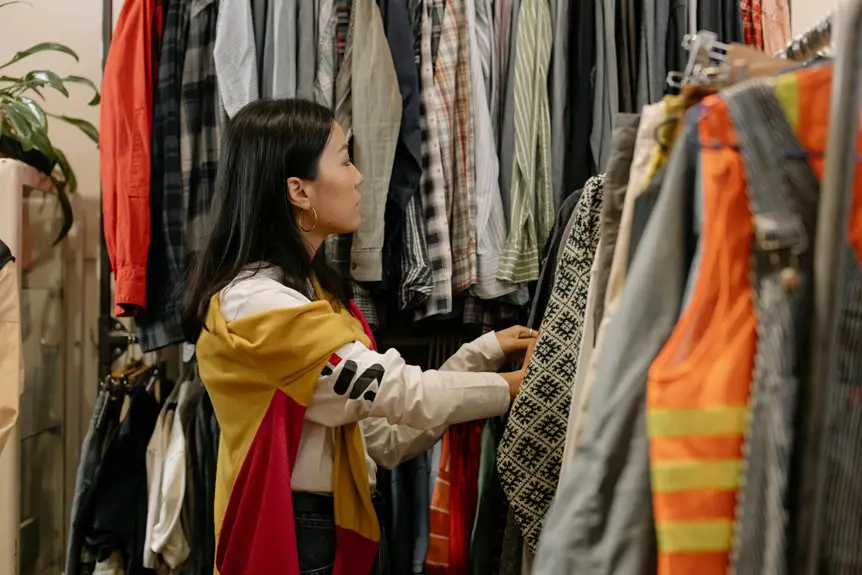
If you’re after acetate fabric, look for its smooth, silky texture, vibrant color retention, and a natural drape that resists wrinkles. You can find high-quality options online, at specialty fabric stores, or craft fairs—each offering different price points and selections. Choose fabrics with a fine, even weave and colorfastness for lasting quality. Handle with care: wash cold, avoid heat, and iron low. Keep exploring to discover how to pick the perfect acetate for your project and care needs.
Key Takeaways
- Look for acetate fabric with a smooth, silky texture, vibrant color retention, and a fine, even weave for high quality.
- Choose acetate that drapes naturally and resists wrinkles, ensuring durability and a luxurious feel.
- Purchase acetate from specialty fabric stores, online retailers, or local markets for diverse and quality selections.
- Verify colorfastness and fabric weight to ensure the acetate maintains appearance after washing and wear.
- Care for acetate by hand washing in cold water, air drying, and ironing on low heat with a pressing cloth.
Understanding the Characteristics of Acetate Fabric
Acetate fabric boasts a smooth, silky texture that feels luxurious against your skin. When you touch it, you’ll notice its softness and slight sheen, which makes garments look elegant.
This fabric drapes beautifully, allowing your clothes to flow naturally without stiffness. It’s lightweight but durable enough for everyday wear. You’ll appreciate that acetate resists shrinking and wrinkles, so your items stay crisp longer.
However, it’s sensitive to heat, so you should avoid high temperatures when ironing or washing. Acetate also has moderate moisture absorption, keeping you comfortable but requiring careful laundering to prevent damage.
Understanding these traits helps you make informed choices and care for your acetate items properly, ensuring they maintain their look and feel over time.
Common Uses for Acetate Fabric
You’ll find acetate fabric in a variety of popular clothing items like linings, dresses, and blouses because of its smooth texture and sheen.
It’s also a great choice for home decor, often used in curtains and upholstery to add a touch of elegance.
Let’s explore how acetate fits into these everyday uses.
Popular Clothing Applications
When choosing fabric for elegant and comfortable clothing, acetate stands out for its versatility and luxurious feel.
You’ll find acetate commonly used in linings for suits and jackets because it glides smoothly over other fabrics, making dressing effortless. It’s also popular in evening wear—dresses, blouses, and skirts—thanks to its silky sheen and ability to hold vibrant colors.
If you want a fabric that drapes beautifully without clinging, acetate is a smart choice. Additionally, acetate is found in scarves and ties, where its soft texture adds a touch of sophistication.
Whether you’re shopping for formal or casual pieces, acetate’s unique qualities make it a reliable option to enhance both comfort and style in your wardrobe.
Home Decor Uses
Though often associated with fashion, acetate fabric also shines in home decor. You’ll find it in elegant curtains, where its smooth texture adds a subtle sheen and drapes beautifully, enhancing any room’s ambiance.
Acetate’s ability to mimic silk makes it a popular choice for decorative pillows and upholstery, offering a luxurious look without the high price. Because it resists wrinkles, you won’t have to worry about constant maintenance, and its color retention keeps your decor vibrant over time.
Keep in mind, acetate isn’t as durable as some other fabrics, so it’s best used in low-traffic areas or as accent pieces. When you choose acetate for your home, you add a touch of sophistication with practical benefits.
Differences Between Acetate and Similar Fabrics
Although acetate shares some qualities with fabrics like rayon and polyester, it stands out due to its unique luster, moisture absorption, and ease of dyeing.
Unlike polyester, which is synthetic and less breathable, acetate feels softer and more breathable, making it comfortable for clothing.
Acetate offers a softer, more breathable alternative to synthetic polyester, enhancing comfort in clothing.
Rayon, also a semi-synthetic fiber, can mimic acetate’s smoothness but lacks its natural sheen and tends to wrinkle more easily.
Acetate’s ability to absorb moisture helps it hold dyes vividly, giving you brighter, more vibrant colors compared to polyester’s sometimes dull finish.
However, acetate is less durable than polyester and may require gentler care.
When choosing between these fabrics, consider how important sheen, breathability, and color vibrancy are for your project, since acetate offers a distinctive combination of these features.
How to Identify Genuine Acetate Material
You’ll want to look closely at acetate’s smooth, lustrous surface and vibrant color when checking its authenticity.
Run your fingers over the fabric to feel its soft, silky texture that’s cool to the touch.
These visual and tactile cues can help you spot genuine acetate quickly.
Visual Characteristics
When you examine acetate fabric closely, its distinct sheen and smooth texture immediately stand out.
Unlike other fabrics, acetate has a subtle, glossy finish that reflects light beautifully without appearing shiny like satin.
To identify genuine acetate visually, focus on these key characteristics:
- Lustrous Surface: Genuine acetate shines with a soft, almost metallic glow that doesn’t look plastic or overly glossy.
- Color Vibrancy: The dye tends to be rich and deep, thanks to acetate’s excellent dye affinity, giving colors a vivid, uniform appearance.
- Smooth Weave: Look for a fine, even weave pattern that appears consistent without irregularities or fuzziness.
Touch and Feel
Besides its visual appeal, acetate fabric reveals much about its authenticity through touch. When you run your fingers over genuine acetate, you’ll notice a smooth, silky texture that feels cool to the touch—unlike many synthetic fabrics that feel plasticky or rough.
Authentic acetate also has a slight crispness, giving it a unique hand that’s neither too stiff nor too limp. If the fabric feels overly waxy or sticky, it’s likely not pure acetate.
Additionally, genuine acetate drapes gracefully, so when you hold it, it flows naturally instead of stiffly resisting movement. You can also test its warmth; acetate tends to heat up quickly in your hand but cools just as fast.
Trust your sense of touch—it’s a reliable way to distinguish real acetate from imitations.
Key Qualities to Look for in High-Quality Acetate
Quality stands out in acetate fabric through its smooth texture, vibrant color retention, and durability. When choosing high-quality acetate, you want fabric that feels soft but sturdy, resists fading even after washing, and maintains its shape over time.
To help you identify the best acetate, focus on these key qualities:
- Colorfastness – Ascertain the fabric holds rich, consistent hues without bleeding or dulling.
- Hand Feel – Look for a silky, smooth surface that doesn’t feel rough or stiff.
- Strength and Resilience – Test for resistance to wrinkles and tears, signaling long-lasting wear.
Best Places to Buy Acetate Fabric Online
Understanding what makes acetate fabric stand out helps you make smarter purchasing decisions.
Knowing the unique qualities of acetate fabric leads to better, more informed buying choices.
When shopping online, start with specialized fabric retailers like Fabric.com or Mood Fabrics—they offer a wide selection and detailed descriptions. Etsy is another great spot, especially if you want unique patterns or vintage acetate.
For bulk orders, check out wholesalers such as Wholesale Fabric or Online Fabric Store, where prices often drop with volume. Always read customer reviews to gauge quality and seller reliability.
Don’t forget to verify return policies in case the fabric doesn’t meet your expectations. By focusing on these trusted online sources, you’ll find high-quality acetate fabric that suits your project without hassle or disappointment.
Physical Stores That Stock Acetate Fabric
Finding physical stores that stock acetate fabric can make your shopping experience more tactile and immediate. When you visit a store, you get to feel the texture, check the color under natural light, and assess the fabric’s weight firsthand.
To find acetate fabric locally, consider these options:
- Fabric and Craft Stores: Large chains often carry a variety of fabrics, including acetate blends.
- Specialty Textile Shops: These stores focus on higher-quality and diverse fabric selections.
- Local Markets and Craft Fairs: Sometimes, independent vendors offer unique acetate materials you won’t find elsewhere.
Visiting these places lets you ask questions directly and get expert advice on the spot, which can be invaluable for your project.
Comparing Prices and Quality Across Suppliers
When comparing acetate fabric suppliers, you’ll want to look closely at price ranges to find the best deal without sacrificing quality.
Check key indicators like fabric weight, weave tightness, and colorfastness to guarantee you’re getting durable material.
Also, consider supplier reliability by reading reviews and verifying return policies before making your purchase.
Price Range Overview
Although acetate fabric prices vary widely, knowing what influences cost can help you make smarter buying decisions. Prices typically depend on the fabric’s quality, the supplier’s reputation, and order quantity.
When comparing suppliers, consider these factors:
- Quality grade: Higher quality acetate with better finish and durability costs more.
- Supplier scale: Large manufacturers often offer lower prices than boutique sellers.
- Bulk discounts: Ordering in larger quantities usually reduces the per-yard price.
You’ll find acetate fabric prices ranging from $5 to $20 per yard, depending on these factors.
Keep an eye on shipping fees and return policies, which can add to your total cost. By balancing price with your needs, you’ll get the best value without compromising your project’s requirements.
Quality Indicators to Check
Quality indicators reveal the true value of acetate fabric beyond just price tags.
When comparing suppliers, look closely at fabric weight and weave tightness; heavier, tightly woven acetate often means better durability and a smoother finish.
Check for colorfastness to guarantee the fabric won’t fade after washing or exposure to sunlight.
Feel the texture—high-quality acetate should be soft with a subtle sheen, not rough or plasticky.
Also, inspect the selvage edges; clean, well-finished edges indicate careful manufacturing.
Don’t overlook certifications or detailed product descriptions that mention fiber content percentages and manufacturing standards.
While cheaper options may seem tempting, investing in quality acetate will save you from frequent replacements and maintain your project’s appearance over time.
Always balance cost with these quality cues before making your purchase.
Supplier Reliability Factors
Understanding the key indicators of acetate fabric quality sets the stage for evaluating supplier reliability.
When comparing suppliers, focus on these factors to guarantee you get the best value:
- Price Transparency – Choose suppliers who clearly outline costs, avoiding hidden fees.
- Consistent Quality – Look for reviews or samples proving uniform fabric quality across batches.
- Customer Service – Reliable suppliers respond promptly and address concerns effectively.
Tips for Caring and Maintaining Acetate Fabric
Caring for acetate fabric requires gentle handling to preserve its smooth texture and vibrant appearance.
When washing, use cold water and a mild detergent to avoid damage. Hand washing is best, but if you use a machine, select a delicate cycle and place the fabric in a mesh laundry bag.
Avoid wringing or twisting acetate, as this can cause wrinkles or distortion. After washing, lay the fabric flat or hang it to air dry—never use a dryer, since heat can shrink or melt acetate fibers.
Iron on a low setting with a pressing cloth to prevent shiny marks or burns. Store acetate garments away from direct sunlight to maintain color.
Sustainable and Ethical Considerations When Buying Acetate
Although acetate is often praised for its silky feel and vibrant colors, you should also consider its environmental and ethical impact before making a purchase.
Acetate is derived from wood pulp and involves chemical processes that may affect sustainability. To make responsible choices, look for:
- Certified Sources – Verify the wood pulp comes from sustainably managed forests with certifications like FSC.
- Eco-friendly Production – Choose brands that minimize harmful chemicals and waste during manufacturing.
- Fair Labor Practices – Support companies transparent about their workers’ rights and fair wages.
How to Choose the Right Acetate Fabric for Your Project
When selecting acetate fabric for your project, you’ll want to balance both aesthetic and practical factors.
First, consider the fabric’s finish—do you need a shiny, satin-like look or a matte texture?
Consider whether you want a glossy satin finish or a subtle matte texture for your acetate fabric.
Next, think about weight and drape; lightweight acetate works well for flowy garments, while heavier versions suit structured items.
Check the blend content too, as pure acetate differs in feel and durability from blends.
Don’t forget your project’s care requirements—acetate often demands gentle handling.
Also, assess colorfastness and how the fabric reacts to light exposure if your piece will face frequent wear.
Finally, request fabric swatches to test texture and color in person.
This approach guarantees you pick the right acetate fabric that fits your design and usage needs perfectly.
Frequently Asked Questions
Can Acetate Fabric Be Dyed at Home?
You might find it a bit tricky to brighten acetate fabric at home since it’s a delicate material. But don’t worry—you can still try specialized dyes designed for synthetic fibers and gentle heat to help colors set beautifully.
Is Acetate Fabric Suitable for Allergy-Sensitive Skin?
You might find acetate fabric suitable for allergy-sensitive skin since it’s smooth and less likely to irritate. But if you have severe allergies, always test a small patch first to avoid any unexpected reactions.
How Does Acetate Fabric Behave in Extreme Weather Conditions?
When push comes to shove, acetate fabric struggles in extreme weather—it wrinkles easily in heat and loses strength when wet. You’ll want to avoid rough conditions to keep it looking sharp and lasting longer.
Can Acetate Fabric Be Recycled or Repurposed?
You can recycle acetate fabric, but it’s not widely accepted in standard programs. Instead, repurpose it creatively—turn old garments into accessories or craft projects—to extend its life and reduce waste effectively.
What Are Common Myths About Acetate Fabric?
Like a magician’s trick, acetate fabric is often mistaken for being purely synthetic and non-breathable. You might think it wrinkles easily or isn’t durable, but acetate can be surprisingly smooth, breathable, and resilient with proper care.