
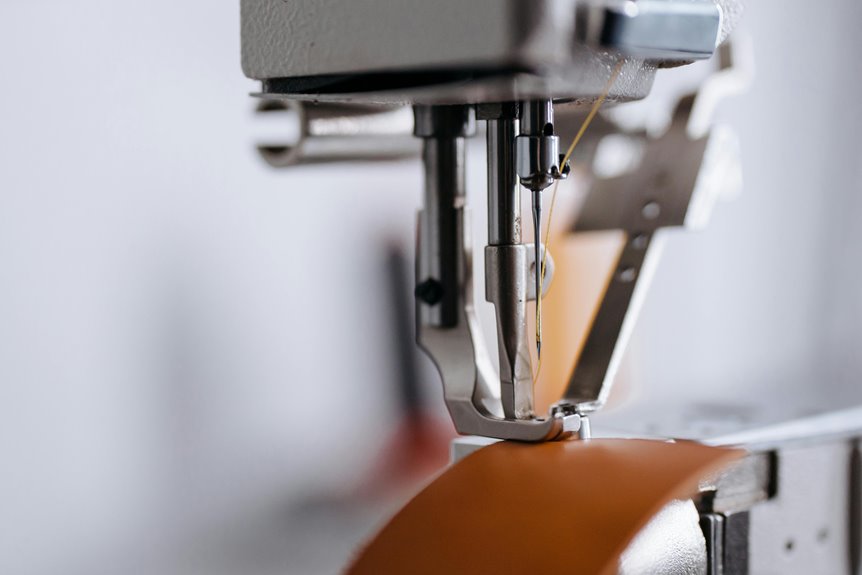
If you’re tackling upholstery projects, you’ll want a sewing machine with a powerful motor, sturdy metal frame, and adjustable presser foot pressure to handle thick fabrics like leather and canvas. Look for heavy-duty or industrial models from trusted brands like Janome, Juki, or Singer to guarantee durability and strong feeding. Consider extra throat space and specialized accessories like walking feet. Keep these features in mind, and you’ll find a machine perfectly suited for your upholstery needs—and there’s more to explore about choosing and maintaining the right one.
Key Takeaways
- Choose machines with powerful motors and sturdy metal frames to handle thick fabrics like leather, canvas, and vinyl efficiently.
- Look for features such as adjustable presser foot pressure, walking foot, and longer throat space for bulky upholstery projects.
- Prioritize heavy-duty or industrial sewing machines from trusted brands like Janome, Juki, and Singer for durability and consistent stitch quality.
- Essential accessories include heavy-duty needles, upholstery thread, roller feet, and extra bobbins to ensure smooth sewing on tough materials.
- Regular maintenance like cleaning lint, oiling parts, and needle replacement prolongs machine life and ensures reliable performance.
Key Features to Look for in an Upholstery Sewing Machine
Choosing the right upholstery sewing machine means focusing on specific features that handle heavy fabrics and thick layers with ease.
You’ll want a machine with a powerful motor to sew through tough materials like leather and canvas without slowing down. A sturdy, metal frame guarantees durability and stability during heavy-duty projects.
Look for adjustable presser foot pressure so you can manage different fabric thicknesses smoothly. A longer arm or throat space gives you room to maneuver bulky items comfortably.
Also, check for a walking foot or dual feed system to prevent fabric shifting. Finally, make certain your machine offers multiple stitch options, especially strong straight stitches, to create durable seams that last under stress.
Types of Sewing Machines Suitable for Upholstery
When choosing a sewing machine for upholstery, you’ll want to focus on heavy-duty models that can handle thick fabrics and multiple layers.
You’ll also need to decide between industrial machines, which offer power and durability, and domestic machines, which provide more versatility and convenience.
Understanding these options will help you find the right machine for your projects.
Heavy-Duty Sewing Machines
Because upholstery materials are thick and tough, you need a heavy-duty sewing machine that can handle multiple layers without breaking a sweat.
These machines feature powerful motors and reinforced frames designed to sew through heavy fabrics like leather, canvas, and denim.
When you choose a heavy-duty model, look for strong feeding mechanisms and adjustable presser feet to manage bulky seams smoothly.
You’ll also want a machine with a high stitch force, ensuring consistent, even stitches on dense materials.
Heavy-duty machines often offer longer-lasting needles and metal components to withstand wear.
By investing in one, you won’t struggle with skipped stitches or broken needles, saving time and frustration.
A reliable heavy-duty sewing machine is your best tool for professional upholstery projects that demand strength and durability.
Industrial vs. Domestic Models
Although both industrial and domestic sewing machines can handle upholstery tasks, they differ markedly in power, speed, and durability.
If you need to sew thick fabrics regularly or handle large volumes, an industrial machine is your best bet. These machines offer stronger motors, faster stitching speeds, and robust frames that withstand heavy use.
On the other hand, domestic models are more affordable and compact, making them suitable if you work on smaller projects or sew occasionally. While they may struggle with very thick materials, many heavy-duty domestic machines can still manage upholstery fabrics with the right needle and thread.
Consider your workload, budget, and workspace before choosing. Industrial machines excel in professional settings, while domestic models suit hobbyists or light upholstery tasks.
Top Brands Known for Heavy-Duty Sewing Machines
Anyone looking to tackle heavy upholstery projects needs a sewing machine that can handle tough materials without faltering.
Brands like Janome, Juki, and Singer have built reputations for producing durable machines designed for heavy-duty use. Janome offers models with powerful motors and sturdy frames, perfect for thick fabrics.
Juki is favored for its industrial-level strength and consistent stitch quality, giving you professional results.
Singer combines affordability with robust features, making it a popular choice for both beginners and experienced upholsterers.
When you choose from these trusted brands, you’re investing in reliability and performance that won’t quit halfway through your project.
Their machines are engineered to sew through layers of leather, canvas, and vinyl, so you can confidently bring your upholstery ideas to life.
How to Choose the Right Sewing Machine for Your Upholstery Projects
How do you pick the perfect sewing machine for your upholstery projects? Start by considering the fabric thickness you’ll work with—look for machines designed to handle heavy materials like leather or canvas.
Next, focus on a strong motor and durable construction to guarantee consistent power and longevity. Check stitch options; a straight stitch with adjustable length is essential for upholstery.
Also, make certain the machine offers a large throat space to accommodate bulky projects comfortably. Portability might matter if you move between workspaces.
Don’t forget user-friendly features like easy threading and adjustable presser foot pressure for better fabric control.
Finally, read reviews and compare warranties to verify reliability. Choosing wisely sets you up for successful, professional-quality upholstery work every time.
Essential Accessories for Upholstery Sewing Machines
Once you’ve chosen the right sewing machine for your upholstery projects, outfitting it with the proper accessories can make a big difference in your work quality and efficiency.
Start with heavy-duty needles designed for thick fabrics—they prevent breakage and guarantee smooth stitching. Invest in upholstery thread, which is stronger and more durable than standard thread.
A walking foot attachment can help feed multiple layers evenly, avoiding fabric shifting. Consider a roller foot for sewing bulky or sticky materials like leather or vinyl.
Extra bobbins and a sturdy extension table will make handling large projects easier. Don’t forget a seam ripper and tweezers for quick fixes.
With these essential accessories, you’ll tackle upholstery tasks confidently and produce professional-looking results every time.
Comparing Mechanical vs. Computerized Sewing Machines for Upholstery
When choosing between mechanical and computerized sewing machines for upholstery, you’ll want to weigh precision and control carefully.
Each type offers different features that can impact your workflow and creativity.
Plus, maintenance needs and durability vary, so understanding these differences helps you pick the right machine for your projects.
Precision and Control
Although both mechanical and computerized sewing machines can handle upholstery tasks, you’ll find that each offers distinct advantages in precision and control.
Mechanical machines give you direct, tactile feedback, making it easier to adjust stitch length and tension manually as you sew heavy fabrics. This hands-on control lets you react instantly to thick seams or tricky materials.
On the other hand, computerized machines provide consistent stitch quality through automated settings, reducing the chance of human error. Their digital controls let you fine-tune stitch parameters with pinpoint accuracy, which is great for detailed upholstery work requiring uniform stitches.
Ultimately, if you prefer a more intuitive, feel-based approach, mechanical might suit you better. But if you want exact repeatability and effortless adjustments, computerized machines have the edge.
Feature Set Differences
Since upholstery projects demand specialized capabilities, understanding the feature differences between mechanical and computerized sewing machines is essential.
Mechanical machines offer straightforward controls, making them reliable for heavy fabrics without many distractions. Computerized machines, however, bring advanced options that can speed up complex tasks.
Here’s what you’ll notice:
- Mechanical machines provide manual stitch selection and tension adjustment for hands-on control.
- Computerized models include programmable stitch patterns and automatic tension settings.
- Mechanical units tend to be more durable under tough workloads.
- Computerized machines often feature touchscreen interfaces and memory functions for custom projects.
Choosing between the two depends on your comfort with technology and the complexity of your upholstery work.
You’ll want to balance simplicity and versatility to get the best results from your sewing machine.
Maintenance and Durability
Understanding the features of mechanical and computerized sewing machines helps you see how maintenance and durability can vary between the two.
Mechanical machines have simpler designs, making them easier to clean and repair. You can often fix minor issues yourself, which saves time and money. These machines typically last longer under heavy use because they rely on fewer electronic parts that might fail.
On the other hand, computerized machines offer advanced functions but require more careful maintenance. You’ll need to keep software updated and may depend on professional servicing for electronic components.
While they provide precision, their complexity can sometimes reduce overall durability, especially in demanding upholstery projects. Ultimately, if you want a machine that’s rugged and straightforward to maintain, mechanical models suit you best.
For tech features, expect more upkeep with computerized options.
Best Sewing Machines for Beginners in Upholstery
When you’re just starting with upholstery, choosing the right sewing machine can make all the difference in your projects. You want something user-friendly yet capable of handling tough fabrics.
Look for machines that balance simplicity and power without overwhelming you.
Consider these features for beginner upholstery machines:
- Straight stitch capability for strong seams
- Adjustable presser foot pressure to manage thick layers
- Easy-to-use controls and clear instructions
- Durable build to handle heavy fabrics like canvas or leather
Models with these traits help you learn confidently while producing professional results.
Avoid overly complicated machines that might discourage you. Starting with a reliable, straightforward sewing machine sets you up for success and enjoyment as you develop your upholstery skills.
High-End Sewing Machines for Professional Upholstery Work
When you’re handling professional upholstery projects, you need a sewing machine built to last with excellent durability and build quality.
Look for advanced stitching features that give you precision and versatility in every seam.
Plus, a powerful motor and high speed will help you work efficiently without compromising on detail.
Durability and Build Quality
Because professional upholstery demands machines that can withstand heavy use, high-end sewing machines prioritize durability and build quality.
When you invest in a quality machine, you get a tool designed to handle thick fabrics and constant operation without faltering. These machines often feature:
- Heavy-duty metal frames for stability and longevity
- Industrial-grade motors that maintain consistent power
- High-quality components that resist wear and tear
- Precision engineering ensuring tight, reliable stitches
You want a machine that won’t break down mid-project or degrade after repeated use.
By focusing on solid construction and robust materials, these sewing machines give you confidence to tackle demanding upholstery tasks day after day.
Durability isn’t just about toughness—it’s about maintaining professional performance over time.
Advanced Stitching Features
Although durability is essential, advanced stitching features truly elevate high-end sewing machines for upholstery by enhancing precision and efficiency.
You’ll appreciate features like programmable stitch patterns that let you customize seams for different fabric types and thicknesses. Needle positioning controls allow you to place stitches exactly where you need them, vital for detailed upholstery work.
Many machines offer automatic thread tension adjustment, so you don’t have to constantly tweak settings as you switch materials. A built-in walking foot or dual feed mechanism guarantees even fabric feeding, preventing puckering on heavy or layered textiles.
Additionally, some models include stitch elongation and reinforcement options, giving your seams extra strength. These features save you time and improve the quality of your projects, making your work look professional every time.
Motor Power and Speed
Choosing a sewing machine with a powerful motor and adjustable speed settings can make a huge difference in your upholstery projects. When you work with thick fabrics and multiple layers, motor strength guarantees smooth, consistent stitching without strain.
Adjustable speed lets you maintain control for intricate seams or speed through straight lines. Look for:
- Motors rated at least 100 watts for heavy-duty performance
- Variable speed controls for precision and efficiency
- Durable construction to handle extended use without overheating
- Quiet operation to reduce fatigue during long sessions
With these features, you’ll sew through tough upholstery materials effortlessly and maintain professional-quality results every time.
Don’t settle for less if you want a machine that keeps up with your demanding projects.
Maintenance Tips to Prolong Your Upholstery Sewing Machine’s Life
Regular maintenance keeps your upholstery sewing machine running smoothly and extends its lifespan.
Consistent upkeep ensures your upholstery sewing machine operates efficiently and lasts longer.
Start by cleaning lint and dust from the bobbin area and feed dogs after every use. Use a small brush or compressed air to reach tight spots.
Oil your machine as recommended in the manual, focusing on moving parts to reduce friction.
Replace needles regularly to avoid fabric damage and skipped stitches.
Check tension settings before each project to guarantee consistent stitching.
Store your machine covered and in a dry place to prevent dust buildup and rust.
Periodically inspect belts and cords for wear and replace them if needed.
Following these simple steps helps you avoid costly repairs and keeps your machine performing at its best for all your upholstery projects.
Budget-Friendly Sewing Machines That Handle Upholstery Well
Many affordable sewing machines today can handle upholstery projects without compromising quality. When shopping on a budget, focus on machines that offer durability and power to sew through thick fabrics. You don’t need to break the bank to get reliable performance.
Look for these key features:
- Strong motor capable of handling heavy materials
- Adjustable presser foot pressure for various fabric thicknesses
- Sturdy metal frame to guarantee longevity and stability
- Multiple stitch options, including straight and zigzag, for versatile upholstery work
Brands like Brother, Singer, and Janome offer models that meet these criteria at a reasonable price.
Choosing a budget-friendly machine with these features guarantees you can tackle upholstery projects without sacrificing quality or breaking your budget.
Frequently Asked Questions
Can Upholstery Sewing Machines Handle Leather and Vinyl Materials?
Wonder if your machine can tackle tough leather or vinyl? It can, but only if you choose a heavy-duty model with strong needles and adjustable settings. Otherwise, sewing those materials might leave you frustrated.
What Type of Needle Is Best for Upholstery Sewing?
You’ll want to use a heavy-duty needle designed for thick fabrics, like a leather or denim needle. These needles are strong enough to penetrate tough materials without bending or breaking during your upholstery projects.
How Do I Thread an Upholstery Sewing Machine Correctly?
Did you know 80% of sewing issues come from incorrect threading? To thread your upholstery machine correctly, follow the manual, pass the thread through each guide, tension discs, and needle eye carefully, ensuring smooth, even thread tension.
Are There Portable Sewing Machines Suitable for Upholstery Projects?
Yes, you can find portable sewing machines designed for upholstery. They’re lightweight yet powerful enough to handle thick fabrics. Just make sure the machine has a strong motor and adjustable presser foot for best results.
Can I Use Regular Sewing Thread for Upholstery Work?
Using regular sewing thread for upholstery is like trying to build a house with paper nails—it won’t hold up well. You’ll want heavy-duty, upholstery-specific thread to guarantee durability and strength for your projects.