
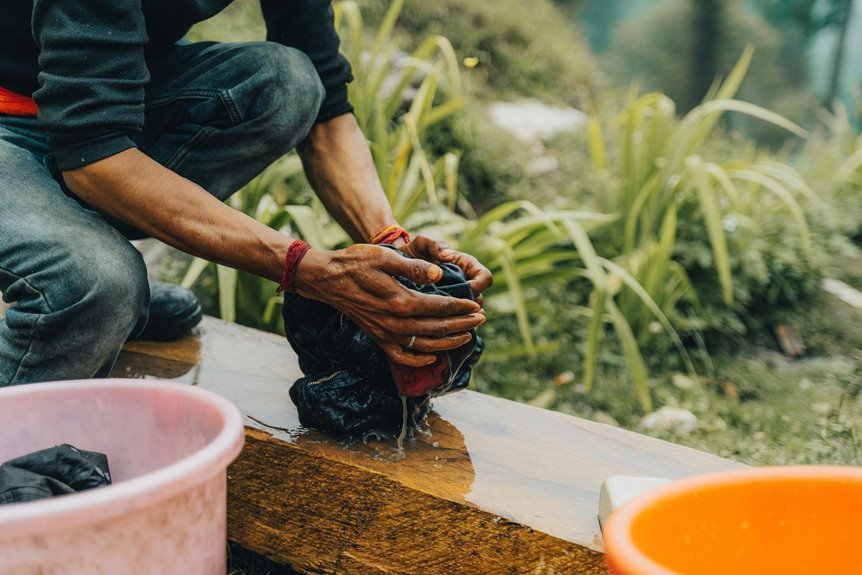
To avoid fabric pilling, you should sort laundry by fabric type and color, wash delicate items separately, and use gentle cycles. Opt for mild detergents labeled for delicate fabrics, and always wash clothes inside out. When drying, air dry if possible, or use a low heat setting. Don’t overload the machine or dryer to minimize friction. By following these practices, you can keep your garments looking fresh and smooth. There’s more you can do to enhance your laundry routine!
Key Takeaways
- Sort laundry by fabric type and color to minimize friction during washing and drying.
- Wash delicate fabrics separately and inside out on a gentle cycle with cold water.
- Use mild, fabric-specific detergents to protect fibers and follow recommended dosages.
- Air dry items or use a low heat setting to prevent overheating and reduce friction.
- Regularly inspect garments for wear and use a fabric shaver to remove any pilling.
Preparing Your Laundry for Washing
Before you toss your clothes into the washing machine, it’s essential to prepare them properly to minimize fabric pilling. Start by sorting your laundry based on fabric type and color.
Delicate fabrics like knits or wool should be washed separately from heavier items to prevent friction. Check for loose threads and snip them off, as they can cause pilling during the wash.
Delicate fabrics like knits and wool require separate washing to minimize friction and prevent pilling.
Turn your garments inside out to protect the outer surface. If you’re dealing with items prone to pilling, consider using a mesh laundry bag for extra protection.
Finally, avoid overloading the machine; this allows clothes to move freely and reduces wear and tear. Taking these steps will help keep your clothes looking fresh and new for longer.
Effective Washing Techniques
While you may think any washing method will do, using effective techniques is essential to preventing fabric pilling. Start by washing your clothes inside out to protect the outer fibers. Use a gentle cycle and cold water to minimize friction and heat. Avoid overloading your machine; it can cause items to rub against each other, leading to pilling.
Here’s a quick reference table for effective washing techniques:
| Technique | Description | Benefits |
|---|---|---|
| Wash Inside Out | Turn garments inside out before washing | Protects outer fibers |
| Use Gentle Cycle | Select a delicate cycle on your machine | Reduces friction |
| Cold Water Wash | Opt for cold instead of hot water | Prevents heat damage |
| Avoid Overloading | Don’t stuff the washing machine | Reduces fabric friction |
| Use a Mesh Bag | Place delicate items in a mesh bag | Minimizes tangling |
Choosing the Right Detergent
When it comes to laundry, picking the right detergent is essential for keeping your fabrics looking their best.
You should opt for mild detergents that won’t harm the fibers and steer clear of harsh chemicals that can lead to pilling.
Additionally, choosing fabric-specific options can make a significant difference in maintaining your clothes’ quality.
Mild Detergents Recommended
Choosing the right detergent plays a crucial role in preventing fabric pilling. Mild detergents are your best bet for keeping your clothes looking fresh.
These gentle formulas clean effectively without harsh ingredients that can wear down fibers. When you pick a mild detergent, you’re reducing the risk of damaging delicate fabrics, which helps maintain their integrity over time.
Look for options labeled “gentle” or “for delicate fabrics” to guarantee you’re protecting your garments. Additionally, using the right amount of detergent matters; too much can lead to residue buildup that contributes to pilling.
Stick to the recommended dosage on the packaging for the best results. By choosing mild detergents, you’ll keep your clothes soft and pill-free for longer.
Avoid Harsh Chemicals
To keep your clothes looking their best, it’s essential to steer clear of harsh chemicals in your laundry routine. These strong detergents can break down fibers, leading to pilling and a worn-out appearance.
Instead, opt for milder, eco-friendly detergents that are effective yet gentle on fabrics. Always check labels for ingredients; avoid those containing bleach or phosphates, which can be particularly damaging.
Additionally, using too much detergent can also contribute to residue buildup, making pilling more likely. Stick to the recommended amounts for your load size.
Fabric-Specific Options Preferred
Using the right detergent for specific fabric types can greatly enhance your laundry results and help prevent pilling.
For delicate fabrics like silk and wool, opt for mild, liquid detergents that clean without harsh abrasives. These gentler options protect fibers, reducing the risk of pilling.
For cotton and linen, you can choose a more robust detergent that effectively removes dirt and oils, but still avoids harsh chemicals. Always check the labels for compatibility, as some detergents contain enzymes that can weaken certain fibers.
Additionally, consider using a fabric softener designed for your fabric type to create a protective barrier.
Optimal Drying Practices
While air drying your laundry might seem like a simple choice, it can greatly reduce the risk of fabric pilling. When you hang your clothes to dry, you minimize friction that typically occurs in a dryer, which can lead to those pesky little balls of fuzz.
If you do use a dryer, opt for a low heat setting and remove items while they’re still slightly damp. This helps prevent overheating, which can weaken fibers. Additionally, consider using dryer balls to separate items and reduce tangling.
Always avoid overloading the dryer, as this can increase friction. By paying attention to your drying methods, you’ll keep your fabrics looking fresh and pill-free for longer.
Proper Fabric Care
After ensuring your drying methods are gentle, it’s time to focus on how you care for your fabrics. Proper fabric care can greatly reduce pilling and extend the life of your clothing.
Gentle drying methods are just the start; proper fabric care is essential for reducing pilling and prolonging your clothing’s lifespan.
Here are some tips to keep in mind:
- Wash similar fabrics together to minimize friction.
- Use a gentle detergent designed for delicate items.
- Keep your washing machine on a gentle cycle to reduce agitation.
- Avoid overloading the washer to prevent excessive rubbing.
- Air dry your fabrics whenever possible to limit heat exposure.
Maintenance and Regular Inspection
To keep your fabrics in top shape, regular maintenance and inspection are essential. Start by checking for any signs of wear or damage before washing. Look for loose threads, frays, or areas where pilling might begin. Address these issues promptly to prevent further deterioration.
After washing, inspect your items again to catch any new issues. If you notice any pilling, consider using a fabric shaver or lint roller to remove it gently.
Don’t forget to store your clothes properly; avoid overcrowding your closet, as this can lead to crushing and pilling.
Sorting Clothes by Fabric Type
Sorting your clothes by fabric type is essential for maintaining their quality.
When you group similar fabrics together, you reduce friction damage during the wash cycle. This simple step can greatly help prevent pilling and keep your garments looking fresh.
Fabric Compatibility Matters
When you sort your laundry by fabric type, you’re not just organizing your clothes; you’re also protecting them from damage like pilling.
Different fabrics have unique characteristics, and washing them together can lead to friction and wear. By grouping similar fabrics, you minimize the risk of pilling and extend the life of your garments.
Here are some fabric categories to evaluate when sorting:
- Cotton: Durable and can handle high heat.
- Synthetic: Lightweight but prone to pilling if washed with rough fabrics.
- Wool: Delicate and should be washed separately to avoid damage.
- Silk: Requires gentle cycles and cold water.
- Denim: Heavy and can cause abrasion on lighter fabrics.
Sorting helps maintain the integrity of your clothes!
Prevent Friction Damage
Fabric pilling often occurs due to friction, especially when different materials rub against each other in the wash. To minimize this, sort your laundry by fabric type. By grouping similar fabrics, you reduce the chances of friction that leads to pilling. Here’s a simple guide for sorting:
| Fabric Type | Washing Instructions |
|---|---|
| Delicates | Cold wash, gentle cycle |
| Cotton | Warm wash, regular cycle |
| Synthetics | Cold wash, gentle cycle |
Use this table to help you organize your laundry. Remember, washing heavier items with lighter ones can create unnecessary friction and lead to pilling. By sorting wisely, you’ll keep your clothes looking fresh longer!
The Importance of Gentle Cycles
Although you might be tempted to wash everything on a standard cycle, using gentle cycles can greatly extend the life of your garments.
Consider opting for gentle cycles to significantly prolong the lifespan of your garments.
Gentle cycles reduce agitation and friction, which are primary causes of fabric pilling. By opting for this setting, you protect delicate fibers and maintain your clothing’s appearance.
Here are some benefits of gentle cycles:
- Minimizes wear and tear on fabrics
- Reduces the risk of pilling and snagging
- Preserves the color and shape of your clothes
- Extends the lifespan of your favorite items
- Keeps your laundry looking newer for longer
Using Fabric Softener Wisely
Using fabric softener can enhance your laundry experience by reducing static and making fabrics feel softer.
However, it’s important to apply it correctly and at the right time to maximize its benefits.
Choosing the right type of fabric softener for your specific fabrics can also help prevent pilling and prolong the life of your clothes.
Benefits of Fabric Softener
Often overlooked, fabric softener can greatly enhance your laundry experience by making clothes softer and more comfortable to wear.
Using it wisely not only improves the texture of your garments but also provides additional benefits that you might appreciate.
Here are some advantages of using fabric softener:
- Reduces static cling, making clothes easier to wear and manage.
- Helps prevent pilling, keeping your items looking new for longer.
- Enhances fragrance, leaving your laundry smelling fresh and inviting.
- Makes ironing easier by reducing wrinkles and creases.
- Extends the lifespan of fabrics by providing a protective layer.
Incorporating fabric softener into your laundry routine can elevate the feel and longevity of your clothes, making each wear a more enjoyable experience.
Application Techniques and Timing
To guarantee you get the most out of fabric softener, timing and application technique are key factors.
When you add fabric softener to your wash, do it during the rinse cycle. This guarantees it coats your fabrics without being washed away by detergent. Use the recommended amount; too much can create residue, leading to pilling.
If you’re using a top-loading machine, pour the softener directly into the water to help it disperse evenly. For front-loading washers, place it in the designated compartment.
Also, avoid mixing fabric softener with detergent, as this can diminish its effectiveness. Finally, don’t forget to check your fabric care labels; some materials may not require softener at all, thereby preventing unnecessary wear.
Choosing the Right Type
Selecting the right type of fabric softener can make a significant difference in maintaining your fabrics. By choosing wisely, you can help reduce fabric pilling and extend the life of your clothes.
Here are some tips to keep in mind:
- Opt for liquid fabric softeners for better penetration.
- Look for softeners specifically designed for sensitive fabrics.
- Avoid using too much softener, as it can build up and cause pilling.
- Consider eco-friendly options that minimize synthetic chemicals.
- Test new products on a small fabric swatch before full use.
Tips for Storing Clothes Correctly
Properly storing your clothes can greatly extend their lifespan and keep them looking fresh. Start by washing and thoroughly drying your garments before storage to prevent mildew.
Use breathable garment bags for delicate items, while cotton or linen storage bins work well for others. Avoid plastic bags, as they can trap moisture and lead to mold.
When hanging clothes, use padded hangers for delicate fabrics to prevent stretching. For sweaters, fold them neatly to avoid stretching and pilling.
Keep your storage area cool, dry, and dark to minimize exposure to light and humidity. Finally, consider using cedar blocks or lavender sachets to deter moths and keep your clothes smelling fresh.
Following these tips will help you maintain your wardrobe’s quality.
Frequently Asked Questions
Can Pilling Be Completely Prevented With Proper Care?
While you can’t completely eliminate pilling, you can greatly reduce it. Balancing proper care with everyday wear helps maintain your fabrics, ensuring they look their best while minimizing those pesky little fuzz balls.
What Types of Fabrics Are Most Prone to Pilling?
Certain fabrics like polyester, wool, and cotton blends are more prone to pilling. When you wear or wash these materials, you’ll notice pilling more often, so keep an eye out for these common culprits.
How Often Should I Inspect My Clothes for Pilling?
Think of your clothes as delicate flowers needing care. You should inspect them weekly for pilling, especially after wearing or washing. Catching those pesky pills early keeps your wardrobe looking fresh and vibrant longer.
Are There Specific Brands Known for Anti-Pilling Fabrics?
Yes, certain brands focus on anti-pilling fabrics. Look for options from Patagonia, L.L. Bean, and Lands’ End. They often use specialized materials designed to resist pilling, ensuring your clothes stay looking fresh and new longer.
Can Washing Machines Contribute to Fabric Pilling?
Did you know that nearly 30% of clothes experience pilling from washing machines? Your machine’s agitation can snag fibers, so consider using a gentle cycle or a mesh bag to protect your fabrics while washing.