
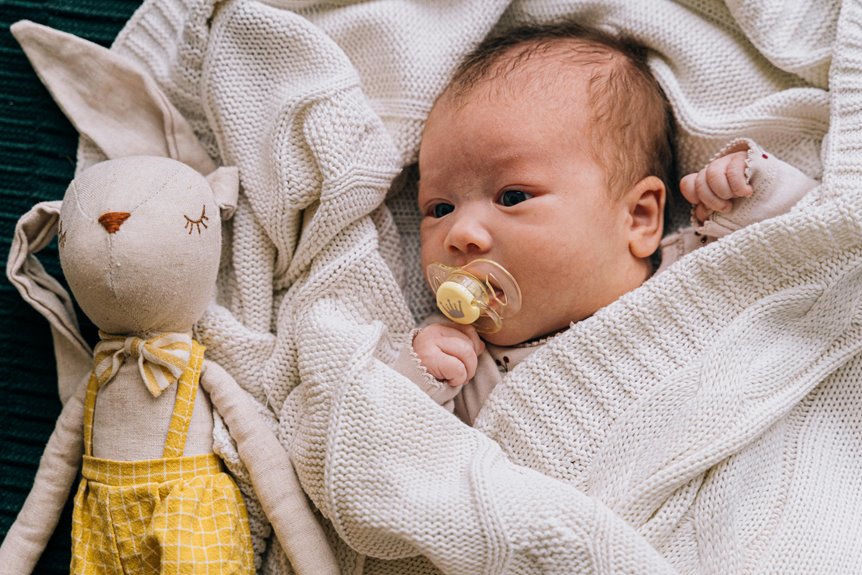
When you’re choosing fabrics for your newborn’s sensitive skin, you want to avoid anything that might cause irritation or discomfort. Knowing which materials are truly hypoallergenic can be tricky, especially with so many options available. You’ll need to contemplate more than just softness—things like breathability, moisture-wicking, and chemical exposure all play a role. Understanding these factors will help you make the best choice for your baby’s delicate needs.
Key Takeaways
- Organic cotton is soft, breathable, and grown without harsh chemicals, making it ideal for newborn sensitive skin.
- Bamboo fiber offers natural antibacterial properties and moisture-wicking, reducing irritation and keeping babies dry.
- Hypoallergenic fabrics avoid synthetic fibers, dyes, and chemicals that can trigger allergies or skin reactions.
- Breathable, tightly woven natural fabrics help regulate temperature and prevent allergen buildup on delicate skin.
- Look for OEKO-TEX Standard 100 or GOTS certifications to ensure fabrics are safe and free from harmful substances.
Understanding Hypoallergenic Fabrics
Although you mightn’t realize it, the fabric you choose for your newborn can greatly affect their comfort and health. Hypoallergenic fabrics offer key benefits by reducing the risk of fabric allergies, which are common in sensitive newborn skin.
When you select hypoallergenic materials, you’re choosing fabrics designed to minimize irritation and prevent allergic reactions. These fabrics avoid harsh chemicals, dyes, and synthetic fibers that can trigger redness, itching, or rashes.
Understanding hypoallergenic benefits means knowing how these fabrics help maintain your baby’s delicate skin barrier and promote better sleep and overall well-being.
Top Natural Fabrics for Sensitive Newborn Skin
Choosing the right hypoallergenic fabric means looking closely at natural options that are gentle on your newborn’s sensitive skin.
Organic cotton is a top choice because it’s grown without harsh chemicals, reducing the risk of irritation. It’s soft, durable, and breathable, making it perfect for delicate skin.
Organic cotton offers softness, durability, and breathability without harsh chemicals, ideal for sensitive, delicate skin.
Bamboo fiber is another excellent option you should consider. It’s naturally antibacterial and moisture-wicking, which helps keep your baby comfortable while minimizing the chance of rashes or allergies.
Both fabrics are eco-friendly and biodegradable, so you’re also making a sustainable choice.
When picking clothes, bedding, or swaddles, prioritize these natural fabrics to protect your newborn’s sensitive skin from harsh synthetic materials or dyes that can cause discomfort or allergic reactions.
Importance of Breathability and Comfort
When you dress your newborn, breathability and comfort play a crucial role in keeping their skin healthy and irritation-free. Choosing breathable materials helps regulate your baby’s body temperature, preventing overheating and excessive sweating, which can lead to rashes or discomfort.
You want fabrics that allow air to circulate freely while gently protecting delicate skin. Comfort factors like softness, stretchability, and moisture-wicking ability also matter—they guarantee your baby stays cozy and dry throughout the day.
Avoid synthetic fabrics that trap heat and moisture, as they can worsen skin sensitivity. Prioritize natural, breathable fabrics designed with these comfort factors in mind to support your newborn’s sensitive skin and promote overall well-being.
This thoughtful fabric choice makes a significant difference in your baby’s daily comfort.
Recognizing Key Fabric Properties for Babies
Breathability and comfort set the foundation, but understanding specific fabric properties helps you make even better choices for your baby’s sensitive skin.
When choosing fabrics, pay close attention to fabric texture—it should be soft and smooth to avoid friction that can cause skin irritation. Natural fibers like cotton offer a gentle touch, while tightly woven fabrics prevent allergens from settling on your baby’s skin.
Also, consider how the fabric reacts to moisture; materials that wick away sweat keep your baby dry and reduce irritation risk. Avoid rough or synthetic fabrics that trap heat and can lead to rashes.
Certifications to Look for When Choosing Baby Fabrics
How can you be certain a fabric is truly safe and gentle for your newborn? Look for trusted certification labels that guarantee rigorous fabric testing.
Certifications like OEKO-TEX Standard 100 and GOTS (Global Organic Textile Standard) confirm the fabric is free from harmful chemicals and allergens. These labels mean the fabric underwent strict testing for substances that could irritate sensitive skin.
Look for OEKO-TEX and GOTS certifications to ensure fabrics are free from harmful chemicals and allergens.
When choosing baby fabrics, always check for these certifications on tags or packaging—they’re your best indicators of safety and hypoallergenic quality.
Avoid uncertified products, as they mightn’t meet the high standards necessary for newborn skin. By relying on certification labels backed by thorough fabric testing, you can confidently select fabrics that protect your baby’s delicate skin from irritation and allergies.
Best Practices for Caring for Hypoallergenic Baby Fabrics
Since hypoallergenic fabrics are designed to protect your newborn’s sensitive skin, you’ll want to handle them with extra care to maintain their gentle qualities.
Proper washing techniques and fabric storage play an important role in keeping these fabrics soft and safe. Here are some best practices you should follow:
- Use mild, fragrance-free detergents to avoid irritation.
- Wash fabrics in cold or lukewarm water to preserve fibers.
- Avoid using fabric softeners and bleach, which can damage fabric.
- Dry hypoallergenic fabrics on a low heat setting or air dry to prevent shrinking.
- Store fabrics in a clean, dry place away from direct sunlight to maintain freshness.
Frequently Asked Questions
Can Hypoallergenic Fabrics Prevent Cradle Cap in Newborns?
You can’t rely solely on hypoallergenic fabrics to prevent cradle cap since it’s linked to skin sensitivity and oil buildup, not just fabric type. However, using gentle fabrics can reduce irritation, supporting healthier skin overall.
Are Hypoallergenic Fabrics Suitable for Baby Bedding and Crib Sheets?
Imagine your baby sleeping peacefully on organic cotton crib sheets without irritation. You’ll find hypoallergenic fabrics perfect for baby bedding, as they reduce allergens and keep your little one comfy and safe throughout the night.
How Do Hypoallergenic Fabrics Perform in Extreme Weather Conditions?
You’ll find hypoallergenic fabrics perform well in extreme weather due to breathability factors that prevent overheating. They help with temperature regulation, keeping you comfortable by wicking moisture away and allowing air circulation even in harsh conditions.
Can Synthetic Blends Be Hypoallergenic for Sensitive Baby Skin?
It’s a coincidence that some synthetic fibers can actually be gentle; you’ll find blends designed for baby comfort that resist allergens. Just make sure the fabric’s breathable and soft to keep sensitive skin happy and irritation-free.
Do Hypoallergenic Fabrics Affect the Durability of Baby Clothing?
You’ll find hypoallergenic fabrics often balance fabric longevity with softness standards, so they usually hold up well. Choosing these materials means your baby’s clothes stay gentle on skin without sacrificing durability through frequent washes and wear.