
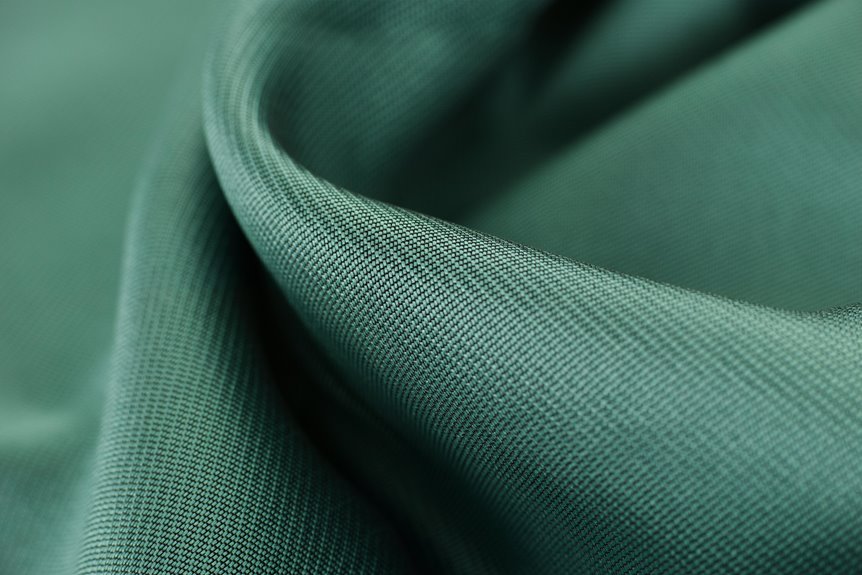
You’ll love Banarasi Katan fabric for its exquisite handwoven silk, rich sheen, and intricate Mughal-inspired designs. This luxurious textile originates from Varanasi, where skilled artisans use traditional techniques to create durable yet elegant cloth perfect for special garments. Its vibrant patterns and shimmering zari work make it a standout symbol of Indian heritage and craftsmanship. Explore further to uncover how this fabric blends history, artistry, and contemporary fashion influence.
Key Takeaways
- Banarasi Katan originates from Varanasi, crafted by skilled weavers since the Mughal era for royal luxury.
- Made from pure silk with a tight weave, it offers a smooth texture and rich sheen unique to this fabric.
- The intricate hand-loom weaving uses the Katan technique, ensuring durability and elegance in every thread.
- Traditional motifs like Mughal floral designs and gold or silver zari enhance its opulence.
- Proper care, including dry cleaning and storage in muslin, preserves its exquisite quality and longevity.
History and Origin of Banarasi Katan
Although many silk fabrics have ancient roots, Banarasi Katan stands out for its unique blend of tradition and craftsmanship.
When you explore its history, you’ll find it dates back to the Mughal era in India, particularly flourishing in Varanasi. The weavers there developed this fabric by refining techniques passed down through generations.
You’ll notice that Banarasi Katan was created to cater to royal families and nobility, reflecting their taste and status. By mastering a specific weaving method, artisans produced a fabric that combined durability with elegance.
As you learn about Banarasi Katan’s origin, you’ll appreciate how the cultural richness of Varanasi and the dedication of its weavers shaped this luxurious textile’s legacy, making it a symbol of Indian heritage today.
Unique Characteristics of Banarasi Katan Fabric
When you touch Banarasi Katan fabric, you’ll immediately notice its smooth texture and rich sheen, qualities that set it apart from other silks. This fabric is made from pure silk threads, giving it a lightweight yet durable feel.
Its tight weave creates a fine, crisp surface that holds intricate designs beautifully. You’ll see that Banarasi Katan often features vibrant colors and subtle patterns that shimmer under light, thanks to expertly woven silk yarns.
Unlike heavier brocades, it maintains an elegant drape, making it perfect for luxurious garments. The fabric’s ability to combine strength with softness guarantees it feels comfortable against your skin while exuding opulence.
These unique traits make Banarasi Katan a timeless choice in Indian luxury textiles.
Traditional Weaving Techniques and Craftsmanship
Since Banarasi Katan fabric owes its elegance to skilled artisans, understanding the traditional weaving techniques is essential.
You’ll find that the process involves hand-loom weaving using pure silk threads, where each thread is meticulously prepared. Artisans use a technique called ‘Katan’, where tightly twisted silk yarns create a fine, durable fabric.
You’ll notice the warp and weft threads interlace with precision, producing a smooth texture and lustrous finish. The craftsmen often employ a supplementary weft technique to add intricate patterns without compromising the fabric’s strength.
When you watch these artisans at work, you appreciate their patience and expertise—they spend hours ensuring every detail is perfect. This dedication transforms raw silk into a luxurious textile that truly reflects India’s rich weaving heritage.
Types of Designs and Motifs in Banarasi Katan
While Banarasi Katan fabric stands out for its fine texture, its true charm lies in the variety of designs and motifs woven into it.
You’ll find traditional floral patterns, often inspired by Mughal art, featuring intricate lotus, jasmine, and rose motifs. These floral elements symbolize beauty and elegance, making the fabric timeless.
Besides florals, geometric patterns add a modern edge, with delicate checks, stripes, and lattice designs enhancing the fabric’s appeal.
Geometric patterns like checks, stripes, and lattices bring a contemporary flair to Banarasi Katan’s timeless elegance.
You’ll also notice paisley motifs, known locally as “buta,” representing fertility and life. Some pieces incorporate animal and bird figures, reflecting nature’s vibrancy.
Each design is carefully crafted with gold or silver zari threads, creating a rich, shimmering effect that highlights the artistry behind Banarasi Katan fabric.
How Banarasi Katan Is Used in Fashion and Apparel
You’ll find Banarasi Katan fabric adds unmatched elegance to bridal wear, making every outfit stand out.
Designers are also incorporating it into contemporary fashion, blending tradition with modern style.
Let’s explore how this luxurious fabric transforms both classic and trendy apparel.
Bridal Wear Elegance
Few fabrics capture the grandeur of Indian bridal wear like Banarasi Katan. When you choose Banarasi Katan for a wedding ensemble, you embrace rich tradition and unmatched elegance.
The fabric’s intricate zari work and vibrant silk threads bring a regal touch that instantly elevates your bridal look. Its durability guarantees your outfit stays flawless throughout the celebrations.
Whether it’s a lehenga, saree, or dupatta, Banarasi Katan adds depth and texture, making every stitch tell a story. You’ll notice how the fabric’s luminous sheen complements gold jewelry, enhancing your overall radiance.
Opting for Banarasi Katan means you’re not just wearing a garment—you’re donning a piece of Indian heritage that defines bridal sophistication.
Contemporary Fashion Adaptations
Although Banarasi Katan has deep roots in tradition, designers have embraced it in contemporary fashion to create striking, modern apparel.
You’ll find this luxurious fabric in chic jackets, sleek skirts, and elegant dresses that blend heritage with current trends. When you wear Banarasi Katan pieces, you showcase intricate weaving and rich textures in fresh silhouettes perfect for parties, formal events, or even upscale casual outings.
Designers experiment with colors and cuts, making the fabric versatile beyond traditional sarees and lehengas. By incorporating Banarasi Katan into everyday wear, you connect with Indian craftsmanship while staying fashion-forward.
Care and Maintenance of Banarasi Katan Garments
Since Banarasi Katan fabric is delicate and intricately woven, you must handle it with care to preserve its beauty. Always dry clean your garments to avoid damage from water and detergents. Store them in a cool, dry place, wrapped in muslin cloth to prevent moisture and color fading. Avoid direct sunlight and harsh chemicals. When ironing, use a low heat setting and place a cloth between the iron and fabric to protect the zari work.
| Care Aspect | Recommendation |
|---|---|
| Cleaning | Dry clean only |
| Storage | Wrap in muslin, cool & dry spot |
| Ironing | Low heat, use protective cloth |
| Handling | Avoid rough surfaces |
| Exposure | Keep away from sunlight & moisture |
Contemporary Trends and Global Influence of Banarasi Katan
The timeless elegance of Banarasi Katan fabric is making waves in contemporary fashion worldwide. You’ll see designers blending its rich silk and intricate motifs with modern silhouettes, creating pieces that honor tradition while embracing innovation.
Celebrities and fashion influencers often showcase Banarasi Katan in global events, boosting its appeal beyond India. As you explore fashion trends, you’ll notice this fabric’s presence in luxury collections, bridal wear, and even casual outfits, proving its versatility.
Its global influence also encourages sustainable and artisanal craftsmanship, supporting weavers and preserving cultural heritage. When you choose Banarasi Katan, you’re not just wearing fabric; you’re part of a vibrant story that connects heritage with modern style, making it an evergreen choice in your wardrobe.
Frequently Asked Questions
Where Can I Buy Authentic Banarasi Katan Fabric Online?
Like finding a needle in a haystack, buying authentic Banarasi Katan online can be tricky. You’ll want to check trusted websites like Craftsvilla, Indianroots, or directly from verified weavers’ stores for genuine, high-quality fabric.
How Long Does It Take to Weave a Banarasi Katan Saree?
It usually takes you several weeks to months to weave a Banarasi Katan saree, depending on the intricacy of the design. Skilled artisans work meticulously, ensuring each piece reflects exquisite craftsmanship and detail.
What Is the Average Price Range of Banarasi Katan Textiles?
You’ll find Banarasi Katan textiles usually range from $200 to $2000, depending on the intricacy and quality. The finer the weave and design, the higher the price you’ll likely pay for this luxurious fabric.
Can Banarasi Katan Fabric Be Blended With Other Materials?
Blending Banarasi Katan fabric with other materials is like mixing colors on a palette—you can create unique textures and designs. You can blend it with silk or cotton, but preserving its luxurious feel is key.
Are There Any Eco-Friendly Banarasi Katan Weaving Initiatives?
You’ll find several eco-friendly weaving initiatives focusing on sustainable practices, using natural dyes and organic fibers. These projects support artisans and reduce environmental impact while preserving traditional craftsmanship in Banarasi Katan weaving.